Deep Well Drilling: Complete Guide to Deep Water Wells
Published February 1, 2026 | 12 min read
📋 In This Guide
When standard well depths won't reach water, deep well drilling becomes necessary. In San Diego County's backcountry, mountain communities, and areas with challenging geology, drilling a deep water well—often 400 to 800+ feet—is the only way to secure a reliable water supply. Here's everything you need to know about deep well drilling, including costs, equipment requirements, and what makes these projects different from standard wells.
What Is Considered a Deep Well?
In the well drilling industry, a deep well is generally defined as any well drilled to 400 feet or deeper. However, this definition can vary by region:
Well Depth Classifications
- Shallow Wells (under 100 ft): Common in areas with high water tables, often hand-dug or driven
- Medium Depth Wells (100-400 ft): Standard residential wells in many regions
- Deep Wells (400-800 ft): Required in challenging geology, mountain areas, granite formations
- Very Deep Wells (800+ ft): Specialized drilling for extreme conditions or commercial applications
In San Diego County, medium to deep wells are the norm rather than the exception. Our region's fractured granite geology and seasonal drought conditions mean many properties require wells in the 400-700+ foot range to reach reliable water-bearing fractures.
Why Deep Wells Are Needed
Several geological and environmental factors determine how deep to drill a well on your property:
1. Granite and Hard Rock Formations
Much of San Diego County's backcountry sits on hard granite bedrock. Unlike porous sandstone or alluvial soils that hold water like a sponge, granite stores water only in fractures and fissures. Drillers must often go deep to intersect enough water-bearing fractures to achieve adequate flow rates.
2. Low Regional Water Tables
Years of drought and groundwater pumping have lowered water tables throughout Southern California. Areas that might have produced water at 200 feet decades ago may now require 400-600+ feet to reach the same aquifer.
3. Mountain and High Elevation Locations
Mountain communities like Julian, Palomar Mountain, and Cuyamaca sit at elevations where water must be sourced from deep fractured rock systems. These areas routinely see wells in the 500-800+ foot range.
4. Distance from Recharge Areas
Properties far from rivers, streams, or natural recharge zones may need deeper wells to tap into regional aquifer systems rather than relying on shallow groundwater.
Deep Well Drilling Cost
Deep well drilling costs significantly more than standard wells due to increased drilling time, specialized equipment, and higher-capacity pump systems. Here's what to expect in 2026:
Deep Well Drilling Cost Ranges
- 400-500 feet: $25,000 - $45,000
- 500-600 feet: $35,000 - $55,000
- 600-700 feet: $45,000 - $65,000
- 700-800 feet: $55,000 - $75,000
- 800+ feet: $65,000 - $80,000+
*Complete turnkey installation including drilling, casing, pump, and pressure system
What Drives Deep Well Drilling Cost?
Several factors make deep wells more expensive per foot than shallower wells:
- Drilling time: Hard rock at depth requires more time—a 600-foot granite well may take 4-5 days of continuous drilling
- Bit wear: Deep drilling in hard rock consumes expensive drill bits faster
- Casing material: More footage of steel or PVC casing adds significant material cost
- Equipment requirements: Deep wells require more powerful rigs and specialized tooling
- Pump costs: Higher horsepower submersible pumps for deep settings cost more
- Installation complexity: Setting pumps at 400-700 feet requires specialized equipment and expertise
For complete pricing details, see our comprehensive San Diego well drilling cost guide.
Equipment for Deep Well Drilling
Deep well drilling requires specialized equipment that differs from standard well drilling rigs:
Drilling Rigs
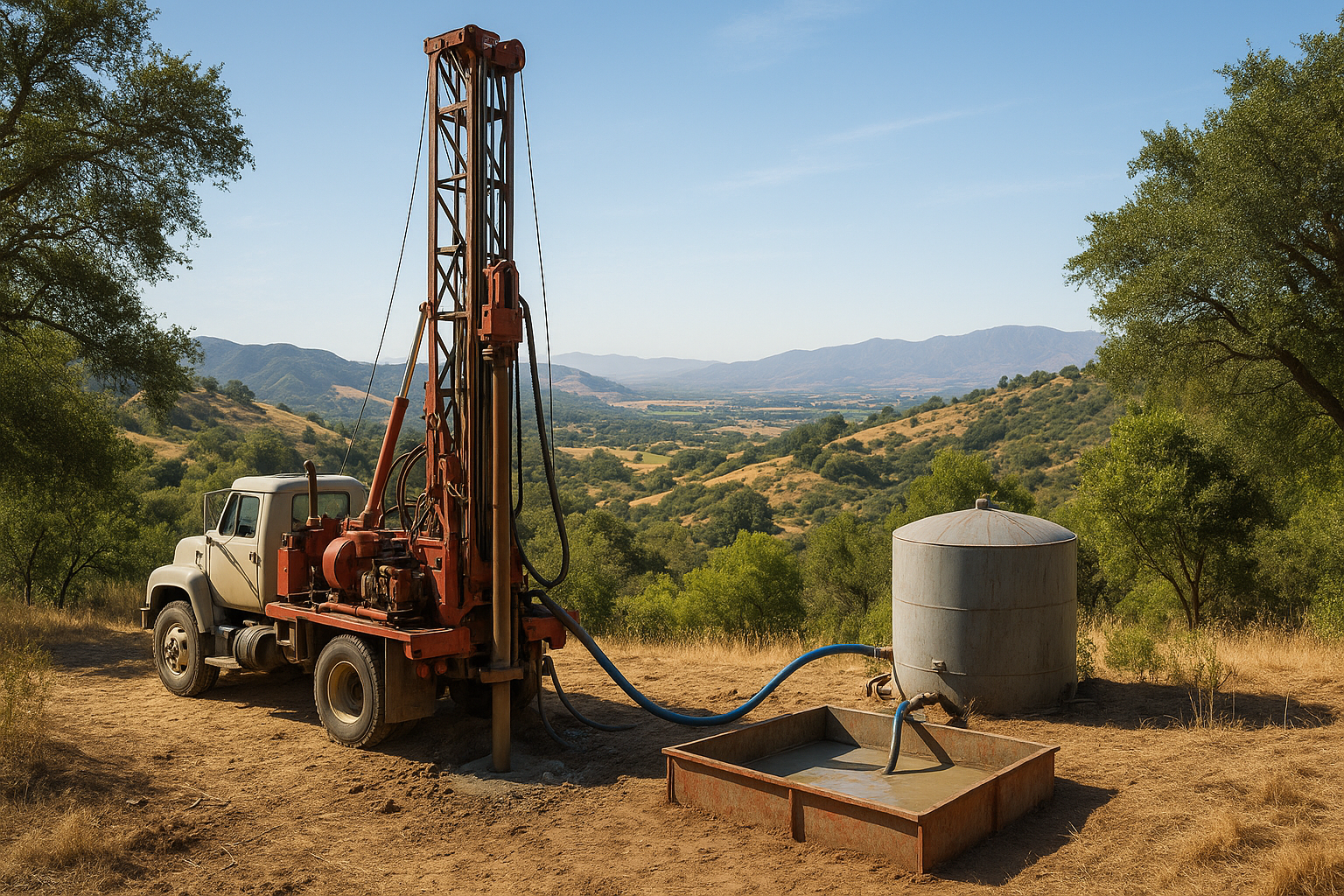
Deep wells in San Diego County typically require air rotary drilling rigs capable of drilling through hard granite. These rigs use compressed air to clear cuttings and can handle depths of 1,000+ feet. Key specifications include:
- High-torque rotary heads for hard rock penetration
- Large air compressors (750-1,200+ CFM)
- Sufficient drill pipe capacity for target depth
- Hammer bits designed for granite and metamorphic rock
Casing and Well Construction
Deep wells require robust casing to maintain well integrity:
- Steel casing: Often required for the upper portion through unstable overburden
- PVC casing: May be used in stable rock zones at depth
- Sanitary seal: Extended grouting to prevent surface contamination
- Well screen: Slotted sections positioned across water-bearing fractures
Deep Well Pump Considerations
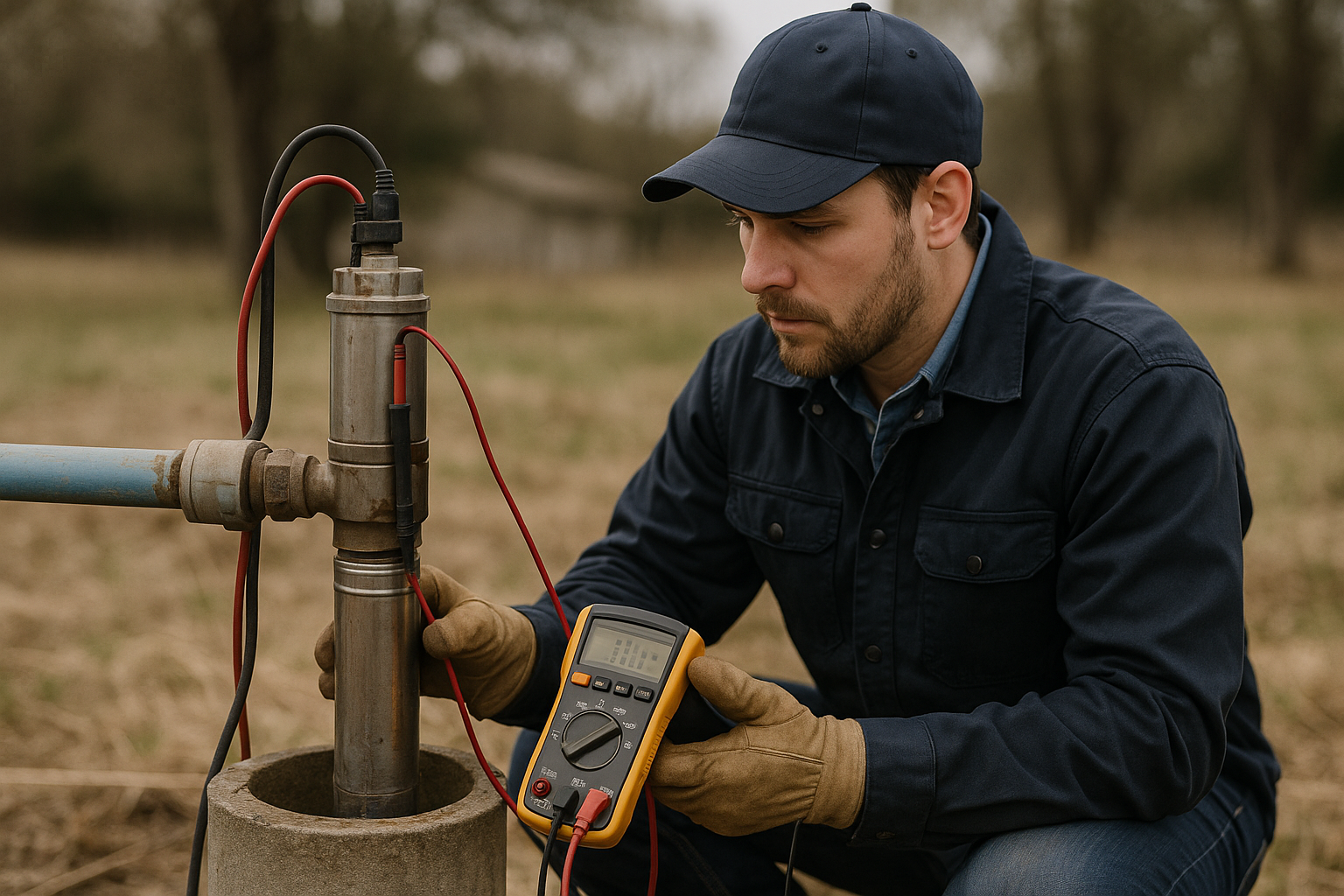
One of the most critical aspects of a deep water well is the pump system. Shallow well jet pumps simply cannot lift water from depths greater than about 25 feet—deep wells absolutely require submersible pumps.
Submersible Pump Requirements
| Well Depth | Typical HP Required | Pump Cost Range |
|---|---|---|
| 400-500 ft | 1.5 - 2 HP | $1,800 - $3,000 |
| 500-600 ft | 2 - 3 HP | $2,500 - $4,000 |
| 600-700 ft | 3 - 5 HP | $3,500 - $5,500 |
| 700-800 ft | 5 - 7.5 HP | $4,500 - $7,000 |
| 800+ ft | 7.5 - 10+ HP | $6,000 - $10,000+ |
Deep Well Pump Sizing Factors
Proper pump sizing for a deep well depends on several factors beyond just depth:
- Total Dynamic Head (TDH): The total lift required including depth, friction loss, and delivery pressure
- Desired flow rate: Gallons per minute needed for household or agricultural use
- Well recovery rate: How quickly the well refills after pumping
- Electrical service: Deep pumps may require 240V service and dedicated circuits
Learn more about submersible well pumps and proper sizing for your application.
San Diego County Deep Well Examples
Here are typical deep well scenarios we encounter in San Diego County's backcountry communities:
Julian (600+ feet typical)
The Julian area sits at 4,200 feet elevation on fractured granite. Wells here commonly range from 500 to 800+ feet. The hard rock requires air rotary drilling, and properties often need 3-5 HP submersible pumps. Despite the depth, Julian wells typically produce good quality water with excellent natural filtration.
Alpine and East County (400-600 feet typical)
Alpine, Descanso, and surrounding communities sit on granite with varying fracture patterns. Well depths range widely—some properties find water at 300 feet while neighboring parcels require 600+ feet. Thorough site assessment and knowledge of local geology is essential.
Palomar Mountain (500-700+ feet)
At 5,000+ feet elevation, Palomar Mountain properties often require deep wells in the 500-700 foot range. The granite bedrock and distance from major aquifer recharge zones necessitate drilling to significant depth.
Backcountry Communities
Remote areas like Campo, Potrero, Boulevard, and Warner Springs see deep wells as the norm. These regions may require 400-700+ feet to reach reliable water-bearing fractures in granite and metamorphic rock formations.
Advantages of Deep Wells
While deep wells cost more upfront, they offer significant long-term benefits:
1. Superior Water Quality
Water from deep aquifers travels through hundreds of feet of rock and soil, providing natural filtration. Deep wells typically have:
- Lower bacteria counts (often bacteria-free)
- Reduced contamination from surface activities
- More consistent mineral content
- Cooler, more refreshing water temperature
2. Drought Resilience
Deep wells tap into aquifers that aren't as affected by short-term drought conditions. While shallow wells may fail during dry years, deep wells accessing regional aquifer systems continue producing. This reliability is invaluable in drought-prone Southern California.
3. Consistent Year-Round Production
Shallow wells often experience seasonal fluctuations—producing well in winter and spring but declining in summer and fall. Deep wells maintain more consistent water levels and production rates throughout the year.
4. Protection from Surface Contamination
Deep wells are better protected from surface contaminants including:
- Septic system drainage
- Agricultural runoff and pesticides
- Roadway contamination
- Fuel spills and industrial pollution
5. Long-Term Investment Value
A properly constructed deep well typically lasts 30-50+ years with proper maintenance. The higher initial investment pays off over decades of reliable water supply without monthly water bills.
Deep Well Drilling Process
Here's what to expect when drilling a deep water well:
1. Site Assessment and Planning (1-2 weeks)
- Review of geological surveys and neighbor well data
- Site visit to assess access and drilling location options
- Permit application to San Diego County
- Detailed cost estimate and project timeline
2. Drilling Phase (3-7 days)
- Rig mobilization and setup
- Drilling through overburden and into bedrock
- Continuous monitoring for water-bearing fractures
- Drilling until adequate water production is achieved
3. Well Completion (1-2 days)
- Casing installation and grouting
- Well development (cleaning and surging)
- Flow rate testing and water sampling
4. Pump Installation (1-2 days)
- Submersible pump sizing and selection
- Pump installation at proper depth
- Electrical connections and controls
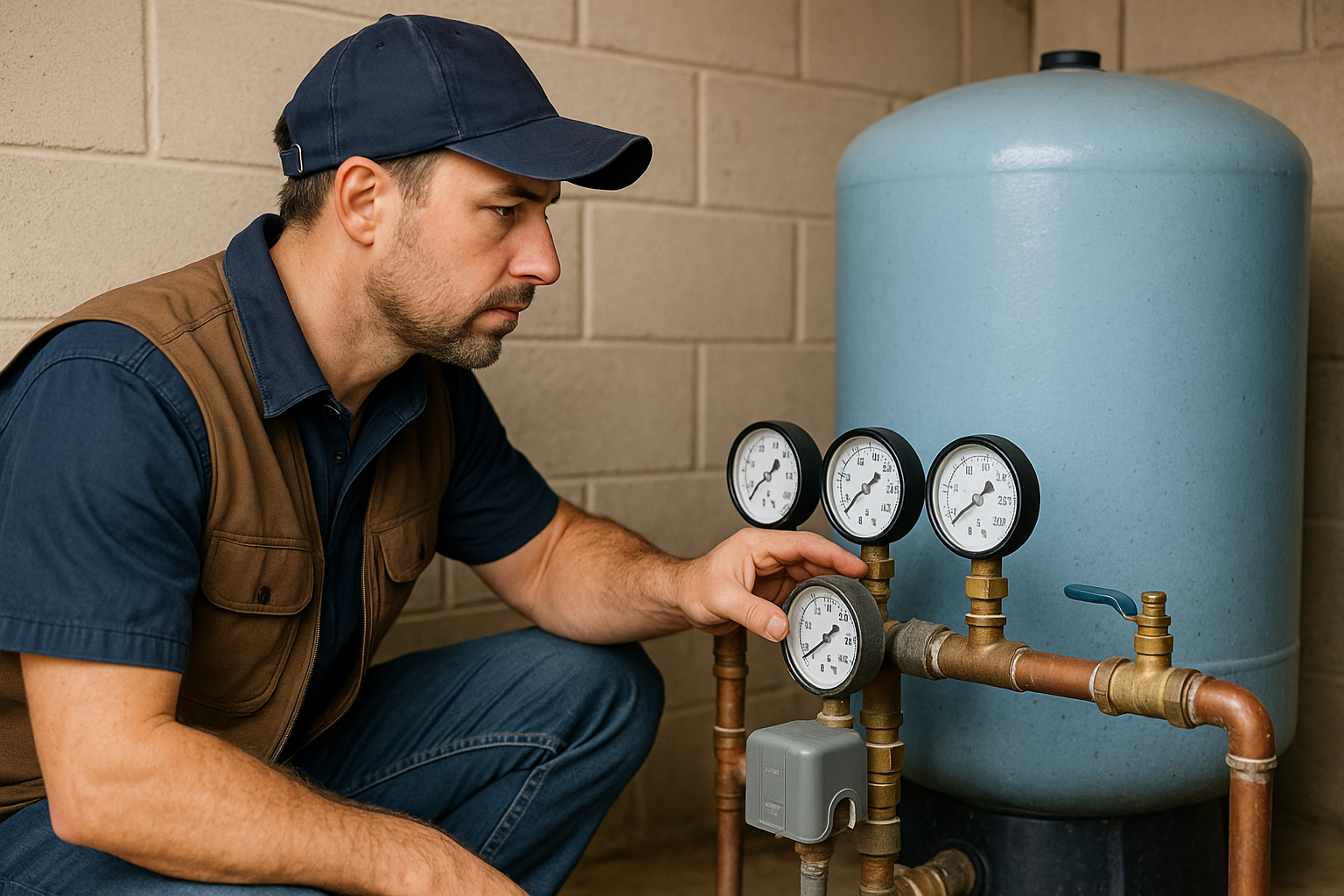
- Pressure tank and system setup
- Final testing and homeowner orientation
Frequently Asked Questions
How deep is considered a deep well?
In the water well industry, a deep well is typically defined as any well drilled 400 feet or deeper. However, in some regions with shallow aquifers, wells over 200-300 feet may be considered deep. In San Diego County's backcountry and mountain areas, wells commonly reach 500-800+ feet, which are definitively classified as deep wells.
How much does deep well drilling cost?
Deep well drilling typically costs $15,000-$80,000 or more, depending on depth and geology. For a 400-500 foot well, expect $25,000-$45,000. Wells 500-700 feet run $40,000-$60,000, and wells over 700 feet can exceed $60,000-$80,000+. These prices include complete turnkey installation with casing, pump, and pressure system.
Why would I need a deep well?
Deep wells are necessary when the water table is far below the surface, typically due to hard granite formations that don't hold water near the surface, low regional water tables from drought or geographic conditions, high elevation mountain locations, or areas with heavy groundwater pumping. In San Diego County, areas like Julian, Alpine, and East County backcountry often require deep wells.
What kind of pump do deep wells need?
Deep wells require submersible pumps installed down in the well, as jet pumps cannot lift water from depths greater than about 25 feet. For wells 400-600 feet deep, you'll typically need a 1.5-3 HP submersible pump. Wells over 600 feet may require 3-5+ HP pumps. The pump must be sized based on depth, desired flow rate, and total dynamic head.
Are deep wells better than shallow wells?
Deep wells often provide better water quality, more consistent year-round production, and greater drought resilience than shallow wells. Water from deep aquifers is naturally filtered through rock and soil, reducing contaminants. Deep wells are also less affected by seasonal water table fluctuations and surface contamination.
How long does it take to drill a deep well?
Deep well drilling typically takes 3-7 days for the drilling phase alone, depending on depth and rock hardness. A 500-foot well in hard granite may take 4-5 days of drilling. Add another 1-2 days for pump installation and system setup. The entire project from start to water flowing usually takes 1-2 weeks.
Need a Deep Well? Get Expert Help
Deep well drilling requires specialized equipment and expertise. We've drilled hundreds of deep wells throughout San Diego County's backcountry and mountain communities. Get a free site assessment and detailed estimate for your property.
See also: Learn about shallow well drilling options for your property.