
Dry Well Solutions for Oak Hills Properties
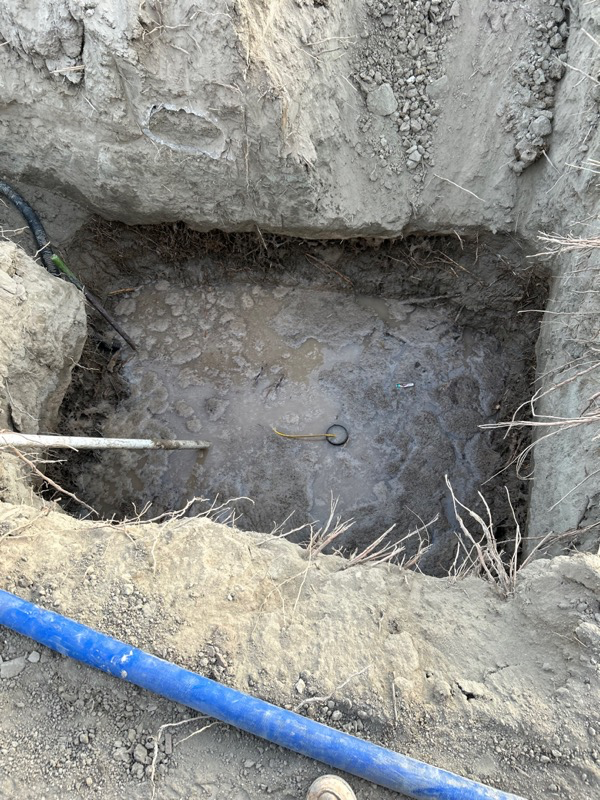
Has your well in Oak Hills stopped producing water? A dry well can be a stressful emergency, but you have options. Southern California Well Service helps Oak Hills property owners restore their water supply quickly.
📋 In This Guide
- Why Wells Go Dry
- Solutions for Dry Wells in Oak Hills
- Emergency Dry Well Service in Oak Hills
- Preventing Future Dry Well Issues
- Related Articles
Before assuming you need a completely new well, let us evaluate your situation—many "dry" wells can be rehabilitated at a fraction of the cost of drilling new.
Why Wells Go Dry
- Drought Conditions: Extended dry periods lower the water table
- Increased Demand: More wells in the area drawing from the same aquifer
- Seasonal Fluctuations: Water table naturally drops in summer/fall
- Pump Position: Pump may be positioned above current water level
- Well Age: Mineral buildup reducing water entry points
- Aquifer Depletion: Long-term overdrawing of groundwater
Solutions for Dry Wells in Oak Hills
1. Well Deepening
If the water table has dropped, deepening your existing well may reach water again. This is often less expensive than drilling a new well.
2. Hydrofracturing
High-pressure water treatment can open new fractures in bedrock, allowing more water to flow into your well.
3. Pump Lowering
Sometimes simply lowering your pump deeper in the well can restore water production.
4. New Well Drilling
When rehabilitation isn't viable, we can drill a new well in a better location on your property.
Emergency Dry Well Service in Oak Hills
We understand that losing your water supply is an emergency. Our team provides rapid response for Oak Hills dry well situations:
- Same-day or next-day assessment when possible
- Temporary water solutions while repairs are made
- Honest evaluation of repair vs. replacement options
- Flexible financing for major well work
Preventing Future Dry Well Issues
- Install a water level monitor
- Practice water conservation during dry months
- Consider a storage tank for backup supply
- Schedule annual well inspections
- Address declining yield early, before complete failure
Need Help With Your Well in Oak Hills?
Our expert technicians serve Oak Hills and all of San Bernardino County with professional well services.
Related Articles
Continue learning about well maintenance and troubleshooting

Signs Your Well Pump Is Failing
Catch pump problems early before you lose water completely.

Low Water Pressure From Well
Diagnose and fix pressure problems before they get worse.

Well Maintenance Guide
Keep your well running smoothly with regular maintenance.
Our Locations
1077 Main St, Ramona, CA 92065
57174 CA-371 (US Hwy 79), Anza, CA 92539
When an Oak Hills Well Runs Dry: What It Means and What Comes Next
Oak Hills sits in the high desert of San Bernardino County, just west of Hesperia and north of the Cajon Pass, at an elevation of roughly 3,200 to 3,600 feet along the southern edge of the Victor Valley. It is a rural, large-lot community where many homes along Caliente Road, Ranchero Road, and the streets fanning out toward Baldy Mesa depend on private wells rather than a municipal connection. When one of those wells stops delivering water, it is not a minor inconvenience — it is a household emergency. The good news is that a well that has "gone dry" is rarely beyond help, and in most Oak Hills cases the fix is far less drastic than drilling an entirely new well.
At Southern California Well Service, we have spent more than 30 years working on wells across the Victor Valley and the wider high desert. A dry well in Oak Hills almost always has a specific, diagnosable cause, and once we know the cause we can match it to the right repair. This guide walks through why wells in this part of San Bernardino County lose water, how we confirm what is actually happening downhole, and the realistic options — with honest cost ranges — for getting your water back.
Why Wells Go Dry in Oak Hills and the High Desert
The Victor Valley draws its groundwater from the Mojave River groundwater basin, a deep alluvial system fed largely by runoff from the San Bernardino and San Gabriel mountains. Unlike the fractured-granite wells of the coastal backcountry, most Oak Hills wells are completed in sand, gravel, and clay layers, and they can be several hundred feet deep. That geology shapes the way these wells fail:
- Long-term regional drawdown. The high desert has seen decades of pumping that exceeds natural recharge. Across much of the Victor Valley, static water levels have dropped steadily, and a well drilled to 250 or 300 feet in the 1980s or 1990s may now sit with its pump perilously close to the current water level.
- Drought cycles. Southern California's recurring multi-year droughts reduce mountain snowpack and the river recharge that replenishes the Mojave basin. During dry stretches the water table can fall enough to leave shallower wells gasping.
- Pump set too high. Frequently the aquifer still holds water — the pump is simply hanging above the new water level. Lowering it can restore production immediately.
- Increased neighborhood demand. As more parcels are developed on Oak Hills' large lots, more straws draw from the same basin, accelerating seasonal declines in localized areas.
- Screen and casing fouling. Desert groundwater is mineral-rich. Over years, calcium and iron scale, plus fine sand, can plug the perforations and gravel pack, choking off flow even when water is present.
How We Confirm a Well Is Actually Dry
"My well is dry" can mean several different things, and guessing wrong is expensive. Before recommending anything, our technician runs through a straightforward diagnostic. We check whether the pump is even running and drawing the correct amperage, then we sound the well to measure the true static and pumping water levels — the depth to water with the pump off, and how far it draws down under load. We compare those numbers against your well's original completion report (depth, screen interval, and pump-setting records), inspect the pressure tank and pressure switch, and test recovery rate after a controlled drawdown.
That data tells us which of three situations you are in: the water level has genuinely fallen below the pump (a placement or aquifer problem), the equipment has failed (pump or controls), or the well bore itself has lost capacity (fouling or collapse). Each points to a different solution. Our diagnostic visit is $125, and we credit that amount toward any repair work we perform.
Your Options for Restoring Water — With Trade-Offs
1. Lower the Pump
If the aquifer still holds water but your pump now sits above it, the simplest fix is to pull the pump and reset it deeper in the existing casing — assuming there is enough remaining well depth and water column to do so safely. This is the least invasive option and often resolves "dry" Oak Hills wells outright. Typical cost runs $800 to $2,500 depending on depth, pump condition, and whether new drop pipe or wire is needed.
2. Deepen the Existing Well
When the water table has dropped below the bottom of the borehole, we can sometimes deepen the existing well to chase the aquifer lower. In the deep alluvial sediments of the Victor Valley this can be very effective. Deepening generally costs $5,000 to $15,000, and is usually a fraction of the cost of starting over.
3. Hydrofracturing to Boost Yield
Hydrofracturing — injecting water under high pressure to clear and open water-bearing zones — is most associated with fractured bedrock, but it can also help rehabilitate plugged screens and tight zones in some desert wells. Cost typically falls between $3,000 and $8,000. We will tell you honestly whether your well construction makes this a good candidate.
4. Add Storage and a Booster Pump
If your well still produces, just slowly, a storage tank and booster-pump system lets a low-yield well fill a cistern around the clock while a booster delivers strong household pressure on demand. This is a popular, cost-effective approach in the high desert where slow recovery is common. Budget roughly $3,000 to $7,000 for a typical residential storage-and-booster setup.
5. Drill a New, Deeper Well
When an old well is too shallow, collapsed, or simply worn out, a new well drilled to the depth modern conditions require is the long-term answer. A turnkey new well — drilling, casing, pump, and hookup — typically runs $18,000 to $42,000 in this region depending on depth and equipment. It is the largest investment, but it resets the clock for decades.
6. Flow-Management Controls
For wells that recover slowly, we can install low-water cutoff switches, cycle timers, and flow controllers that protect the pump from running dry and let a modest aquifer keep up with household use. These controls are often paired with the storage-tank approach.
When to Call a Professional
If you have lost water entirely, are pumping air or sand, notice the pump cycling rapidly, or see a sudden drop in pressure across the whole house, stop running the pump and call us. Continuing to run a pump in a dry well can burn out the motor and turn a modest repair into a full replacement. A licensed C-57 water well contractor — not a general plumber — is the right professional for diagnosing and working inside the well itself. Our same-day emergency service means an Oak Hills household rarely has to go long without a clear plan.
Serving Oak Hills and the Surrounding High Desert
From our Ramona and Anza offices, Southern California Well Service covers Oak Hills and the neighboring Victor Valley communities — Hesperia, Phelan, Pinon Hills, Baldy Mesa, Oak Glen-area foothills, Apple Valley, and Victorville. We know the Mojave River basin, the typical well depths along the Cajon corridor, and the permitting process in San Bernardino County. That local knowledge means faster diagnosis and the right recommendation the first time, whether you are off Ranchero Road or up toward Wrightwood.
Frequently Asked Questions
How deep are wells in Oak Hills?
Wells in the Oak Hills and greater Victor Valley area are typically completed in deep alluvial sediments and commonly range from about 250 to 600 feet, though exact depth depends on your parcel's location relative to the Mojave River basin. Older wells drilled decades ago are often shallower and more vulnerable as regional water levels decline.
Is my Oak Hills well dry, or is the pump just broken?
Both produce the same symptom — no water — so the only reliable way to know is to measure the actual water level in the well and test the pump's electrical draw and recovery rate. Our $125 diagnostic, credited toward any repair, tells us whether the issue is a fallen water table, a placement problem, or failed equipment.
Can lowering the pump fix a dry well?
Often, yes. In many Oak Hills wells the aquifer still holds water but the pump now hangs above the current water level. If the casing has enough remaining depth and water column, resetting the pump deeper can restore production for $800 to $2,500 — the least expensive fix.
How much does it cost to deepen a well versus drill a new one in the high desert?
Deepening an existing well usually costs $5,000 to $15,000, while a turnkey new, deeper well typically runs $18,000 to $42,000. We always evaluate deepening, hydrofracturing, and storage solutions before recommending a new well, because rehabilitation is usually far cheaper.
Will a storage tank help my low-yield Oak Hills well?
Yes. A storage tank and booster pump let a slow-recovering well fill a cistern continuously while the booster delivers strong household pressure on demand. It is one of the most cost-effective solutions in the high desert, typically $3,000 to $7,000 installed.
Do you offer emergency service in Oak Hills?
Yes. We provide same-day emergency response for Oak Hills and the surrounding Victor Valley. If you have lost water completely, call (760) 440-8520 or text (760) 219-5877 and stop running the pump to avoid burning out the motor.