Filling a Swimming Pool from Your Well
If you own a well and a swimming pool in San Diego, Riverside, or San Bernardino County, you've probably wondered whether it's safe to fill your pool directly from your well. After 30+ years of servicing wells throughout Southern California, we've seen homeowners successfully fill pools from wells—and we've also seen wells temporarily go dry or pumps burn out from improper filling. The short answer is yes, you can usually fill a pool from your well, but you need to do it the right way.
This guide covers everything you need to know: how to assess whether your well can handle it, the proper timeline for filling, protecting your pump from damage, dealing with well water quality issues in pools, and when it makes more sense to have water delivered instead.
Can Your Well Handle Filling a Pool?
Not all wells are created equal. Some can comfortably supply enough water to fill a pool, while others struggle to keep up with household demand. Before you start filling, you need to know three critical numbers:
1. Your Well's Recovery Rate (GPM)
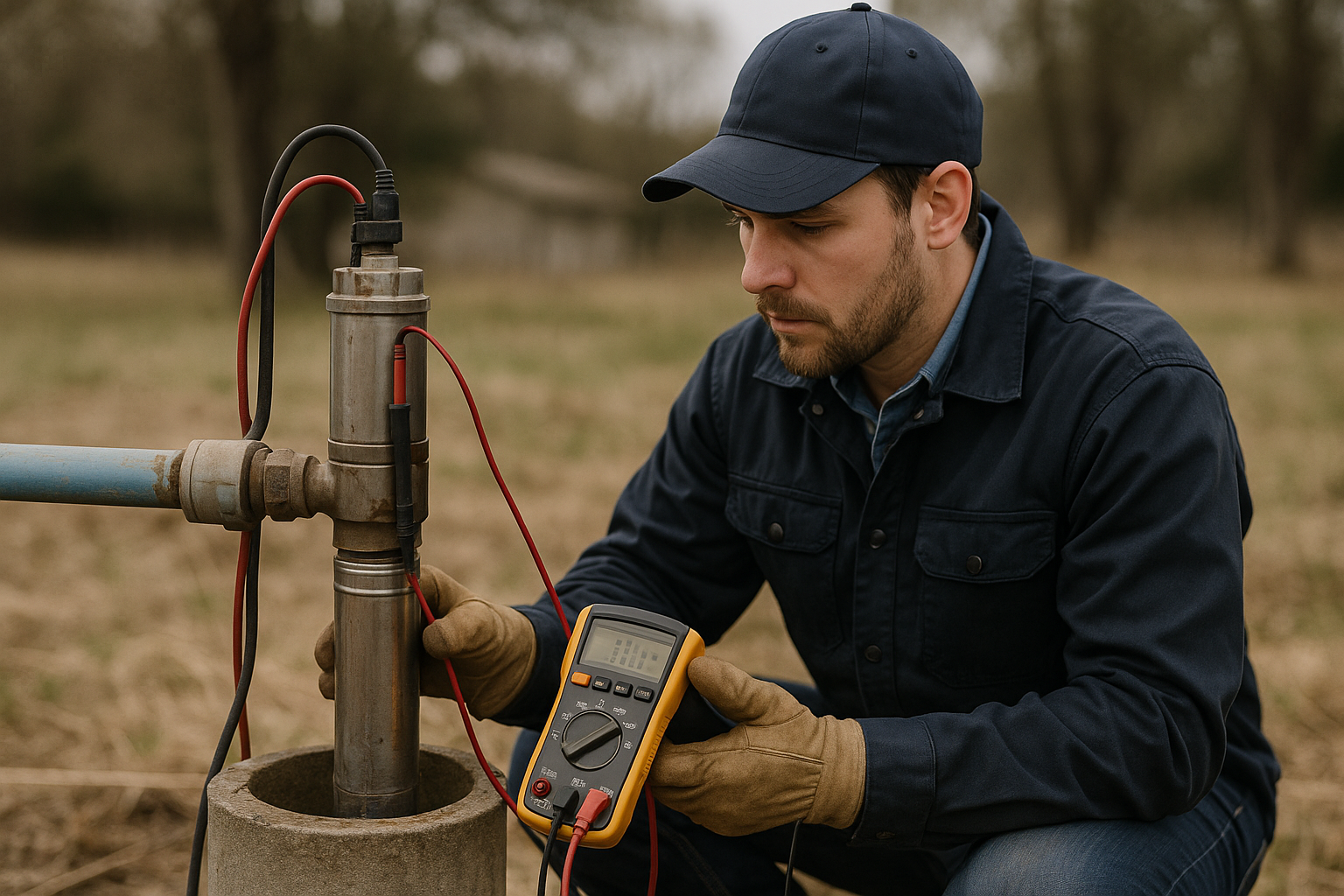
This is how many gallons per minute your well can sustainably produce. Most residential wells in San Diego County produce 5-15 GPM, though some shallow wells in drought-affected areas may only yield 2-5 GPM. You can find this information on your well completion report (the document from when your well was drilled) or by having a well contractor perform a yield test.
As a rule of thumb: if your well produces at least 5 GPM and recovers quickly, you can likely fill a pool. Wells under 3 GPM may struggle.
2. Pool Size and Total Gallons Needed
Common residential pool sizes:
- Small pool (12'x24'): 10,000-12,000 gallons
- Medium pool (16'x32'): 15,000-20,000 gallons
- Large pool (20'x40'): 25,000-30,000 gallons
- Kidney/freeform: Varies widely, typically 12,000-25,000 gallons
To calculate your pool's volume: Length × Width × Average Depth × 7.5 = gallons (for rectangular pools). For other shapes, use an online pool calculator or measure the actual fill volume.
3. Pump Duty Cycle and Capacity
Your well pump wasn't designed to run continuously for 24+ hours straight. Most submersible pumps are rated for intermittent duty—they need rest periods to cool down. Continuous operation risks overheating and premature failure. We'll cover the safe filling schedule below.
How Long Does It Take to Fill a Pool from a Well?
The math is straightforward, but the reality is more complicated:
Quick Math Example
Let's say you have:
- A 15,000-gallon pool to fill
- A well producing 10 GPM
15,000 gallons ÷ 10 GPM = 1,500 minutes = 25 hours of continuous pumping.
But here's the critical part: You should NOT run your well pump continuously for 25 hours. That's how you burn out a pump or run a well dry.
Safe Filling Schedule
Instead, follow this approach:
- Run for 2-4 hours, then rest for 1-2 hours. This gives your well time to recover and your pump time to cool.
- Monitor pressure and flow. If you notice pressure dropping or flow decreasing, stop immediately and let the well recover.
- Spread filling over several days. For a 15,000-gallon pool, plan on 4-6 hours of filling per day for 4-7 days.
- Do it during a low-usage period. Fill when household water use is minimal (overnight or early morning) so you're not competing with showers, laundry, etc.
- Avoid summer drought periods. Fill in spring or early summer when well water levels are highest.
Yes, this takes longer than continuous filling, but it protects your well system and ensures you don't end up with no water mid-fill.
Protecting Your Well Pump During Pool Filling
We've replaced dozens of burnt-out pumps for homeowners who filled pools improperly. Here's how to avoid becoming a statistic:
Warning Signs to Watch For
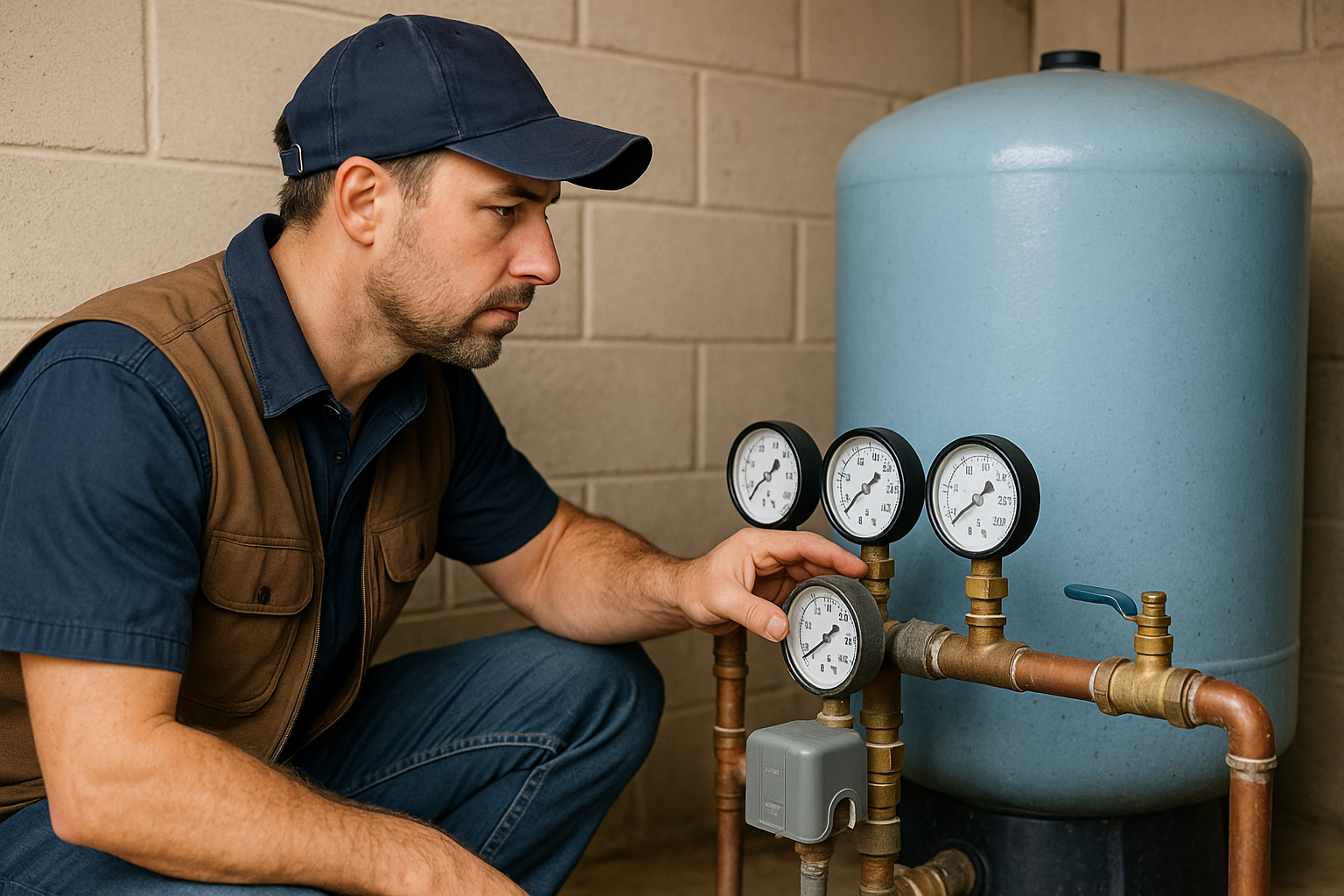
- Pressure drops: If your pressure gauge shows declining pressure, the well isn't keeping up—stop and let it recover
- Pump short-cycling: If the pump turns on and off rapidly, it may be running dry—shut it down immediately
- Air in the lines: Sputtering faucets or air bursts mean water level is too low
- Reduced flow: If water coming out slows to a trickle, stop filling
- Strange sounds: Grinding, whining, or loud humming from the pump area indicates trouble
Best Practices
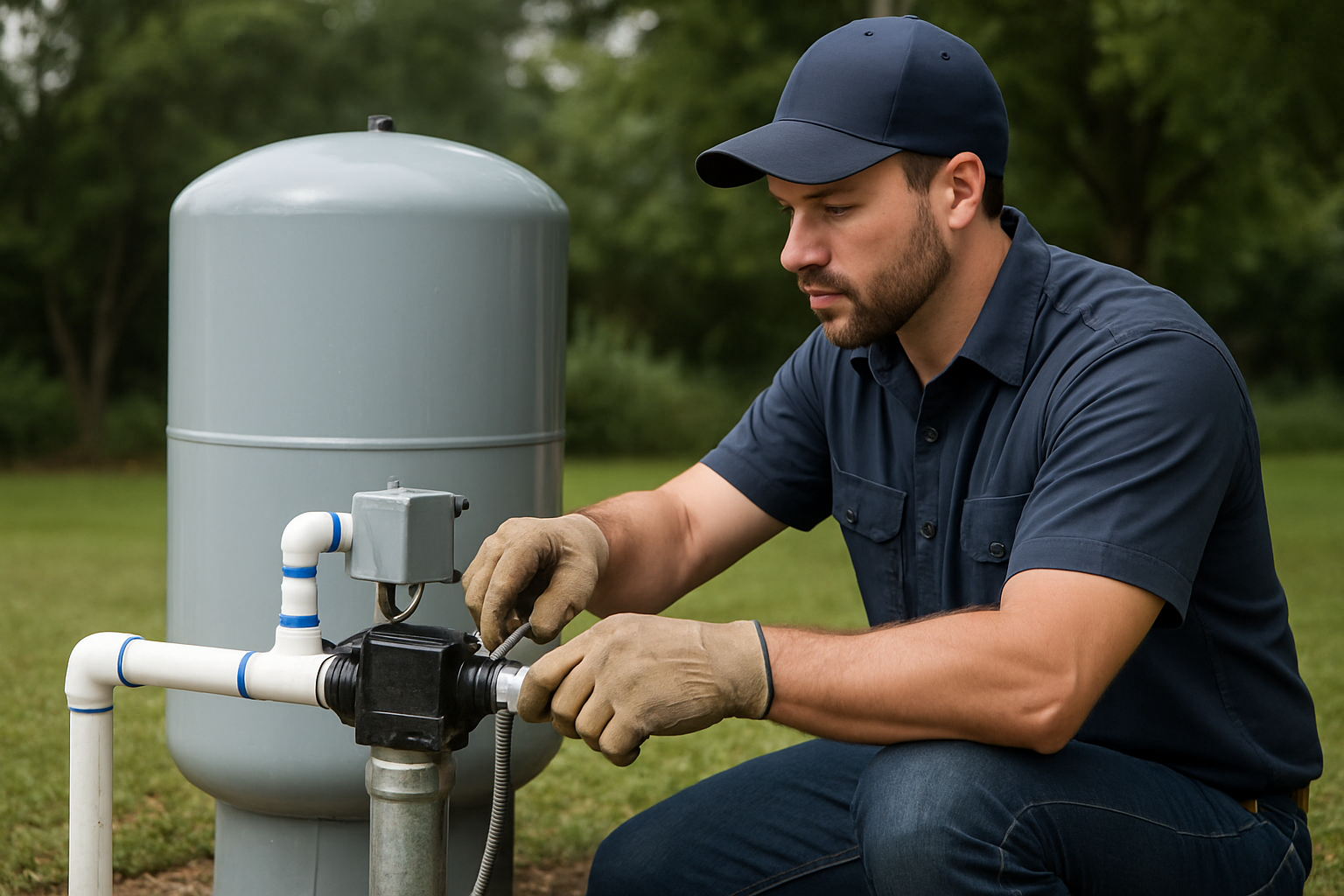
- Use a hose directly from an outdoor spigot rather than taxing your pressure tank system
- Check your pressure gauge before, during, and after each filling session
- Don't use other water while actively filling the pool (no showers, laundry, dishwasher)
- Install a flow meter temporarily to track exactly how much water you've pumped
- Have a backup plan in case your well can't keep up (water delivery contact info)
Well Water Quality Issues in Swimming Pools
This is where many well owners get surprised. Well water that's fine for drinking and household use can cause significant problems in a swimming pool. The issue isn't bacteria or safety—it's minerals and metals.
Common Well Water Problems in Pools
1. Iron
Iron is the #1 culprit. Even small amounts (as little as 0.2 ppm) can cause problems:
- Rust-colored water that won't clear despite filtering
- Brown or orange staining on pool walls, floor, and surfaces
- Stains that appear after adding chlorine (oxidizes the iron)
2. Manganese
Similar to iron, creates black or purple-brown staining. Less common but equally frustrating.
3. Copper
Can turn blonde hair green, cause green staining on pool surfaces, and create cloudy water. Usually comes from copper plumbing corrosion rather than the well itself.
4. Calcium Hardness
San Diego County well water is notoriously hard. High calcium causes:
- Scale buildup on pool surfaces, tile, and equipment
- Cloudy water that's hard to balance
- Shortened filter life
5. Tannins and Organics
Gives water a tea or yellow tint. More common in shallow wells or areas with organic soil.
Solutions for Well Water Pool Issues
Before filling:
- Test your well water at a pool store (bring a sample in a clean bottle)
- If iron is present, consider using a hose-end filter with an iron removal cartridge during filling
- For very hard water, some homeowners pre-soften fill water, though this is expensive
After filling:
- Add a metal sequestrant immediately before shocking or adding chlorine (prevents staining)
- Balance pH and alkalinity first before addressing other chemistry
- Use a good test kit and bring samples to a pool store for professional analysis
- Expect to use more chemicals initially to get water balanced
- Run your filter continuously for the first 48-72 hours
For iron-heavy water, consider installing an iron filter on your well system—it benefits both pool and household use.
Cost Comparison: Well Water vs. Water Delivery
Many homeowners wonder if they should just pay for water delivery instead of using their well. Here's the breakdown:
Water Delivery Costs
- Typical truckload: 6,000-7,000 gallons for $200-$400 depending on distance
- 15,000-gallon pool: 2-3 truckloads = $400-$1,200
- 20,000-gallon pool: 3-4 truckloads = $600-$1,600
Advantages of delivery: Fast (done in a few hours), no strain on your well, delivered water is often pre-treated and balanced.
Well Water Costs
- Electricity: $50-$100 total to fill a 15,000-gallon pool (varies by pump size and efficiency)
- Water treatment chemicals: $50-$150 for metal sequestrants, pH adjusters, etc.
- Potential filter costs: $20-$100 if using in-line filtration
- Total: $120-$350
Savings: $300-$1,000+ compared to delivery, but requires more time and attention.
When to Choose Delivery Instead
- Your well produces less than 5 GPM
- You're in a drought period with low water levels
- Your well water has severe iron or quality issues
- You need the pool filled quickly (for an event, etc.)
- Your pump is old or showing signs of wear
- You'd rather pay for convenience
Step-by-Step: How to Safely Fill Your Pool from Your Well
Ready to fill? Follow this process:
Phase 1: Preparation
- Test your well water at a pool store or lab (get iron, hardness, pH, copper, and metals tested)
- Check your well's recovery rate and recent performance
- Inspect your pressure gauge and note normal operating pressure
- Purchase metal sequestrant and any needed chemicals ahead of time
- Clean your pool thoroughly before filling
- Choose early spring for filling (highest water table)
Phase 2: Filling
- Day 1: Run hose for 3-4 hours, then shut off for 2-3 hours to let well recover. Repeat once if all is well.
- Day 2-5: Continue this pattern, monitoring pressure and flow each session
- Signs to stop immediately: Pressure drops, air in lines, reduced flow, strange pump sounds
- If problems arise: Give the well 12-24 hours to fully recover before resuming
Phase 3: Post-Fill Treatment
- Add metal sequestrant as soon as pool is full (BEFORE chlorine or shock)
- Run filter continuously for 48 hours
- Test and balance pH and alkalinity first
- Then address calcium hardness, chlorine, and stabilizer
- Expect water to take 3-7 days to fully balance and clear
What If Your Well Can't Handle It?
If you start filling and run into problems—pressure drops, pump issues, or insufficient recovery—don't panic. Here are your options:
- Slow down: Extend the timeline, do shorter sessions with longer breaks
- Partial fill + delivery: Fill halfway with your well, then finish with a delivery truck
- Well rehabilitation: If your well has declined in performance, cleaning or rehabilitation may help
- Professional assessment: Call us to evaluate your well's capacity and condition
Maintenance and Future Fills
Once your pool is initially filled, maintenance is much easier. You'll only need to add water to compensate for evaporation and splashing—typically 50-200 gallons per week in summer. This is well within most wells' capacity and puts minimal strain on your system.
When to Call a Professional
Contact a well service professional before filling if:
- You don't know your well's recovery rate or capacity
- Your well is older than 15 years without recent service
- You've noticed declining performance or pressure
- You want a professional yield test and assessment
- You experience problems during filling
At SCWS, we've helped hundreds of Southern California homeowners assess their wells for pool filling. We can perform yield tests, evaluate your system's condition, and let you know whether your well can safely handle the demand. If issues arise, we provide same-day service throughout San Diego, Riverside, and San Bernardino counties.
Need Help? Call SCWS
Our expert technicians serve San Diego, Riverside, and San Bernardino counties.
Call (760) 440-8520Final Thoughts
Filling a swimming pool from your well is entirely doable for most homeowners, but it requires patience, monitoring, and the right approach. Take your time, protect your pump, address water quality issues, and don't hesitate to call for professional help if you encounter problems. Your well is a valuable asset—treat it right, and it will serve both your household and your pool for decades to come.