
How to Read Your Well Pump Pressure Gauge

Understanding your pressure gauge readings. Normal ranges, warning signs, and what they mean.
📋 In This Guide
Need help? Call us:
(760) 440-8520Understanding Your Pressure Gauge Basics
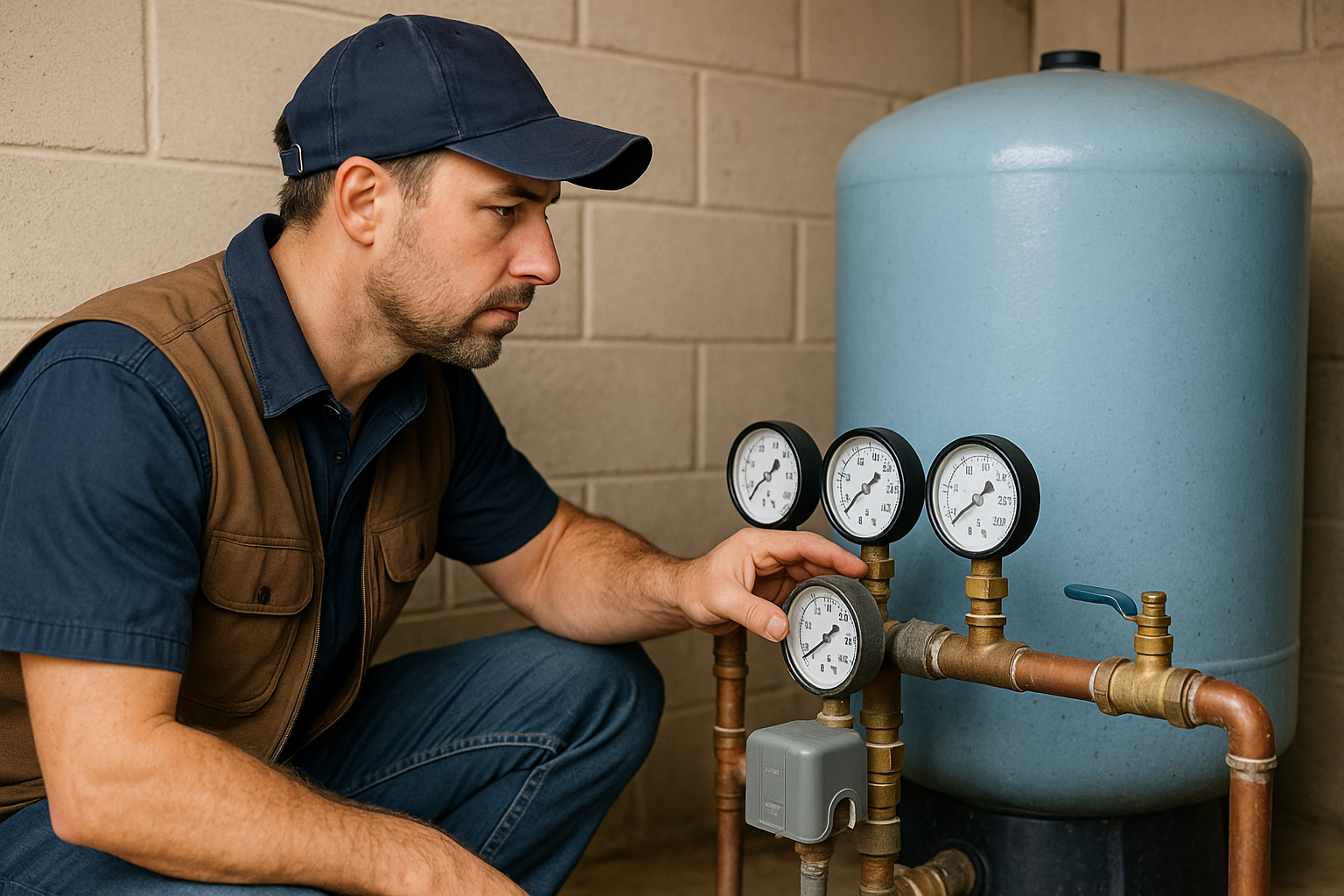
Your well system's pressure gauge is mounted on or near the pressure tank and measures water pressure in pounds per square inch (PSI). Think of it as your well system's vital signs monitor—it tells you whether everything is functioning normally. The gauge face typically shows numbers from 0 to 100 PSI, with the needle indicating current system pressure. Most residential systems operate in the 30-70 PSI range. Pressure below 20 PSI usually indicates a problem, while pressure above 80 PSI can damage fixtures and appliances. Learning to read and interpret your gauge empowers you to detect problems early, saving money on emergency repairs. SCWS recommends homeowners familiarize themselves with their specific gauge and normal operating ranges.
Normal vs. Abnormal Gauge Readings
Normal operation shows pressure gradually dropping when water is used and steadily rising when the pump runs. The pump should start at your cut-in pressure and stop at cut-out, typically cycling a few times during heavy use periods. Abnormal readings include: pressure dropping below cut-in without pump activation (power or pump failure), pressure never reaching cut-out (pump weakness, leak, or low well yield), rapid pressure fluctuations (waterlogged tank), extremely slow pressure build-up (failing pump or clogged pipes), or pressure spiking above normal cut-out (stuck pressure switch contacts). Any reading stuck at zero or above 80 PSI requires immediate investigation. Document unusual readings—patterns help SCWS technicians diagnose issues faster.
The Pressure Cycle Explained
Understanding your system's pressure cycle reveals how everything works together. When system pressure drops to the cut-in point (typically 30 or 40 PSI), the pressure switch closes and activates the pump. Water flows into the pressure tank, compressing the air bladder inside, which raises system pressure. When pressure reaches cut-out (typically 50-70 PSI), the switch opens and the pump stops. The pressurized tank then supplies water to your home, gradually losing pressure until the cycle repeats. A healthy cycle takes several minutes—rapid cycling indicates problems. Watch your gauge through a complete cycle: note how long pressure takes to build, whether it reaches cut-out, and how long pressure holds without use. These observations help identify issues early.
Troubleshooting Common Gauge Issues
Sometimes the gauge itself is the problem, not your well system. Test a suspicious gauge by noting the reading, then running water until the pump kicks on—if the gauge doesn't change, it's likely stuck. Tap the gauge face gently; stuck needles sometimes free up. Gauges exposed to vibration or moisture fail over time. If your gauge reads inconsistently or seems inaccurate, replace it—they're inexpensive insurance. When replacing a gauge, use pipe thread sealant and hand-tighten to avoid cracking the fitting. After installation, verify readings match expected behavior. Consider installing a gauge guard in exposed locations. If your new gauge immediately shows abnormal readings, the problem lies elsewhere in your system—time to call Southern California Well Service.
Using Gauge Readings for System Health Monitoring
Your pressure gauge enables proactive maintenance rather than reactive repairs. Create a simple log noting date, cut-in pressure, cut-out pressure, and cycle time. Over months, patterns emerge: gradually declining cut-out pressure suggests pump wear; increasingly frequent cycling indicates tank problems; difficulty reaching cut-out during summer may reveal declining well yield. These trends let you schedule repairs conveniently rather than facing emergency situations. Share your log with SCWS during service visits—this data helps technicians diagnose issues and track system health over time. Remember, a well-maintained system delivers reliable water for decades, and your pressure gauge is the window into that system's health.
We service all major pump brands including Franklin Electric, Grundfos, Goulds (Xylem), and Sta-Rite (Pentair). Our trucks carry common parts and components for same-day repairs.
Frequently Asked Questions
What is the normal pressure range for a well system?
Most residential well systems operate between 30-60 PSI or 40-70 PSI. The two numbers represent your cut-in pressure (when the pump starts) and cut-out pressure (when it stops). A 40/60 setting is most common in Southern California homes. Your pressure gauge should fluctuate between these numbers during normal operation—dropping as you use water and rising as the pump refills the tank. Pressure consistently outside this range indicates a problem.
Why does my pressure gauge needle bounce or vibrate?
A bouncing needle typically indicates a waterlogged pressure tank—meaning the air cushion inside has been absorbed and the tank is full of water. Without air cushion, pressure changes occur rapidly with each pump cycle, causing rapid short-cycling and needle bouncing. This damages your pump through excessive starting and stopping. Another cause is a failing gauge. If adding air to the tank doesn't fix the bouncing, the gauge itself may need replacement. Either way, short-cycling requires prompt attention.
What does it mean if my gauge shows zero pressure?
Zero pressure indicates several possible issues: the pump may have lost its prime and isn't moving water, the pump motor may have failed or lost power, the well may be dry or water level too low, or the gauge itself could be broken. First, check if the pump is running—listen for motor sounds. Check your circuit breaker. If the pump runs but shows zero pressure, it's likely a priming or mechanical issue. A stuck-at-zero gauge with normal water flow means replace the gauge.
Should my pressure gauge needle move when I run water?
Yes, absolutely. When you turn on faucets, the needle should drop as water leaves the pressure tank. Once pressure drops to the cut-in point (typically 30 or 40 PSI), the pump activates and pressure slowly climbs. When faucets close and pressure reaches cut-out (50-70 PSI), the pump stops. If the needle doesn't move at all while water runs, your gauge is likely stuck or defective. If it drops but never rises, your pump isn't working properly.
How often should I check my well pressure gauge?
Check your pressure gauge at least monthly as part of basic well system monitoring. Make it a habit whenever you're near the pressure tank. During summer months when water usage increases, weekly checks help catch problems early. Also check after power outages, storms, or any period of non-use. Document your readings—consistent pressure within normal ranges indicates a healthy system. Gradual changes over time can indicate developing problems like pump wear or tank issues.
Get Expert Help
Contact Southern California Well Service for professional assistance.
Call (760) 440-8520Serving San Diego, Riverside & San Bernardino Counties
Related Articles
Continue learning about well maintenance and troubleshooting
Low Water Pressure From Well: Complete Fix Guide
Diagnose and solve low pressure problems
Well Pressure Switch: Settings, Adjustment & Replacement
Everything about pressure switches
Pressure Tank Maintenance: Complete Guide
Keep your pressure tank working properly