
Hydrofracturing Well Services in Allied Gardens, CA
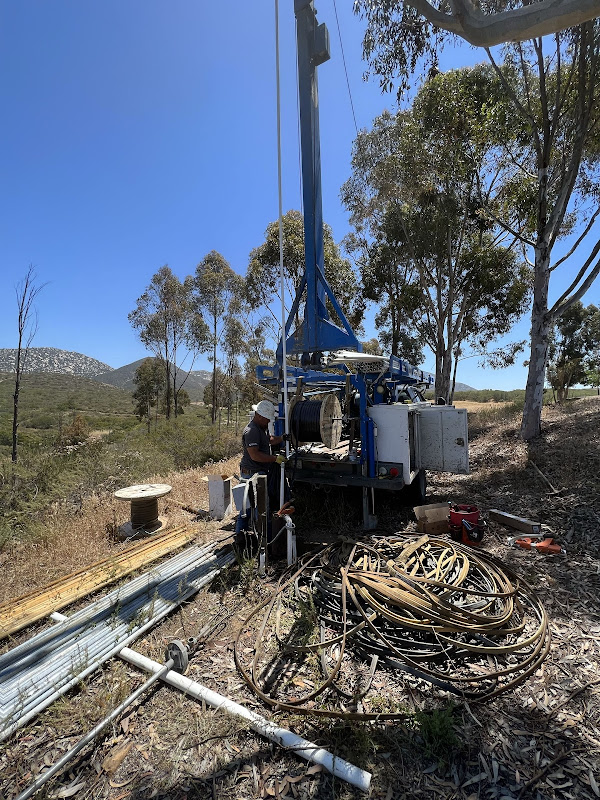
Is your well in Allied Gardens producing less water than it used to? Hydrofracturing (also called hydrofracking) could be the solution to restore and even improve your well's water production without the expense of drilling a new well.
📋 In This Guide
- What is Hydrofracturing?
- Signs Your Allied Gardens Well Needs Hydrofracturing
- The Hydrofracturing Process
- Cost vs. New Well Drilling in Allied Gardens
- Why Choose SCWS for Hydrofracturing?
- Related Articles
Southern California Well Service provides professional hydrofracturing services throughout San Diego County to help homeowners and property owners increase their well yield.
What is Hydrofracturing?
Hydrofracturing is a well rehabilitation technique that uses high-pressure water to clean and expand existing fractures in the bedrock surrounding your well. This process:
- Clears mineral deposits and sediment blocking water flow
- Opens new pathways for groundwater to reach your well
- Can increase well yield by 2-10 times in many cases
- Extends the life of your existing well
Unlike oil and gas fracking, well hydrofracturing uses only clean water—no chemicals are involved.
Signs Your Allied Gardens Well Needs Hydrofracturing
- Declining water production over time
- Well runs dry during peak usage
- Slow recovery rate after pumping
- Pump cycling on and off frequently
- Lower water pressure than previous years
The Hydrofracturing Process
- Initial Assessment: We evaluate your well's current yield and condition
- Equipment Setup: Specialized high-pressure equipment is positioned at your well
- Isolation: Packers seal off sections of the well for targeted treatment
- Pressurization: Water is pumped at 500-3,000 PSI to fracture bedrock
- Development: Well is cleaned and tested for improved yield
Cost vs. New Well Drilling in Allied Gardens
In Allied Gardens, drilling a new well can cost $15,000-$50,000+ depending on depth. Hydrofracturing typically costs a fraction of that—often $3,000-$8,000—making it an excellent first option before considering a new well.
Many Allied Gardens wells that appear to be "going dry" can be successfully rehabilitated through hydrofracturing, saving homeowners tens of thousands of dollars.
Why Choose SCWS for Hydrofracturing?
- Founded 2020 · 60+ Years Family Heritage: We've rehabilitated thousands of wells across Southern California
- Licensed C-57 Contractor. CSLB License #1086994. Fully licensed for well drilling and service in California
- Specialized Equipment: Professional-grade hydrofracturing equipment
- Free Estimates: We'll assess your well and provide honest recommendations
Need Help With Your Well in Allied Gardens?
Our expert technicians serve Allied Gardens and all of San Diego County with professional well services.
Related Articles
Continue learning about well maintenance and troubleshooting

Signs Your Well Pump Is Failing
Catch pump problems early before you lose water completely.

Low Water Pressure From Well
Diagnose and fix pressure problems before they get worse.

Well Maintenance Guide
Keep your well running smoothly with regular maintenance.
Our Locations
1077 Main St, Ramona, CA 92065
57174 CA-371 (US Hwy 79), Anza, CA 92539
Hydrofracturing for Allied Gardens-Area Wells
Allied Gardens is a mid-century residential neighborhood in the eastern part of the city of San Diego, tucked between Mission Gorge, Del Cerro, and Grantville along the San Diego River corridor. Most homes here are on city water, but the surrounding eastern San Diego County terrain, the rocky slopes climbing toward Mission Trails Regional Park and the canyons that drain toward the river, is the kind of fractured-rock country where private wells are common just a short drive out. When property owners in and around the Allied Gardens area depend on a well and watch its output fade, hydrofracturing is one of the most dependable ways to bring that yield back without paying for an entirely new borehole.
The bedrock under this part of San Diego County is dominated by the granitic and metamorphic rock of the Peninsular Ranges batholith, with the distinctive weathered "rotten granite" outcrops you can see exposed all over Mission Trails. Wells in this rock do not draw from a sandy reservoir; they draw from fractures, the joints and seams in otherwise solid stone. When those fractures silt up or the regional water table dips after a dry stretch, production drops. Hydrofracturing addresses the problem at its source by reopening and extending that fracture network.
How Hydrofracturing Works
The technique is simple but requires the right equipment and experience. Our crew lowers an inflatable packer into the well, seals off a target section of the borehole, and then injects clean water under high pressure, generally 1,500 to 3,000 PSI and occasionally more for tight, deep rock. The pressurized water surges into existing fractures in the granite, scouring out the clay and mineral scale that have clogged them and widening hairline cracks so they link up with larger water-bearing zones. The result is a more open, better-connected network feeding your well.
Two points matter for Allied Gardens-area property owners. First, only clean water is used; there are no chemicals, no additives, and nothing that could contaminate your groundwater. Second, the packer system lets us isolate and treat one zone at a time, so we concentrate pressure exactly where the rock is most promising instead of wasting energy on solid stone. A typical treatment runs four to eight hours.
Common Causes of Declining Yield Near Allied Gardens
In eastern San Diego County's fractured granite, a handful of issues account for most low-yield calls:
- Fracture plugging — over years of pumping, fine sediment migrates into the cracks and slowly strangles flow.
- Drought-related decline — fractured-rock aquifers store relatively little water, so a few dry winters can pull the water table down sharply.
- Disappointing new wells — a freshly drilled borehole that intersected only a few open fractures often responds very well to hydrofracturing.
- Peak-demand shortfalls — the well keeps up most of the year but falls behind during hot months when irrigation demand spikes.
What to Check and Signs You May Need It
Before assuming the worst, look for these telltale signs that your well is struggling:
- Air spitting from faucets, indicating the pump is pulling the well down to the screen.
- The pump running noticeably longer, or short-cycling on and off, to meet the same demand.
- A drop in pressure during showers or while running multiple fixtures.
- Cloudy or gritty water after heavy use, which clears once the well rests.
- Longer recovery time, the well taking much longer than it used to to refill.
It is also worth confirming the basics first: a tripped pressure switch, a waterlogged pressure tank, or a tired pump can mimic a low-yield well. A proper diagnostic separates a true yield problem from an equipment problem.
When to Call a Professional
Hydrofracturing is not a homeowner project, it involves high-pressure equipment, downhole packers, and an informed judgment about whether your rock formation will respond. Bring in a licensed C-57 contractor when your yield is clearly trending down, when a new well underperformed expectations, or when you are deciding between rehabilitating and replacing. A good contractor will also rule out cheaper fixes first so you are not paying for the wrong solution.
Hydrofracturing Costs Near Allied Gardens
Most residential hydrofracturing jobs in the greater San Diego County area run $3,000 to $8,000, depending on depth, the number of zones treated, and site access. A new turnkey well, by contrast, typically runs $18,000 to $42,000 here, which is why hydrofracturing is almost always worth trying first. When other work is needed, a replacement pump runs $2,500 to $5,500, a pressure tank $600 to $1,500, and a pressure switch $150 to $350. Our diagnostic visit is $125 and is credited toward any work you approve.
Across San Diego County's decomposed granite and fractured crystalline rock, hydrofracturing improves yield in roughly 70 to 80 percent of wells, with typical gains of two to five times the starting flow rate. Wells in solid fractured rock respond best; the occasional well finishing in loose sand is not a candidate, and we will say so up front.
Hydrofracturing Compared to Other Options
When a well in the Allied Gardens area underperforms, owners generally weigh three paths: rehabilitate the existing well, deepen it, or drill a new one. Hydrofracturing is usually the smartest first step because it is the least invasive and least expensive of the three, and it often makes the other two unnecessary.
- Versus deepening: Deepening pushes the borehole farther into the rock in hope of finding new fractures. It can work, but it is more expensive and offers no guarantee of hitting water-bearing zones. Hydrofracturing instead makes better use of the fractures the well already touches.
- Versus a new well: A new well is a major investment and, in fractured-rock country, carries its own yield uncertainty until the bit is in the ground. Rehabilitating a proven borehole first protects you from spending tens of thousands of dollars before you have to.
- Versus doing nothing: Low yield rarely improves on its own. Fractures continue to silt up and the problem compounds, often leading to a dry well at the worst possible time. Acting early is cheaper and less stressful.
For most fractured-rock wells around eastern San Diego County, the math favors trying hydrofracturing first. It is the option a reputable contractor recommends when the well is a reasonable candidate, precisely because it so often solves the problem at a fraction of the alternative cost.
What Results Look Like
After a successful treatment, the most common change Allied Gardens-area owners notice is steadier pressure and a pump that no longer struggles to keep up. A well that used to run dry by mid-afternoon during summer irrigation can return to comfortable, all-day capacity. We hand over a documented before-and-after comparison so you can see the gain in gallons per minute and recovery rate rather than taking our word for it.
Serving Allied Gardens and All of San Diego County
Southern California Well Service has founded in 2020, with 60+ years of family heritage rehabilitating wells throughout San Diego County, from the eastern city neighborhoods near Allied Gardens, Del Cerro, and Grantville out to the rural backcountry where private wells are the rule. Working from our Ramona office at 1077 Main St, we cover the Allied Gardens area and the wider county, with same-day emergency response when a property has lost water. We are licensed C-57, CSLB #1086994, and hold CSLB #1086994 earned through straight answers and lasting results.
Frequently Asked Questions
Is hydrofracturing safe for my groundwater near Allied Gardens?
Yes. The process uses only clean water under pressure. No chemicals, sand, or additives are introduced, so there is no risk of contaminating your aquifer or your neighbors' wells.
How much can I expect my yield to improve?
Across San Diego County's fractured-rock wells, a successful treatment typically delivers two to five times the pre-treatment flow rate. We document your before-and-after numbers with flow tests so the improvement is measurable, not guesswork.
Will hydrofracturing harm my well casing?
No. We inspect the casing on camera first and isolate the treatment zone with packers, directing the pressure into the open rock below the casing rather than against intact pipe.
How long does the whole process take?
The treatment itself usually takes four to eight hours. After a short settling period and a re-test, most wells are back in normal service within 24 to 48 hours.
How do I know whether my well will respond?
Wells drilled into fractured granite or crystalline rock, which is most wells in eastern San Diego County, are strong candidates. We confirm with a flow test and a downhole camera survey before recommending treatment.
Is hydrofracturing cheaper than drilling a new well?
Almost always. At $3,000 to $8,000 it is a fraction of the $18,000 to $42,000 cost of a new well, which is why we recommend trying it first on any well that is a reasonable candidate.
Get Your Allied Gardens-Area Well Flowing Again
If a well you rely on near Allied Gardens is producing less than it should, call Southern California Well Service at (760) 440-8520 or text (760) 219-5877 to book a diagnostic and a free hydrofracturing estimate. We will give you an honest assessment and a clear path forward.