
Hydrofracturing Well Services in Bay Ho, CA
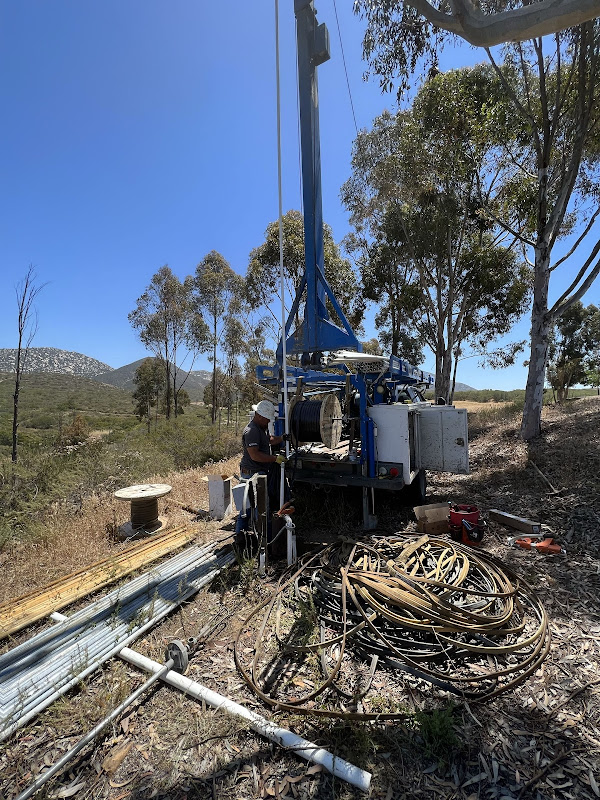
Is your well in Bay Ho producing less water than it used to? Hydrofracturing (also called hydrofracking) could be the solution to restore and even improve your well's water production without the expense of drilling a new well.
📋 In This Guide
- What is Hydrofracturing?
- Signs Your Bay Ho Well Needs Hydrofracturing
- The Hydrofracturing Process
- Cost vs. New Well Drilling in Bay Ho
- Why Choose SCWS for Hydrofracturing?
- Related Articles
Southern California Well Service provides professional hydrofracturing services throughout San Diego County to help homeowners and property owners increase their well yield.
What is Hydrofracturing?
Hydrofracturing is a well rehabilitation technique that uses high-pressure water to clean and expand existing fractures in the bedrock surrounding your well. This process:
- Clears mineral deposits and sediment blocking water flow
- Opens new pathways for groundwater to reach your well
- Can increase well yield by 2-10 times in many cases
- Extends the life of your existing well
Unlike oil and gas fracking, well hydrofracturing uses only clean water—no chemicals are involved.
Signs Your Bay Ho Well Needs Hydrofracturing
- Declining water production over time
- Well runs dry during peak usage
- Slow recovery rate after pumping
- Pump cycling on and off frequently
- Lower water pressure than previous years
The Hydrofracturing Process
- Initial Assessment: We evaluate your well's current yield and condition
- Equipment Setup: Specialized high-pressure equipment is positioned at your well
- Isolation: Packers seal off sections of the well for targeted treatment
- Pressurization: Water is pumped at 500-3,000 PSI to fracture bedrock
- Development: Well is cleaned and tested for improved yield
Cost vs. New Well Drilling in Bay Ho
In Bay Ho, drilling a new well can cost $15,000-$50,000+ depending on depth. Hydrofracturing typically costs a fraction of that—often $3,000-$8,000—making it an excellent first option before considering a new well.
Many Bay Ho wells that appear to be "going dry" can be successfully rehabilitated through hydrofracturing, saving homeowners tens of thousands of dollars.
Why Choose SCWS for Hydrofracturing?
- Founded 2020 · 60+ Years Family Heritage: We've rehabilitated thousands of wells across Southern California
- Licensed C-57 Contractor. CSLB License #1086994. Fully licensed for well drilling and service in California
- Specialized Equipment: Professional-grade hydrofracturing equipment
- Free Estimates: We'll assess your well and provide honest recommendations
Need Help With Your Well in Bay Ho?
Our expert technicians serve Bay Ho and all of San Diego County with professional well services.
Related Articles
Continue learning about well maintenance and troubleshooting

Signs Your Well Pump Is Failing
Catch pump problems early before you lose water completely.

Low Water Pressure From Well
Diagnose and fix pressure problems before they get worse.

Well Maintenance Guide
Keep your well running smoothly with regular maintenance.
Our Locations
1077 Main St, Ramona, CA 92065
57174 CA-371 (US Hwy 79), Anza, CA 92539
Hydrofracturing for Wells in the Bay Ho Area
Bay Ho is a quiet residential neighborhood in the Clairemont area of San Diego, sitting on the mesas and canyon rims above Mission Bay between Bay Park, Clairemont Mesa, and Morena. Homes here are served by city water, but Bay Ho is part of a San Diego County whose interior, the foothills and backcountry beyond the coastal mesas, is built on fractured granite where private wells are the primary water source for tens of thousands of rural residents. When one of those wells starts producing less than it used to, hydrofracturing is one of the most effective and economical ways to restore yield without committing to a brand-new well.
What makes San Diego County wells distinctive is that they draw from fractures rather than from a thick sandy aquifer. The Peninsular Ranges batholith underlying the region is hard crystalline rock, cut by joints and seams through which groundwater slowly migrates. The mesas and canyons around Bay Ho hint at the same geology that governs the county's well country: water-bearing rock that depends on an open fracture network. When that network silts up or the water table falls during dry years, yield drops, and hydrofracturing is the rehabilitation technique designed for exactly this rock.
How Hydrofracturing Works
The method is straightforward but demands proper equipment and experience. A technician lowers an inflatable packer into the well casing and inflates it to seal off a target section of the borehole. Clean water is then injected at high pressure, generally 1,500 to 3,000 PSI, and higher when the rock is deep or especially tight. The pressurized water drives into the existing fractures in the granite, flushing out clay, silt, and mineral scale and widening hairline cracks so they connect into a larger water-bearing system. The well returns to service with more open, better-linked pathways supplying it.
Two facts matter most for Bay Ho-area property owners. The process uses nothing but clean water, no chemicals, no sand proppants, no additives, so it cannot contaminate your groundwater. And the packer system lets the crew isolate and treat one zone at a time, concentrating pressure where the rock is most productive instead of wasting it on solid stone. Most treatments take four to eight hours, and the well can be re-tested within 24 to 48 hours.
The Treatment Step by Step
- Baseline flow test to record current yield and static water level.
- Downhole camera inspection to verify casing condition and identify the best fracture zones to target.
- Zone-by-zone pressurization with packers to direct the clean water precisely.
- Re-development and re-test to clear the well and confirm the improvement.
Common Causes of Declining Yield
In San Diego County's fractured-rock terrain, most low-yield situations come down to a few recurring causes:
- Sediment-plugged fractures — fine particles work into the cracks over years of pumping and slowly cut off flow.
- Drought drawdown — fractured-rock aquifers store relatively little water, so a string of dry winters can drop the water table quickly and strand shallow fractures.
- Disappointing new wells — a borehole that reached rock but few open fractures is often the best hydrofracturing candidate.
- Peak-season shortfalls — a well that copes in winter may struggle under heavy summer irrigation.
What to Check and Signs You Need It
The following symptoms point to a well running low rather than a simple equipment failure:
- Faucets spitting air during heavy household use.
- A pump that runs far longer than it used to, or short-cycles repeatedly.
- Pressure that sags when multiple fixtures run at once.
- Cloudy or gritty water after a big draw that clears with rest.
- A recovery time, the period the well needs to refill, that has noticeably lengthened.
Rule out the simple causes first. A stuck pressure switch, a waterlogged tank, or an aging pump can all mimic a low-yield well. A thorough diagnostic distinguishes a real yield shortfall from a mechanical fault and keeps you from paying for the wrong repair.
When to Call a Professional
Hydrofracturing relies on high-pressure equipment, downhole packers, and a trained judgment about whether your rock will respond, so it is firmly a job for a licensed contractor. Call a C-57 well contractor when your yield is clearly falling, when a new well underdelivered, or when you are weighing rehabilitation against the expense of drilling new. A good contractor will also confirm the issue is the well itself and not a fixable mechanical problem before proceeding.
Hydrofracturing Costs in San Diego County
Residential hydrofracturing in San Diego County generally runs $3,000 to $8,000, depending on well depth, the number of zones treated, and access at the site. A new turnkey well, by contrast, typically runs $18,000 to $42,000 here, which is why hydrofracturing is almost always the smart first option. When other work is needed, a replacement pump runs $2,500 to $5,500, a pressure tank $600 to $1,500, and a pressure switch $150 to $350. Our diagnostic visit is $125 and is credited toward any work you approve.
In the county's decomposed granite and fractured crystalline rock, hydrofracturing improves yield in roughly 70 to 80 percent of wells, with typical gains of two to five times the pre-treatment flow rate. Wells in solid fractured rock respond best; the rare well finishing in loose sand or gravel is not a candidate, and we will tell you so honestly.
How It Compares to Other Options
When a well underperforms, owners usually weigh three paths: rehabilitate, deepen, or drill new. Hydrofracturing is the natural starting point because it is the least invasive and least costly, and it frequently makes the alternatives unnecessary. Deepening costs more and bets on finding new fractures lower in the borehole. A new well is a large investment that carries its own yield uncertainty until completion. And leaving the problem alone only lets the fractures keep silting up until the well fails. For a sound fractured-rock well, hydrofracturing offers the best mix of low cost, low risk, and strong likelihood of success.
Protecting Your Yield Over Time
A successful treatment can keep a Bay Ho-area well producing for years, and a few habits extend that benefit. Avoid over-pumping during the driest stretches, keep a simple log of flow rate and recovery time so you can catch a slow decline early, have the pump and pressure system checked periodically, and stagger heavy irrigation during drought rather than running everything together. These practices, paired with a well-executed treatment, help most fractured-rock wells stay reliable for the long term.
Serving the Bay Ho Area and All of San Diego County
Southern California Well Service brings founded in 2020 of well rehabilitation experience to property owners across San Diego County, from the Clairemont-area neighborhoods near Bay Ho, Bay Park, and Morena out to the rural backcountry where wells are indispensable. Working from our Ramona office at 1077 Main St, we serve the Bay Ho area and the entire county, including same-day emergency response for properties that have lost water. We are licensed C-57, CSLB #1086994, and hold CSLB #1086994 built on honest assessments and durable results.
Frequently Asked Questions
Does hydrofracturing put chemicals in my water?
No. The process uses only clean water under pressure. There are no chemicals, sand, or additives, and no risk of contaminating your groundwater.
How much can my yield improve?
Across San Diego County's fractured-rock wells, a successful treatment usually delivers two to five times the pre-treatment flow rate, which we document with before-and-after flow tests.
Will the high pressure damage my casing?
No. We inspect the casing on camera and isolate the treatment zone with packers, so the pressure works on the open rock below the casing rather than against intact pipe.
How long is my well out of service?
The treatment takes four to eight hours, plus a short settling and re-test period. Most wells are back to normal within 24 to 48 hours.
How do I know my well is a candidate?
Wells drilled into fractured granite or crystalline rock, which is most of San Diego County, are good candidates. We confirm with a flow test and a downhole camera inspection first.
Why try hydrofracturing before a new well?
Because it costs $3,000 to $8,000 versus $18,000 to $42,000 for a new well, and it succeeds on most candidate wells, frequently making a new well unnecessary.
Restore Your Bay Ho-Area Well Today
If a well you depend on near Bay Ho is losing yield, call Southern California Well Service at (760) 440-8520 or text (760) 219-5877 to schedule a diagnostic and a free hydrofracturing estimate. We will give you a candid evaluation and a clear plan to get your water flowing again.