
Hydrofracturing Well Services in Cherry Valley, CA
Is your well in Cherry Valley producing less water than it used to? Hydrofracturing (also called hydrofracking) could be the solution to restore and even improve your well's water production without the expense of drilling a new well.
📋 In This Guide
- What is Hydrofracturing?
- Signs Your Cherry Valley Well Needs Hydrofracturing
- The Hydrofracturing Process
- Cost vs. New Well Drilling in Cherry Valley
- Why Choose SCWS for Hydrofracturing?
- Related Articles
Southern California Well Service provides professional hydrofracturing services throughout Riverside County to help homeowners and property owners increase their well yield.
What is Hydrofracturing?
Hydrofracturing is a well rehabilitation technique that uses high-pressure water to clean and expand existing fractures in the bedrock surrounding your well. This process:
- Clears mineral deposits and sediment blocking water flow
- Opens new pathways for groundwater to reach your well
- Can increase well yield by 2-10 times in many cases
- Extends the life of your existing well
Unlike oil and gas fracking, well hydrofracturing uses only clean water—no chemicals are involved.
Signs Your Cherry Valley Well Needs Hydrofracturing
- Declining water production over time
- Well runs dry during peak usage
- Slow recovery rate after pumping
- Pump cycling on and off frequently
- Lower water pressure than previous years
The Hydrofracturing Process
- Initial Assessment: We evaluate your well's current yield and condition
- Equipment Setup: Specialized high-pressure equipment is positioned at your well
- Isolation: Packers seal off sections of the well for targeted treatment
- Pressurization: Water is pumped at 500-3,000 PSI to fracture bedrock
- Development: Well is cleaned and tested for improved yield
Cost vs. New Well Drilling in Cherry Valley
In Cherry Valley, drilling a new well can cost $15,000-$50,000+ depending on depth. Hydrofracturing typically costs a fraction of that—often $3,000-$8,000—making it an excellent first option before considering a new well.
Many Cherry Valley wells that appear to be "going dry" can be successfully rehabilitated through hydrofracturing, saving homeowners tens of thousands of dollars.
Why Choose SCWS for Hydrofracturing?
- Founded 2020 · 60+ Years Family Heritage: We've rehabilitated thousands of wells across Southern California
- Licensed C-57 Contractor. CSLB License #1086994. Fully licensed for well drilling and service in California
- Specialized Equipment: Professional-grade hydrofracturing equipment
- Free Estimates: We'll assess your well and provide honest recommendations
Need Help With Your Well in Cherry Valley?
Our expert technicians serve Cherry Valley and all of Riverside County with professional well services.
Related Articles
Continue learning about well maintenance and troubleshooting

Signs Your Well Pump Is Failing
Catch pump problems early before you lose water completely.
Low Water Pressure From Well
Diagnose and fix pressure problems before they get worse.

Well Maintenance Guide
Keep your well running smoothly with regular maintenance.
Our Locations
1077 Main St, Ramona, CA 92065
57174 CA-371 (US Hwy 79), Anza, CA 92539
Hydrofracturing for Low-Yield Wells in Cherry Valley
Cherry Valley sits in the San Gorgonio Pass country of Riverside County, on the gently rising ground between Beaumont and Calimesa where the valley floor begins to climb toward the foothills of the San Bernardino Mountains. It is a semi-rural community of horse properties, small orchards, and older homesteads, and a great many of those parcels along Brookside Avenue, Oak Valley, and the lanes north of the I-10 still depend on private wells rather than district water. When one of those wells starts producing less than it used to, hydrofracturing (sometimes called hydrofracking) is frequently the most cost-effective way to restore flow without the gamble of drilling a brand-new well.
The Geology Beneath Cherry Valley
What makes Cherry Valley interesting from a well standpoint is that two very different kinds of ground meet here. Lower in the valley, wells draw from the alluvial fan sediment washed down over thousands of years from the surrounding slopes. Higher up, toward the foothills and along the mountain front, wells are set into weathered granite and the fractured crystalline bedrock that forms the southern flank of the San Bernardino range. Hydrofracturing only works in the second kind of ground. It is a fractured-rock technique: high-pressure water opens and cleans the natural cracks in hard rock, and the rock itself holds those openings apart afterward. In loose sand and gravel there is nothing solid to keep a fracture open, so a purely alluvial well is not a candidate. The first thing we do in Cherry Valley is determine which kind of well you actually have.
Why Foothill Wells Lose Yield Over Time
A bedrock well does not pull from a broad underground reservoir. It depends on a handful of water-bearing seams in otherwise solid granite. Over the years those seams slowly narrow as fine mineral scale, silt carried down from the slopes, and iron and manganese deposits build up along the fracture faces and choke off flow. The well that comfortably ran the house and watered a couple of horses begins to fall behind, especially through the long dry stretch from late summer into fall. You may notice the pressure fading by evening, the well recovering slowly overnight, and the pump kicking on and off more often than it used to. None of that necessarily means the water is gone. Far more often the pathways into the borehole have simply tightened, and reopening them restores much of the lost production.
How the Hydrofracturing Process Works
The treatment uses nothing but clean water under high pressure. We lower a set of inflatable packers into the well to seal off a target interval, then pump water into that isolated zone at pressures that commonly run from roughly 1,000 up to 3,000 PSI. The pressure flushes accumulated sediment out of the existing fractures and gently widens and extends the natural cracks in the surrounding rock, reconnecting your borehole to seams that had silted shut or were never fully open. Because the foothill bedrock around Cherry Valley is genuine fractured granite, it tends to respond far better than soft ground would. The entire job is a closed water process, so there are no chemicals and nothing is added to your aquifer.
Signs Your Cherry Valley Well Could Benefit
- Gradual decline: the well produces noticeably less than it did a few years ago, even in a normal-rain winter.
- Afternoon slowdowns: volume and pressure fade under heavy household or irrigation demand and need hours to recover.
- A disappointing new well: a recently drilled hole reached bedrock but came in weaker than expected.
- Short-cycling pump: the pump starts and stops repeatedly because the well cannot keep up.
- Seasonal rationing: you find yourself stretching water through September and October every year.
The honest caveat for Cherry Valley specifically is that not every well here is a fractured-rock well. If yours draws from the alluvial fan rather than bedrock, we will tell you that during the assessment instead of selling you a treatment that cannot help.
What to Check Before Assuming the Well Is Failing
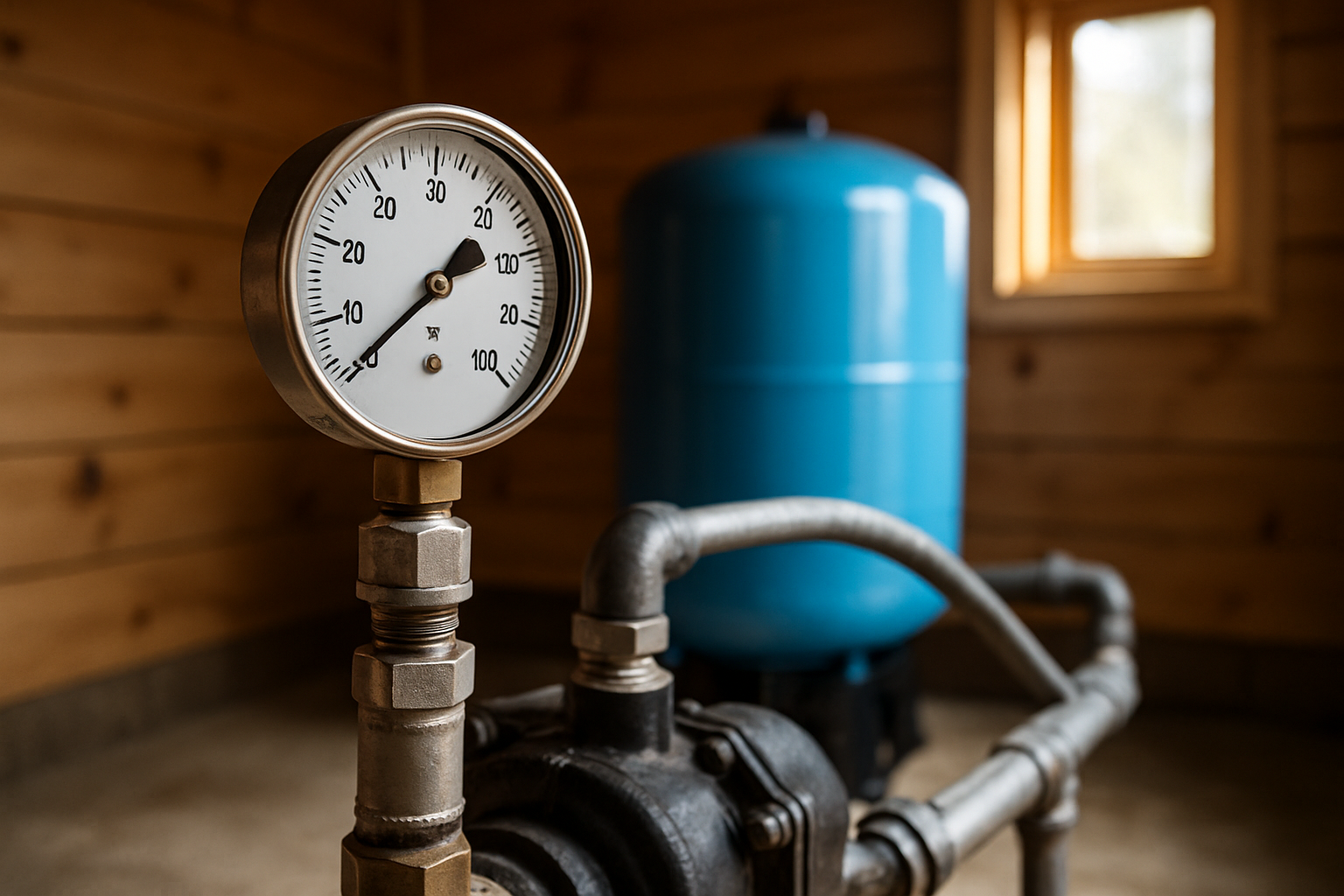
A few minutes of checking can save you a service call. If your water has dropped off, first look at the pressure tank gauge; a low reading or a waterlogged tank often points to a failed pressure tank or a worn pressure switch rather than a dry well. Notice whether the problem affects the whole property or just one fixture, because a single weak faucet usually means a clogged aerator or a plumbing restriction. If the pump is suddenly drawing air or the water turns sandy, the issue may be a dropping water level reaching the pump or a worn pump, not the aquifer itself. When the well genuinely recovers more slowly than it used to, runs low only under sustained demand, and has faded over seasons rather than overnight, that pattern is the classic signature of a tightening fracture network, and that is exactly what hydrofracturing addresses.
When to Call a Professional
If your well has clearly lost ground year over year, if a newer borehole came in weak, or if you are weighing a new well against rehabilitating the one you have, that is the moment to bring in a licensed contractor for a proper flow test and camera inspection. Guessing is expensive in pass country, where a new well is a five-figure commitment. A short diagnostic visit tells you whether the existing well is worth saving and whether hydrofracturing is the right tool. Our diagnostic is $125 and is credited toward the work if you move forward.
The Cherry Valley Hydrofracturing Process, Step by Step
- Baseline flow test: we measure your well's current yield in gallons per minute and check static and pumping water levels for a real before-number.
- Downhole camera survey: a video inspection shows casing condition and helps us locate the fracture zones worth targeting.
- Packer isolation: we seal off the chosen interval so all the pressure works on that zone instead of escaping up the borehole.
- High-pressure injection: clean water is pumped in to clear and extend the fractures, usually four to eight hours on site.
- Post-treatment flow test: we re-measure yield after the well settles and hand you a documented before-and-after comparison.
What Hydrofracturing Will and Will Not Do
It is worth being clear about the limits, because honest expectations make for happy customers. Hydrofracturing does not create new groundwater and it does not make it rain on the San Gorgonio Pass. What it does is reconnect your borehole to the water that is already moving through the fractured rock, by clearing and widening the seams that feed it. On a true bedrock well that has slowly lost yield, that is usually enough to restore comfortable household production and a margin for irrigation. It will not rescue a well whose water table has genuinely dropped below the pump in a deep drought, though in that case lowering the pump or deepening the well may be the better remedy, and it will not turn an alluvial-fan well into a high producer. We would rather tell you that during the assessment than after a treatment.
After Treatment: Water Quality and Holding the Gains
For the first hours to a day after hydrofracturing, your water may run cloudy as the freshly opened fractures flush out silt and fine mineral material. This is normal and clears as the well develops; we run the well to help move that sediment through. Some Cherry Valley wells carry naturally elevated iron, manganese, or hardness from the surrounding ground, and opening new seams can briefly change the mineral mix until the well stabilizes, so if you run a softener or iron filter it is worth servicing it after treatment. To protect your investment, we recommend a periodic flow check so you can see early if production starts to slip again, since catching a tightening fracture network early makes any future re-treatment simpler than waiting until the well runs short in the heat of August.
Cost Compared to a New Well in Cherry Valley
Drilling a new well in the San Gorgonio Pass foothills is expensive and uncertain. A turnkey new well generally runs from about $18,000 to $42,000 once you account for the depth needed to reach reliable bedrock seams. Hydrofracturing an existing well usually costs between $3,000 and $8,000, and it improves yield in roughly 70 to 80 percent of the fractured-rock wells we treat, with typical gains of two to five times the starting flow. For most Cherry Valley homeowners with a bedrock well, it is simply the smart first move before committing to a new borehole.
Serving Cherry Valley and the San Gorgonio Pass
Southern California Well Service has worked on wells throughout Riverside County since 2020, including the pass communities of Cherry Valley, Beaumont, Banning, and Calimesa. We are a licensed C-57 water well contractor (CSLB #1086994), licensed C-57 (CSLB #1086994) by our customers, and we offer same-day emergency help when a household loses water. Our compact hydrofracturing equipment sets up easily on the horse properties and older lots common around Cherry Valley, where a full drilling rig would struggle to position. Before you spend tens of thousands on a new well, let us test the one you have. Call (760) 440-8520 or text (760) 219-5877 to schedule a flow test.