
Hydrofracturing Well Services in Chollas View, CA
Is your well in Chollas View producing less water than it used to? Hydrofracturing (also called hydrofracking) could be the solution to restore and even improve your well's water production without the expense of drilling a new well.
📋 In This Guide
- What is Hydrofracturing?
- Signs Your Chollas View Well Needs Hydrofracturing
- The Hydrofracturing Process
- Cost vs. New Well Drilling in Chollas View
- Why Choose SCWS for Hydrofracturing?
- Related Articles
Southern California Well Service provides professional hydrofracturing services throughout San Diego County to help homeowners and property owners increase their well yield.
What is Hydrofracturing?
Hydrofracturing is a well rehabilitation technique that uses high-pressure water to clean and expand existing fractures in the bedrock surrounding your well. This process:
- Clears mineral deposits and sediment blocking water flow
- Opens new pathways for groundwater to reach your well
- Can increase well yield by 2-10 times in many cases
- Extends the life of your existing well
Unlike oil and gas fracking, well hydrofracturing uses only clean water—no chemicals are involved.
Signs Your Chollas View Well Needs Hydrofracturing
- Declining water production over time
- Well runs dry during peak usage
- Slow recovery rate after pumping
- Pump cycling on and off frequently
- Lower water pressure than previous years
The Hydrofracturing Process
- Initial Assessment: We evaluate your well's current yield and condition
- Equipment Setup: Specialized high-pressure equipment is positioned at your well
- Isolation: Packers seal off sections of the well for targeted treatment
- Pressurization: Water is pumped at 500-3,000 PSI to fracture bedrock
- Development: Well is cleaned and tested for improved yield
Cost vs. New Well Drilling in Chollas View
In Chollas View, drilling a new well can cost $15,000-$50,000+ depending on depth. Hydrofracturing typically costs a fraction of that—often $3,000-$8,000—making it an excellent first option before considering a new well.
Many Chollas View wells that appear to be "going dry" can be successfully rehabilitated through hydrofracturing, saving homeowners tens of thousands of dollars.
Why Choose SCWS for Hydrofracturing?
- Founded 2020 · 60+ Years Family Heritage: We've rehabilitated thousands of wells across Southern California
- Licensed C-57 Contractor. CSLB License #1086994. Fully licensed for well drilling and service in California
- Specialized Equipment: Professional-grade hydrofracturing equipment
- Free Estimates: We'll assess your well and provide honest recommendations
Need Help With Your Well in Chollas View?
Our expert technicians serve Chollas View and all of San Diego County with professional well services.
Related Articles
Continue learning about well maintenance and troubleshooting

Signs Your Well Pump Is Failing
Catch pump problems early before you lose water completely.
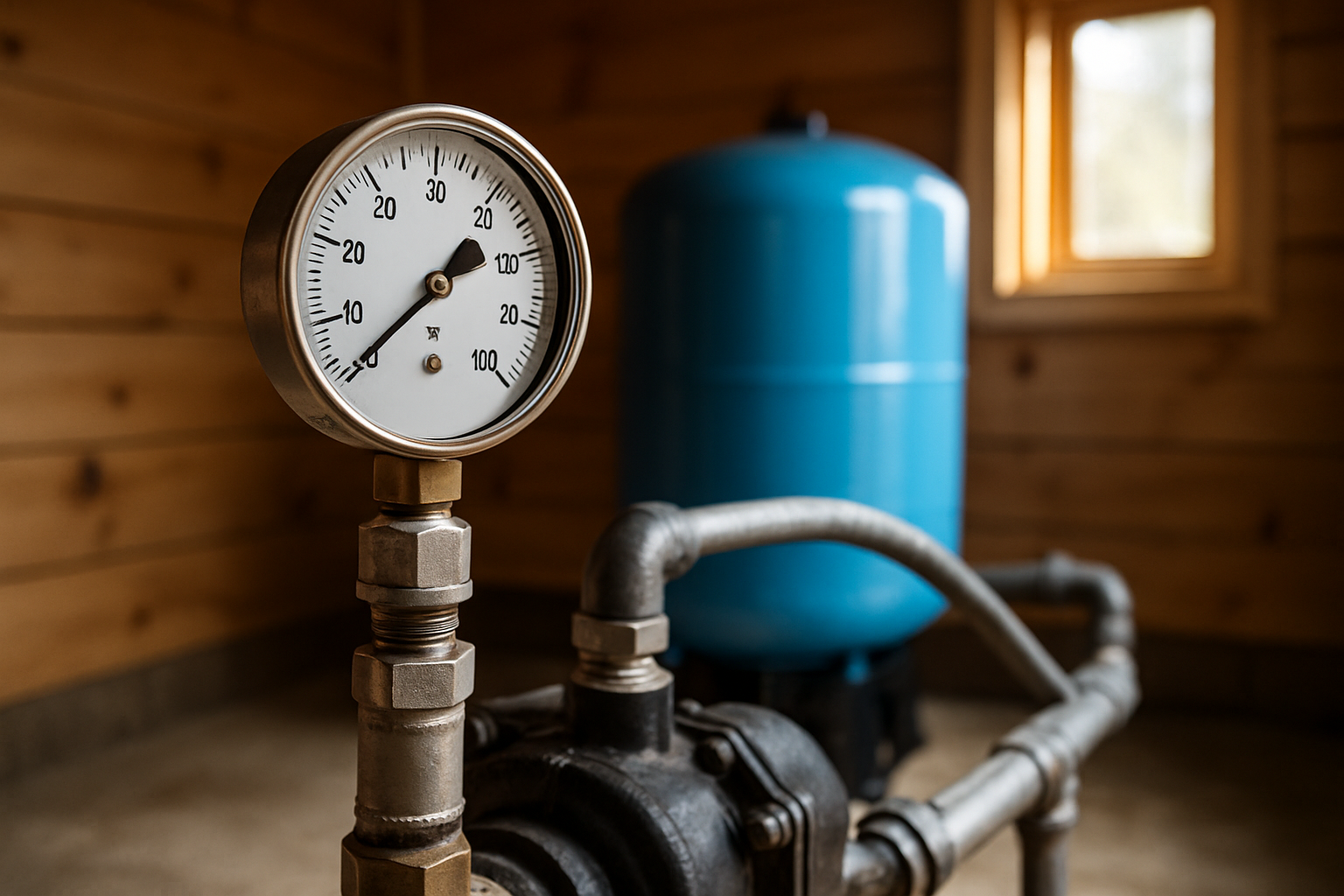
Low Water Pressure From Well
Diagnose and fix pressure problems before they get worse.
Well Maintenance Guide
Keep your well running smoothly with regular maintenance.
Our Locations
1077 Main St, Ramona, CA 92065
57174 CA-371 (US Hwy 79), Anza, CA 92539
Hydrofracturing and Wells in Chollas View
Chollas View is a long-established residential neighborhood in Southeastern San Diego, in San Diego County, tucked north of Lincoln Park and bounded roughly by State Route 94, Euclid Avenue, and Interstate 805. It sits within the Chollas Creek watershed, where the creek threads through City Heights, Encanto, and neighboring communities on its way to San Diego Bay. We should be straightforward with you: Chollas View is a fully urban neighborhood served by City of San Diego municipal water, and private water wells here are rare. Most of what follows is written for the small number of legacy well owners, irrigation or stock wells on older parcels, and property owners on the canyon edges and rural fringes of greater Southeastern San Diego who still rely on a private well and are wondering whether hydrofracturing (also called hydrofracking) can restore a fading one.
If you do own a well in or around Chollas View, the most important first step is an honest assessment. Hydrofracturing is a powerful tool for the right well in the right geology, but it is not a fit for every situation, and a good contractor will tell you plainly whether your well is a candidate rather than selling you a treatment you do not need. In a neighborhood where wells are uncommon, that candid, no-pressure approach matters even more, because there are fewer local examples to compare against and every well deserves to be judged on its own merits.
How Hydrofracturing Works
Hydrofracturing is a well-rehabilitation process that uses nothing but clean, high-pressure water. There are no chemicals at any stage, which matters in an urban watershed like Chollas Creek that is already the subject of water-quality monitoring. Here is what happens:
- Packers isolate a zone. Inflatable packers are lowered into the casing and inflated to seal off a target section of the well, concentrating the pressure where the water-bearing rock is.
- High-pressure injection. Clean water is pumped into that zone at pressures generally between 1,500 and 3,000-plus PSI, flushing silt and mineral buildup out of existing fractures.
- Fractures open and connect. The pressure widens fractures and can link the borehole to nearby water-bearing cracks, enlarging the volume of rock that feeds the well.
- Development and testing. Afterward the well is surged, pumped to clear debris, and flow-tested to confirm any improvement.
Common Causes of Low Yield in This Area
For the private wells that do exist around Southeastern San Diego, declining yield usually traces back to a handful of causes tied to the local hard-rock and mixed sedimentary geology:
- Fracture plugging. Wells in the harder rock of the surrounding mesas and canyons rely on thin fractures that gradually fill with fine sediment.
- Mineral scaling. Calcium and iron deposits build up across the intake and along fracture faces, slowly choking flow.
- Aging, neglected wells. Because so few wells remain in active use here, many are old and have sat with little maintenance, so screens and casings have corroded or partially clogged.
- Low-yield formations. Some wells simply intersect only a few productive fractures, which is precisely the situation hydrofracturing can sometimes improve.
- Long periods of disuse. A well that has not been pumped regularly can accumulate fine material and biological growth around the intake, restricting flow once it is put back into service.
What to Check Before You Call
A little homework helps you avoid paying for the wrong fix:
- Confirm it is really the well. Low pressure is often caused by a failing pump, a waterlogged pressure tank, or a bad pressure switch, all of which are far cheaper to repair than a yield problem.
- Note the timing. A shortage that appears only during heavy summer use and recovers overnight points to a recovery-rate issue, which hydrofracturing can address.
- Look at the water. Grit or cloudiness may indicate sediment moving through the formation and collecting at the intake.
- Check the pressure tank. If it feels solid with no air cushion, the bladder has likely failed.
- Find the well log. The original driller's report showing depth and water-bearing zones tells a technician a great deal about whether your well will respond.
Signs You May Need Hydrofracturing
Watch for several of these together, which point to a genuine yield problem:
- Water output that has declined steadily over several years.
- The well drawing down quickly and recovering slowly after heavy use.
- The pump short-cycling more than it used to.
- Air spitting from faucets when more than one fixture runs.
- A relatively new rock well that never produced the flow you expected.
- A noticeable change after a long dry stretch, when the surrounding formation has had less chance to recharge.
When to Call a Professional
Hydrofracturing requires specialized high-pressure equipment, properly sized packers, and the judgment to read a specific formation, so it is not a do-it-yourself job. Contact a licensed well contractor when your yield has clearly fallen, when a flow test confirms production below your needs, or when you are weighing rehabilitation against the cost of a new well. A professional begins with a casing inspection, usually by camera, both to verify the casing is sound and to judge whether the well draws from material that will respond. For an urban-fringe well that may have sat unused for years, that inspection is especially valuable because it often turns up simple, inexpensive problems before any major work is considered.
What Hydrofracturing and Related Work Costs
Final pricing depends on depth, casing condition, and the number of zones treated, but here are realistic ranges:
- Hydrofracturing: $3,000 to $8,000 for most residential wells.
- New well, turnkey: $18,000 to $42,000.
- Well rehabilitation or deepening: varies with depth and condition.
- Pump replacement: $2,500 to $5,500.
- Pressure tank: $600 to $1,500.
- Pressure switch: $150 to $350.
- Diagnostic visit: $125, credited toward the work if you proceed.
Serving Chollas View and San Diego County
Southern California Well Service provides hydrofracturing and full well service across Chollas View and the surrounding Southeastern San Diego communities, including City Heights, Lincoln Park, Encanto, and out toward the rural and canyon-edge properties of eastern San Diego County. While most homes here are on municipal water, we are the team to call for the wells that remain, and for well owners throughout the county. We work from our offices in Ramona and Anza, founded in 2020, with 60+ years of family heritage.
Frequently Asked Questions
Are there even private wells in Chollas View?
Very few. Chollas View is an urban neighborhood on City of San Diego municipal water, so private wells are rare. This page is written mainly for the handful of legacy, irrigation, or canyon-edge well owners in and around Southeastern San Diego who still depend on one.
Is hydrofracturing the same as oil and gas fracking?
No. Water-well hydrofracturing uses only clean water to reopen existing fractures in shallow rock. There are no chemicals, no proppants, and no deep shale formations. It is a long-established well-rehabilitation method, completely separate from oil and gas extraction.
Will hydrofracturing work on my well?
It depends on your geology. Wells set in fractured rock respond well, often improving two to five times, while wells in loose sand are generally weaker candidates. We inspect the casing and formation before recommending the treatment.
How long does the process take?
Most residential jobs finish in a single day. The high-pressure injection itself runs roughly four to eight hours depending on how many zones we treat, and we flow-test afterward, usually confirming results within 24 to 48 hours.
Is it cheaper than drilling a new well?
Almost always. Hydrofracturing runs $3,000 to $8,000, while a new turnkey well runs $18,000 to $42,000 or more. For most low-yield wells it is the smart first step.
My well has sat unused for years. Can it be revived?
Possibly. We start with a camera inspection and a flow test. Sometimes the fix is as simple as a new pump or pressure tank; in other cases hydrofracturing can meaningfully restore yield. We tell you honestly which path makes sense.
Have a Well Near Chollas View? Get an Honest Assessment
If you own one of the few private wells in or around Chollas View and it is producing less than it should, call Southern California Well Service. Reach us at (760) 440-8520 or text (760) 219-5877 for same-day emergency service across San Diego County.