
Hydrofracturing Well Services in Rainbow, CA
Is your well in Rainbow producing less water than it used to? Hydrofracturing (also called hydrofracking) could be the solution to restore and even improve your well's water production without the expense of drilling a new well.
📋 In This Guide
- What is Hydrofracturing?
- Signs Your Rainbow Well Needs Hydrofracturing
- The Hydrofracturing Process
- Cost vs. New Well Drilling in Rainbow
- Why Choose SCWS for Hydrofracturing?
- Related Articles
Southern California Well Service provides professional hydrofracturing services throughout San Diego County to help homeowners and property owners increase their well yield.
What is Hydrofracturing?
Hydrofracturing is a well rehabilitation technique that uses high-pressure water to clean and expand existing fractures in the bedrock surrounding your well. This process:
- Clears mineral deposits and sediment blocking water flow
- Opens new pathways for groundwater to reach your well
- Can increase well yield by 2-10 times in many cases
- Extends the life of your existing well
Unlike oil and gas fracking, well hydrofracturing uses only clean water—no chemicals are involved.
Signs Your Rainbow Well Needs Hydrofracturing
- Declining water production over time
- Well runs dry during peak usage
- Slow recovery rate after pumping
- Pump cycling on and off frequently
- Lower water pressure than previous years
The Hydrofracturing Process
- Initial Assessment: We evaluate your well's current yield and condition
- Equipment Setup: Specialized high-pressure equipment is positioned at your well
- Isolation: Packers seal off sections of the well for targeted treatment
- Pressurization: Water is pumped at 500-3,000 PSI to fracture bedrock
- Development: Well is cleaned and tested for improved yield
Cost vs. New Well Drilling in Rainbow
In Rainbow, drilling a new well can cost $15,000-$50,000+ depending on depth. Hydrofracturing typically costs a fraction of that—often $3,000-$8,000—making it an excellent first option before considering a new well.
Many Rainbow wells that appear to be "going dry" can be successfully rehabilitated through hydrofracturing, saving homeowners tens of thousands of dollars.
Why Choose SCWS for Hydrofracturing?
- Founded 2020 · 60+ Years Family Heritage: We've rehabilitated thousands of wells across Southern California
- Licensed C-57 Contractor. CSLB License #1086994. Fully licensed for well drilling and service in California
- Specialized Equipment: Professional-grade hydrofracturing equipment
- Free Estimates: We'll assess your well and provide honest recommendations
Need Help With Your Well in Rainbow?
Our expert technicians serve Rainbow and all of San Diego County with professional well services.
Related Articles
Continue learning about well maintenance and troubleshooting

Signs Your Well Pump Is Failing
Catch pump problems early before you lose water completely.
Low Water Pressure From Well
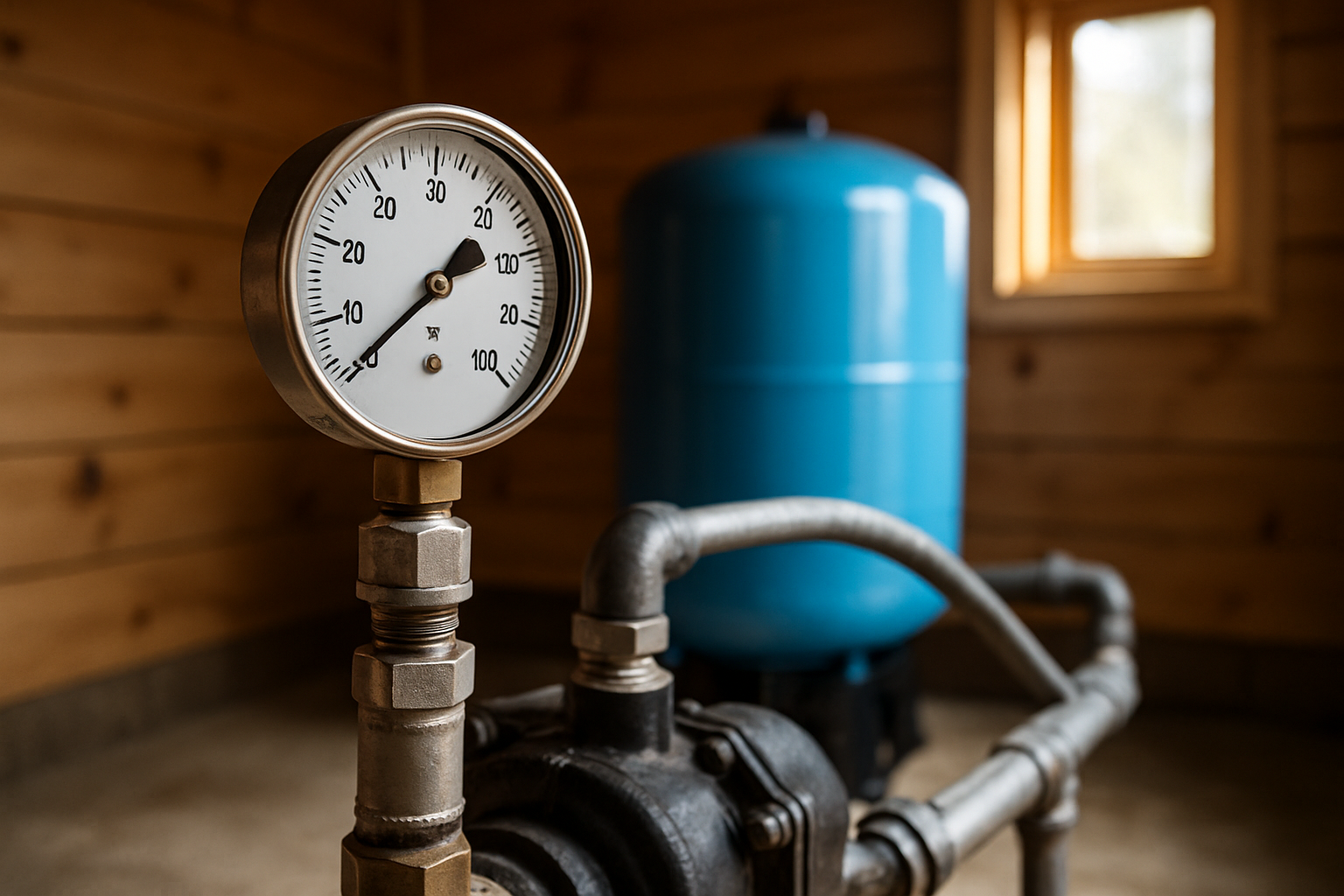
Diagnose and fix pressure problems before they get worse.
Well Maintenance Guide
Keep your well running smoothly with regular maintenance.
Our Locations
1077 Main St, Ramona, CA 92065
57174 CA-371 (US Hwy 79), Anza, CA 92539
Hydrofracturing for Rainbow's Nurseries, Groves, and Rural Homes
Rainbow is a rural community in the far north of San Diego County, sitting along the old Highway 395 and I-15 corridor just north of Fallbrook and near Pala. It lies very close to the Riverside County line — close enough that people sometimes assume otherwise — but Rainbow is firmly within San Diego County, and the wells here are San Diego County wells. The community is known for its nurseries, avocado and citrus groves, and large rural parcels rolling across hills of decomposed granite. Although the Rainbow Municipal Water District serves much of the area, many of those rural properties rely on private wells, and when a well's output slips, hydrofracturing is frequently the best path back to a dependable supply.
The ground beneath Rainbow is the key. These are decomposed-granite hills underlain by fractured crystalline bedrock. Groundwater here does not occupy a deep sandy aquifer; it travels through fractures, joints, and seams in the rock. A well yields only as much as those fractures can deliver, and over years of pumping they clog with mineral scale and fine sediment, slowly throttling the flow. Hydrofracturing is built to address that specific problem by cleaning and reopening the fracture network around the borehole.
How the Treatment Works
At a Rainbow property we set a high-pressure rig over the wellhead and lower an inflatable packer into the casing, expanding it to seal off a section of the borehole. Clean water is then injected into that isolated interval at controlled pressure, typically 1,500 to 3,000 PSI and sometimes more for deeper or tighter rock. The pressure widens existing fractures, flushes out the silt and scale clogging them, and can connect the well to productive cracks that were previously sealed. The packer is generally moved to treat several depths so the entire water-bearing zone is improved.
The whole process takes roughly four to eight hours and uses only clean water — no chemical additives at all. This is entirely distinct from the hydraulic fracturing used in oil and gas work, and that difference is why hydrofracturing is widely used on domestic and agricultural drinking-water wells across the decomposed-granite country of northern San Diego County.
Decomposed Granite and Fractured Bedrock Respond Well
Rainbow's geology is well suited to this treatment. Where a well draws from fractured crystalline rock, the hard rock holds the cleaned, widened fractures open and the improvement in yield tends to last. Decomposed granite that retains fracture structure can also respond. The wells that do not benefit are those finished in loose, unconsolidated sand or gravel, which cannot hold a fracture open. Determining which kind of formation feeds your well is part of our diagnostic.
Signs a Rainbow Well May Be a Candidate
- Declining yield over the seasons — the well that once supplied the home and the grove now struggles to keep up.
- Irrigation drawing the well down — nursery or grove watering pulls the level down faster than it recovers.
- Slow recovery — after the pump runs, the water level rebounds far more slowly than it used to.
- Short-cycling pump — the pump repeatedly starts and stops because the borehole cannot sustain steady output.
- A new well that disappointed — a freshly drilled hole into granite that never produced the gallons per minute you needed.
Cost Versus Drilling a New Well in Rainbow
For Rainbow's rural and agricultural properties, the math usually favors rehabilitation. Hydrofracturing an existing well typically costs $3,000 to $8,000. A new well — borehole, casing, pump, electrical work, and permitting — generally runs $18,000 to $42,000 turnkey. Because hydrofracturing reuses the borehole and often the existing pump, it is the first option worth weighing before drilling something new, especially when a grove or nursery depends on the water and downtime is costly.
We begin with a $125 diagnostic that is credited toward the work if you proceed. The visit lets us measure current yield, review the well's history, and judge whether the formation and casing make your well a realistic candidate. If it is not, we will tell you directly rather than recommend a treatment unlikely to pay off.
What to Expect
- Baseline flow test — we record gallons per minute and recovery rate before treatment.
- Camera inspection — a downhole video confirms casing condition and locates fracture zones.
- Hydrofracturing — packers isolate each interval and clean water is injected over four to eight hours.
- Post-treatment flow test — we re-measure within a day or two to confirm the gain.
- Documented results — a clear before-and-after report of your well's yield.
Across San Diego County's decomposed-granite and fractured crystalline formations, hydrofracturing improves yield in roughly 70 to 80 percent of treated wells, with typical gains of two to five times the pre-treatment flow. The diagnostic comes first so expectations stay grounded.
Agricultural Water Demand in Rainbow
Rainbow's nurseries and groves place real, sustained demand on local wells, and that changes the stakes when yield drops. A grower whose well can no longer keep the irrigation system supplied faces not just inconvenience but potential crop loss. In dry years the water table in fractured rock can fall, compounding the problem — but very often the limiting factor is not the water table at all. It is a fracture network that has narrowed with mineral deposits and can no longer move water to the borehole at the old rate. Reopening those fractures lets the well draw on water the surrounding rock still holds, which can restore the steady supply a nursery or grove depends on.
Because the decomposed-granite hills vary from parcel to parcel, two neighboring wells can produce very differently based on the fractures each intersects. Hydrofracturing extends a borehole's reach into the surrounding fracture system, helping bring an underperforming well closer to the output of a strong one nearby.
Protecting Your Pump and Property Value
On Rainbow's rural acreage, a reliable well underpins the value and usefulness of the land — particularly for agricultural property where the well is a working asset. A failing well can stall a sale or force a buyer to plan for an expensive replacement. Restoring yield protects that value at a fraction of new-drilling cost. It also protects equipment: a pump short-cycling against a starved borehole wears out fast, and an emergency failure during the irrigation season is the worst possible timing. Improving the well's flow lets the existing pump operate as designed and can extend its life considerably.
Serving Rainbow and North County
Southern California Well Service is a C-57 licensed well contractor (CSLB #1086994) founded in 2020, with 60+ years of family heritage. We serve Rainbow and the surrounding North County area, including nearby Fallbrook and Pala, throughout San Diego County, working from our Ramona office at 1077 Main St and our Anza office at 57174 CA-371 (US Hwy 79). Same-day emergency service is available when a well fails unexpectedly. Call (760) 440-8520 or text (760) 219-5877 to schedule a diagnostic.
Frequently Asked Questions
Is Rainbow in San Diego County or Riverside County?
Rainbow is in San Diego County, just north of Fallbrook and close to the Riverside County line. We are a San Diego County well contractor and serve Rainbow's wells as part of our North County service area.
Will hydrofracturing work on my Rainbow well?
If your well draws from the fractured crystalline rock or fracture-bearing decomposed granite common around Rainbow, it is likely a good candidate — about 70 to 80 percent of hard-rock wells in San Diego County see improved yield. Wells in loose sand or gravel are not candidates. The $125 diagnostic confirms which applies to yours.
How does the cost compare to a new well?
Hydrofracturing usually costs $3,000 to $8,000, while a new turnkey well runs $18,000 to $42,000. For most rural Rainbow properties, rehabilitating the existing well is the more economical first step.
Can hydrofracturing help my nursery or grove well?
Yes, provided the well is finished in suitable fractured rock. Restoring yield on an agricultural well can be especially valuable because it protects irrigation capacity during the dry season.
Are any chemicals involved?
No. Only clean water is injected. There are no additives, which is why the process is appropriate for drinking-water and irrigation wells alike.
How long does the work take and how long do results last?
The treatment takes about four to eight hours in one day, with a follow-up flow test inside 24 to 48 hours. Because hard rock holds the cleaned fractures open, results commonly last for years.