
Hydrofracturing Well Services in Ranchita, CA
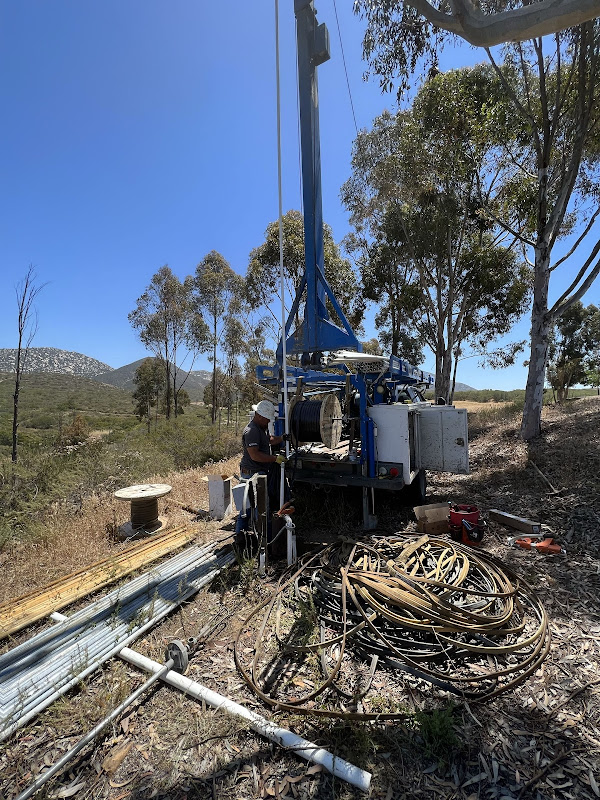
Is your well in Ranchita producing less water than it used to? Hydrofracturing (also called hydrofracking) could be the solution to restore and even improve your well's water production without the expense of drilling a new well.
📋 In This Guide
- What is Hydrofracturing?
- Signs Your Ranchita Well Needs Hydrofracturing
- The Hydrofracturing Process
- Cost vs. New Well Drilling in Ranchita
- Why Choose SCWS for Hydrofracturing?
- Related Articles
Southern California Well Service provides professional hydrofracturing services throughout San Diego County to help homeowners and property owners increase their well yield.
What is Hydrofracturing?
Hydrofracturing is a well rehabilitation technique that uses high-pressure water to clean and expand existing fractures in the bedrock surrounding your well. This process:
- Clears mineral deposits and sediment blocking water flow
- Opens new pathways for groundwater to reach your well
- Can increase well yield by 2-10 times in many cases
- Extends the life of your existing well
Unlike oil and gas fracking, well hydrofracturing uses only clean water—no chemicals are involved.
Signs Your Ranchita Well Needs Hydrofracturing
- Declining water production over time
- Well runs dry during peak usage
- Slow recovery rate after pumping
- Pump cycling on and off frequently
- Lower water pressure than previous years
The Hydrofracturing Process
- Initial Assessment: We evaluate your well's current yield and condition
- Equipment Setup: Specialized high-pressure equipment is positioned at your well
- Isolation: Packers seal off sections of the well for targeted treatment
- Pressurization: Water is pumped at 500-3,000 PSI to fracture bedrock
- Development: Well is cleaned and tested for improved yield
Cost vs. New Well Drilling in Ranchita
In Ranchita, drilling a new well can cost $15,000-$50,000+ depending on depth. Hydrofracturing typically costs a fraction of that—often $3,000-$8,000—making it an excellent first option before considering a new well.
Many Ranchita wells that appear to be "going dry" can be successfully rehabilitated through hydrofracturing, saving homeowners tens of thousands of dollars.
Why Choose SCWS for Hydrofracturing?
- Founded 2020 · 60+ Years Family Heritage: We've rehabilitated thousands of wells across Southern California
- Licensed C-57 Contractor. CSLB License #1086994. Fully licensed for well drilling and service in California
- Specialized Equipment: Professional-grade hydrofracturing equipment
- Free Estimates: We'll assess your well and provide honest recommendations
Need Help With Your Well in Ranchita?
Our expert technicians serve Ranchita and all of San Diego County with professional well services.
Related Articles
Continue learning about well maintenance and troubleshooting

Signs Your Well Pump Is Failing
Catch pump problems early before you lose water completely.

Low Water Pressure From Well
Diagnose and fix pressure problems before they get worse.

Well Maintenance Guide
Keep your well running smoothly with regular maintenance.
Our Locations
1077 Main St, Ramona, CA 92065
57174 CA-371 (US Hwy 79), Anza, CA 92539
Hydrofracturing Backcountry Wells in Ranchita
Ranchita is a quiet high-country community in northeastern San Diego County, sitting around 4,000 feet along Montezuma Valley Road (County Route S22) west of Borrego Springs and not far from Warner Springs. It's ranch and rural-homestead country — wide parcels, dark night skies, and a scattering of homes that sit on the granitic uplands above the Anza-Borrego desert. Out here there is no municipal water; every property relies on a private well drilled into the fractured granitic bedrock of the Peninsular Ranges. When a Ranchita well starts producing less than it used to, the cause is almost never a vanishing aquifer — it's a fracture network that has narrowed or silted over. Hydrofracturing reopens and extends those fractures, and for most backcountry owners it's far cheaper than drilling a new well in this remote terrain.
The Granite That Feeds Ranchita Wells
The hills and ridges around Ranchita are carved from the granitic rock of the Peninsular Ranges batholith — mainly tonalite and granodiorite that crystallized deep underground and was later uplifted to form the backcountry highlands. This rock is hard and nearly impermeable except where it is broken, so groundwater collects and travels only through joints, fractures, and fault-related cracks. A well produces water where its borehole crosses those water-bearing fractures, and its yield depends entirely on how many it intersects. That's why two ranches on the same road can have very different wells — and why drilling deeper into unbroken granite often adds cost without adding water. Hydrofracturing works outward from the existing bore to tap more of the fracture system.
How the Treatment Restores a Well
We seat inflatable packers in the open-hole section of the well to isolate a target zone, then inject clean water — never chemicals — at pressures between 1,500 and 3,000 PSI. That pressure flushes mineral scale and fine sediment from existing fractures and propagates them deeper into the rock, frequently connecting the well to productive seams just beyond its original reach. On the competent granite around Ranchita, those reopened fractures tend to hold and keep producing reliably. A typical treatment runs four to eight hours, and we measure flow before and after so the improvement is clearly documented.
Why Remote High-Country Wells Run Short
Ranchita straddles the transition between the wetter mountains to the west and the arid desert to the east, so it receives modest winter precipitation — occasionally even snow — and long, dry, sunny stretches the rest of the year. Groundwater is recharged mainly during the wet season, and a well with a limited fracture network can draw down faster than the rock refills it, leaving owners rationing through the dry months. Over time, the mineral-rich groundwater common in granitic terrain also deposits scale in the narrowest, most productive cracks near the bore, gradually choking the flow. Fracturing tackles both at once, clearing the clogged fractures and opening new ones so the well gains both stronger inflow and more storage to ride out dry spells — a real advantage where hauling water any distance is expensive and inconvenient.
Signs Your Ranchita Well May Benefit
- The well produced more water a few years ago than it does today.
- Watering animals or a garden leaves the house short on pressure.
- Recovery is slow — the well draws down fast and refills slowly.
- You ration water every late summer until the winter rains return.
- A recently drilled well hit granite but never delivered a satisfying flow.
What to Gather Before the Assessment
If you can locate your well completion report, note the total depth, casing depth, and the original measured yield — these tell us a great deal about whether fracturing will help. Watch your system over a week of normal use: when does pressure fade, and how long does recovery take? Rule out the simple causes too, since a waterlogged pressure tank, a worn pump, or a failed check valve can all mimic a low-yield well. We confirm those during the visit, because in remote country the last thing you want is to pay for the wrong fix — and we won't fracture a well that simply needed a new pump.
Why a Licensed Contractor Matters Out Here
Hydrofracturing uses high pressure and specialized down-hole equipment and is never a do-it-yourself project. We begin with a pre-treatment flow test and a downhole video inspection to confirm your casing is sound and to map the fracture zones worth targeting. That inspection also catches problems — casing damage or a collapsed section — that would need to be addressed first. In Ranchita's remote setting, getting the diagnosis right on the first trip matters even more, and a licensed contractor's judgment ensures your money goes toward the fix that will actually solve the shortage.
Cost in Ranchita
Drilling a new well in this remote, hard-rock backcountry commonly runs $18,000 to $42,000 once depth, drilling, and a pump are included, and the distance can push it higher. Hydrofracturing an existing well typically costs $3,000 to $8,000 — far less — which is why it's almost always worth trying first. Our diagnostic visit is $125, credited toward the work if you proceed. If your system also needs equipment, expect roughly $2,500 to $5,500 for a submersible pump and $600 to $1,500 for a pressure tank.
A Common Ranchita Scenario
A frequent case is the rural homestead that grows over time. The original well was drilled for a modest cabin or a part-time residence, and as the owners add animals, a larger garden, guest quarters, or move out full-time, the well falls behind. Before committing to a new bore — and the long haul of getting a rig to a remote parcel — it's worth testing whether fracturing can raise the existing well's capacity to match the new demand. In sound granite it frequently does, sparing the owner a major expense and a lengthy permitting and drilling timeline.
Documentation That Protects Remote Property
For a backcountry parcel, proof of a dependable water supply is one of the most valuable things you can document. Lenders financing rural land increasingly require a recent well yield test, and buyers of remote property want assurance the land can support a home and animals. When we hydrofracture a well, we provide a documented before-and-after flow comparison to keep on file with your completion report and pump history. That record speeds future service, answers buyers' questions, and can keep a sale on track — a simple, low-cost way to safeguard the value of a Ranchita property.
Serving Ranchita, Warner Springs, and the Backcountry
Southern California Well Service has worked on backcountry and ranch wells across San Diego County since 2020, including Ranchita, Warner Springs, and the surrounding high country, with our Anza office on Highway 79 keeping us close to this corner of the region. We know the granite, the realities of servicing remote parcels, and the seasonal recharge that drives how these wells behave. We're licensed C-57 contractors with CSLB #1086994 and offer same-day emergency response when a property suddenly loses water.
Frequently Asked Questions
How much more water can hydrofracturing produce?
It depends on the rock, but successful treatments in this granite often raise yield two to five times over the pre-treatment rate. We measure flow before and after so the gain is documented.
Are any chemicals used?
No. Only clean water is injected, so nothing is introduced into the ground that could affect your water quality.
Does it work at Ranchita's elevation and climate?
Yes. The technique depends on the rock, not the weather, and the fractured granite here responds well. Access is the main scheduling factor, and the area's roads are generally passable year-round.
How long do the results last?
In sound granite, gains commonly last many years. A well may eventually benefit from a second treatment, but most owners enjoy a long, stable run of improved flow.
Will it affect my neighbor's well?
No. Treatment works only the fractures immediately around your borehole and does not deplete the shared aquifer or draw down nearby wells. The high-pressure injection acts within a limited radius of your own well, so your neighbors' supply is unaffected.
What if my well isn't a candidate?
We'll tell you honestly and recommend a better option. We don't fracture wells in loose formations or with damaged casing.
Restore Your Ranchita Well
Ask a licensed San Diego County contractor whether hydrofracturing is right for your backcountry well.