
Hydrofracturing Well Services in Rancho Bernardo, CA
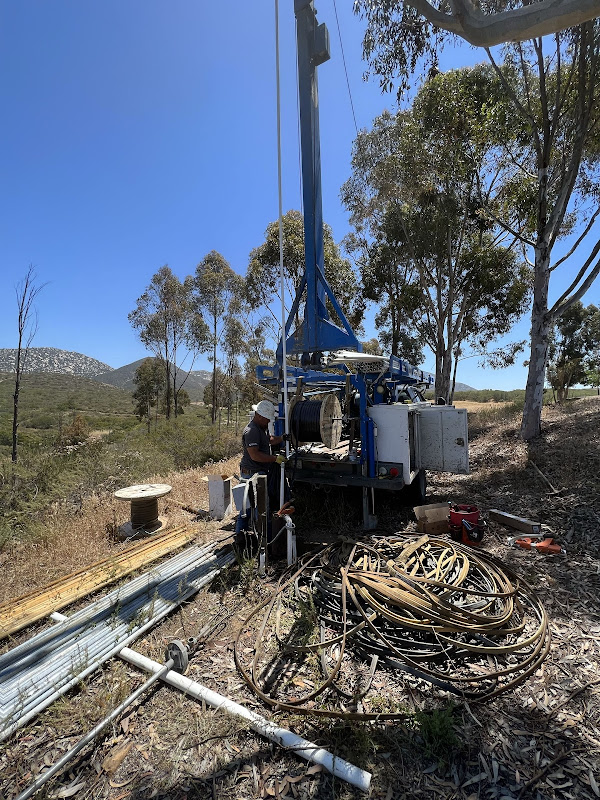
Is your well in Rancho Bernardo producing less water than it used to? Hydrofracturing (also called hydrofracking) could be the solution to restore and even improve your well's water production without the expense of drilling a new well.
📋 In This Guide
- What is Hydrofracturing?
- Signs Your Rancho Bernardo Well Needs Hydrofracturing
- The Hydrofracturing Process
- Cost vs. New Well Drilling in Rancho Bernardo
- Why Choose SCWS for Hydrofracturing?
- Related Articles
Southern California Well Service provides professional hydrofracturing services throughout San Diego County to help homeowners and property owners increase their well yield.
What is Hydrofracturing?
Hydrofracturing is a well rehabilitation technique that uses high-pressure water to clean and expand existing fractures in the bedrock surrounding your well. This process:
- Clears mineral deposits and sediment blocking water flow
- Opens new pathways for groundwater to reach your well
- Can increase well yield by 2-10 times in many cases
- Extends the life of your existing well
Unlike oil and gas fracking, well hydrofracturing uses only clean water—no chemicals are involved.
Signs Your Rancho Bernardo Well Needs Hydrofracturing
- Declining water production over time
- Well runs dry during peak usage
- Slow recovery rate after pumping
- Pump cycling on and off frequently
- Lower water pressure than previous years
The Hydrofracturing Process
- Initial Assessment: We evaluate your well's current yield and condition
- Equipment Setup: Specialized high-pressure equipment is positioned at your well
- Isolation: Packers seal off sections of the well for targeted treatment
- Pressurization: Water is pumped at 500-3,000 PSI to fracture bedrock
- Development: Well is cleaned and tested for improved yield
Cost vs. New Well Drilling in Rancho Bernardo
In Rancho Bernardo, drilling a new well can cost $15,000-$50,000+ depending on depth. Hydrofracturing typically costs a fraction of that—often $3,000-$8,000—making it an excellent first option before considering a new well.
Many Rancho Bernardo wells that appear to be "going dry" can be successfully rehabilitated through hydrofracturing, saving homeowners tens of thousands of dollars.
Why Choose SCWS for Hydrofracturing?
- Founded 2020 · 60+ Years Family Heritage: We've rehabilitated thousands of wells across Southern California
- Licensed C-57 Contractor. CSLB License #1086994. Fully licensed for well drilling and service in California
- Specialized Equipment: Professional-grade hydrofracturing equipment
- Free Estimates: We'll assess your well and provide honest recommendations
Need Help With Your Well in Rancho Bernardo?
Our expert technicians serve Rancho Bernardo and all of San Diego County with professional well services.
Related Articles
Continue learning about well maintenance and troubleshooting

Signs Your Well Pump Is Failing
Catch pump problems early before you lose water completely.

Low Water Pressure From Well
Diagnose and fix pressure problems before they get worse.

Well Maintenance Guide
Keep your well running smoothly with regular maintenance.
Our Locations
1077 Main St, Ramona, CA 92065
57174 CA-371 (US Hwy 79), Anza, CA 92539
Hydrofracturing for Rancho Bernardo Water Wells
Rancho Bernardo sits in the inland northern hills of the City of San Diego, tucked among the rolling foothills that climb toward Poway, Escondido, and Lake Hodges. Most homes in the heart of the community draw municipal water, but the picture changes once you move out toward the rural eastern fringes, the larger estate parcels, and the unincorporated edges that blend into 4S Ranch and Rancho Peñasquitos. Out there, a private well is often the only practical water source, and the geology beneath those properties is unlike the soft aquifers you find in a river valley. Rancho Bernardo rests on the Peninsular Ranges batholith: decomposed granite near the surface giving way to dense, fractured granitic and crystalline bedrock below. If you own a private well on one of these hard-rock lots and the flow has dropped off, hydrofracturing is one of the most cost-effective tools available to you.
That geology matters more than almost anything else when deciding whether to hydrofracture. A well drilled into solid granitic rock does not pull water from a wide, sandy reservoir. Instead, it collects whatever groundwater happens to seep through the natural cracks and seams in the stone. When those fractures are narrow, partially sealed by mineral scale, or poorly connected to one another, your well simply cannot gather water fast enough to keep up with a household. Rancho Bernardo's fractured bedrock is precisely the kind of formation where hydrofracturing tends to perform well, because the technique works by reopening and extending exactly those rock fractures.
How Hydrofracturing Actually Works
Hydrofracturing, sometimes shortened to hydrofracking, is a well-rehabilitation method that uses nothing but clean water under pressure. There are no chemicals, no proppants, and no additives of any kind pushed into your well. The crew lowers a tool fitted with inflatable packers into the borehole. These packers expand against the casing or rock wall to isolate a specific vertical zone, sealing it off above and below so that all the energy is concentrated where it is needed.
Once a zone is isolated, water is injected into it at high pressure, commonly in the range of 1,500 to 3,000 PSI and sometimes higher when the rock is especially tight. That pressure does two useful things at once. First, it scours out the silt, mineral scale, and fine sediment that have accumulated in the existing fractures over years of use. Second, it pries those hairline cracks open a little wider and pushes the pressure outward, often connecting the well to additional water-bearing fractures it could not previously reach. The crew typically repeats the process at several depths, working through the most promising zones one at a time. From setup to teardown, a typical Rancho Bernardo job runs about four to eight hours, depending on well depth and how many intervals are treated.
Because the only thing going down the hole is water, hydrofracturing of a domestic water well bears no resemblance to the chemical-intensive fracking used in the oil and gas industry. The distinction is worth repeating to any neighbor who raises an eyebrow: this is a clean-water process designed to recover a drinking-water well, not a petroleum extraction technique.
Common Low-Yield Scenarios in Rancho Bernardo Hard-Rock Wells
Over the years we have seen the same handful of situations repeat across the area's granitic terrain. Recognizing yours can help you decide whether a service call is worthwhile.
- The slowly declining well. A well that produced comfortably a decade ago now struggles during summer. Mineral buildup has gradually choked the fractures, and recovery between pump cycles has stretched out from minutes to hours.
- The disappointing new well. A freshly drilled borehole hit fractured rock but came in at a frustratingly low gallons-per-minute rate. Hydrofracturing a brand-new well, before it ever goes into full service, frequently unlocks the yield the driller hoped for.
- The seasonal dry-down. The well keeps up through the wet winter months but runs short during the dry stretch from late summer into fall, when the local water table drops and demand for irrigation climbs.
- The pump that short-cycles. When a well cannot feed the pump fast enough, the pump kicks on and off repeatedly. That cycling is often a yield problem masquerading as a pump problem, and chasing it with a new pump alone rarely fixes the root cause.
What to Check Before You Call
A little observation on your end helps us diagnose your well faster and gives you a clearer sense of what you are dealing with.
- Track when the water gets thin. Note whether shortages line up with heavy use, time of day, or the dry season. A well that fails only under peak demand is usually a yield candidate.
- Listen to the pump. Frequent on-off cycling, or a pump that runs and then sputters air, points toward the well being drawn down faster than it refills.
- Look for sediment and staining. Cloudy water, grit in the aerators, or reddish-brown iron and manganese staining can signal both a yield issue and a water-quality issue worth addressing together.
- Find your well records. The original driller's log, including the well's depth and the depths where water was encountered, is gold. Most hard-rock domestic wells in this part of San Diego County run roughly 200 to 600 feet deep, and knowing where your fracture zones sit helps target the treatment.
- Confirm it is a yield problem, not a pressure problem. Low pressure at the tap can stem from a failing pressure tank or switch rather than the well itself. Sorting that out early prevents spending money in the wrong place.
When to Call a Professional
Hydrofracturing is not a do-it-yourself job. It requires high-pressure pumping equipment, properly rated packers, and the experience to read how a particular formation is responding so the pressure can be adjusted on the fly. Pushing too hard in the wrong zone can damage casing; too little accomplishes nothing. This is the point to bring in a licensed contractor who can first verify that your well is a sound candidate. If your well is shallow, sits in loose sand or gravel rather than rock, or has compromised casing, hydrofracturing may not be appropriate, and an honest assessment will tell you so before any work begins.
Southern California Well Service offers a $125 diagnostic visit that is credited toward the job if you move forward. That evaluation typically includes a flow measurement and an assessment of casing and equipment condition, so the recommendation you receive is grounded in your well's actual numbers rather than guesswork.
Realistic Cost Ranges
The single biggest reason homeowners choose hydrofracturing is the math. Here is roughly what to expect in the Rancho Bernardo area.
- Hydrofracturing: generally $3,000 to $8,000, depending on depth and the number of zones treated.
- A new drilled well, turnkey: commonly $18,000 to $42,000 once drilling, casing, and connection are accounted for, which is why rehabilitating an existing well is almost always worth trying first.
- Pump replacement: about $2,500 to $5,500.
- Pressure tank: roughly $600 to $1,500.
- Pressure switch: around $150 to $350.
- Sediment filtration: typically $300 to $900.
- Iron or manganese filter, or a water softener: about $1,500 to $3,500, often relevant given local mineral staining.
- Constant-pressure or booster system: roughly $2,000 to $4,500 to smooth out delivery once yield is restored.
- Well abandonment, if a well is truly beyond saving: about $1,500 to $5,000 to seal it properly per county requirements.
Set the $3,000 to $8,000 hydrofracturing range against the $18,000 to $42,000 cost of a new well and the appeal is obvious. Even when hydrofracturing is paired with a new pump or a filtration upgrade, the combined total usually lands well below the price of starting over with a fresh borehole.
Serving Rancho Bernardo and the Surrounding Communities
We provide hydrofracturing and full well service across Rancho Bernardo and the neighboring inland communities, including Poway, Escondido, 4S Ranch, Rancho Peñasquitos, and the rural stretches around Lake Hodges. Our crews know the granitic terrain of this corner of San Diego County and what it takes to coax more water out of a hard-rock well. With offices in Ramona and Anza, we are positioned to reach properties on the eastern and rural edges of the region where most private wells are located. Same-day emergency service is available when a household is out of water.
Frequently Asked Questions
Will hydrofracturing work on my Rancho Bernardo well?
If your well is drilled into the fractured granitic or crystalline bedrock that underlies most of the area, it is a strong candidate. The technique relies on reopening rock fractures, so it performs best in exactly this kind of hard-rock formation. Wells set in loose sand or gravel are not good candidates. A diagnostic visit confirms which category your well falls into.
How much more water can I expect afterward?
Results vary by well, but many hard-rock wells see a meaningful increase in yield once clogged fractures are cleaned out and new ones are connected. We measure flow before and after so you can see the change with your own numbers rather than relying on a promise.
Are any chemicals injected into my well?
No. Domestic well hydrofracturing uses only clean water under pressure. Nothing else goes down the borehole, which is what makes it appropriate for a drinking-water well.
How long does the job take?
Most jobs run about four to eight hours from setup to completion, depending on the depth of the well and how many zones are treated. We perform a flow test afterward to verify the result.
Is it cheaper than drilling a new well?
Almost always. Hydrofracturing typically costs $3,000 to $8,000, while a new turnkey well runs $18,000 to $42,000. Rehabilitating the well you already have is the sensible first step before considering a replacement.
What if hydrofracturing does not improve my well?
If an honest evaluation shows your well is not a good candidate, we will tell you up front before any work begins. When a well genuinely cannot be saved, we can discuss other options, including a new well or proper abandonment of the old one.
Talk to a Licensed Well Contractor
Southern California Well Service is a licensed C-57 well contractor (CSLB #1086994) founded in 2020, with 60+ years of family heritage. We serve Rancho Bernardo and the surrounding San Diego County communities from our offices at 1077 Main St, Ramona, CA 92065 and 57174 CA-371 (US Hwy 79), Anza, CA 92539. If your well is producing less water than it should, call (760) 440-8520 or text (760) 219-5877 to schedule your $125 diagnostic, credited toward the work if you proceed. Same-day emergency service is available when you are out of water.
- Call: (760) 440-8520
- Text: (760) 219-5877