
Hydrofracturing Well Services in Riverside County, CA
Is your well in Riverside County producing less water than it used to? Hydrofracturing (also called hydrofracking) could be the solution to restore and even improve your well's water production without the expense of drilling a new well.
📋 In This Guide
- What is Hydrofracturing?
- Signs Your Riverside County Well Needs Hydrofracturing
- The Hydrofracturing Process
- Cost vs. New Well Drilling in Riverside County
- Why Choose SCWS for Hydrofracturing?
- Related Articles
Southern California Well Service provides professional hydrofracturing services throughout Riverside County to help homeowners and property owners increase their well yield.
What is Hydrofracturing?
Hydrofracturing is a well rehabilitation technique that uses high-pressure water to clean and expand existing fractures in the bedrock surrounding your well. This process:
- Clears mineral deposits and sediment blocking water flow
- Opens new pathways for groundwater to reach your well
- Can increase well yield by 2-10 times in many cases
- Extends the life of your existing well
Unlike oil and gas fracking, well hydrofracturing uses only clean water—no chemicals are involved.
Signs Your Riverside County Well Needs Hydrofracturing
- Declining water production over time
- Well runs dry during peak usage
- Slow recovery rate after pumping
- Pump cycling on and off frequently
- Lower water pressure than previous years
The Hydrofracturing Process
- Initial Assessment: We evaluate your well's current yield and condition
- Equipment Setup: Specialized high-pressure equipment is positioned at your well
- Isolation: Packers seal off sections of the well for targeted treatment
- Pressurization: Water is pumped at 500-3,000 PSI to fracture bedrock
- Development: Well is cleaned and tested for improved yield
Cost vs. New Well Drilling in Riverside County
In Riverside County, drilling a new well can cost $15,000-$50,000+ depending on depth. Hydrofracturing typically costs a fraction of that—often $3,000-$8,000—making it an excellent first option before considering a new well.
Many Riverside County wells that appear to be "going dry" can be successfully rehabilitated through hydrofracturing, saving homeowners tens of thousands of dollars.
Why Choose SCWS for Hydrofracturing?
- Founded 2020 · 60+ Years Family Heritage: We've rehabilitated thousands of wells across Southern California
- Licensed C-57 Contractor. CSLB License #1086994. Fully licensed for well drilling and service in California
- Specialized Equipment: Professional-grade hydrofracturing equipment
- Free Estimates: We'll assess your well and provide honest recommendations
Need Help With Your Well in Riverside County?
Our expert technicians serve Riverside County and the surrounding region with professional well services.
Related Articles
Continue learning about well maintenance and troubleshooting

Signs Your Well Pump Is Failing
Catch pump problems early before you lose water completely.
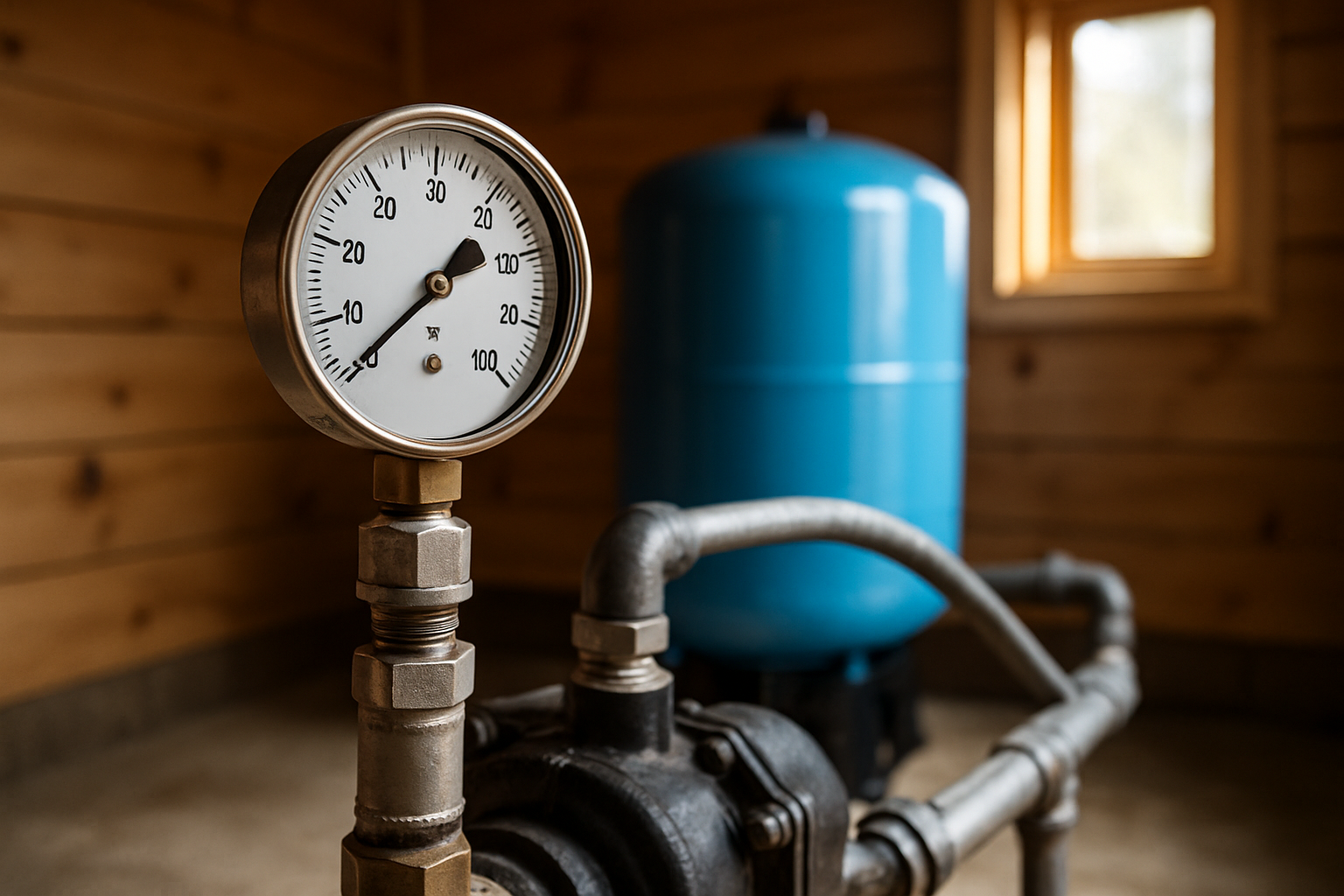
Low Water Pressure From Well
Diagnose and fix pressure problems before they get worse.
Well Maintenance Guide
Keep your well running smoothly with regular maintenance.
Our Locations
1077 Main St, Ramona, CA 92065
57174 CA-371 (US Hwy 79), Anza, CA 92539
Hydrofracturing Across Riverside County: It Depends Where You Are
Riverside County stretches more than 180 miles from the edge of the Los Angeles metro to the Arizona border, and the geology underneath it changes dramatically along the way. That matters enormously for well owners, because whether hydrofracturing will help your well depends almost entirely on what kind of ground your water comes from. In one part of the county it is one of the best investments you can make; in another it is the wrong tool entirely. This guide walks through both, so you can understand where your property fits before you spend a dollar.
Broadly, Riverside County splits into two very different water worlds. The low desert basins — the Coachella Valley around Palm Springs, Indio, and Coachella — sit on a vast alluvial aquifer of sand, gravel, silt, and clay. The mountainous and high-valley backcountry — Anza, Aguanga, Idyllwild, and the surrounding foothills — sits on fractured granitic and crystalline bedrock. Hydrofracturing belongs to the second world, not the first.
The Coachella Valley: A Weak Fit for Hydrofracturing
The Coachella Valley groundwater basin is one of the largest in Southern California, holding an estimated tens of millions of acre-feet of water in deep, water-bearing layers of sand and gravel shed off the surrounding mountains. Wells here draw from that loose alluvium. The problem is that hydrofracturing needs solid rock to hold open the fractures it creates — and loose sand simply slumps back the moment the pressure is released. Injecting high-pressure water into an alluvial Coachella Valley well will not produce a lasting yield increase.
If you own a struggling well in the desert basin, the real causes are usually different: a regional decline in the water table after years of pumping, a pump now hanging too high above the productive zone, sand intrusion wearing out equipment, or hard, mineral-rich water that needs treatment. The right answers there are lowering or deepening the well, replacing or repositioning the pump, drilling a properly screened new well, or installing filtration and softening — not fracturing. We would rather steer you to the fix that works than sell you one that doesn't.
Anza, Aguanga, Idyllwild and the Backcountry: Where Hydrofracturing Shines
Climb out of the desert into the high country and the story flips. The U.S. Geological Survey's studies of the Anza-Terwilliger area describe a hydrologic system built on a fractured bedrock aquifer overlain in places by thin alluvium. More than 500 drillers' logs in that area show bedrock as the primary water source, and for good reason — in Anza, Aguanga, and around Idyllwild, most domestic wells produce from cracks and seams in granitic rock, frequently at depths of 500 to 800 feet or more, with naturally pure but often modest yields.
This is the classic setting where hydrofracturing earns its keep. A bedrock well produces only where it intersects water-bearing fractures, so a borehole that caught just a couple of seams can be a low producer even at great depth. Hydrofracturing flushes those existing fractures clean of silt and mineral scale and extends them outward, connecting the well to additional seams it never reached. In competent backcountry granite, those new openings stay open, and yield improvements of two to five times the original flow are common.
Common Backcountry Scenarios
- Seasonal dry-up. Anza and Aguanga wells often recharge in the wet winter and run thin by late summer. Adding fracture volume can carry a property through the dry months.
- The deep well that disappointed. Drilling 600-800 feet into Idyllwild-area granite is costly; if the hole missed the best seams, fracturing it is far cheaper than starting a new well.
- The aging well in slow decline. Years of mineral precipitate and silt steadily choke the fractures of an older well; rehabilitation restores lost flow.
- The marginal new homestead well. Backcountry parcels frequently come with a single low-yield well; raising that yield can be the difference between a livable property and a constant water struggle.
How Hydrofracturing Works
When the geology is right, the procedure is consistent countywide. We run a baseline flow test, inspect the casing with a downhole camera, and identify fracture zones. An inflatable packer isolates a target zone, and clean water is injected at roughly 1,500 to over 3,000 PSI to clean and propagate the fractures. We may treat several zones in one well. The active work takes four to eight hours, followed by a post-treatment flow test within 24 to 48 hours and a written before-and-after report. Only clean water is used — despite the shared name, this has nothing in common with the chemical-intensive fracking used in oil and gas extraction.
What to Check Before You Call
- Know your location's geology. Desert-floor (Coachella Valley) versus mountain or high-valley (Anza, Aguanga, Idyllwild) is the first and biggest question — it usually tells us immediately whether fracturing is even on the table.
- Time your recovery. How long after heavy use before pressure returns? Slow recovery in bedrock country points to limited fracture flow.
- Note the seasonal pattern. Year-round shortage versus late-summer-only shortage tells us whether you are fighting equipment or a yield ceiling.
- Pull the well log. The DWR well-completion report lists depth, casing, and logged fractures — essential for planning.
- Rule out the cheap stuff. A waterlogged pressure tank or failing pressure switch can mimic a dying well; we always check these first.
When to Call a Professional
Reach out when yield is clearly declining, when a new well underperformed, when a desert well is pulling sand or losing pressure, or when you are deciding between an expensive new well and rehabilitating the one you have. Hydrofracturing demands specialized high-pressure equipment and an operator who understands fractured-rock aquifers — it is never a DIY job. Our $125 diagnostic visit, credited toward any work performed, includes a flow test, camera inspection where access allows, a well-log review, and a straight recommendation, including telling you when fracturing is the wrong call for your part of the county.
Realistic Cost Ranges
- Hydrofracturing (bedrock areas): $3,000-$8,000
- New well, turnkey: $18,000-$42,000
- Submersible pump replacement: $2,500-$5,500
- Pressure tank replacement: $600-$1,500
- Pressure switch replacement: $150-$350
- Sediment filtration: $300-$900
- Iron/manganese filter or water softener: $1,500-$3,500
- Constant-pressure or booster system: $2,000-$4,500
- Well abandonment/decommissioning: $1,500-$5,000
In the backcountry, the comparison between a $3,000-$8,000 hydrofracturing job and an $18,000-$42,000 new well is what makes rehabilitation so compelling. In the Coachella Valley, the spending usually belongs in the pump, deepening, and treatment categories instead.
One more practical note for Riverside County's backcountry: properties here are often far from any municipal connection, so the well is not a convenience — it is the entire water supply for the household, the livestock, and sometimes a small grove or vineyard. That raises the stakes of a low-yield well and makes a $3,000-$8,000 rehabilitation an easy decision when the alternative is hauling water or drilling a fresh $18,000-$42,000 hole. We see this calculus play out constantly in Anza and Aguanga, and it is why we keep an office in Anza specifically to serve the high-valley community quickly.
Serving All of Riverside County
Southern California Well Service is a licensed C-57 water well contractor (CSLB #1086994) founded in 2020, with 60+ years of family heritage. We serve the full breadth of Riverside County — from the Coachella Valley communities of Palm Springs, Palm Desert, Indio, and Coachella to the backcountry of Anza, Aguanga, Idyllwild, Temecula wine country, and the foothill ranches between — from our offices in Ramona (1077 Main St, Ramona, CA 92065) and Anza (57174 CA-371 (US Hwy 79), Anza, CA 92539). Same-day emergency service is available when you have no water. Call (760) 440-8520 or text (760) 219-5877.
Frequently Asked Questions
Will hydrofracturing help my well in the Coachella Valley?
Usually not. Desert-floor wells draw from loose sand and gravel that won't hold open fractures. For those wells, lowering or deepening the well, replacing the pump, drilling a new screened well, or adding treatment is the right path. We will tell you honestly based on your location and well log.
Is my Anza or Idyllwild well a good candidate?
Very likely. Backcountry wells are drilled into fractured granitic bedrock — the ideal setting for hydrofracturing. We confirm with a flow test and camera survey before recommending it.
How do I know which kind of ground my well is in?
Your DWR well-completion report shows the depth and the material the well is completed in. If you can't find it, our diagnostic visit and camera inspection will determine it. In general, desert-floor wells are alluvial and mountain or high-valley wells are bedrock.
How much can yield improve in bedrock wells?
Two to five times the pre-treatment flow is typical in good fractured granite, with larger gains possible. Because results vary with the rock, we measure before and after and document the change.
Does the procedure use chemicals?
No. Water-well hydrofracturing uses only clean water under pressure. It shares a name with oil-and-gas fracking but none of the chemicals.
Is the diagnostic fee refundable?
The $125 diagnostic is credited toward any service or repair work you authorize, so it effectively pays for itself once you proceed.