Jet Pump vs. Submersible Pump: Which Is Right for Your Well?
If you're replacing a well pump or converting from one type to another, understanding the real-world differences between jet pumps and submersible pumps will save you from an expensive mistake. We install both types across San Diego County, but the split isn't even close: 95% of our installations are submersible pumps. Here's why — and the specific situations where a jet pump still makes sense.
The Head-to-Head Comparison
| Feature | Jet Pump | Submersible Pump |
|---|---|---|
| Location | Above ground in pump house | Inside well, underwater |
| Max depth | 25 ft (single-line) / 70-110 ft (two-line) | Unlimited (we've installed at 600+ ft) |
| Efficiency | 25-40% (wastes energy creating vacuum) | 50-70% (pushes water directly) |
| Flow rate | 4-15 GPM (drops with depth) | 5-25+ GPM (consistent regardless of depth) |
| Noise | Loud — audible from outside pump house | Silent — buried underground |
| Priming required | Yes — loses prime during outages | No — always submerged |
| Freeze risk | Yes — exposed pipes and pump housing | No — below frost line |
| Typical lifespan | 5-10 years | 8-15 years |
| Ease of service | Easy — accessible above ground | Harder — must pull from well |
| Pump cost | $200-$800 | $400-$1,500 |
| Total installed cost | $500-$1,500 | $1,200-$5,000+ (depth-dependent) |
How Jet Pumps Work
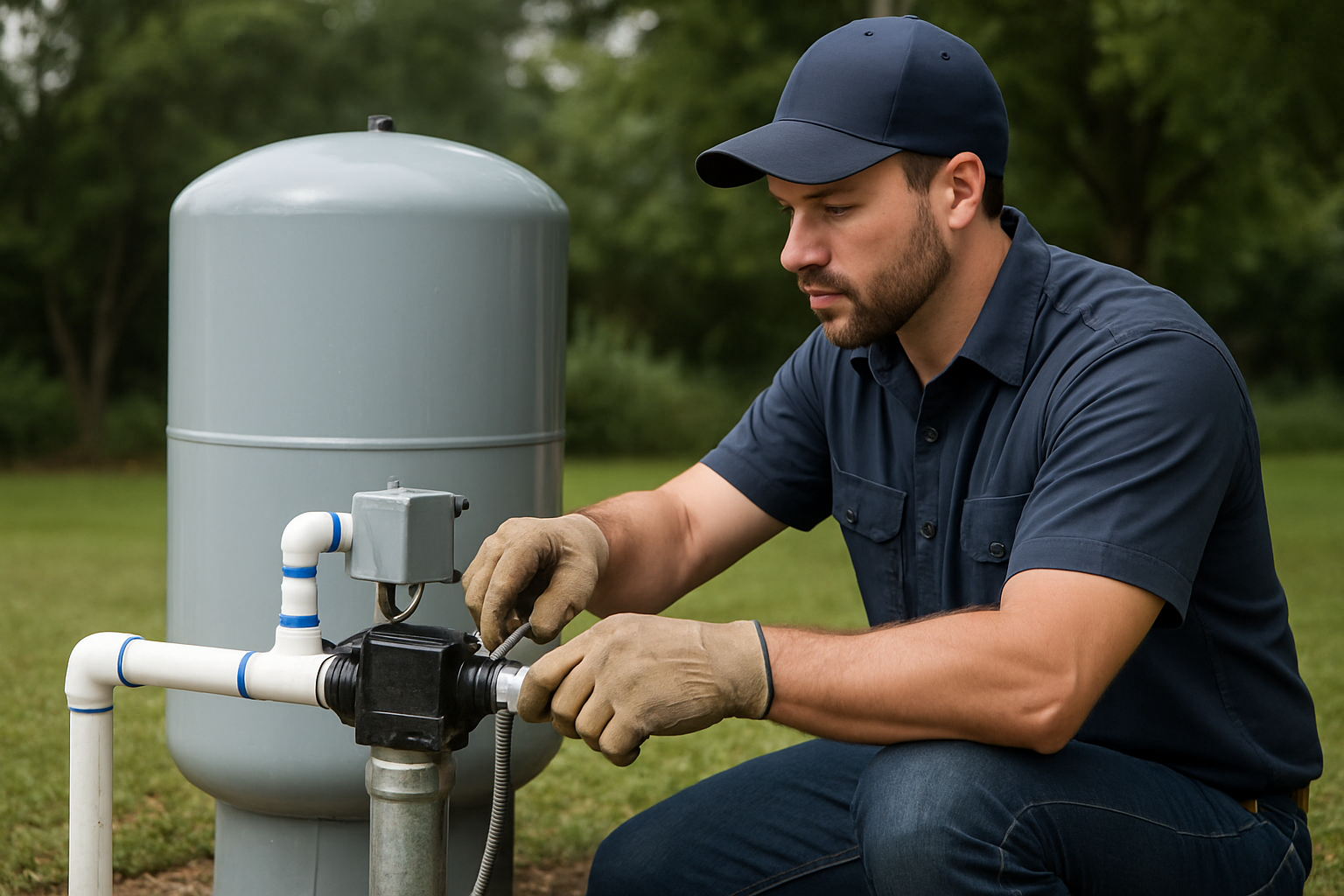
A jet pump sits above ground and uses the Venturi effect to create suction. Water is pushed through a narrow jet nozzle (either inside the pump housing for shallow wells, or down the well in a two-line system) creating a vacuum that pulls water from the well.
Single-Line Jet Pump (Shallow Well)
For wells with water level within 25 feet of the pump. The jet assembly is built into the pump body. One pipe runs to the well. Simple, cheap, easy to service. But extremely limited in depth and efficiency.
Two-Line Jet Pump (Deep Well)
Two pipes run to the well: one pushes water down to the jet assembly at the bottom, the other brings water back up. Can reach 70-110 feet depending on the pump. Better than single-line, but still significantly less efficient than a submersible because the pump is fighting gravity twice — once to push water down to the jet, and again to pull water back up.
The efficiency problem: At 100 feet of depth, a two-line jet pump might deliver 5-8 GPM while consuming the same electricity that a submersible would use to deliver 12-15 GPM. You're paying for water twice — once to push it down, once to bring it back up. Over 10 years, the electricity difference can exceed the higher cost of a submersible installation.
How Submersible Pumps Work
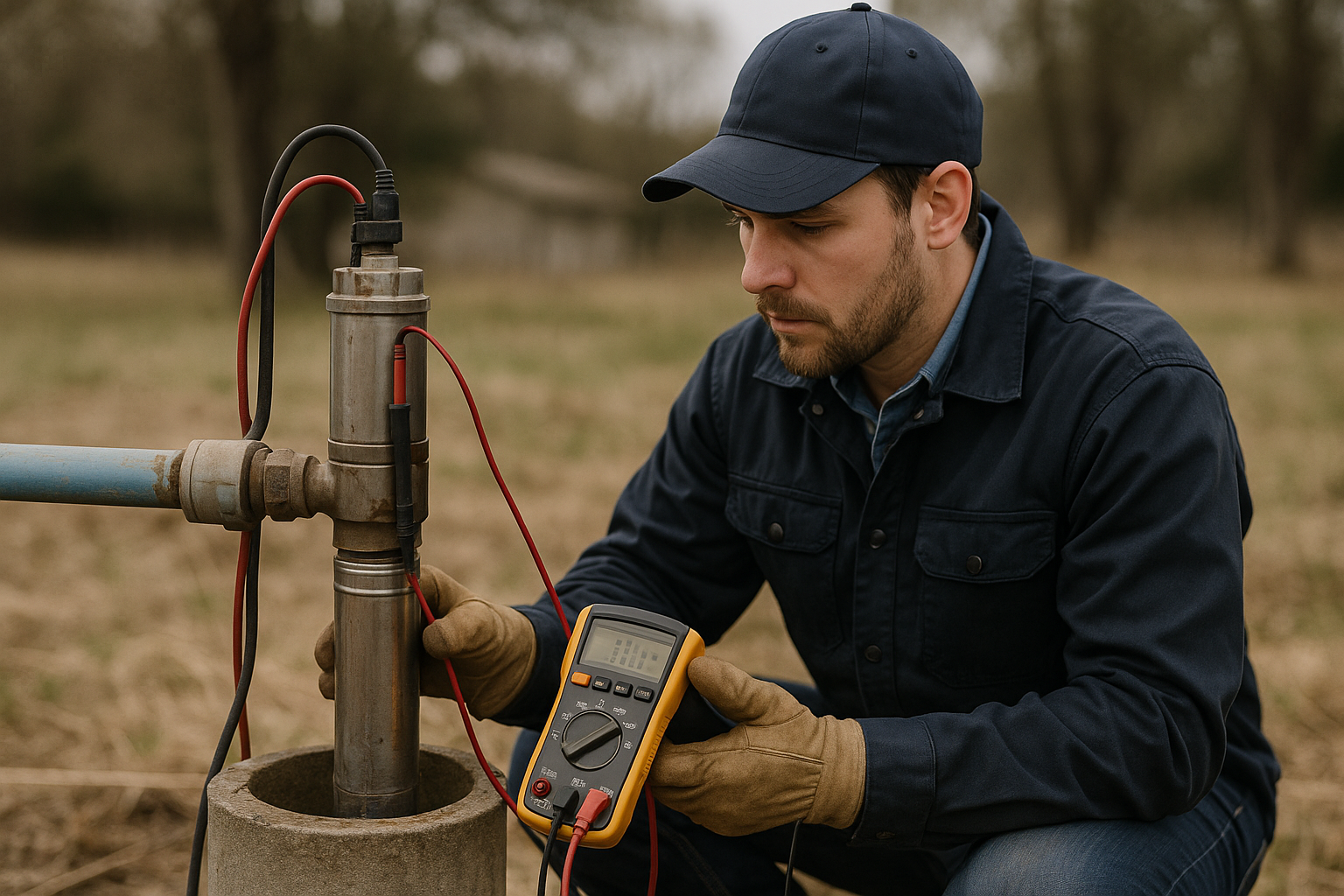
A submersible pump is a sealed unit containing a motor and a series of impeller stages (typically 5-20 stages depending on the depth and pressure required). The entire unit sits underwater inside the well, connected to the surface by a single pipe (drop pipe) and electrical wiring.
Because the pump pushes water up rather than pulling it, it doesn't fight atmospheric pressure limits. A submersible can push water from any depth — we've installed them at 600+ feet in mountain communities like Julian and Palomar Mountain. The deeper the well, the more impeller stages (and horsepower) required, but the principle is the same at 100 feet or 500 feet.
Why Submersibles Last Longer
- Constant water cooling: The motor is surrounded by well water, which acts as a natural coolant. Jet pump motors sit in ambient air, running hotter (especially in a San Diego County pump house in summer — 120°F+ inside is common).
- No priming stress: A jet pump that loses prime and runs dry can overheat in under a minute. A submersible never runs dry unless the water level drops below the pump — and a low-water cutoff switch prevents this.
- No freeze damage: Submersibles are protected from our occasional hard freezes. Mountain community jet pumps (Julian, Idyllwild, Palomar) are vulnerable every winter.
- No suction line issues: Jet pumps depend on airtight suction plumbing. One small leak and the pump loses prime. Submersibles have one pressurized pipe going up — no vacuum seals to fail.
When a Jet Pump Still Makes Sense
Despite the submersible's advantages, there are legitimate scenarios where a jet pump is the right choice:
- Very shallow well (under 25 feet): A single-line jet pump is cheap, simple, and easy to service. Why spend $2,000+ on a submersible for a 20-foot well?
- Hand-dug or large-diameter well: Old-style large-diameter wells (3-4+ feet across) sometimes can't accommodate a standard 4" submersible pump. A jet pump with a suction pipe works fine.
- Well casing too small: Submersible pumps need at least a 4" casing (5" or 6" preferred). Some old wells have 2" or 3" casing. A two-line jet pump can work in these situations until the well can be re-drilled.
- Temporary or secondary use: Irrigation-only wells, temporary construction water supply, or backup wells where the cost of a submersible installation isn't justified.
- Serviceability priority: On properties where the owner wants to be able to service the pump themselves without hiring a well company. Jet pumps are accessible above ground.
Converting from Jet Pump to Submersible
This is one of our most common service calls. A homeowner has dealt with years of priming issues, low flow, noise, or freeze damage, and wants to upgrade. Here's what's involved:
- Remove the existing jet pump, suction pipe, and foot valve from the well
- Inspect the well casing (must be at least 4" diameter for a standard submersible)
- Size the new submersible pump based on well depth, water level, and household demand
- Install the submersible pump, drop pipe, wiring, and safety rope
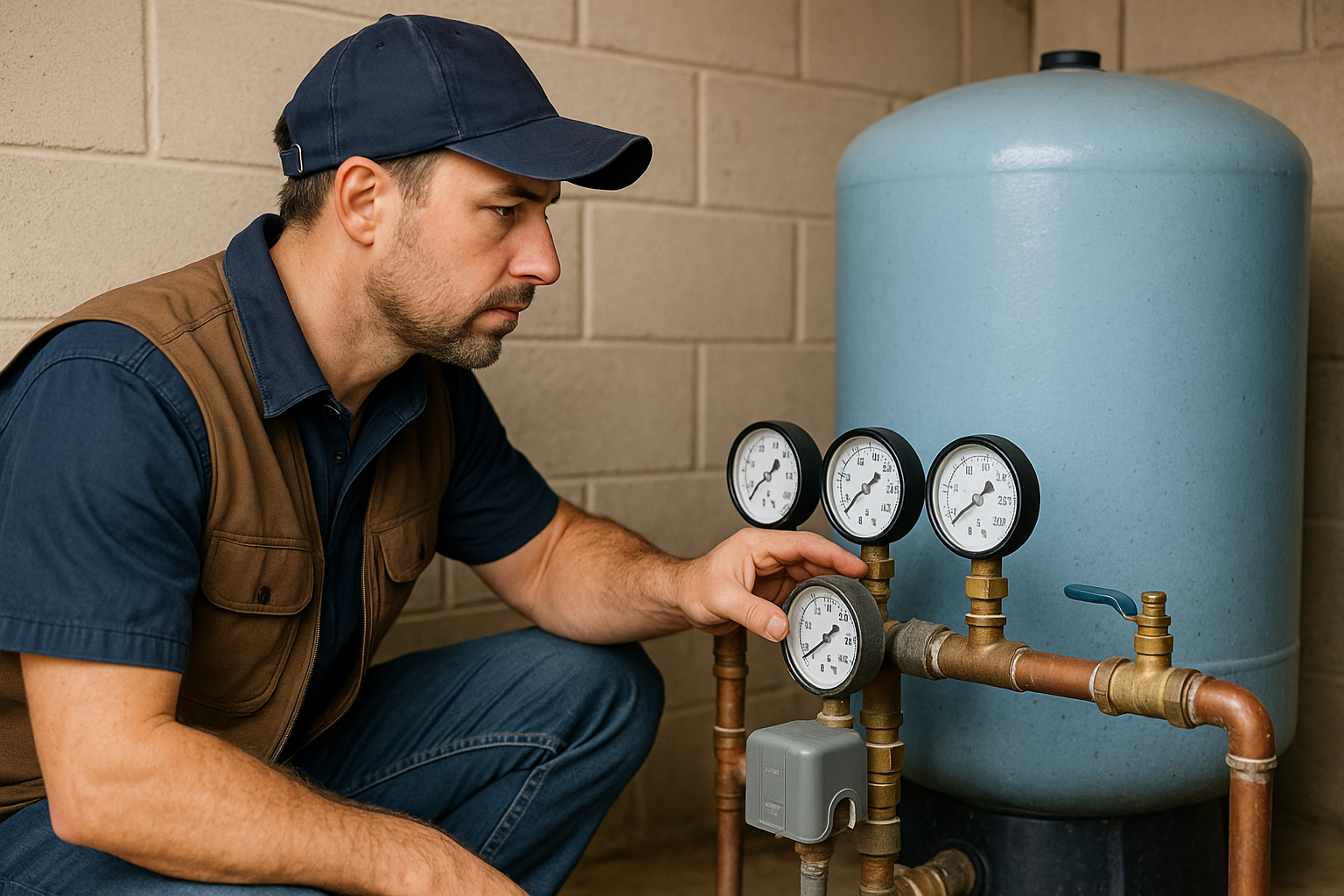
- Connect to existing pressure tank and plumbing (usually minimal changes needed above ground)
- Wire the new pump to a control box and the existing circuit (may need electrical upgrades for larger pumps)
Cost: $2,000-$4,000 for most conversions, depending on well depth. Deeper wells require more pipe, wire, and a more powerful pump. The conversion typically pays for itself within 3-5 years through lower electricity costs, fewer service calls, and eliminated freeze/prime issues.
The Servicing Tradeoff
The one area where jet pumps genuinely win is serviceability:
- Jet pump repair: Walk up to the pump house, diagnose the problem, swap parts. Most repairs take 1-2 hours and cost $150-$500. A mechanically inclined homeowner can do basic repairs.
- Submersible pump repair: Requires pulling hundreds of feet of pipe from the well using a service truck with a hoist. Even a simple diagnosis requires a pump pull ($500-$1,000 just for the pull). Repairs typically cost $1,000-$3,000+ including the pull.
However, submersible pumps need service far less often. A quality submersible (Franklin Electric, Grundfos) in good water lasts 10-15 years without any service. A jet pump typically needs some form of attention every 2-5 years. Over a 15-year period, total service costs tend to be similar or lower for the submersible.
Our Recommendation
For virtually every residential well in San Diego County: submersible pump. Our wells are too deep for jet pumps to be efficient (most are 150-500+ feet), and the reliability, efficiency, and noise advantages are overwhelming. The only time we install jet pumps is for shallow wells under 25 feet, large-diameter hand-dug wells, or temporary/secondary applications. If you currently have a jet pump on a deep well, the conversion to submersible is one of the best upgrades you can make.
Need Help Choosing the Right Pump?
We'll assess your well depth, water level, and usage to recommend the best pump type and size. Serving San Diego, Riverside, and San Bernardino counties for over 30 years.
Call (760) 440-8520