SC By SCWS Team | February 3, 2026 | 10 min read
Loud Noise From Well Pump: 9 Sounds & What They Mean
Your well pump just started making a sound it's never made before. That's not a noise you should ignore. Well pumps communicate through sounds—and unusual noises are almost always warning signs of developing problems. Catching issues early can mean the difference between a $200 repair and a $3,000+ pump replacement.
🚨 Stop Immediately If You Hear:
- • Loud humming with no water: Motor overheating—turn off power
- • Screaming/squealing: Severe mechanical distress
- • Grinding metal: Components destroying themselves
- • Burning smell with any noise: Electrical or motor failure
What's Normal vs. What's Not
Before diagnosing problems, know what normal sounds like:
✅ Normal Sounds
- Submersible pumps: Nearly silent in the house; faint water flow sound
- Jet pumps: Steady hum when running, click when starting
- Pressure switch: Single click on, single click off
- Water flow: Quiet whoosh through pipes
🚨 Warning Sounds
- New sounds: Any noise the system hasn't made before
- Loud sounds: Significant increase in noise level
- Rhythmic sounds: Clicking, banging, or cycling
- Continuous sounds: That don't stop when pump should be off
9 Common Well Pump Noises & Their Causes
1. Loud Humming (No Water Flowing)
The sound: A loud, continuous electrical hum from the pump or control box, but no water comes out.
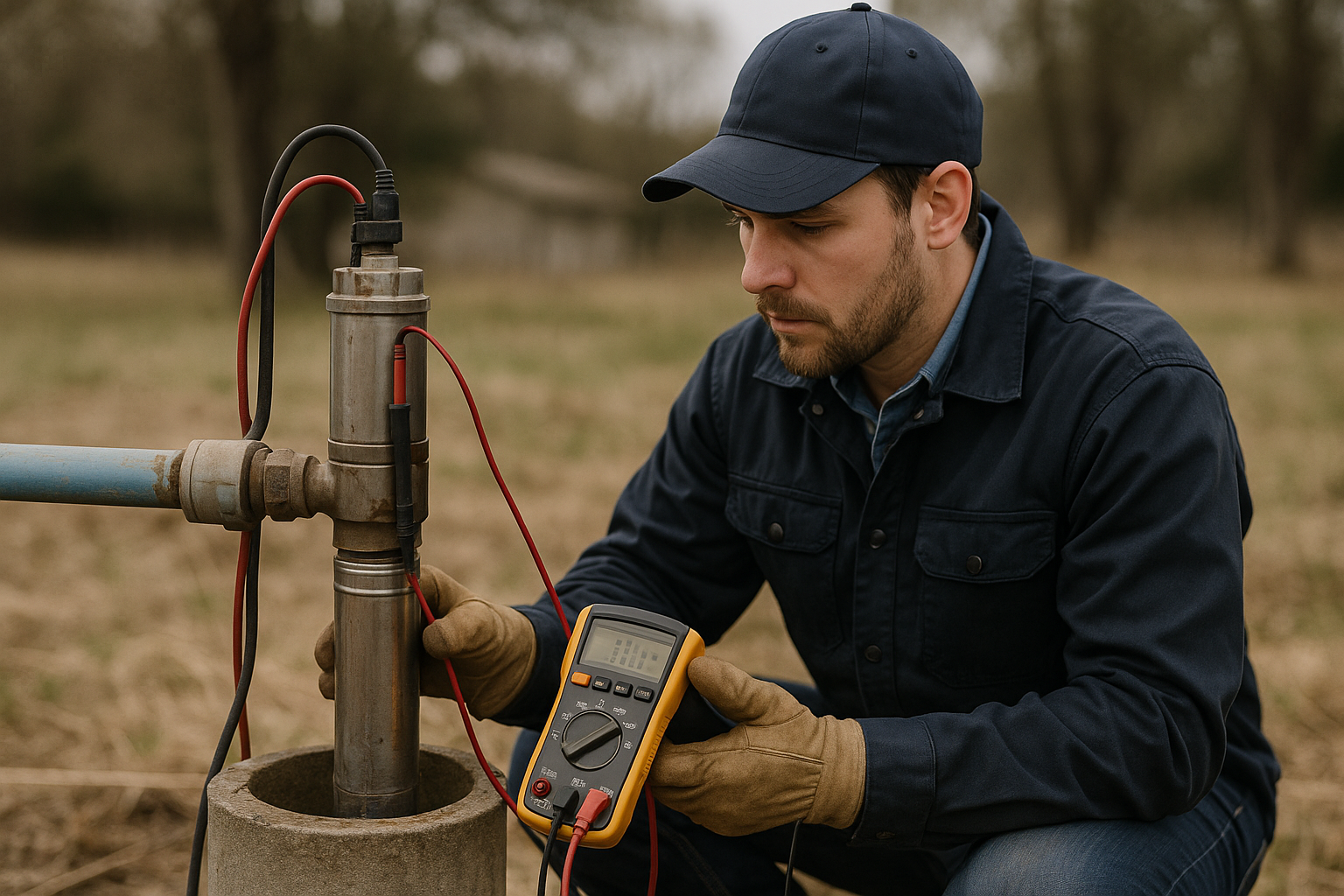
What it means: The motor is receiving power but the pump shaft cannot turn. This is an emergency—the motor is overheating.
Possible Causes:
- Seized pump: Sand, sediment, or corrosion has locked the impeller
- Failed bearings: Motor bearings have seized
- Bad start capacitor: Motor can't generate enough torque to start
- Low voltage: Insufficient power to turn the motor
- Jammed impeller: Debris blocking rotation
⚡ Immediate Action Required
Turn off the breaker immediately. A motor trying to run but unable to turn will burn out its windings within minutes. Call a professional—do not keep trying to restart it.
The fix: Depends on cause. Capacitor replacement costs $100-$250. Seized pump usually means pump replacement ($1,500-$3,500+). See our guide on pump humming but not working.
2. Grinding or Growling
The sound: A rough, grinding, or growling noise while the pump runs, like metal on metal.
What it means: Mechanical components are wearing against each other destructively.
Possible Causes:
- Worn bearings: Most common cause—bearings breaking down
- Sand in pump: Abrasive particles grinding internal components
- Bent shaft: Impeller wobbling and scraping housing
- Worn impeller: Loose impeller contacting diffuser
- Debris in pump: Foreign object caught in mechanism
The fix: Grinding almost always means the pump is damaging itself and will fail soon. For submersible pumps, this typically means replacement ($1,500-$3,500+). For jet pumps, bearing/seal kits may be available ($200-$500 repair).
3. Rapid Clicking (From Pressure Switch Area)
The sound: Rapid click-click-click-click from near the pressure tank, often with fluctuating water pressure.
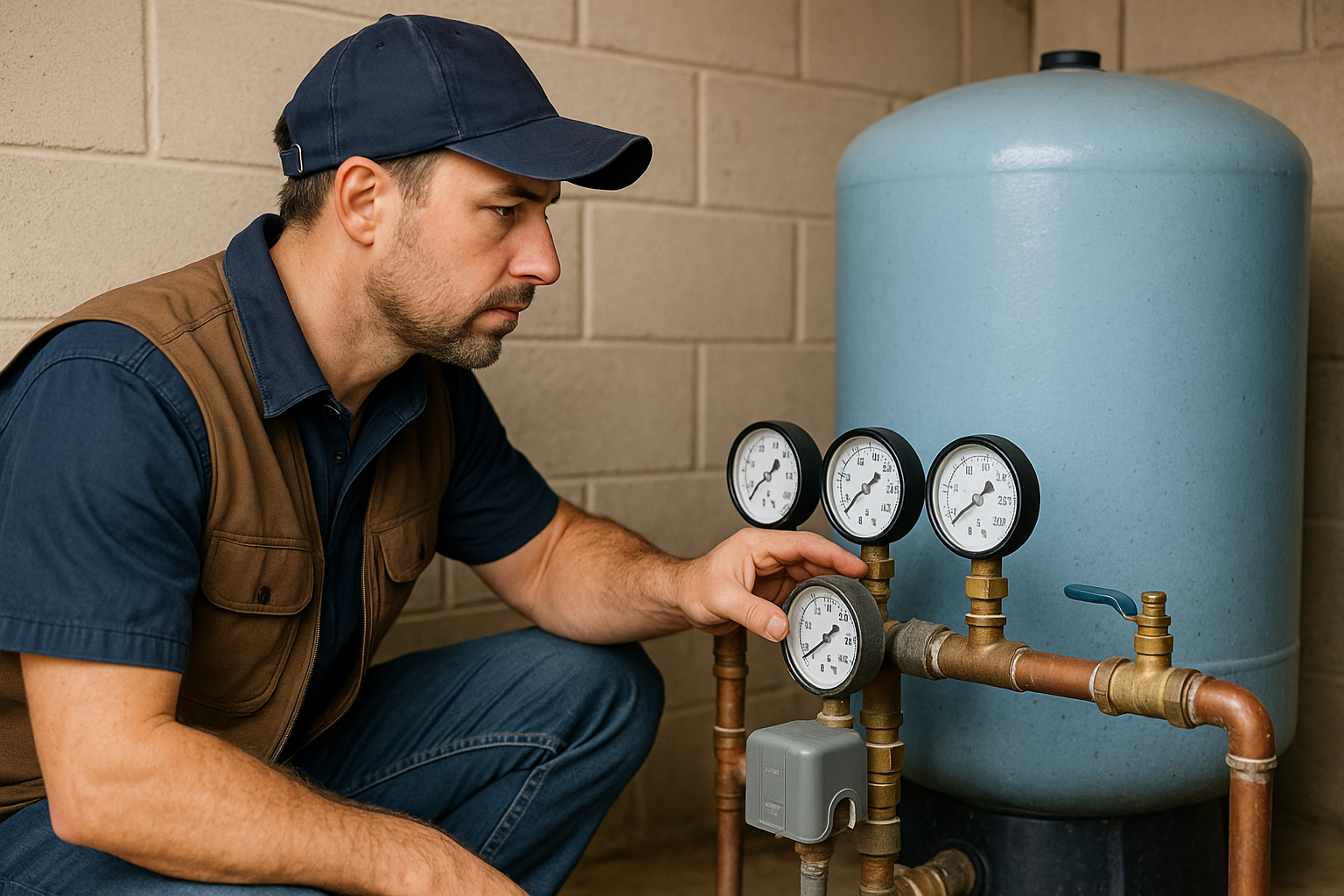
What it means: The pressure switch is cycling rapidly—turning the pump on and off many times per minute (short cycling).
Possible Causes:
- Waterlogged pressure tank: Most common—no air cushion to maintain pressure
- Failing pressure switch: Contacts bouncing or incorrectly calibrated
- Leak in system: Pressure drops immediately after pump stops
- Failed check valve: Water draining back, triggering restart
⚠️ Don't Ignore Short Cycling
Each pump start draws 3-5x the running current. Constant starting overheats the motor and dramatically shortens pump life. A pump rated for 10-15 years may fail in 2-3 years if short cycling continues.
The fix: Most often, the pressure tank needs recharging ($75-$150) or replacement ($400-$1,500). See our guide on well pump short cycling.
4. Banging or Hammering (Water Hammer)
The sound: Loud bangs, thuds, or hammering in pipes when the pump starts, stops, or valves close.
What it means: Water hammer—pressure shockwaves traveling through the plumbing when water flow suddenly stops.
Possible Causes:
- No check valve: Or check valve slamming closed
- High water pressure: Excessive system pressure amplifies hammer
- Quick-closing valves: Single-lever faucets, solenoid valves
- Loose pipes: Unsecured pipes amplify sound
- Pump starting abruptly: Especially after power restoration
The fix: Install water hammer arrestors ($50-$150 each), add or replace check valves ($200-$500), secure loose pipes, or install a pressure reducing valve if pressure exceeds 60 PSI. See our guide on water hammer solutions.
5. Screaming or Squealing
The sound: High-pitched screaming, squealing, or shrieking from the pump.
What it means: The pump is in severe distress—something is very wrong mechanically.
Possible Causes:
- Cavitation: Pump pulling air instead of water (low water level)
- Severely worn bearings: Metal-on-metal contact at high speed
- Motor overheating: Windings under extreme stress
- Dry running: Pump running without water (deadly for pumps)
🚨 Emergency Response
Turn off the pump immediately. Screaming indicates imminent failure. Running the pump further will cause catastrophic damage. Call for emergency service.
The fix: Investigate the cause before restarting. May need to check well water level, pump position, or replace the pump entirely.
6. Vibration and Rattling
The sound: Pipes shaking, rattling, or vibrating when pump runs, possibly with buzzing sounds.
What it means: Mechanical vibration is being transmitted through the system, often amplified by loose components.
Possible Causes:
- Loose pipe hangers: Pipes not properly secured
- Pump mounting issues: Jet pump not securely mounted
- Air in lines: Causes turbulent, pulsing flow
- Worn pump components: Unbalanced impeller creating vibration
- Excessive pressure: System operating above design limits
The fix: Secure loose pipes and fittings, check pump mounting, bleed air from system. If vibration is from the pump itself, internal wear may require pump service or replacement.
7. Sputtering or Gurgling
The sound: Water sputtering from faucets, gurgling in pipes, irregular flow sounds.
What it means: Air is mixing with the water in your system.
Possible Causes:
- Low well water level: Pump drawing air from near surface
- Pump set too deep: Drawing from aerated zone
- Failed check valve: Allowing air into system
- Leak on suction side: Air being drawn into pipes
- Naturally gassy water: Dissolved gases releasing
The fix: Identify the air source. May require checking water level, adjusting pump depth, replacing check valves, or sealing leaks. See air bubbles in well water and sputtering water from well.
8. Constant Running (No Shutoff)
The sound: Pump runs continuously without ever shutting off, even when no water is being used.
What it means: The pump can't build enough pressure to reach the cut-out setting.
Possible Causes:
- Significant leak: Water escaping as fast as pump delivers
- Worn pump: Can't generate enough pressure anymore
- Drop pipe leak: Leak between pump and surface
- Pressure switch set too high: Beyond pump's capability
- Stuck check valve: Water flowing back down well
⚠️ Continuous Running Dangers
A pump running 24/7 will overheat and fail prematurely. It also wastes significant electricity. If the pump can't reach shutoff pressure, turn off the system and call for service.
The fix: Find the leak or determine why pressure can't build. May require pressure adjustment, leak repair, or pump replacement.
9. Electrical Buzzing or Arcing Sounds
The sound: Electrical buzzing, crackling, or snapping from the control box, pressure switch, or wiring.
What it means: Electrical problems—potentially dangerous.
Possible Causes:
- Loose connections: Wires not properly secured
- Corroded contacts: Resistance causing heat and arcing
- Failing capacitor: Making noise as it dies
- Damaged insulation: Potential for short circuit
- Overloaded circuit: Wiring undersized for load
🔥 Fire Hazard Warning
Electrical buzzing or arcing can cause fires. Turn off the breaker immediately and do not restore power until a qualified technician inspects the system. This is not a DIY situation.
The fix: Professional electrical inspection and repair. May need new pressure switch, control box, wiring, or connections ($150-$500+).
🔊 Quick Sound Diagnosis Chart
| Sound | Likely Cause | Urgency |
|---|---|---|
| Humming (no water) | Seized pump or bad capacitor | 🔴 Emergency |
| Screaming/squealing | Cavitation or bearing failure | 🔴 Emergency |
| Grinding | Worn bearings or sand damage | 🟠 Urgent |
| Electrical buzzing | Loose/failing electrical | 🟠 Urgent |
| Rapid clicking | Short cycling | 🟡 Soon |
| Banging/hammering | Water hammer | 🟡 Soon |
| Sputtering/gurgling | Air in system | 🔵 Monitor |
| Vibration/rattling | Loose mounting | 🔵 Monitor |
Repair Cost Summary
| Problem | Typical Solution | Cost Range |
|---|---|---|
| Bad capacitor | Replace capacitor | $100-$250 |
| Short cycling | Recharge/replace tank | $75-$1,500 |
| Pressure switch | Replace switch | $150-$350 |
| Water hammer | Install arrestors/valve | $150-$500 |
| Check valve | Replace valve | $200-$500 |
| Electrical issues | Repair connections | $150-$500 |
| Failed pump | Replace pump | $1,500-$3,500+ |
Frequently Asked Questions
Why is my well pump making a loud humming noise?
A loud humming sound from a well pump usually means the motor is receiving power but cannot turn. Common causes include a seized pump (from sand, sediment, or failed bearings), a bad starting capacitor, low voltage, or a jammed impeller. This is an emergency—the motor will overheat and fail if left running in this state.
What does a grinding sound from my well pump mean?
Grinding indicates mechanical wear—typically worn bearings, sand/sediment in the pump, a bent shaft, or worn impellers scraping against the housing. The pump is damaging itself and will fail soon without intervention. For submersible pumps, this sound may be transmitted through pipes into the house.
Why does my well pump make a clicking noise?
Rapid clicking from the pressure switch area indicates short cycling—the pump turning on and off rapidly. This is usually caused by a waterlogged pressure tank, failing pressure switch, or leak in the system. The clicking sound is the pressure switch contacts opening and closing. Address this quickly to prevent pump damage.
What causes a banging or hammering sound in my well system?
Banging sounds are usually water hammer—pressure shockwaves caused when water flow suddenly stops or the pump starts/stops abruptly. This can damage pipes, fittings, and the pump itself. Solutions include installing water hammer arrestors, check valves, or adjusting pump operation.
Is it normal for a well pump to make noise?
Some sound is normal. Submersible pumps should be nearly silent inside the house (you might hear water flowing). Jet pumps above ground produce a steady hum when running. Any new, unusual, or loud noises warrant investigation—they usually indicate developing problems that worsen without attention.
Why is my well pump screaming or squealing?
A high-pitched screaming or squealing sound typically indicates cavitation (pump pulling air), severely worn bearings, or a motor operating under extreme stress. This is a serious warning—the pump is in distress and may fail at any moment. Turn off the system and call for service immediately.
My pipes vibrate and rattle when the pump runs. Why?
Pipe vibration usually comes from loose mounting hardware, pipes not properly secured, or excessive water pressure/flow. It can also indicate air in the lines or pump cavitation. While the vibration itself isn't usually dangerous, it can loosen fittings over time and indicates the system needs attention.
How much does it cost to fix a noisy well pump?
Costs vary by cause: pressure switch replacement costs $150-$350, pressure tank replacement costs $400-$1,500, check valve replacement costs $200-$500, water hammer arrestor installation costs $150-$400, and pump replacement costs $1,500-$3,500+. Diagnosis/service calls typically cost $100-$200.
Strange Sounds From Your Well Pump?
Don't wait for that noise to become a complete failure. Our technicians can diagnose pump sounds over the phone and get you scheduled for service quickly. We serve all of San Diego and Riverside Counties with same-day emergency service available.