
Low Flow or Low Yield Well in Arrowbear Lake
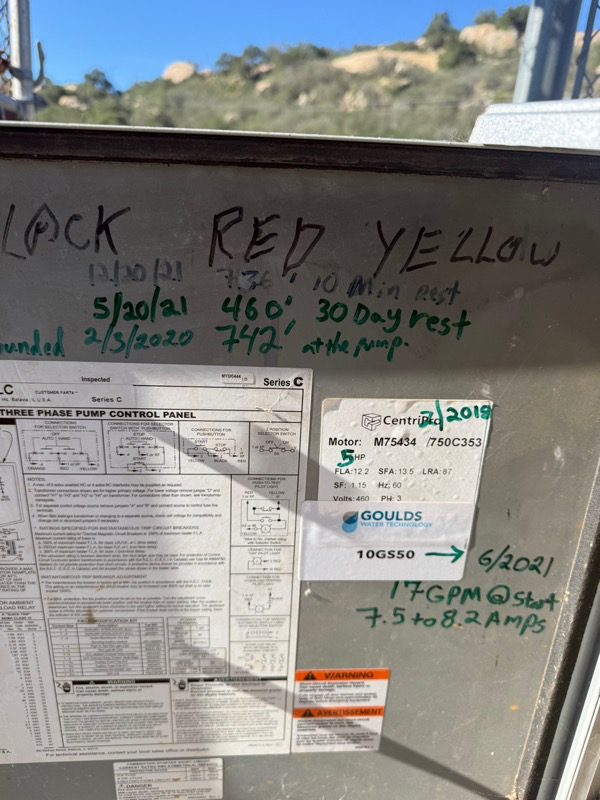
Is your Arrowbear Lake well not producing enough water for your needs? Low flow wells are frustrating, but there are proven solutions to improve your water supply.
📋 In This Guide
- Understanding Well Yield
- Solutions for Low Flow Wells
- Living with a Low Flow Well
- Free Well Yield Evaluation
- Related Articles
Understanding Well Yield
Well yield is measured in gallons per minute (GPM). Typical requirements:
- Single family home: 3-5 GPM minimum
- Large family/multiple bathrooms: 6-12 GPM
- Small farm/livestock: 10-20 GPM
- Agricultural irrigation: 50-500+ GPM
Many San Bernardino County wells produce 1-3 GPM—technically "low flow" but manageable with proper system design.
Solutions for Low Flow Wells
Storage Tank Systems
Collect water 24/7 into a large tank, then use a booster pump for household pressure. This multiplies your effective supply.
Hydrofracturing
High-pressure treatment to open fractures in bedrock, often doubling or tripling yield.
Well Deepening
Drilling deeper may reach better-producing zones.
Second Well
Adding a second well to supplement your primary supply.
Living with a Low Flow Well
While improving yield is ideal, you can also adapt:
- Install low-flow fixtures
- Spread water use throughout the day
- Add storage capacity for peak demand
- Use water-efficient appliances
Free Well Yield Evaluation
Not sure how much your well produces? We can perform a flow test and recommend the most cost-effective solution for your situation.
Need Help With Your Well in Arrowbear Lake?
Our expert technicians serve Arrowbear Lake and all of San Bernardino County with professional well services.
Related Articles
Continue learning about well maintenance and troubleshooting
Signs Your Well Pump Is Failing
Catch pump problems early before you lose water completely.
Low Water Pressure From Well
Diagnose and fix pressure problems before they get worse.
Well Maintenance Guide
Keep your well running smoothly with regular maintenance.
Our Locations
1077 Main St, Ramona, CA 92065
57174 CA-371 (US Hwy 79), Anza, CA 92539
Low-Yield Wells in the Arrowbear Lake High Country
Arrowbear Lake is a small mountain community perched around 6,000 feet in the San Bernardino Mountains, in San Bernardino County, tucked along Highway 18 between Running Springs and Big Bear. Up here the geology is hard crystalline and granitic bedrock of the San Bernardino range, not the deep alluvial valleys you find downhill. That single fact shapes almost every well problem we see in Arrowbear Lake: water does not sit in a thick, sandy aquifer, it travels through cracks and fractures in the rock. When a property has a low-flow or low-yield well, the cause is usually that the well intercepts only a few productive fractures, and when those fractures run low, so does your faucet.
Mountain wells also contend with seasonal swings. Arrowbear's supply leans heavily on winter snowpack to recharge the fracture network, so a marginal well that ran fine in a wet spring can struggle by late summer. The encouraging part is that fractured-rock low-yield wells respond very well to the right combination of treatment and system design. Here is how we approach them.
Living with a low-yield well at this elevation means small annoyances add up fast: a shower that fades while the dishwasher runs, an irrigation zone that drops pressure, or a pump that hammers on and off during a busy morning. None of those symptoms automatically mean your well is failing. More often they mean the supply and the demand are mismatched, and that mismatch is exactly what a proper evaluation and the right system design correct.
Measuring Your Well Yield in Gallons Per Minute
Start by separating two things: how fast your fixtures flow, and how much water the well can actually sustain. For a quick check, run an outdoor spigot into a five-gallon bucket and time it. Fifteen seconds to fill means 20 GPM; one minute means 5 GPM; if it takes two or three minutes, you are at 2.5 GPM or less and you have a genuine low-yield situation.
Because a pressure tank stores water and can briefly disguise a weak well, the number that matters most comes from a sustained yield (drawdown) test. We pump the well steadily, watch the water level fall, and time how quickly it recovers. In Arrowbear Lake's fractured granite this is essential, because a well can deliver a healthy burst and then drop to a trickle once it has drained its accessible fractures. A typical mountain home needs 3 to 5 GPM of reliable supply; many Arrowbear wells naturally produce only 1 to 3 GPM, which is workable with proper storage but unforgiving if your equipment is wrong.
Why Arrowbear Lake Wells Run Low
- Limited fracture yield. The defining issue at this elevation. A well only produces as much as the fractures it crosses, and some properties simply tap a sparse network. A neighbor 200 feet away can have triple your yield purely by luck of geology.
- Seasonal water-table decline. Snowmelt recharges these fractures. After a dry winter the saturated zone shrinks and shallow or marginal wells lose their cushion first.
- Mineral scale on the screen and casing. The hard, mineral-rich mountain water leaves calcium and iron encrustation that gradually seals off the openings where water enters the well.
- Iron and sulfur biofouling. Bacterial slimes plug intake zones and often arrive with staining or an odor, slowly choking flow.
- Pump set too high or oversized. If the pump sits above the productive fractures, it loses prime as soon as the level drops; if it is too powerful, it pulls the well down faster than the rock can refill, causing short cycling and sputtering taps.
Your Options, With Honest Tradeoffs
Well Rehabilitation
When an older Arrowbear well has slowly weakened, cleaning the screen and casing with brushing, surging, and chemical treatment often recovers significant yield lost to scale and bacteria. At roughly $1,500 to $5,000, it is the logical first step for a well that used to perform better. It restores capacity but cannot manufacture water the fractures do not hold.
Hydrofracturing
This is frequently the standout solution in fractured-granite country like Arrowbear Lake. By injecting high-pressure water, we open and connect existing fractures, commonly doubling or tripling a hard-rock well's output. Costs run about $3,000 to $8,000, and because nearly every well here is finished in bedrock, hydrofracturing is a realistic candidate for most low-yield properties.
Deepening
Drilling deeper can intersect additional water-bearing fractures, though in crystalline rock there is no guarantee the next hundred feet is wetter. We weigh it against nearby well logs before recommending it.
Storage Cistern With a Booster or Constant-Pressure Pump
For a well that is simply slow, this is the most dependable answer. Let your low-yield well trickle continuously into a large cistern (commonly 2,500 to 5,000 gallons), then use a booster or constant-pressure pump to deliver strong household pressure on demand. Even a 1.5 GPM well filling around the clock provides over 2,000 gallons a day, comfortably covering a mountain household, while the tank absorbs peak morning and evening use. Plan on roughly $3,000 to $7,000. The tradeoffs are tank space and a little extra equipment, and in freezing Arrowbear winters the cistern and lines must be properly insulated or buried, something our local crews build in by default.
Right-Sizing the Pump
Often the most economical fix is matching the pump to the well: setting it at the correct depth and adding a flow-control valve so it cannot outrun the fractures. A properly sized pump and pressure tank run $2,500 to $5,500.
When It Is Time to Call a Pro
Sputtering air at the taps, a pump that clicks on and off rapidly, cloudy or sandy water, or a noticeable drop in flow all signal that you should stop guessing and get a yield evaluation. In Arrowbear's fractured rock the cause is rarely obvious from the surface, and replacing the wrong component is an expensive mistake. Our $125 diagnostic, credited toward repairs, pins down whether you need cleaning, fracturing, storage, or simply a better-matched pump.
Serving Arrowbear Lake and the Mountain Communities
Southern California Well Service serves Arrowbear Lake and the surrounding San Bernardino County mountain towns of Running Springs, Green Valley Lake, Smiley Park, and the Highway 18 corridor toward Big Bear. As a licensed C-57 water well contractor founded in 2020, with 60+ years of family heritage, we handle yield testing, rehabilitation, hydrofracturing, freeze-protected storage systems, and pump work in-house. Crews who understand high-elevation fractured-rock wells and cold-weather installations get these jobs right the first time.
Talk to a Low-Yield Well Specialist in Arrowbear Lake
Southern California Well Service has worked since 2020 coaxing reliable water out of stubborn wells across the region. We are a licensed C-57 water well contractor, licensed C-57 (CSLB #1086994), with same-day emergency response from our Ramona and Anza offices. Our diagnostic visit is $125, and that fee is credited toward any work we perform.
Frequently Asked Questions
Why does my Arrowbear Lake well produce less in late summer?
At 6,000 feet the fracture network is recharged mainly by winter snowmelt. As the season dries out, the saturated zone shrinks and marginal wells lose flow. Storage capacity is the most reliable way to ride out the seasonal low.
Is hydrofracturing worth it for a mountain well?
Often yes. Arrowbear wells are finished in fractured granite, and hydrofracturing opens and links those fractures, frequently doubling or tripling yield. It is one of the most effective options in hard-rock terrain like this.
My well makes water for a few minutes then sputters. What is wrong?
That is classic low fracture yield: the well delivers what is in its accessible fractures, then drains faster than it refills. A yield test confirms it, and a storage-and-booster system usually solves it for good.
Will pipes and a storage tank freeze up here in winter?
They can if installed carelessly. We insulate, bury, or heat-trace cisterns and lines as needed for Arrowbear's climate, so a properly built storage system runs reliably through the coldest months.
How much will fixing my low-yield well cost?
Rehabilitation runs $1,500 to $5,000, hydrofracturing $3,000 to $8,000, a storage-plus-booster system $3,000 to $7,000, and a right-sized pump and tank $2,500 to $5,500, depending on what the diagnosis shows.
Do you provide emergency well service in Arrowbear Lake?
Yes. We offer same-day emergency response throughout the mountain communities. Call (760) 440-8520 or text (760) 219-5877 any time you lose water.