
Low Flow or Low Yield Well in Beaumont
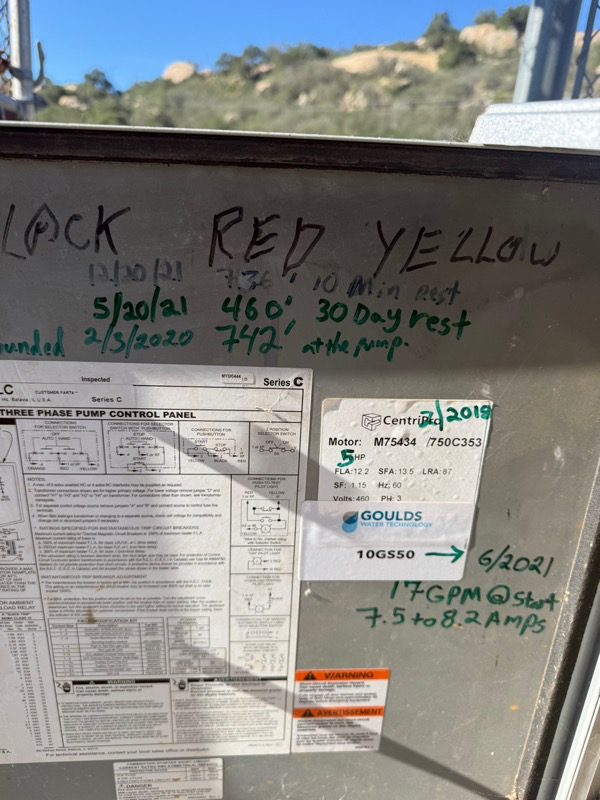
Is your Beaumont well not producing enough water for your needs? Low flow wells are frustrating, but there are proven solutions to improve your water supply.
📋 In This Guide
- Understanding Well Yield
- Solutions for Low Flow Wells
- Living with a Low Flow Well
- Free Well Yield Evaluation
- Related Articles
Understanding Well Yield
Well yield is measured in gallons per minute (GPM). Typical requirements:
- Single family home: 3-5 GPM minimum
- Large family/multiple bathrooms: 6-12 GPM
- Small farm/livestock: 10-20 GPM
- Agricultural irrigation: 50-500+ GPM
Many Riverside County wells produce 1-3 GPM—technically "low flow" but manageable with proper system design.
Solutions for Low Flow Wells
Storage Tank Systems
Collect water 24/7 into a large tank, then use a booster pump for household pressure. This multiplies your effective supply.
Hydrofracturing
High-pressure treatment to open fractures in bedrock, often doubling or tripling yield.
Well Deepening
Drilling deeper may reach better-producing zones.
Second Well
Adding a second well to supplement your primary supply.
Living with a Low Flow Well
While improving yield is ideal, you can also adapt:
- Install low-flow fixtures
- Spread water use throughout the day
- Add storage capacity for peak demand
- Use water-efficient appliances
Free Well Yield Evaluation
Not sure how much your well produces? We can perform a flow test and recommend the most cost-effective solution for your situation.
Need Help With Your Well in Beaumont?
Our expert technicians serve Beaumont and all of Riverside County with professional well services.
Related Articles
Continue learning about well maintenance and troubleshooting

Signs Your Well Pump Is Failing
Catch pump problems early before you lose water completely.
Low Water Pressure From Well
Diagnose and fix pressure problems before they get worse.
Well Maintenance Guide
Keep your well running smoothly with regular maintenance.
Our Locations
1077 Main St, Ramona, CA 92065
57174 CA-371 (US Hwy 79), Anza, CA 92539
Low Flow and Low Yield Wells in Beaumont: What Pass-Area Owners Need to Know
Beaumont sits at the top of the San Gorgonio Pass, the high gap in Riverside County that separates the San Bernardino Mountains from the San Jacintos and funnels wind and weather between the coast and the desert. For property owners here — especially on the rural edges toward Cherry Valley, Oak Valley, and the ranch land east of town — a private well is often the only water source, and few local problems are as frustrating as a well that no longer keeps up. If your Beaumont taps sputter, your pressure drops when two fixtures run at once, or your pump seems to run forever, you are dealing with a low-flow or low-yield well. Southern California Well Service has worked these Pass-area wells since 2020, and nearly every case traces back to a cause that measurement can pin down and repair can solve.
The key thing to understand is that a low-yield well is a supply problem, not necessarily a mechanical failure. The pump can be perfectly healthy while the aquifer struggles to feed water into the well as fast as the house pulls it out. What makes Beaumont unusual is that the local groundwater story is one of the most documented — and most challenged — in the region.
Why Beaumont Wells Struggle to Keep Up
Beaumont lies over the Beaumont storage unit of the San Gorgonio Pass groundwater subbasin. According to USGS studies of the area, the main water-bearing deposits here are younger sedimentary and surficial layers, broken into a perched aquifer, an upper aquifer, and a deeper lower aquifer. In much of the Beaumont area the water table sits deep — commonly more than 150 feet down — and it has been falling for a long time. Groundwater levels in the Beaumont storage unit declined by as much as 100 feet over the twentieth century in response to decades of pumping, and numerous natural springs that once flowed in the area have gone dry as levels dropped. That regional decline is the single biggest reason Pass-area wells lose flow.
On an individual property, low flow in Beaumont usually comes down to:
- A long-term and seasonal drop in the water table. With the Beaumont subbasin's documented water-level declines, an older well drilled decades ago may now have its pump sitting near or above today's water level, so it draws air and loses flow during heavy use.
- A pump set too high or too small. Wells built for the higher water tables of years past frequently need the pump lowered or upsized to reach and lift from today's deeper level.
- Screen clogging from scale and biofouling. The Pass area's mineral-rich water leaves scale on the well screen, and iron bacteria form slime that plugs perforations, choking the rate at which water can enter the well.
- Silt and sediment accumulation. In the sedimentary aquifers here, fine material settles into the bottom of a well over time and can bury the productive zone, cutting yield.
- Drought-reduced recharge. The Pass gets modest rainfall, and dry cycles slow the natural refilling of the aquifer, deepening the seasonal lows.
Common Local Scenarios in the Pass
A Cherry Valley homeowner notices the well that served the family for twenty years now can't run the irrigation and the house at the same time — a case of steady water-table decline outpacing an aging pump setup. An Oak Valley property that expanded from a couple of people to a full household finds its modest yield suddenly inadequate at peak demand. An older well on the east side starts producing cloudy, gritty water as silt fills the casing and the screen scales over. These are distinct problems, and telling them apart requires testing the well, not swapping parts and hoping.
What to Check When Your Flow Falls Off
A sound diagnosis measures the well's actual behavior. When we evaluate a low-flow Beaumont well, we assess:
- Static water level — where the water stands with the pump off, compared with the well's original drilling records, to gauge how far the local table has fallen.
- Pumping level and drawdown — how far the water drops while pumping. Deep, continuing drawdown is a hallmark of a well fighting to keep up with its pump in a declining aquifer.
- A yield and recovery test — sustained GPM plus how quickly the level rebounds. Slow recovery indicates a weak or over-drafted aquifer; fast recovery with low flow points to a mechanical restriction.
- Pump depth and condition — whether the pump is positioned correctly for today's water level and whether it, the wiring, and the check valve are sound.
- Sediment and water clarity — grit or turbidity flags screen and casing issues.
Ahead of a visit, note whether the flow weakens only during simultaneous use, only in the dry season, or all the time, and whether the water looks clear. Those details speed up the diagnosis.
Effective Fixes for Beaumont's Deep Aquifers
Because Beaumont's water table is both deep and declining, the fixes here often center on reaching and managing a lower water level:
- Lower or replace the pump. Setting the pump deeper into the water column is frequently the direct answer when a falling table has left it too high. A worn or undersized submersible pump is replaced with a properly sized unit, typically $2,500 to $5,500 installed depending on depth and horsepower — and Beaumont's greater depths can push toward the upper end.
- Well rehabilitation. Mechanical brushing plus chemical or acid treatment removes scale and biofouling from the screen and perforations, restoring the rate at which water enters the well. For a well that has slowly declined, this is often the smartest first move.
- Deepening the well. Where a deeper, better-producing zone exists in the lower aquifer, extending the borehole can tap it. Hydrofracturing is less common in these sedimentary units but is evaluated case by case.
- Storage plus constant-pressure systems. When the sustainable yield is genuinely low, we pair the well with a large storage or cistern tank that fills slowly around the clock, then use a booster or constant-pressure system ($2,000 to $4,500) to deliver strong, steady household pressure. This lets a low-GPM Beaumont well serve a full home comfortably.
- A new well. If an old well is collapsed or poorly sited, a new turnkey well runs about $18,000 to $42,000 depending on depth and formation.
On the pressure side, we also handle pressure switches ($150–$350), pressure tanks ($600–$1,500), and control box or capacitor work ($400–$900). Where mineral-rich Pass water is the underlying nuisance, sediment filtration ($300–$900), a water softener ($1,500–$3,500), UV ($800–$1,800), or reverse osmosis ($300–$1,200) may round out the solution.
When to Call a Professional
California requires a licensed C-57 contractor for well work, and safely pulling a pump from a deep Beaumont well involves specialized rigs and live electrical connections — this is not a homeowner job. Reach out when flow keeps declining, air spits from your fixtures, the water turns gritty, or the pump runs nonstop. A well inspection runs $150 to $400, and our $125 diagnostic is credited toward any repair we perform, so you begin with a clear picture and no wasted money.
Serving Beaumont and the San Gorgonio Pass
Southern California Well Service is a licensed C-57 water well contractor founded in 2020, with 60+ years of family heritage. Working from our Ramona and Anza offices, we serve Beaumont and the surrounding Pass communities of Banning, Cherry Valley, Calimesa, and Oak Valley, with same-day emergency service when the water stops. Because we understand the Beaumont storage unit's deep, declining aquifers and the layered geology of the Pass, we diagnose low-yield wells accurately and recommend the fix that actually fits your water level — not a one-size-fits-all guess. Call (760) 440-8520 or text (760) 219-5877 to get your Beaumont well producing again.
Frequently Asked Questions
Why has my Beaumont well slowly lost water over the years?
Beaumont sits over the Beaumont storage unit, where groundwater levels have declined by as much as 100 feet over the past century due to sustained pumping. As the regional water table falls, an older well's pump can end up too high, so it can no longer keep the pump submerged during heavy use. Lowering the pump or deepening the well usually restores supply.
How deep are wells in the Beaumont area?
It varies with location, but the water table across much of the Beaumont and Banning storage units sits deep — often more than 150 feet down — so functional wells commonly reach well below that to stay in the productive aquifer. Original drilling records help us compare your well against today's water level.
Can a storage tank make my low-yield Beaumont well usable?
Yes. A large storage or cistern tank fills slowly from the well around the clock, then a booster or constant-pressure system delivers strong household pressure on demand. This approach lets a well that only sustains a few GPM comfortably serve a full home, and it is one of the most reliable fixes for the Pass area's deeper aquifers.
Is my low flow a pump problem or an aquifer problem?
A yield and recovery test answers that. If the water level holds steady and flow is still weak, a clogged screen or a tired pump is likely the culprit; if the level drops sharply and recovers slowly, the aquifer itself is limiting supply. We measure before we recommend so you pay for the fix you actually need.
What does it cost to fix a low-flow well in Beaumont?
Costs depend on the cause. A new submersible pump runs $2,500–$5,500, well rehabilitation to clean a scaled screen is mid-range, and a storage-plus-booster system runs $2,000–$4,500. A full new well is $18,000–$42,000. Our $125 diagnostic is credited toward the repair.
Do you provide emergency well service in Beaumont?
Yes. We offer same-day emergency response throughout Beaumont and the San Gorgonio Pass. If your well has quit and you have no water, call (760) 440-8520 and we will make your property a priority.