
Low Flow or Low Yield Well in Bonsall
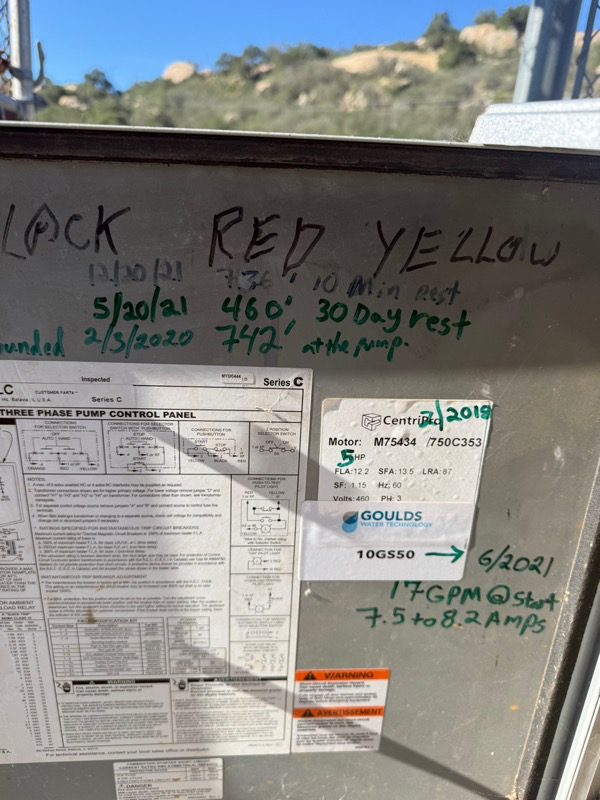
Is your Bonsall well not producing enough water for your needs? Low flow wells are frustrating, but there are proven solutions to improve your water supply.
📋 In This Guide
- Understanding Well Yield
- Solutions for Low Flow Wells
- Living with a Low Flow Well
- Free Well Yield Evaluation
- Related Articles
Understanding Well Yield
Well yield is measured in gallons per minute (GPM). Typical requirements:
- Single family home: 3-5 GPM minimum
- Large family/multiple bathrooms: 6-12 GPM
- Small farm/livestock: 10-20 GPM
- Agricultural irrigation: 50-500+ GPM
Many San Diego County wells produce 1-3 GPM—technically "low flow" but manageable with proper system design.
Solutions for Low Flow Wells
Storage Tank Systems
Collect water 24/7 into a large tank, then use a booster pump for household pressure. This multiplies your effective supply.
Hydrofracturing
High-pressure treatment to open fractures in bedrock, often doubling or tripling yield.
Well Deepening
Drilling deeper may reach better-producing zones.
Second Well
Adding a second well to supplement your primary supply.
Living with a Low Flow Well
While improving yield is ideal, you can also adapt:
- Install low-flow fixtures
- Spread water use throughout the day
- Add storage capacity for peak demand
- Use water-efficient appliances
Free Well Yield Evaluation
Not sure how much your well produces? We can perform a flow test and recommend the most cost-effective solution for your situation.
Need Help With Your Well in Bonsall?
Our expert technicians serve Bonsall and all of San Diego County with professional well services.
Related Articles
Continue learning about well maintenance and troubleshooting

Signs Your Well Pump Is Failing
Catch pump problems early before you lose water completely.

Low Water Pressure From Well
Diagnose and fix pressure problems before they get worse.

Well Maintenance Guide
Keep your well running smoothly with regular maintenance.
Our Locations
1077 Main St, Ramona, CA 92065
57174 CA-371 (US Hwy 79), Anza, CA 92539
Why Bonsall Wells Lose Flow — and How We Bring It Back
Bonsall sits in the lower San Luis Rey River valley of northern San Diego County, a landscape of rolling avocado and citrus groves, horse ranches, and rural estates strung between Fallbrook, Vista, and Oceanside. Nearly every property off the water district mains here depends on a private well, and the hydrogeology is a story of two very different aquifers. Along the valley floor you may draw from shallow alluvial gravels only a few dozen feet deep, while homes up on the surrounding hills tap fractured granitic bedrock that can run 200 to 400 feet or deeper. When a Bonsall well starts delivering weak flow at the tap, the cause almost always traces back to one of these two systems — and knowing which one you have is the first step to fixing it.
The Real Causes of Low Yield in Bonsall
"Low flow" is a symptom, not a diagnosis. since 2020 of well work across San Diego County, we see the same handful of root causes again and again in the Bonsall area:
- A dropping water table. The San Luis Rey valley aquifer rises and falls with winter rain. After a dry stretch, the static water level can fall below where your pump is set, so the pump starts sucking air and cavitating. Flow surges, then sputters.
- A pump set too high or undersized. Many older Bonsall wells were fitted with a submersible pump hung well above the bottom of the casing. As the aquifer declines seasonally, that once-adequate setting becomes the bottleneck.
- Clogged screen or perforations. The mineral-rich groundwater here deposits calcium and iron scale on the well screen. Add iron-bacteria biofilm — a slimy, rust-colored growth common in the valley — and the open area that lets water into the casing slowly plugs shut.
- Silt and partial casing collapse. Decomposed granite sloughs fine sand into the borehole. Over years, sediment builds in the bottom of the well and can bury the pump intake or block a lower producing zone.
- A worn pump or bad check valve. An aging impeller stack simply moves less water than it did when new, and a failed check valve lets water drain back down the drop pipe between cycles.
- Drought-reduced recharge. Southern California's multi-year droughts leave the aquifer with less water to give, and hillside bedrock wells feel it first.
Common Bonsall Scenarios We Get Called For
A grove owner off West Lilac Road calls because the drip irrigation that used to run two zones at once now barely holds pressure on one. A family on a hilltop parcel near Gird Road notices the shower goes weak whenever the washing machine and dishwasher run together. A horse property near the river bottom finds the well recovers fine overnight but can't keep up with a full afternoon of stock tanks and arena watering. Each of these is a classic low-yield pattern — plenty of water in storage, but not enough instantaneous flow to meet peak demand. The fix is rarely "drill a new well." More often it's matching your system design to what the aquifer can realistically deliver.
What to Check Before You Call
You can gather useful clues yourself. Note whether the pressure drop is constant or only appears during heavy use. Listen for the pump short-cycling (rapid on-off clicking at the pressure switch), which points to a waterlogged pressure tank rather than the well itself. Check that your pressure tank's air charge is correct and that the pressure switch (a $150–$350 part) isn't sticking. If flow is fine first thing in the morning but collapses by evening, that seasonal or daily recovery pattern strongly suggests a yield limitation rather than an equipment failure.
How We Diagnose a Low-Flow Well
When our technician arrives, we run a real hydraulic workup, not a guess:
- We measure the static water level (how high the water stands when the pump is off) and compare it to well records to see how far the table has dropped.
- We run the pump and track drawdown — how far the level falls while pumping — and the pumping water level where it stabilizes.
- We perform a well yield and recovery test, timing how fast the well refills, to establish your true sustainable GPM.
- We pull records or camera the casing to confirm pump depth, pump condition, and any silt or scale on the screen.
From those numbers we can tell you whether the problem is the pump, the aquifer, or a plugged screen — and which fix actually pays off.
Solutions That Work in the San Luis Rey Valley
Depending on what the testing reveals, we recommend one or more of the following:
- Lower or replace the pump. If the water is there but the pump is set too high or worn out, resetting it deeper or installing a properly sized submersible ($2,500–$5,500 installed) restores flow. A new control box or capacitor runs $400–$900.
- Rehabilitate the well. Mechanical brushing plus a chemical or acid treatment dissolves scale and kills iron bacteria, reopening a clogged screen. This is often the most cost-effective way to recover lost yield on an older Bonsall bedrock well.
- Deepen the well or drill new. When the aquifer has genuinely declined, deepening into a lower zone or drilling a replacement (a turnkey new well runs roughly $18,000–$42,000 depending on depth and geology) may be the only durable answer.
- Add storage and a booster. For a low but steady producer, a cistern or storage tank collects water around the clock, then a booster or constant-pressure system ($2,000–$4,500) delivers strong household pressure on demand. This is the workhorse solution for hillside Bonsall properties.
Realistic Costs
A well inspection runs $150–$400 and a full diagnostic is $125, credited toward any repair we perform. Supporting equipment — a pressure tank ($600–$1,500), sediment filtration ($300–$900) for silty valley wells, or a water softener ($1,500–$3,500) for the hard, mineral-laden groundwater common in Bonsall — often accompanies a low-flow fix. We give you the numbers up front and never upsell services you don't need.
When to Call a Professional
Call us the moment flow becomes unreliable rather than waiting for the well to quit entirely. Air spitting from faucets, brown or sandy water, a pump that runs constantly, or flow that fades over the course of a day are all signals worth a same-day look. Chasing these early usually means a modest repair instead of an emergency drilling job.
Serving Bonsall and Surrounding Communities
Southern California Well Service is a licensed C-57 water well drilling contractor (CSLB #1086994) serving San Diego County. From our Ramona office at 1077 Main St and our Anza office at 57174 CA-371 (US Hwy 79), we reach Bonsall and neighboring Fallbrook, Vista, Valley Center, Pala, and Rainbow quickly — and we offer same-day emergency response when you have no water. Our CSLB #1086994 is built on honest diagnostics and durable repairs.
Frequently Asked Questions
Why does my Bonsall well produce less water in late summer?
The San Luis Rey valley aquifer recharges mainly from winter rain. By late summer the static water level has fallen, and if your pump is set high, it can begin drawing air. A yield test tells us whether lowering the pump or adding storage is the right response.
Is low flow the same as low pressure?
Not always. Low pressure can come from a bad pressure switch or waterlogged tank even when the well produces plenty of water. Low flow means the well itself can't deliver enough gallons per minute. We test both so you don't pay to fix the wrong thing.
Can a clogged well screen really be reopened?
Yes. Mineral scale and iron-bacteria biofilm are common in Bonsall groundwater, and mechanical brushing combined with an acid or chemical treatment frequently restores a well close to its original yield — far cheaper than drilling new.
How many gallons per minute do I actually need?
A typical single-family home needs roughly 3–5 GPM, while properties with groves, livestock, or multiple bathrooms need more. Many Bonsall wells produce 1–3 GPM, which is workable with a storage tank and booster pump.
Should I deepen my existing well or drill a new one?
It depends on your casing condition and the geology below. Deepening is often cheaper when the existing well is sound; a new well makes sense when the casing is collapsing or the current zone is exhausted. We base the recommendation on your well's actual test data.
Do you offer emergency service in Bonsall?
Yes. We provide same-day emergency response throughout the Bonsall area. Call (760) 440-8520 or text (760) 219-5877.
Get Your Bonsall Well Flowing Again
If your Bonsall well is delivering weak flow, don't wait for it to fail completely. Call Southern California Well Service at (760) 440-8520, text us at (760) 219-5877, or request a free estimate. We'll run a proper yield test and give you a straight answer on the most cost-effective way to restore your water.