
Low Flow or Low Yield Well in Chino
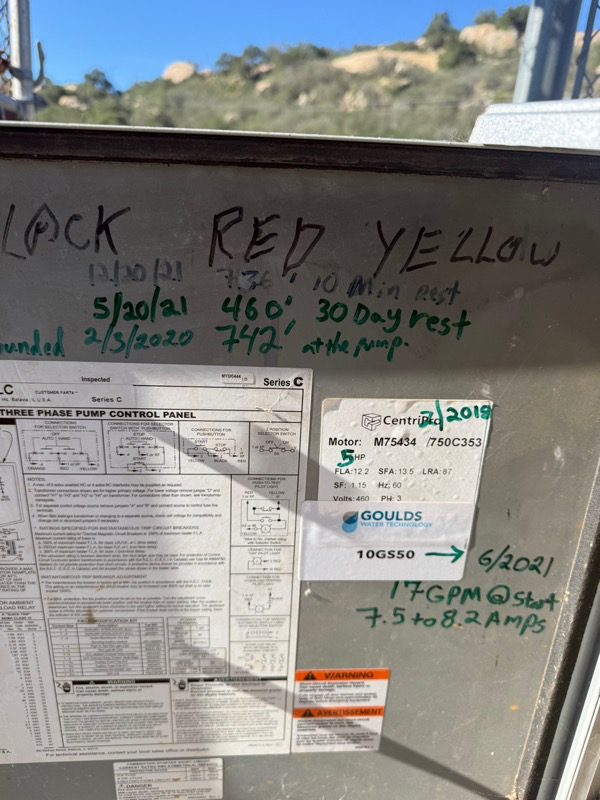
Is your Chino well not producing enough water for your needs? Low flow wells are frustrating, but there are proven solutions to improve your water supply.
📋 In This Guide
- Understanding Well Yield
- Solutions for Low Flow Wells
- Living with a Low Flow Well
- Free Well Yield Evaluation
- Related Articles
Understanding Well Yield
Well yield is measured in gallons per minute (GPM). Typical requirements:
- Single family home: 3-5 GPM minimum
- Large family/multiple bathrooms: 6-12 GPM
- Small farm/livestock: 10-20 GPM
- Agricultural irrigation: 50-500+ GPM
Many San Bernardino County wells produce 1-3 GPM—technically "low flow" but manageable with proper system design.
Solutions for Low Flow Wells
Storage Tank Systems
Collect water 24/7 into a large tank, then use a booster pump for household pressure. This multiplies your effective supply.
Hydrofracturing
High-pressure treatment to open fractures in bedrock, often doubling or tripling yield.
Well Deepening
Drilling deeper may reach better-producing zones.
Second Well
Adding a second well to supplement your primary supply.
Living with a Low Flow Well
While improving yield is ideal, you can also adapt:
- Install low-flow fixtures
- Spread water use throughout the day
- Add storage capacity for peak demand
- Use water-efficient appliances
Free Well Yield Evaluation
Not sure how much your well produces? We can perform a flow test and recommend the most cost-effective solution for your situation.
Need Help With Your Well in Chino?
Our expert technicians serve Chino and all of San Bernardino County with professional well services.
Related Articles
Continue learning about well maintenance and troubleshooting

Signs Your Well Pump Is Failing
Catch pump problems early before you lose water completely.
Low Water Pressure From Well
Diagnose and fix pressure problems before they get worse.
Well Maintenance Guide
Keep your well running smoothly with regular maintenance.
Our Locations
1077 Main St, Ramona, CA 92065
57174 CA-371 (US Hwy 79), Anza, CA 92539
Understanding Low-Flow Wells in Chino
Chino lies in the southwestern corner of San Bernardino County, on the broad, flat floor of the Chino Basin — one of the largest alluvial groundwater basins in Southern California. Where Bonsall or the mountain foothills deal with fractured bedrock, Chino is a different world: hundreds of feet of Pleistocene sand, gravel, and clay laid down by the Santa Ana River and the streams draining out of the surrounding mountains. That thick alluvium historically gave Chino Valley wells some of the strongest yields in the region, which is exactly why a low-flow complaint here is worth investigating rather than shrugging off. When a Chino well weakens, it is usually telling you something specific about the pump, the screen, or the local water level — not that the basin has run dry.
Why a Chino Well Loses Flow
Across our years working the Chino Basin, weak flow at the tap traces back to a familiar set of causes:
- A dropping water table. The Chino Basin is actively managed, and pumping plus dry years can lower the static water level. When it falls below a pump set for higher water, the pump begins drawing air and output collapses.
- A pump set too high, undersized, or worn. A submersible placed decades ago may now sit above the water level, or its impellers may simply be worn out and moving less water than they used to.
- Clay layers and fine sediment. The southern part of the Chino Basin carries more clay in the alluvium. Fine material can migrate into the borehole, silt up the bottom, and blind off the well screen over time.
- Screen scale and iron-bacteria biofouling. Chino's mineral-rich groundwater deposits scale, and iron bacteria form a biofilm that clogs the screen openings and steadily cuts the flow the well can accept.
- Partial casing collapse. Older ag-era wells around Chino sometimes suffer casing or perforation damage that restricts inflow to a fraction of the original.
- Reduced recharge in drought. Less river flow and rainfall means the basin has less water to give, and shallow-set pumps feel it first.
Real Chino Situations
A former dairy parcel off Euclid Avenue now growing row crops finds the irrigation well that once ran multiple lines can barely pressurize one. A rural-residential property near the Chino Hills edge reports household pressure that crashes whenever two fixtures run at once. An older agricultural well on the valley floor pumps hard at startup, then the flow tapers within the hour and takes most of the day to bounce back — the classic signature of a well drawing down faster than the surrounding alluvium can refill it. In every one of these, the water is usually there in storage; the shortfall is in sustainable gallons per minute at peak demand.
What to Check Before You Call
A few observations help pin down the problem. Is the pressure loss constant, or only during heavy simultaneous use? Listen for the pump short-cycling at the pressure tank — rapid clicking on and off usually means a waterlogged tank or a worn pressure switch ($150–$350), not a well fault. Make sure the tank is holding its proper air charge. If the well runs strong in the morning but fades by evening and recovers overnight, that daily pattern points to a yield limit and deserves a real test.
How We Pin Down the Cause
Rather than swap parts and hope, we run a full hydraulic workup on your Chino well:
- We record the static water level with the pump off and compare it to the well log to see how far the table has moved.
- We run the pump and measure drawdown and the stabilized pumping water level.
- We perform a well yield and recovery (GPM) test to establish the true sustainable output and recharge rate.
- We confirm pump depth and condition and, when warranted, camera the casing to look for silt, clay intrusion, scale, or biofilm on the screen.
Those hard numbers separate a tired pump from a plugged screen from a genuinely lowered water level — so you invest in the fix that actually solves your problem.
Solutions Suited to the Chino Basin
- Lower or replace the pump. If the aquifer is healthy but the pump is set too high or worn, resetting it deeper or installing a properly sized submersible ($2,500–$5,500 installed) restores flow. A control box or capacitor runs $400–$900.
- Well rehabilitation. Mechanical brushing plus acid or chemical treatment clears scale, clay, and iron bacteria from the screen. On silted or fouled Chino wells this is frequently the most cost-effective way to recover lost capacity.
- Deepen or drill new. When a producing zone is exhausted or the casing has failed, deepening the well or drilling a replacement (a turnkey new well runs roughly $18,000–$42,000) delivers a durable fix.
- Storage plus a booster. For a low but steady well, a cistern collects water around the clock and a booster or constant-pressure system ($2,000–$4,500) provides strong, even household pressure.
Realistic Cost Ranges
A well inspection is $150–$400 and our diagnostic is $125, credited toward any repair. Because Chino's groundwater is hard and can carry sediment, low-flow work often pairs with a pressure tank ($600–$1,500), sediment filtration ($300–$900), or a softener ($1,500–$3,500). Where iron bacteria or drinking-water quality are concerns, UV disinfection ($800–$1,800) or reverse osmosis ($300–$1,200) may come up. Every number is quoted in writing before any work starts.
When to Bring in a Professional
Call us as soon as flow turns unreliable rather than waiting for the well to fail. Air spitting from faucets, sandy or cloudy water, a pump that runs nonstop, or flow that fades through the day are all worth a same-day visit. Catching these early nearly always means a modest repair instead of an emergency drilling project.
Serving Chino and the Surrounding Valley
Southern California Well Service is a licensed C-57 water well drilling contractor (CSLB #1086994) serving San Bernardino County. From our Ramona office (1077 Main St, Ramona, CA 92065) and Anza office (57174 CA-371 (US Hwy 79), Anza, CA 92539), we serve Chino and neighboring Chino Hills, Ontario, Montclair, and the greater Chino Valley — offering same-day emergency response for honest, lasting repairs.
What Makes the Chino Basin Different
It helps to know how the Chino Basin behaves, because it shapes every repair decision. This is a deep, layered alluvial system: the productive Pleistocene sands and gravels run several hundred feet thick beneath much of the valley, overlain in places by younger fan deposits near the canyon mouths. In the central basin, where the alluvium is cleanest, wells have historically been among the most productive around; toward the southern and western margins the sediments carry more clay, which lowers yields and makes screens more prone to plugging. So two Chino wells only a few miles apart can behave completely differently, and a fix that suits one may be wrong for the other. Knowing which part of the basin you sit in is the starting point for any honest recommendation.
The basin is also intensively managed and recharged — from Santa Ana River flows, stormwater capture, and imported-water spreading — which means water levels respond to both drought and management decisions. If your well's seasonal low keeps dropping year over year, that trend is worth measuring rather than simply tolerating, because the right response might be as modest as resetting the pump a little deeper or as substantial as adding storage. Either way, a proper yield and recovery test on your specific well turns guesswork into a clear plan, and it's why we always start there before quoting any Chino low-flow repair.
Frequently Asked Questions
My Chino well used to be a strong producer — why is it weak now?
The Chino Basin generally holds plenty of water, so a decline usually means the pump is set above the current water level, the impellers are worn, or the screen has fouled with scale, clay, and iron bacteria. A yield test and screen inspection identify which.
Is my low flow a pump problem or an aquifer problem?
Frequently it's the pump, not the basin. We measure static level, drawdown, and recovery so we can distinguish a worn or too-shallow pump from a genuinely lowered water table before recommending a repair.
Can silt and clay really reduce my well's flow?
Yes. The southern Chino Basin alluvium carries more clay, and fine sediment can silt the well bottom and blind the screen. Rehabilitation with brushing and treatment reopens the screen and clears accumulated material.
How many gallons per minute does my property need?
A single-family home typically needs 3–5 GPM; irrigated ground and livestock need considerably more. Wells that fall short can still serve a property well when paired with a storage tank and booster system.
Should I rehab my old ag well or drill a new one?
If the casing is sound and a productive zone remains, rehabilitation or deepening is usually cheaper. If the casing is collapsing or the zone is spent, a new well may be the better investment. We decide from your well's test data.
Do you offer same-day service in Chino?
Yes. We provide same-day emergency response throughout Chino and the Chino Valley. Call (760) 440-8520 or text (760) 219-5877.
Get Your Chino Well Producing Again
Weak flow from your Chino well is almost always fixable — and usually for far less than you fear. Call Southern California Well Service at (760) 440-8520, text (760) 219-5877, or request a free estimate. We'll test your well's real yield and recommend the most cost-effective way to bring back strong, dependable water.