
Low Flow or Low Yield Well in Corona
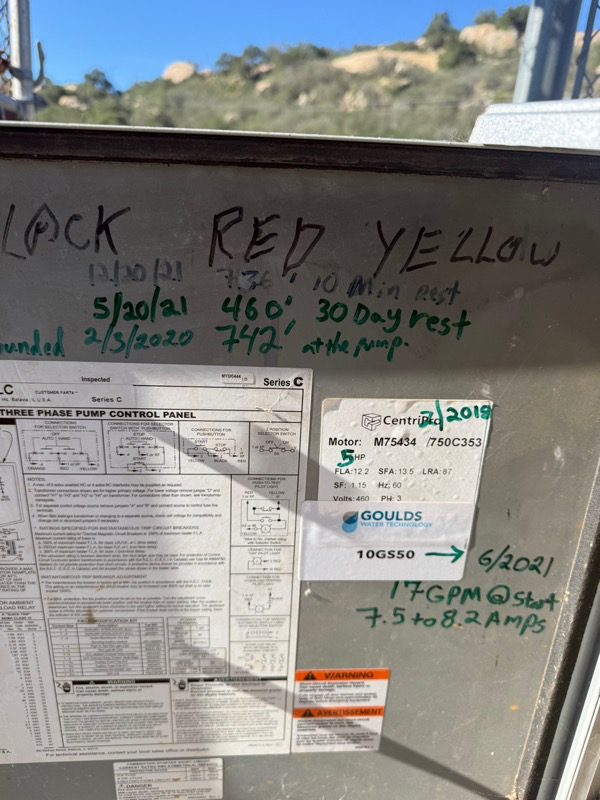
Is your Corona well not producing enough water for your needs? Low flow wells are frustrating, but there are proven solutions to improve your water supply.
📋 In This Guide
- Understanding Well Yield
- Solutions for Low Flow Wells
- Living with a Low Flow Well
- Free Well Yield Evaluation
- Related Articles
Understanding Well Yield
Well yield is measured in gallons per minute (GPM). Typical requirements:
- Single family home: 3-5 GPM minimum
- Large family/multiple bathrooms: 6-12 GPM
- Small farm/livestock: 10-20 GPM
- Agricultural irrigation: 50-500+ GPM
Many Riverside County wells produce 1-3 GPM—technically "low flow" but manageable with proper system design.
Solutions for Low Flow Wells
Storage Tank Systems
Collect water 24/7 into a large tank, then use a booster pump for household pressure. This multiplies your effective supply.
Hydrofracturing
High-pressure treatment to open fractures in bedrock, often doubling or tripling yield.
Well Deepening
Drilling deeper may reach better-producing zones.
Second Well
Adding a second well to supplement your primary supply.
Living with a Low Flow Well
While improving yield is ideal, you can also adapt:
- Install low-flow fixtures
- Spread water use throughout the day
- Add storage capacity for peak demand
- Use water-efficient appliances
Free Well Yield Evaluation
Not sure how much your well produces? We can perform a flow test and recommend the most cost-effective solution for your situation.
Need Help With Your Well in Corona?
Our expert technicians serve Corona and all of Riverside County with professional well services.
Related Articles
Continue learning about well maintenance and troubleshooting

Signs Your Well Pump Is Failing
Catch pump problems early before you lose water completely.
Low Water Pressure From Well
Diagnose and fix pressure problems before they get worse.

Well Maintenance Guide
Keep your well running smoothly with regular maintenance.
Our Locations
1077 Main St, Ramona, CA 92065
57174 CA-371 (US Hwy 79), Anza, CA 92539
Low-Flow and Low-Yield Wells in Corona: Diagnosing Weak GPM at the Tap
When a Corona well starts giving up less water than it used to, the signs are hard to miss: showers lose their punch, the irrigation timer can't keep the yard green, and the pressure tank cycles constantly as the pump strains to keep up. That weak stream is the calling card of a low-flow or low-yield well — the well simply can't produce enough gallons per minute (GPM) for the demand you're placing on it. In and around Corona, it's a problem we solve routinely, and almost always the fix is far less drastic than homeowners fear.
Corona sits in western Riverside County, at the mouth of the Santa Ana River canyon where the Temescal Valley opens toward the city. Groundwater here comes from the Temescal (Bedford-Coldwater) basin, and the geology is telling: depth to bedrock swings wildly, from as shallow as ten feet near the valley margins to over 700 feet in the center, where thick alluvial-fan sands and gravels store the best water. Some wells tap deep alluvial fan aquifers; others, especially toward the hills of Temescal Canyon and the perimeter, sit close to consolidated bedrock and yield far less. Two neighbors can have completely different wells — which is why a Corona-specific diagnosis is essential.
Why Corona Wells Lose Their Flow
A low-flow well is one that can't deliver water quickly enough to satisfy the fixtures and irrigation drawing on it. Open two taps and the pressure sags; run the sprinklers and the house drops out. But the same weak symptom can trace back to several very different causes:
- A dropping water table. Corona relies on local groundwater for roughly half its supply, and pumping combined with dry winters can lower the water level in the Temescal basin. When the static level sinks below your pump's intake, the well starts pulling air and yield falls off a cliff.
- A pump set too high, worn, or undersized. A well drilled when water stood higher may have its pump hung above today's level. A worn or too-small submersible also caps GPM even when plenty of water is available below.
- Clogged screen and perforations. Corona's hard, mineral-rich water leaves calcium and iron scale on the well screen, while iron-reducing bacteria coat it in a biofouling slime. Together they seal off the slots where water enters, choking a once-strong well down to a trickle over the years.
- Silting-in or partial casing collapse. Fine sand from the alluvial-fan deposits works its way into the borehole and buries the lower screen. In older wells, casing can crimp or partly collapse and cut off the productive zone.
- Drought-reduced recharge. Wells near the valley edges and in the surrounding hills depend on rainfall soaking into shallow bedrock and fan margins. A dry season leaves that recharge short, and a marginal well becomes a low-yield well.
Real Corona Scenarios
A homeowner in the Temescal Canyon area finds the well can't keep up with a newly expanded garden. Testing showed the well near the bedrock margin was genuinely low-yield — but perfectly steady. A large storage tank paired with a booster pump now banks that slow flow and delivers strong pressure whenever it's needed.
An older property near the center of the valley had watched its flow decline for years. A yield and recovery test revealed heavy screen scaling and iron biofouling. Mechanical brushing plus acid treatment reopened the perforations and restored most of the well's original GPM — no new drilling, a fraction of the cost.
A family on the Corona hillside side lost pressure every time two fixtures ran together. The well was healthy; the culprit was a worn, undersized pump set higher than the current water level. A correctly sized submersible, set to the right depth, ended the problem in a single visit.
What a Proper Diagnosis Looks At
Instead of throwing parts at the symptom, we measure the well and let the data choose the fix:
- Static water level — the resting level with the pump off, showing where the aquifer actually is right now.
- Pumping water level and drawdown — how far and how fast the level drops under load; a steep drop signals a clogged screen or an over-pumped well.
- Yield and recovery (GPM) test — sustained output plus recovery speed, the number that drives every solution we recommend.
- Pump depth and condition — whether the pump can reach today's water and whether the motor is on its way out.
- Water quality signs — sand, iron staining, or a sulfur smell, each pointing to a specific downhole cause.
Solutions, Least Invasive First
- Lower or replace the pump. If water is present but unreachable or under-delivered, repositioning or upsizing the submersible restores flow right away.
- Well rehabilitation. Mechanical brushing with chemical or acid treatment removes the scale and biofouling clogging your screen, reopening the intake and reviving yield — typically well below the cost of drilling.
- Storage plus booster. A cistern or storage tank collects your well's 24/7 output; a booster or constant-pressure system then supplies strong household pressure, the ideal answer for genuinely low-yield bedrock-margin wells.
- Deepen or drill new. Where the water has dropped out of reach or the casing has failed, deepening the existing borehole or drilling a new well restores supply for good.
When to Bring in a Professional
If your pump runs nonstop, the pressure switch clicks rapidly on and off, you spot sand or cloudy water, or you've simply run dry on a hot day, stop and call. A pump laboring against a dry or clogged well overheats and burns out its motor, turning a fixable issue into a full replacement. Backed by founded in 2020 of Riverside County experience and a C-57 license, we find the true cause first and recommend only what your well actually needs.
Realistic Cost Ranges in the Corona Area
Pricing varies with each well, but these ranges help Corona homeowners plan:
- Well inspection: $150-$400
- Diagnostic visit: $125 (credited toward the repair)
- Pressure switch: $150-$350
- Pressure tank: $600-$1,500
- Control box / capacitor: $400-$900
- Submersible pump: $2,500-$5,500
- Booster / constant-pressure system: $2,000-$4,500
- Sediment filtration: $300-$900
- Water softener: $1,500-$3,500
- New well, turnkey: $18,000-$42,000
Since rehabilitation costs a fraction of a new well, we always weigh it first.
Serving Corona and Western Riverside County
From our Ramona and Anza offices, we serve Corona, Temescal Canyon, Coronita, Home Gardens, Norco, and the surrounding western Riverside County communities. We do it all under a single C-57 license — from a quick pressure-switch swap to full well rehabilitation, pump replacement, storage-and-boost installations, and new drilling — with same-day emergency response whenever you're out of water.
Frequently Asked Questions
How many GPM does a Corona home need?
A typical single-family home runs comfortably on 3-5 GPM, while larger homes with several baths and irrigation want 6-12 GPM. Many Riverside County wells put out only 1-3 GPM — low flow by the numbers, but very livable with a storage tank and booster that stockpile water between peak uses.
Is my problem the well or the pump?
A yield and recovery test answers it directly. Quick recovery with weak delivery points to the pump; deep, slow-recovering drawdown points to the well itself — its screen, depth, or water level.
Can a clogged Corona well be saved without drilling?
Usually, yes. Mineral scale and iron-bacteria biofouling are the main yield-killers in Corona's hard water, and mechanical brushing plus acid or chemical treatment reopens the screen, often restoring most of the well's original GPM.
Why does depth to water vary so much between neighbors here?
Because depth to bedrock in the Temescal basin ranges from about ten feet at the margins to over 700 feet in the center. A well drilled into deep alluvial-fan sand behaves nothing like one perched near shallow bedrock, so yields differ dramatically over short distances.
Would a storage tank beat drilling deeper for my well?
Often, yes. If your well produces slowly but steadily, a storage-and-booster system lets you draw far more usable water than the raw GPM implies — at much lower cost than deepening or re-drilling.
How soon can you reach Corona?
With crews based in Ramona and Anza, we offer same-day emergency service throughout Corona and western Riverside County when your water is out.
Get Your Corona Well Producing Again
Don't settle for weak flow or gamble on your pump surviving a clogged well. Call Southern California Well Service at (760) 440-8520, text (760) 219-5877, or request a free estimate. Licensed C-57 (CSLB #1086994), founded 2020, serving Riverside County, and same-day emergency response.