
Low Flow or Low Yield Well in Hemet
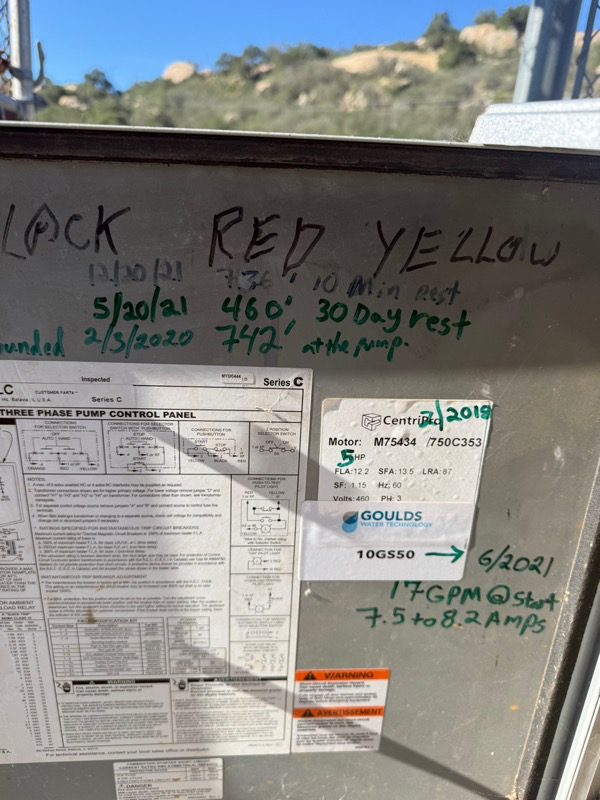
Is your Hemet well not producing enough water for your needs? Low flow wells are frustrating, but there are proven solutions to improve your water supply.
📋 In This Guide
- Understanding Well Yield
- Solutions for Low Flow Wells
- Living with a Low Flow Well
- Free Well Yield Evaluation
- Related Articles
Understanding Well Yield
Well yield is measured in gallons per minute (GPM). Typical requirements:
- Single family home: 3-5 GPM minimum
- Large family/multiple bathrooms: 6-12 GPM
- Small farm/livestock: 10-20 GPM
- Agricultural irrigation: 50-500+ GPM
Many Riverside County wells produce 1-3 GPM—technically "low flow" but manageable with proper system design.
Solutions for Low Flow Wells
Storage Tank Systems
Collect water 24/7 into a large tank, then use a booster pump for household pressure. This multiplies your effective supply.
Hydrofracturing
High-pressure treatment to open fractures in bedrock, often doubling or tripling yield.
Well Deepening
Drilling deeper may reach better-producing zones.
Second Well
Adding a second well to supplement your primary supply.
Living with a Low Flow Well
While improving yield is ideal, you can also adapt:
- Install low-flow fixtures
- Spread water use throughout the day
- Add storage capacity for peak demand
- Use water-efficient appliances
Free Well Yield Evaluation
Not sure how much your well produces? We can perform a flow test and recommend the most cost-effective solution for your situation.
Need Help With Your Well in Hemet?
Our expert technicians serve Hemet and all of Riverside County with professional well services.
Related Articles
Continue learning about well maintenance and troubleshooting

Signs Your Well Pump Is Failing
Catch pump problems early before you lose water completely.
Low Water Pressure From Well
Diagnose and fix pressure problems before they get worse.
Well Maintenance Guide
Keep your well running smoothly with regular maintenance.
Our Locations
1077 Main St, Ramona, CA 92065
57174 CA-371 (US Hwy 79), Anza, CA 92539
Low-Flow and Low-Yield Wells in Hemet: Why Your GPM Drops and How to Fix It
If the faucets in your Hemet home have slowed to a trickle, the sprinklers barely reach the second row of plants, or the pressure tank cycles for what feels like forever before it satisfies a single shower, you are almost certainly dealing with a low-flow or low-yield well. Out here on the floor of the San Jacinto Valley and up the surrounding foothills, this is one of the most common calls we get. The good news is that weak gallons-per-minute (GPM) at the tap is a solvable problem once you understand which of several possible causes is actually at work on your property.
Hemet sits in Riverside County, on the southern end of the San Jacinto groundwater basin — a sediment-filled valley wrapped by the San Jacinto Mountains to the east and the hills toward Winchester, Sage, and the Anza high country to the south. Homes on the valley floor near downtown, East Hemet, and the San Jacinto side often draw from productive alluvial sand-and-gravel aquifers, while properties climbing toward the foothills and out toward Sage frequently tap fractured granite. Those two geologies fail in very different ways, which is exactly why a Hemet-specific diagnosis matters.
Why Low Flow Happens in the Hemet Area
"Low flow" simply means your well cannot deliver water fast enough to keep up with demand. When you open two fixtures and the pressure collapses, or the pump runs continuously without recovering, the well is being asked for more GPM than it can supply. Several distinct problems produce that same symptom around Hemet:
- A dropping water table. Decades of pumping in the San Jacinto basin have lowered groundwater levels significantly in places, and drought years accelerate it. When the static water level falls below where your pump is set, the well starts pulling air or cavitating, and yield plummets.
- A pump set too high or undersized. If your pump intake sits above the drawn-down water level — common when a well was drilled during a wetter decade — it simply cannot reach the water anymore. A worn or undersized submersible pump also chokes GPM even when water is present.
- Screen and perforation clogging. Hemet's mineral-rich, hard water scales up the well screen with calcium and iron deposits, and iron-reducing bacteria form a slimy biofouling layer that seals off the slots where water enters the casing. A well that once produced 8 GPM can quietly fall to 2.
- Silted-in or collapsing casing. In the valley's finer alluvial and clay-cap sediments, sand and silt migrate into the borehole and bury the lower screen. In older wells, sections of casing can partially collapse, pinching off the productive zone.
- Reduced aquifer recharge. Foothill wells in fractured granite depend on seasonal recharge through rock fractures. Dry winters mean those fractures don't refill, and a marginal well becomes a low-flow well by late summer.
Common Local Scenarios We See Around Hemet
A retired couple in East Hemet call because their morning shower has become a dribble whenever the washing machine runs. Their static water level tested fine, but a pumping test showed severe drawdown after four minutes — classic screen biofouling from years of hard water. Rehabilitation reopened the screen and restored usable flow without any drilling.
A small horse property out toward Sage runs dry every August. The well sits in fractured granite, and the summer water table drops below the pump. Here, lowering the pump a few dozen feet and adding a storage tank solved a problem that recharge alone never would.
A newer home near the Diamond Valley Lake side has a perfectly healthy well but a pump that was undersized for a three-bathroom household with landscape irrigation. The well could give more; the pump couldn't move it. A correctly sized submersible fixed the "low flow" instantly.
What to Check When Your Flow Drops
Before assuming the worst, a professional evaluation looks at a specific set of measurements that tell us where the bottleneck is:
- Static water level — how high the water stands in the casing when the pump is off. This tells us where the aquifer actually is today versus where it was when the well was drilled.
- Pumping water level and drawdown — how far the water drops while the pump runs. Rapid, deep drawdown points to a clogged screen or an over-pumped well.
- A well yield and recovery test — we measure sustained GPM and time how quickly the water recovers after pumping. This is the single most important number for sizing any fix.
- Pump depth and condition — where the pump is set, whether it's worn, and whether the motor amperage suggests a failing unit.
- Water quality clues — sand in the water, iron staining, or a sulfur smell all hint at specific downhole problems.
Solutions Ranked From Least to Most Invasive
We always start with the cheapest fix that will actually work:
- Lower or replace the pump. If water is present but the pump can't reach it or move it, repositioning or upsizing the submersible is often all that's needed.
- Well rehabilitation. Mechanical brushing plus chemical or acid treatment dissolves scale and kills the biofouling that's clogging your screen — frequently restoring most of a well's original yield at a fraction of the cost of drilling.
- Storage and boosting. A cistern or storage tank collects your well's slow-but-steady output around the clock; a booster or constant-pressure system then delivers strong household pressure on demand. This is the workhorse solution for genuinely low-yield foothill wells.
- Deepen the well or drill new. When the aquifer has truly moved out of reach or the casing has failed, deepening the existing borehole or drilling a new well restores supply for the long term.
When to Call a Professional
If your pump runs continuously, your pressure switch clicks on and off rapidly (short-cycling), you see sand or cloudy water, or you have simply run out of water on a hot day, stop guessing and call. Running a pump against a dry or clogged well burns out the motor — turning a repairable problem into a full pump replacement. As a licensed C-57 water well contractor (CSLB #1086994) serving Riverside County, we diagnose the real cause rather than throwing parts at the symptom.
Realistic Cost Ranges in the Hemet Area
Every well is different, but these ranges give Hemet homeowners a realistic starting point:
- Well inspection: $150-$400
- Diagnostic visit: $125 (credited toward the repair)
- Pressure switch replacement: $150-$350
- Pressure tank: $600-$1,500
- Control box or capacitor: $400-$900
- Submersible pump replacement: $2,500-$5,500
- Booster / constant-pressure system: $2,000-$4,500
- Sediment filtration: $300-$900
- New well, turnkey: $18,000-$42,000
Well rehabilitation typically lands well below the cost of a new well, which is why we always evaluate it first.
Serving Hemet and All of Riverside County
From our offices in Ramona and Anza, we serve Hemet, San Jacinto, East Hemet, Winchester, Sage, Valle Vista, and the surrounding foothill communities. Our Anza office in particular puts a crew close to Hemet's southern and eastern ranch country. We handle everything from a quick pressure-switch swap to full well rehabilitation, pump replacement, storage-and-boost installs, and new drilling — all under one C-57 license, with same-day emergency response when you have no water.
Frequently Asked Questions
How many gallons per minute does my Hemet home actually need?
A typical single-family home needs about 3-5 GPM, and a larger household with multiple bathrooms and landscaping may need 6-12 GPM. Many Riverside County wells produce only 1-3 GPM, which is technically low flow but perfectly livable with a storage tank and booster system that stockpiles water between peak uses.
Is my low flow the well or the pump?
That's exactly what a yield and recovery test answers. If the well recovers water quickly but the pump can't deliver GPM, it's the pump. If drawdown is deep and recovery is slow, the well itself — its screen, depth, or aquifer level — is the constraint.
Can a clogged well really be restored without drilling?
Often, yes. Mineral scale and iron-bacteria biofouling are the leading yield-killers in Hemet's hard water, and mechanical brushing plus acid or chemical treatment reopens the screen. Many wells recover most of their original GPM through rehabilitation alone.
Why does my well run dry only in summer?
Foothill wells around Sage and the eastern edge of Hemet depend on seasonal recharge. After a dry winter, the water table drops through summer until it falls below the pump. Lowering the pump and adding storage smooths out that seasonal swing.
Will hydrofracturing help my Hemet well?
For wells in fractured granite up in the foothills, high-pressure treatment to open bedrock fractures can meaningfully increase yield. For valley-floor wells in alluvial sand and gravel, rehabilitation, pump changes, or storage are usually the better answer. A site evaluation tells us which applies.
How fast can you respond in Hemet?
With crews based in Ramona and Anza, we offer same-day emergency service to Hemet and surrounding Riverside County communities when you've lost water.
Get Your Hemet Well Flowing Again
Don't live with weak pressure or run the risk of burning out your pump. Call Southern California Well Service at (760) 440-8520, text us at (760) 219-5877, or request a free estimate online. Licensed C-57, Founded 2020, serving Riverside County, and same-day emergency response when you need it most.