
Low Flow or Low Yield Well in Julian
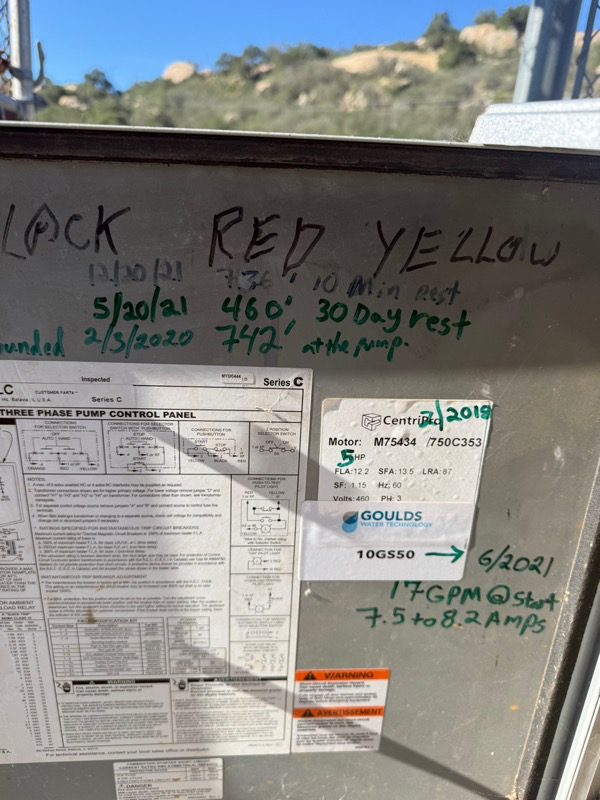
Is your Julian well not producing enough water for your needs? Low flow wells are frustrating, but there are proven solutions to improve your water supply.
📋 In This Guide
- Understanding Well Yield
- Solutions for Low Flow Wells
- Living with a Low Flow Well
- Free Well Yield Evaluation
- Related Articles
Understanding Well Yield
Well yield is measured in gallons per minute (GPM). Typical requirements:
- Single family home: 3-5 GPM minimum
- Large family/multiple bathrooms: 6-12 GPM
- Small farm/livestock: 10-20 GPM
- Agricultural irrigation: 50-500+ GPM
Many San Diego County wells produce 1-3 GPM—technically "low flow" but manageable with proper system design.
Solutions for Low Flow Wells
Storage Tank Systems
Collect water 24/7 into a large tank, then use a booster pump for household pressure. This multiplies your effective supply.
Hydrofracturing
High-pressure treatment to open fractures in bedrock, often doubling or tripling yield.
Well Deepening
Drilling deeper may reach better-producing zones.
Second Well
Adding a second well to supplement your primary supply.
Living with a Low Flow Well
While improving yield is ideal, you can also adapt:
- Install low-flow fixtures
- Spread water use throughout the day
- Add storage capacity for peak demand
- Use water-efficient appliances
Free Well Yield Evaluation
Not sure how much your well produces? We can perform a flow test and recommend the most cost-effective solution for your situation.
Need Help With Your Well in Julian?
Our expert technicians serve Julian and all of San Diego County with professional well services.
Related Articles
Continue learning about well maintenance and troubleshooting

Signs Your Well Pump Is Failing
Catch pump problems early before you lose water completely.

Low Water Pressure From Well
Diagnose and fix pressure problems before they get worse.

Well Maintenance Guide
Keep your well running smoothly with regular maintenance.
Our Locations
1077 Main St, Ramona, CA 92065
57174 CA-371 (US Hwy 79), Anza, CA 92539
Low-Flow Well Solutions for Julian Properties
When a private well in Julian stops keeping up — weak pressure with two taps open, a storage tank that never quite recovers, or a slow decline through the dry years — you are dealing with a low-yield well. It is one of the most common calls we field from this part of San Diego County, and in the great majority of cases it can be fixed without abandoning the well. The first step is understanding why your well runs low, and that always comes back to the ground beneath your feet.
Julian is a historic mountain town in eastern San Diego County, perched in the Cuyamaca and Volcan ranges among apple orchards and oak woodland at around 4,200 feet. Nearly everyone here is on a private well, and the local geology is dominated by hard, fractured metamorphic and granitic bedrock. That rock holds water only in its fractures, which is exactly why low-yield wells are so common in and around Julian.
Understanding Well Yield and GPM Testing
Well yield is the sustained rate, in gallons per minute (GPM), that your well can deliver without running dry — a different thing from the pressure you feel at the faucet, which a small pump can fake for a few minutes. We measure true yield with a flow test paired with drawdown and recovery monitoring: we pump at a steady rate, watch how far the water level falls, and time how quickly it rebounds once the pump shuts off. For a Julian home, 4 to 8 GPM is comfortable, but many mountain wells in the fractured bedrock produce just 1 to 4 GPM — workable with proper storage, but tight for orchards, livestock, or larger parcels.
A well that draws down sharply and recovers slowly is limited by the aquifer or the fractures feeding it. One that holds its level but still delivers little is usually choked by a fouled screen or hampered by an undersized or failing pump. Knowing which it is keeps you from paying for the wrong fix.
What Causes Low Flow in Julian Wells
The culprits we see most often around Julian tie directly to the local geology and climate:
- Fracture-limited bedrock. The defining issue around Julian; water enters the well only where the bore crosses an open fracture, so even a deep well can be slow.
- Dry winters and reduced recharge. Mountain aquifers depend on winter precipitation; a run of dry years lowers the water table and fracture saturation.
- Mineral scale and biofouling gradually plugging the screen and fracture faces.
- A pump set above the productive fractures, leaving available water untapped.
- Sediment from decomposed rock clogging the intake on steeper lots.
Proven Solutions for a Low-Yield Julian Well
Well rehabilitation and redevelopment. Mechanical surging, brushing, and chemical treatment strip mineral scale and biofouling from the screen and gravel pack, often restoring much of the original yield. This is usually the first and least expensive step.
Lowering the pump. If the water table has fallen or the pump sits above the productive zone, repositioning it deeper in the casing can recover flow immediately, at a fraction of the cost of drilling.
Hydrofracturing. Fractured bedrock is the ideal setting for hydrofracturing, and in the Julian mountains it is often the standout option. Injecting water under high pressure reopens and connects the rock's natural fractures, and yields commonly double or more.
Deepening or drilling a new well. When the existing borehole bottomed out in tight rock, deepening it can reach a better-producing zone. When a well is truly spent, a new well sited with local knowledge is the long-term answer.
Storage tank plus booster or constant-pressure pump. The most practical fix for a modest-but-steady well. A 2,500 to 5,000 gallon tank banks your well's 24-hour output, and a booster or constant-pressure system delivers strong, even household pressure on demand — letting a 1 to 3 GPM well comfortably serve a busy home.
When to Call a Professional
Reach out if your flow has noticeably dropped, you are pulling air or sand, pressure collapses under normal use, or you are about to add bathrooms, livestock, or irrigation the well cannot support. A proper flow and drawdown test removes the guesswork and points to the most economical fix before a marginal well becomes a dry one.
Julian Well Service Costs
Every property differs, but realistic ranges are: well rehabilitation $1,500 to $6,000; hydrofracturing $3,000 to $8,000; a storage tank with booster or constant-pressure system $3,000 to $8,000; and a complete new turnkey well $18,000 to $42,000 depending on depth and geology. Our on-site diagnostic is $125, credited toward any work you approve.
What to Expect When We Visit Your Julian Property
Mountain service calls start at the wellhead with a full inspection of the pump's age, horsepower, and set depth, the pressure tank and storage, and any well log. We then run a flow and drawdown test, which in this geology almost always reveals whether the well is fracture-limited, fouled, or simply pumping from too high after a dry winter.
Julian's elevation, oak-studded terrain, and hard rock call for the right equipment and local know-how. For many properties the winning combination is hydrofracturing to open the bedrock followed by a right-sized storage tank, so the well's improved-but-still-modest output is banked and delivered as strong, steady pressure to the house and orchard.
Keeping Your Julian Well Reliable
After we restore flow, a yearly flow check late in the dry season catches declines before they become a dry tap. Adequate storage is your insurance against low-precipitation years, and managing rock sediment protects the pump. With the right setup, even a 1 to 2 GPM Julian well can quietly serve a full-time mountain household.
Serving Julian and San Diego County
Southern California Well Service is a licensed C-57 water well contractor founded in 2020, with 60+ years of family heritage. From our Ramona office (1077 Main St, Ramona, CA 92065) — just down the hill — and our Anza office (57174 CA-371 (US Hwy 79), Anza, CA 92539), we serve Julian, Wynola, Pine Hills, Lake Cuyamaca, and the surrounding San Diego County mountains. With same-day emergency service when you have no water, help is never far away.
Frequently Asked Questions
What is a normal well yield in Julian?
In the Julian mountains, 4 to 8 GPM is comfortable for a home. Many fractured-bedrock wells produce only 1 to 4 GPM, which works with adequate storage but can fall short for orchards or livestock.
Why is my Julian mountain well so low on water?
Julian sits on hard, fractured metamorphic and granitic rock that stores water only in its cracks. If a well intersects few fractures, yield is naturally low. Dry winters, a dropping water table, scale, or a pump set too high make it worse.
Will hydrofracturing help my Julian well?
Usually yes. Fractured bedrock is the best setting for hydrofracturing. High-pressure water reopens and links the rock's fractures, and mountain wells around Julian often see yield double or more.
Should I add a storage tank in Julian?
For most mountain properties, yes. A storage tank lets a slow well fill steadily over 24 hours while a booster or constant-pressure pump supplies the home. Even a 2 GPM well banks nearly 2,900 gallons a day.
How deep are wells around Julian?
Mountain wells here commonly run 200 to 500 feet through fractured rock, though depth varies with terrain and fracture location. Hitting productive fractures matters more than total depth.
What does well work cost in Julian?
Rehabilitation typically runs $1,500 to $6,000, hydrofracturing $3,000 to $8,000, and storage-plus-booster systems $3,000 to $8,000. A new turnkey well ranges from $18,000 to $42,000. The diagnostic is $125, credited toward approved work.
Talk to a Local Well Expert in Julian
Southern California Well Service has helped Julian-area families and ranchers get more water out of low-yield wells since 2020. Call for a same-day assessment, a clear written estimate, and an honest recommendation.