
Low Flow or Low Yield Well in Oceanside
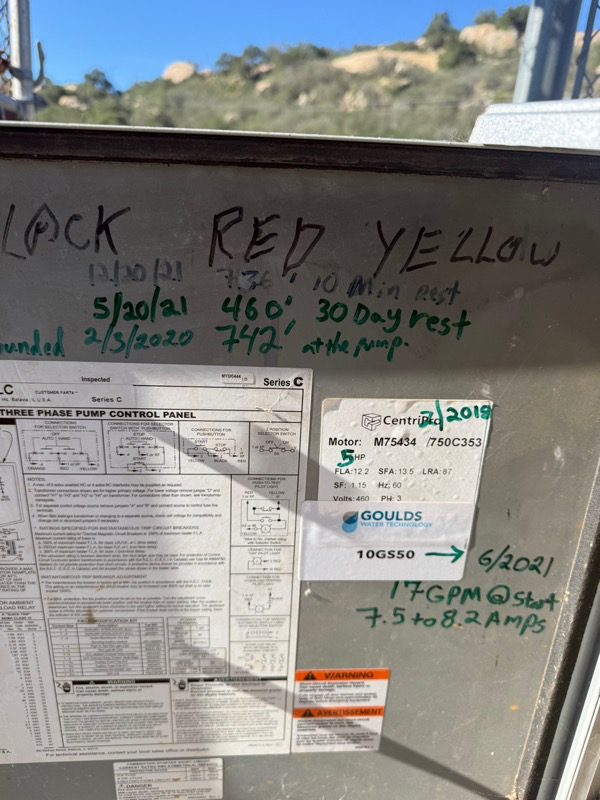
Is your Oceanside well not producing enough water for your needs? Low flow wells are frustrating, but there are proven solutions to improve your water supply.
📋 In This Guide
- Understanding Well Yield
- Solutions for Low Flow Wells
- Living with a Low Flow Well
- Free Well Yield Evaluation
- Related Articles
Understanding Well Yield
Well yield is measured in gallons per minute (GPM). Typical requirements:
- Single family home: 3-5 GPM minimum
- Large family/multiple bathrooms: 6-12 GPM
- Small farm/livestock: 10-20 GPM
- Agricultural irrigation: 50-500+ GPM
Many San Diego County wells produce 1-3 GPM—technically "low flow" but manageable with proper system design.
Solutions for Low Flow Wells
Storage Tank Systems
Collect water 24/7 into a large tank, then use a booster pump for household pressure. This multiplies your effective supply.
Hydrofracturing
High-pressure treatment to open fractures in bedrock, often doubling or tripling yield.
Well Deepening
Drilling deeper may reach better-producing zones.
Second Well
Adding a second well to supplement your primary supply.
Living with a Low Flow Well
While improving yield is ideal, you can also adapt:
- Install low-flow fixtures
- Spread water use throughout the day
- Add storage capacity for peak demand
- Use water-efficient appliances
Free Well Yield Evaluation
Not sure how much your well produces? We can perform a flow test and recommend the most cost-effective solution for your situation.
Need Help With Your Well in Oceanside?
Our expert technicians serve Oceanside and all of San Diego County with professional well services.
Related Articles
Continue learning about well maintenance and troubleshooting

Signs Your Well Pump Is Failing
Catch pump problems early before you lose water completely.
Low Water Pressure From Well
Diagnose and fix pressure problems before they get worse.
Well Maintenance Guide
Keep your well running smoothly with regular maintenance.
Our Locations
1077 Main St, Ramona, CA 92065
57174 CA-371 (US Hwy 79), Anza, CA 92539
Low-Flow and Low-Yield Wells in Oceanside: A Local Owner's Guide
Oceanside sits at the mouth of the San Luis Rey River, and that geography shapes almost everything about how private wells behave here. Along the river valley and the Mission and Bonsall basins, wells tap shallow alluvium — sand, gravel, and clay where water can sit within a few feet to a few dozen feet of the surface. Push east and uphill toward Whelan Lake, Guajome, and the rural pockets bordering Bonsall and Vista, and you move into weathered crystalline bedrock where water hides in fractures. When an Oceanside tap slows to a trickle, the cause usually traces back to which of those two worlds your well lives in. This guide walks you through why low flow happens in this corner of San Diego County, what to check, and how we fix it.
Why Low Flow Happens on Oceanside Wells
“Low flow” describes weak gallons-per-minute (GPM) at the fixtures, and it has several distinct causes we see repeatedly in the 92057, 92058, and rural east-Oceanside areas:
- A dropping water table. Coastal San Diego County swings hard between wet and dry years. In a run of dry winters, the alluvial water table along the San Luis Rey can fall below its usual level, and shallow well pumps that used to stay submerged suddenly draw air by late afternoon.
- A pump set too high or undersized. Many older Oceanside wells were completed decades ago when the table was higher. As levels drop seasonally, a pump set near the historic level ends up above the working water and can only pull a fraction of what the aquifer holds deeper down.
- Clogged screen or perforations. Oceanside's mineral-rich groundwater deposits calcium and iron scale on well screens, and iron bacteria form a slimy biofilm that plugs the open area. The aquifer still has water; your well just can't let enough of it in.
- Silted-in or collapsing casing. In the sandy river-valley formations, fine sediment migrates into the well over the years and settles in the bottom, burying the intake and reducing available column.
- Reduced recharge. Drought years mean less rain soaking into the basin, and heavy agricultural and orchard pumping around the valley can lower shared water levels during the growing season.
Two Very Different Oceanside Scenarios
Picture a shallow alluvial well on a half-acre near the river bottom that has run 12 GPM for twenty years and drops to 4 GPM one August. That is almost always a falling seasonal table plus a pump sitting too shallow — a lowering or an upsized pump usually restores it. Now picture a fractured-rock well on the ridges east of the city that has only ever made 2–3 GPM. That well was never high-yield; the fix there is about managing what you have with storage, not chasing more GPM out of tight bedrock. Diagnosing which situation you're in is the whole ballgame, and it's where local experience pays off.
What to Check Before You Call
A few observations help us help you faster:
- Is it all fixtures or just one? Whole-house weakness points to the well, pump, or pressure system. One slow faucet is plumbing.
- Does it fade over the day? Strong in the morning, weak by evening, then recovered overnight is the classic signature of a well drawing down faster than the aquifer feeds it — a yield problem, not a pressure-switch problem.
- Any air spitting or sand? Sputtering means the pump is breaking suction; sand or grit points to a compromised screen or dropping level pulling from the well bottom.
- Check the pressure tank and switch. A waterlogged tank or a switch set low mimics low flow. These are the cheapest fixes, so they're worth ruling out first.
How We Diagnose Yield in the Field
Our Oceanside diagnostic starts by measuring the static water level (with the pump off) and the pumping level (under load) to calculate drawdown. We run a well yield and recovery test to see true sustainable GPM and how fast the aquifer refills after we stop pumping. We confirm your pump's set depth, horsepower, age, and condition, and we inspect the pressure tank, switch, and wiring. That data tells us whether you have a pump problem, a well problem, or simply a modest well that needs a smarter delivery system. Our diagnostic is $125 and is credited toward any repair we perform.
Fixes That Work in Oceanside
- Lower or replace the pump. If the water is there but deeper, re-setting the pump lower or installing a properly sized submersible restores flow. Submersible pump replacements typically run $2,500–$5,500 installed depending on depth and horsepower.
- Well rehabilitation. For scaled or biofouled screens, mechanical brushing plus a chemical or acid treatment reopens the perforations and can bring a tired well back to life — often the best value before spending on drilling.
- Storage and constant-pressure delivery. A cistern or storage tank fills slowly around the clock, then a booster or constant-pressure system delivers strong household pressure on demand. This is the go-to answer for the 2–3 GPM bedrock wells east of town. Booster and constant-pressure systems generally run $2,000–$4,500.
- Deepen or drill new. When a well has truly run its course, deepening or a new well may be warranted. A turnkey new well typically ranges $18,000–$42,000 depending on depth and formation — a last resort we recommend only when the numbers justify it.
- Supporting components. Related repairs we handle include pressure switches ($150–$350), pressure tanks ($600–$1,500), control boxes or capacitors ($400–$900), and sediment filtration ($300–$900) for the fine sand common in valley wells.
When to Call a Professional
Call us right away if you've lost water entirely, if the pump runs constantly without building pressure, if you smell a burning motor, or if you see sand and air together at the tap. These signal a pump breaking suction or a well drawing down to its limit, and running a starved pump can burn it out. If flow has slipped gradually over a season, it's less urgent but still worth a yield test before the next dry stretch makes it worse.
Serving Oceanside and North County
Southern California Well Service has spent founded in 2020 on wells across San Diego County, and Oceanside sits squarely in our service area. From our Ramona office we reach Oceanside and the surrounding San Luis Rey valley, Bonsall, Vista, Fallbrook, and the coastal North County communities. We're a licensed C-57 water well contractor — not a general plumber — carry, and offer same-day emergency response when you have no water. We handle the whole job: diagnosis, pump work, rehabilitation, storage systems, and new wells when needed.
Oceanside Low-Flow Well FAQ
Why is my Oceanside well weaker in late summer than in spring?
The San Luis Rey valley table typically drops through the dry season as recharge stops and agricultural pumping peaks. A pump set near the historic water level runs out of submergence, so flow fades in the afternoon and recovers overnight. A yield test confirms it, and lowering the pump usually solves it.
Can a low-yield fractured-rock well east of Oceanside be improved?
Sometimes modestly, through rehabilitation or a deeper pump, but tight bedrock wells rarely become high-yield. The reliable answer is a storage tank plus a booster or constant-pressure system that stockpiles the slow inflow and delivers strong pressure on demand.
How can I tell a pump problem from a well problem?
If flow is steady but weak all day, suspect the pump, tank, or pressure switch. If it starts strong and fades as you use water, then recovers after a rest, the well is drawing down faster than the aquifer feeds it — a yield issue.
Is sandy water a sign of low yield in Oceanside?
It can be. In sandy valley formations, a dropping level makes the pump pull from the silted bottom, producing grit. It can also mean a compromised screen. Either way it warrants inspection, and sediment filtration protects your fixtures in the meantime.
What does it cost to diagnose a low-flow well?
Our field diagnostic is $125, credited toward any repair. It includes static and pumping water levels, drawdown, and a yield and recovery test so you get real numbers before deciding on a fix.
Do I need a whole new well?
Rarely as a first step. Most Oceanside low-flow cases resolve with a pump adjustment, rehabilitation, or a storage-and-booster setup. We only recommend deepening or a new well when testing shows the existing well is genuinely at the end of its life.
Get Your Oceanside Well Flowing Again
If your Oceanside well isn't keeping up, let's find out why with real measurements instead of guesswork. Call (760) 440-8520, text us at (760) 219-5877, or request a free estimate. Same-day emergency service is available across Oceanside and North County.