
Low Flow or Low Yield Well in Poway
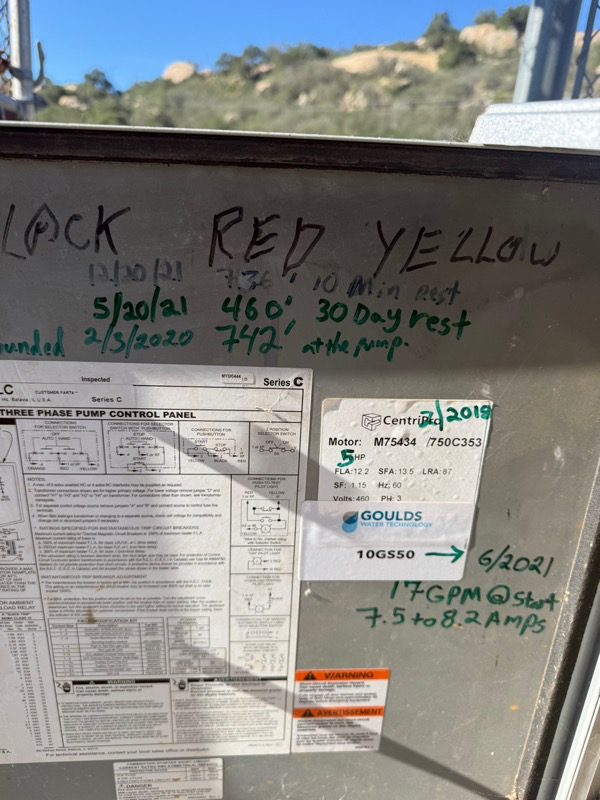
Is your Poway well not producing enough water for your needs? Low flow wells are frustrating, but there are proven solutions to improve your water supply.
📋 In This Guide
- Understanding Well Yield
- Solutions for Low Flow Wells
- Living with a Low Flow Well
- Free Well Yield Evaluation
- Related Articles
Understanding Well Yield
Well yield is measured in gallons per minute (GPM). Typical requirements:
- Single family home: 3-5 GPM minimum
- Large family/multiple bathrooms: 6-12 GPM
- Small farm/livestock: 10-20 GPM
- Agricultural irrigation: 50-500+ GPM
Many San Diego County wells produce 1-3 GPM—technically "low flow" but manageable with proper system design.
Solutions for Low Flow Wells
Storage Tank Systems
Collect water 24/7 into a large tank, then use a booster pump for household pressure. This multiplies your effective supply.
Hydrofracturing
High-pressure treatment to open fractures in bedrock, often doubling or tripling yield.
Well Deepening
Drilling deeper may reach better-producing zones.
Second Well
Adding a second well to supplement your primary supply.
Living with a Low Flow Well
While improving yield is ideal, you can also adapt:
- Install low-flow fixtures
- Spread water use throughout the day
- Add storage capacity for peak demand
- Use water-efficient appliances
Free Well Yield Evaluation
Not sure how much your well produces? We can perform a flow test and recommend the most cost-effective solution for your situation.
Need Help With Your Well in Poway?
Our expert technicians serve Poway and all of San Diego County with professional well services.
Related Articles
Continue learning about well maintenance and troubleshooting

Signs Your Well Pump Is Failing
Catch pump problems early before you lose water completely.
Low Water Pressure From Well
Diagnose and fix pressure problems before they get worse.
Well Maintenance Guide
Keep your well running smoothly with regular maintenance.
Our Locations
1077 Main St, Ramona, CA 92065
57174 CA-371 (US Hwy 79), Anza, CA 92539
Low-Flow and Low-Yield Wells in Poway, the City in the Country
Poway earned its nickname — “The City in the Country” — from the large-lot estates, equestrian properties, and winding hillside roads on its eastern side, and many of those homes run entirely on private wells. But not all Poway wells are created equal. A well in the alluvial fill along Green Valley might pull 10–20 GPM from sand and gravel over the granite basement, while a property up on the Iron Mountain or Mount Woodson ridges can be staring down 400–500 feet of hard, fractured granite that yields only 1–3 GPM. Poway wells range from roughly 200 to 500-plus feet deep, and where yours sits on that spectrum determines what “low flow” means for you and how we fix it.
Why Poway Wells Lose Flow
Weak GPM at the tap traces back to a handful of causes we encounter across Poway's varied terrain:
- A declining, seasonal water table. Poway's rainfall varies year to year, and after dry winters the water level in both valley and hillside wells falls. A pump set near the old level loses submergence and can only deliver a portion of the well's capacity.
- Pump set too high, undersized, or worn. Estate wells drilled years ago were sized for the conditions of the day. As the table drops or impellers wear, output falls even though water remains deeper in the column.
- Clogged screen and biofouling. Poway groundwater varies chemically from the decomposed-granite zones to the Santiago Formation and volcanic areas, and mineral scale plus iron-bacteria biofilm can plug a screen or the fractures feeding the well.
- Silting or casing collapse. In the alluvial valley wells, fine sediment settles into the bottom over time; in older bedrock wells, partial collapse can restrict the intake.
- Drought-reduced recharge. Less rain soaking into the hills means less water refilling tight fracture systems, and the ridge wells feel it first and worst.
Green Valley vs. Iron Mountain: The Poway Divide
The contrast is striking. A Green Valley Road property on alluvium may run a strong, comfortable 15 GPM and only complain when a dry year drops the level and its pump needs re-setting. A ridge home near Mount Woodson may have made just 2 GPM since the day it was drilled — there simply isn't much water in that granite. Both owners describe the same symptom, “my well is low,” but the correct fix is opposite: one needs a pump adjustment, the other needs a storage system to bank a slow trickle into usable pressure. Knowing your side of the divide is the key.
Check These Before You Call
- All fixtures or just one? House-wide weakness implicates the well or pump; a lone slow tap is plumbing.
- Does flow fade through the day? Strong in the morning, weak by evening, recovered by dawn is the signature of a well drawing down faster than it recharges — a yield problem.
- Air or sand? Sputtering means lost suction; grit suggests the level has fallen to the silted bottom or the screen is compromised.
- Pressure tank and switch. A waterlogged tank or a low switch setting mimics low flow and is cheap to fix, so it's worth checking first.
How We Test Yield in Poway
Our field workup measures the static water level (pump off) and the pumping level (under load) to find drawdown, then runs a well yield and recovery test to establish true sustainable GPM and recovery speed. We check the pump's set depth, horsepower, age, and condition and inspect the tank, switch, and wiring. On Poway's ridges especially, where a well can be 450 feet deep in granite, these numbers separate a fixable pump issue from a genuinely low-yield well that needs a storage strategy. The diagnostic is $125, credited toward any repair.
Fixes for Poway Properties
- Lower or replace the pump. If water sits deeper than the pump, re-setting it or installing a right-sized submersible restores flow. Submersible replacements typically run $2,500–$5,500 installed, more on the deepest ridge wells.
- Well rehabilitation. Mechanical brushing with acid or chemical treatment clears scale and biofilm and reopens the screen or fractures — often the best first investment on an aging well.
- Storage and constant pressure. A cistern fills slowly all day, then a booster or constant-pressure system delivers strong household pressure. This is the standard answer for the 1–3 GPM Mount Woodson and Iron Mountain wells. Booster and constant-pressure systems run about $2,000–$4,500.
- Deepen or drill new. When a well is truly finished, deepening or a new well may make sense. A turnkey new well ranges $18,000–$42,000 depending on depth and rock — a last resort, not a first move.
- Supporting components. We also service pressure switches ($150–$350), pressure tanks ($600–$1,500), control boxes and capacitors ($400–$900), and sediment filtration ($300–$900) for valley wells that produce grit.
What Low-Flow Repairs Really Cost in Poway
Poway estate owners often brace for the worst when the water slows, but many low-flow fixes are surprisingly affordable. On a Green Valley property where a seasonal drop is the culprit, adjusting an existing pump is a modest job; a full submersible pump replacement runs about $2,500 to $5,500 installed, with the deepest ridge wells at the higher end because of the extra pipe and horsepower involved. A pressure tank that was masking the real problem is $600 to $1,500, and a worn pressure switch just $150 to $350. Where mineral scale and iron bacteria have choked the screen or fractures, rehabilitation through mechanical brushing and acid treatment costs a fraction of drilling and can restore much of the lost flow. For the classic low-yield granite wells around Mount Woodson and Iron Mountain, a storage tank plus a booster or constant-pressure system, roughly $2,000 to $4,500, is the reliable long-term answer. A new well sits at the far end at $18,000 to $42,000 turnkey, reserved for wells that testing shows are truly spent. Our $125 diagnostic is credited toward any repair, so the numbers you get are honest and the assessment is not money wasted.
A Typical Poway Service Visit
Because Poway wells vary so much from lot to lot, we never quote before we measure. We inspect the wellhead, pressure tank, and controls, read the static and pumping levels, and run a yield and recovery test right there on your property. On a valley parcel that frequently points to a same-day pump adjustment; up on the ridge it usually points to a storage-and-boost system sized to your household. You finish the visit understanding precisely what your granite or alluvial well can deliver and the most cost-effective path to steady water pressure.
When It's Time to Call a Professional
Call without delay if you've lost water entirely, if the pump runs nonstop without building pressure, if you smell a hot motor, or if air and sand appear together at the tap. These mean the pump is starving or the well is drawn to its limit, and a running pump with no water can burn out fast. A slow seasonal decline is less urgent but still worth a yield test before the next dry year makes it worse.
Serving Poway and the Eastern Hills
Southern California Well Service has worked San Diego County wells since 2020, and Poway's estate and equestrian properties are right in our wheelhouse. From our Ramona office we cover Poway, Green Valley, the Mount Woodson and Iron Mountain areas, and the surrounding rural communities. We're a licensed C-57 water well contractor — not a general plumber — hold offer same-day emergency service when you have no water. We handle diagnosis, pump work, rehabilitation, storage systems, and new wells all under one roof.
Poway Low-Flow Well FAQ
Why does my Mount Woodson-area well produce so little?
Ridge wells near Mount Woodson and Iron Mountain are drilled deep into hard, fractured granite where water moves only through sparse cracks. Yields of 1–3 GPM are typical. The dependable solution is a storage tank plus a booster or constant-pressure system rather than chasing more GPM out of tight rock.
My Green Valley well slowed down this summer — what happened?
Valley wells on alluvium usually make good water, so a summer slowdown often means the seasonal table dropped and the pump lost submergence. Lowering or upsizing the pump typically brings the flow right back.
Is it my pump or my well?
Weak but steady flow all day usually means the pump, tank, or switch. Flow that's strong at first and fades as you use water, then recovers overnight, means the well is drawing down faster than it refills — a yield issue.
Can a low-yield Poway well be improved without drilling?
Frequently, yes. Rehabilitation can recover yield lost to clogging, and a storage-and-booster system turns even a 2 GPM trickle into strong, reliable household pressure — both far cheaper than a new well.
How deep are Poway wells, and does depth cause low flow?
Poway wells range from about 200 feet in the valleys to 500-plus feet on the ridges. Depth alone doesn't cause low flow — it's the amount of water the formation gives up at that depth. A deep granite well can still be low-yield, which is exactly when storage systems shine.
What's the cost to diagnose the problem?
Our diagnostic is $125 and is credited toward any repair. It includes static and pumping levels, drawdown, and a yield and recovery test so you decide with real numbers.
Let's Get Your Poway Well Producing
Whether you're on Green Valley alluvium or granite up near the ridge, we'll measure exactly what your well can do and match the fix to it. Call (760) 440-8520, text (760) 219-5877, or request a free estimate. Same-day emergency service is available across Poway and the eastern hills.