
Low Flow or Low Yield Well in Temecula
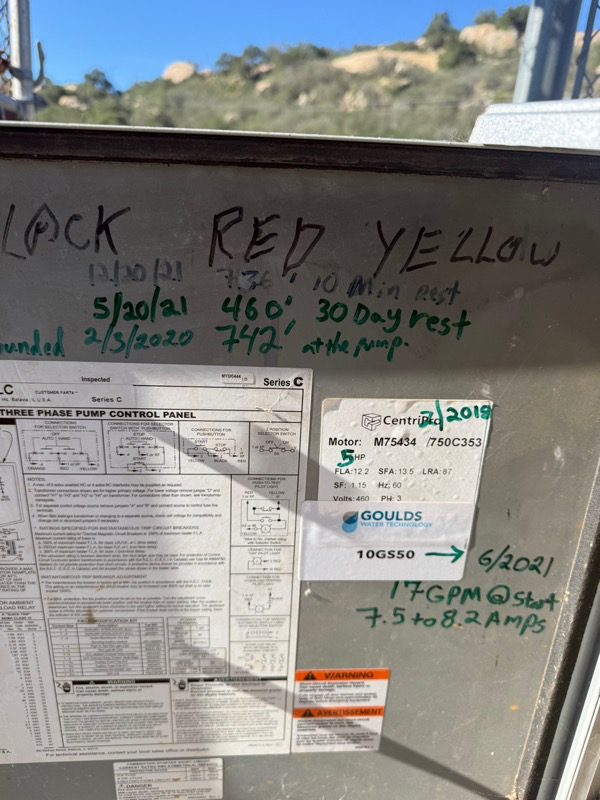
Is your Temecula well not producing enough water for your needs? Low flow wells are frustrating, but there are proven solutions to improve your water supply.
📋 In This Guide
- Understanding Well Yield
- Solutions for Low Flow Wells
- Living with a Low Flow Well
- Free Well Yield Evaluation
- Related Articles
Understanding Well Yield
Well yield is measured in gallons per minute (GPM). Typical requirements:
- Single family home: 3-5 GPM minimum
- Large family/multiple bathrooms: 6-12 GPM
- Small farm/livestock: 10-20 GPM
- Agricultural irrigation: 50-500+ GPM
Many Riverside County wells produce 1-3 GPM—technically "low flow" but manageable with proper system design.
Solutions for Low Flow Wells
Storage Tank Systems
Collect water 24/7 into a large tank, then use a booster pump for household pressure. This multiplies your effective supply.
Hydrofracturing
High-pressure treatment to open fractures in bedrock, often doubling or tripling yield.
Well Deepening
Drilling deeper may reach better-producing zones.
Second Well
Adding a second well to supplement your primary supply.
Living with a Low Flow Well
While improving yield is ideal, you can also adapt:
- Install low-flow fixtures
- Spread water use throughout the day
- Add storage capacity for peak demand
- Use water-efficient appliances
Free Well Yield Evaluation
Not sure how much your well produces? We can perform a flow test and recommend the most cost-effective solution for your situation.
Need Help With Your Well in Temecula?
Our expert technicians serve Temecula and all of Riverside County with professional well services.
Related Articles
Continue learning about well maintenance and troubleshooting

Signs Your Well Pump Is Failing
Catch pump problems early before you lose water completely.
Low Water Pressure From Well
Diagnose and fix pressure problems before they get worse.
Well Maintenance Guide
Keep your well running smoothly with regular maintenance.
Our Locations
1077 Main St, Ramona, CA 92065
57174 CA-371 (US Hwy 79), Anza, CA 92539
Solving a Low-Flow Well in Temecula's Wine Country and Foothills
If your Temecula well sputters when two fixtures run at once, drops off when the irrigation timer kicks on, or simply never seems to keep up with the household, you are dealing with a low-yield well — and you are in good company. Across the Temecula Valley, from the vineyards along De Portola Road to the rugged De Luz hills and the older horse properties off Pauba and Glenoaks, well owners regularly wrestle with modest production. The good news is that a low-flow well is rarely a dead end. With the right diagnosis and the right fix, most Temecula properties can get reliable, strong water again.
Temecula sits in Riverside County at the southwestern edge of the Peninsular Ranges. Valley-floor parcels draw from the alluvial Pauba Valley aquifer, which is recharged by the Santa Margarita River watershed and managed in part through recharge ponds run by Rancho California Water District. Hillside and De Luz properties, by contrast, are drilled into hard, fractured granite. That difference in geology is the single biggest factor in whether your well flows freely or trickles.
How Well Yield Works and Why GPM Testing Matters
Well yield is the sustained rate, measured in gallons per minute (GPM), that your well can deliver without running dry. It is not the same as the pressure at your faucet — a small pump can briefly push good pressure while the well behind it produces only a couple of gallons a minute. To know what you truly have, we run a flow test combined with a drawdown and recovery test. We pump at a steady rate and watch how far the water level falls (drawdown) and how quickly it climbs back (recovery) once the pump shuts off.
A well that draws down hard and recovers slowly is telling us the aquifer or the fractures simply cannot feed it fast enough. A well that holds its level but still delivers little is more likely choked by a clogged screen or an undersized or failing pump. For a Temecula home, 5 to 10 GPM is comfortable; 2 to 4 GPM is common in the granite and entirely livable with the right system; below 1 GPM needs intervention.
What Causes Low Flow in Temecula Wells
Several culprits show up again and again on Temecula service calls, and they tie directly to the local geology and climate:
- Fractured-granite wells with limited storage. De Luz and foothill wells depend on a network of cracks in the bedrock. If those fractures are few or poorly connected, the well produces slowly no matter how deep it is.
- A dropping water table during dry years. Southern California's multi-year droughts pull regional groundwater levels down, and a pump that was once well below the water column can end up near the top of it, starving for flow.
- Mineral scale and biofouling on the screen. Temecula's hard, mineral-rich water leaves calcium and iron deposits that gradually plug the well screen and gravel pack, choking off the water that should be entering the casing.
- A pump set too high. If the pump intake sits above the most productive fractures, lowering it can recover flow you already have.
- A well that is simply too shallow. Some older valley wells never reached the deeper, more reliable zones.
Proven Solutions for a Low-Yield Temecula Well
Well rehabilitation and redevelopment. When scale and fouling are the problem, mechanical brushing, surging, and chemical treatment can strip the screen and gravel pack clean and restore much of the original yield. This is usually the first and least expensive thing to try.
Lowering the pump. If the water table has dropped or the pump sits above good fractures, repositioning it deeper in the casing can immediately improve flow at a fraction of the cost of drilling.
Hydrofracturing. On the fractured-granite wells so common around De Luz and the Temecula foothills, hydrofracturing is often the highest-payoff option. High-pressure water is injected to reopen and link existing fractures, and yields frequently double or triple.
Deepening or drilling a new well. If the existing borehole bottomed out in tight rock, deepening it may reach a more productive zone. When a well is beyond saving, a new well sited with knowledge of the local aquifer is the long-term answer.
Storage tank plus booster or constant-pressure pump. The most practical fix for a modest-but-steady well. A 2,500 to 5,000 gallon tank banks your well's 24-hour output, and a booster or constant-pressure system delivers strong, even household pressure on demand — letting a 2 to 3 GPM well comfortably serve a busy home.
When to Call a Professional
Call us if your flow has dropped noticeably, if you are pulling air or sand, if pressure collapses when more than one fixture runs, or if you are planning to add bathrooms, livestock, or irrigation that your current well cannot support. A proper flow and drawdown test takes the guesswork out and points you to the lowest-cost fix that will actually work.
Cost Ranges for Temecula Well Work
Every property is different, but here are realistic ranges: well rehabilitation $1,500 to $6,000; hydrofracturing $3,000 to $8,000; a storage tank with booster or constant-pressure system $3,000 to $8,000; and a complete new turnkey well $18,000 to $42,000 depending on depth and geology. Our on-site diagnostic is $125, and we credit it toward any work you approve.
Serving Temecula and All of Riverside County
Southern California Well Service is a licensed C-57 water well contractor with since 2020. From our offices in Ramona (1077 Main St, Ramona, CA 92065) and Anza (57174 CA-371 (US Hwy 79), Anza, CA 92539), we reach Temecula, De Luz, Wine Country, Murrieta, Wildomar, Aguanga, and the surrounding Riverside County communities quickly — with same-day emergency service when you have no water.
What to Expect When We Visit Your Temecula Property
A typical first visit starts at the wellhead. We pull your well records if they exist, check the pump's age, horsepower, and set depth, and inspect the pressure tank and controls. Then we run the flow and drawdown test so we have hard numbers rather than guesses. Within the same visit we can usually tell you whether your Temecula well is fracture-limited, fouled, under-pumped, or simply sitting too high in a dropping water table — and we put the recommendation and price in writing before any work begins.
Because Temecula spans such different ground, the right answer varies block to block. A vineyard estate off Anza Road over the Pauba Valley alluvium may only need a deeper pump setting and a clean-out, while a De Luz hilltop on tight granite may be a strong candidate for hydrofracturing followed by a storage tank. We have drilled, rehabilitated, and re-pumped wells across all of these settings, and that local pattern recognition saves our customers from paying for the wrong fix.
Protecting Your Investment Over the Long Run
Once your flow is restored, a little maintenance keeps it that way. We recommend a periodic flow check, especially after dry winters, plus attention to water treatment since Temecula's hard, mineral-rich water is what scales screens and shortens pump life in the first place. Sizing your storage to your real peak demand — household plus any vines or landscaping — means a modest well never leaves you short during a hot July afternoon. These are the small steps that turn a frustrating low-flow well into a system you stop worrying about.
Frequently Asked Questions
How many gallons per minute should a Temecula well produce?
For a single-family home in the Temecula Valley, 5 to 10 GPM is comfortable. Many wine-country and De Luz hillside wells drilled into decomposed granite produce only 2 to 4 GPM, which is workable for a household once paired with a storage tank and booster pump but tight for landscape or a few acres of vines.
Why has my Temecula well lost flow over the past few years?
The most common causes here are a dropping water table during dry cycles, a clogged or mineral-encrusted screen from the area's hard water, a pump set too high in the casing, or simply a well that was drilled into tight fractured granite with limited storage. A flow and drawdown test tells us which it is.
Will hydrofracturing actually help a granite well near Temecula?
Often, yes. De Luz and the foothills around Temecula sit on fractured Peninsular Ranges granite, exactly the rock type where hydrofracturing works best. By injecting water under high pressure we reopen and connect existing fractures, and many wells see yield double or triple afterward.
Is a storage tank a good option for a low-flow Temecula well?
It is one of the most cost-effective fixes. A 2,500 to 5,000 gallon tank collects your well's modest output around the clock, then a booster or constant-pressure pump delivers strong household pressure on demand. A 2 GPM well stores roughly 2,880 gallons a day, plenty for most homes.
How deep are wells in the Temecula area?
Valley-floor wells over the Pauba Valley aquifer often hit water at 200 to 300 feet, while foothill and De Luz properties commonly run 350 to 500 feet through decomposed granite. Deepening an existing borehole can sometimes reach a better-producing zone.
What does it cost to improve a low-yield well in Temecula?
Well rehabilitation typically runs $1,500 to $6,000, hydrofracturing $3,000 to $8,000, and a storage tank with a booster system $3,000 to $8,000. A complete new turnkey well ranges from $18,000 to $42,000. Our on-site diagnostic is $125, credited toward any work you approve.
Talk to a Local Well Expert in Temecula
Southern California Well Service has helped Temecula-area families and ranchers get more water out of low-yield wells since 2020. Call for a same-day assessment, a clear written estimate, and an honest recommendation.