
Low Flow or Low Yield Well in Wildomar
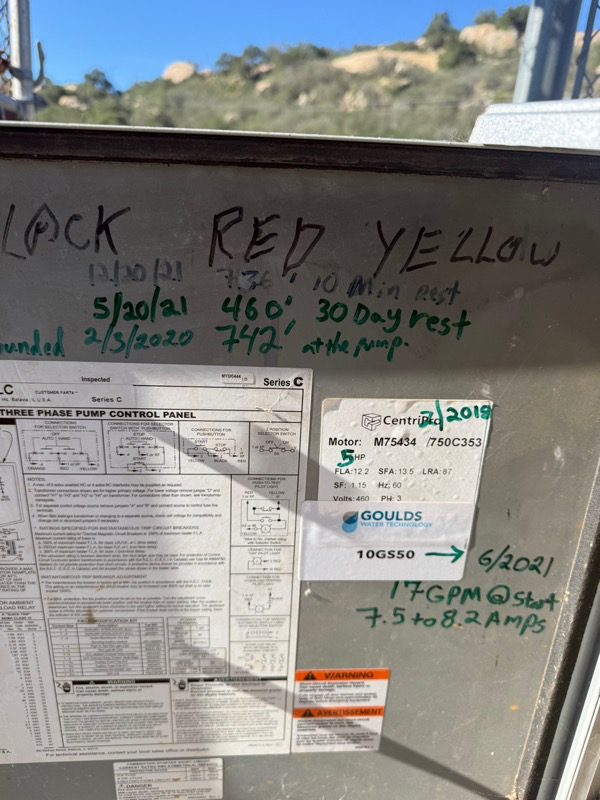
Is your Wildomar well not producing enough water for your needs? Low flow wells are frustrating, but there are proven solutions to improve your water supply.
📋 In This Guide
- Understanding Well Yield
- Solutions for Low Flow Wells
- Living with a Low Flow Well
- Free Well Yield Evaluation
- Related Articles
Understanding Well Yield
Well yield is measured in gallons per minute (GPM). Typical requirements:
- Single family home: 3-5 GPM minimum
- Large family/multiple bathrooms: 6-12 GPM
- Small farm/livestock: 10-20 GPM
- Agricultural irrigation: 50-500+ GPM
Many Riverside County wells produce 1-3 GPM—technically "low flow" but manageable with proper system design.
Solutions for Low Flow Wells
Storage Tank Systems
Collect water 24/7 into a large tank, then use a booster pump for household pressure. This multiplies your effective supply.
Hydrofracturing
High-pressure treatment to open fractures in bedrock, often doubling or tripling yield.
Well Deepening
Drilling deeper may reach better-producing zones.
Second Well
Adding a second well to supplement your primary supply.
Living with a Low Flow Well
While improving yield is ideal, you can also adapt:
- Install low-flow fixtures
- Spread water use throughout the day
- Add storage capacity for peak demand
- Use water-efficient appliances
Free Well Yield Evaluation
Not sure how much your well produces? We can perform a flow test and recommend the most cost-effective solution for your situation.
Need Help With Your Well in Wildomar?
Our expert technicians serve Wildomar and all of Riverside County with professional well services.
Related Articles
Continue learning about well maintenance and troubleshooting

Signs Your Well Pump Is Failing
Catch pump problems early before you lose water completely.
Low Water Pressure From Well
Diagnose and fix pressure problems before they get worse.
Well Maintenance Guide
Keep your well running smoothly with regular maintenance.
Our Locations
1077 Main St, Ramona, CA 92065
57174 CA-371 (US Hwy 79), Anza, CA 92539
Low Flow and Low Yield Wells in Wildomar: A Local Owner's Guide
When you turn on the tap at a Wildomar property and the flow slows to a trickle, or the shower loses pressure the moment the washing machine kicks on, you are almost certainly dealing with a low-flow or low-yield well. Out here in the Elsinore Valley, along the I-15 corridor between Lake Elsinore and Murrieta, private wells are a way of life on the larger lots east of town and up in the De Luz and Bundy Canyon foothills. Southern California Well Service has worked since 2020 diagnosing weak-producing wells across this part of southwest Riverside County, and the good news is that "low flow" almost always has a specific, fixable cause once someone actually measures what the well is doing.
A low-yield well is not the same as a broken one. Your pump may run fine and your pressure tank may hold air correctly, yet the aquifer simply cannot deliver water to the pump intake as fast as your household draws it down. The result is sputtering faucets, air in the lines, and a pump that short-cycles or runs dry during peak demand. Understanding why this happens on Wildomar's particular geology is the first step toward the right fix.
Why Wildomar Wells Run Low
Wildomar sits in the Elsinore trough, a fault-controlled valley where the ground beneath your feet changes character dramatically over short distances. The Elsinore Fault Zone runs directly through the region, and it has left behind a patchwork of thick alluvial deposits — sand, gravel, and clay washed down from the Peninsular Ranges — sitting over older, fractured granitic bedrock. Two properties a few hundred feet apart can hit water at completely different depths. Local wells range widely, from shallow alluvial wells under 150 feet near the drainages to bedrock wells reaching 300 to 500 feet or deeper in the foothills. That variability is exactly why generic diagnoses fail here.
The most common reasons a Wildomar well loses flow include:
- A dropping water table. During dry years and extended Southern California droughts, aquifer recharge slows and the static water level falls. When the water table drops below or near your pump intake, the pump can no longer stay submerged during heavy use, so it draws air and flow collapses.
- A pump set too high or undersized. Many older Wildomar wells were built when the water table sat higher. If the submersible pump is hanging above today's water level, or if it was sized for a smaller household, it simply cannot keep up.
- A clogged screen or perforations. Mineral scale from the area's hard water, plus iron-bacteria biofouling, gradually plugs the well screen or the perforations in the casing. Water that used to flow freely into the well now struggles through a coated, restricted opening.
- Silted-in or partially collapsed casing. In the alluvial zones, fine sand and silt can accumulate in the bottom of the well over decades, burying the productive interval. An older steel casing near the fault can also corrode or partially collapse.
- Fractures that have tightened up. In the granitic bedrock wells common in the foothills, yield depends on how many water-bearing fractures the borehole intersects. Those fractures can be naturally sparse, giving a well that was never a strong producer to begin with.
Common Local Scenarios We See in Wildomar
A homeowner off Palomar Street calls in August because the well "works fine in winter but goes dry every summer" — a classic seasonal water-table drop where the pump needs to be lowered. A family that added a second bathroom and a horse setup on Bundy Canyon Road finds their reliable 4 GPM well can no longer keep up with the new peak demand. An older property near the lake starts pumping sand and losing pressure as silt fills the bottom of an aging casing. Each of these is a different problem with a different fix, which is why measurement matters more than guesswork.
What to Check When Flow Drops
Before assuming the worst, a proper diagnosis measures the well rather than the symptoms. When our technicians evaluate a low-flow Wildomar well, we look at:
- Static water level — how high the water stands when the pump has been off, which tells us where the aquifer sits today versus when the well was drilled.
- Pumping water level and drawdown — how far the level falls while the pump runs. Large drawdown that keeps dropping signals a well struggling to keep up with the pump.
- A well yield and recovery test — we measure sustained GPM and how quickly the water level recovers after pumping. This separates a weak aquifer from a mechanical restriction.
- Pump depth and condition — how deep the pump hangs relative to the water level, and whether the pump, wiring, and check valve are healthy.
- Water clarity — sand or turbidity points to screen or casing problems rather than a simple pump issue.
You can safely note a few things yourself first: does the flow drop only during simultaneous use, only in dry months, or all the time? Is the water cloudy or gritty? Does the pump seem to run constantly? These observations help us arrive with the right equipment.
Fixes That Work in the Elsinore Valley
The right solution depends entirely on what the testing reveals. In our Wildomar service work, the effective fixes fall into a few categories:
- Lower or replace the pump. If a falling water table left the pump too high, lowering it deeper into the water column often restores flow immediately. A worn or undersized submersible pump can be replaced with a properly sized unit — a submersible pump job typically runs $2,500 to $5,500 installed depending on depth and horsepower.
- Well rehabilitation. When scale and biofouling have plugged the screen, mechanical brushing combined with chemical or acid treatment can reopen the perforations and dramatically improve inflow. This is often the most cost-effective route for a well that used to produce well and has slowly declined.
- Hydrofracturing or deepening. For bedrock wells in the foothills, high-pressure hydrofracturing can open additional fractures and frequently doubles or triples yield. Where deeper, better-producing zones exist, deepening the existing borehole is another option.
- Storage and constant-pressure systems. When the aquifer genuinely can only give a few GPM, we pair a low-yield well with a large storage or cistern tank that fills slowly around the clock, then deliver strong household pressure with a booster or constant-pressure system — typically $2,000 to $4,500. This "manage the flow" approach lets a 1–3 GPM well comfortably serve a full household.
- A new well. As a last resort, when an old well is collapsed or the location is simply poor, a new turnkey well runs roughly $18,000 to $42,000 depending on depth and geology.
Related pressure-side fixes we handle include pressure switches ($150–$350), pressure tanks ($600–$1,500), and control box or capacitor replacement ($400–$900). If your low flow is really a hard-water or sediment issue, sediment filtration ($300–$900) or a softener ($1,500–$3,500) may be part of the answer.
When to Call a Professional
Because a C-57 licensed contractor is required for well work in California, and because pulling a submersible pump involves heavy equipment and live electrical connections, low-flow diagnosis is not a DIY project. Call us when you notice flow that keeps declining, air spitting from the taps, sand in the water, or a pump that runs constantly. A well inspection runs $150 to $400, and our $125 diagnostic is credited toward any repair we perform. Catching a low-yield problem early usually means a lower-cost fix than waiting until the well runs completely dry in the middle of summer.
Serving Wildomar and Southwest Riverside County
Southern California Well Service is a licensed C-57 water well contractor with since 2020 of local experience. From our offices in Ramona and Anza, we reach Wildomar and the surrounding communities of Lake Elsinore, Murrieta, Menifee, Canyon Lake, and Temecula quickly, and we offer same-day emergency service when you have no water. Because we know the Elsinore trough and the fault-controlled geology beneath southwest Riverside County, we diagnose low-flow wells correctly the first time instead of throwing parts at the problem. Call (760) 440-8520, text us at (760) 219-5877, and we will get your Wildomar water supply back to full strength.
Frequently Asked Questions
How many gallons per minute does a Wildomar home really need?
A single-family home is comfortable with 3–5 GPM, and larger households with multiple bathrooms may want 6–12 GPM. That said, many Wildomar wells produce only 1–3 GPM and still serve a family well when paired with a storage tank and a constant-pressure booster system that stores water during low-demand hours.
Why does my Wildomar well go dry in summer but recover in winter?
That pattern almost always points to a seasonal water-table drop. In dry months the static level falls and can reach your pump intake, causing air and lost flow; winter recharge raises it again. Lowering the pump deeper into the water column, or adding storage, usually solves it.
Will hydrofracturing help a low-yield bedrock well near the foothills?
Often, yes. Wildomar's granitic foothill wells depend on water-bearing fractures. Hydrofracturing uses high pressure to open and connect additional fractures, and it frequently doubles or triples yield. We test the well first to confirm it is a good candidate before recommending it.
Is low flow caused by my pump or by the well itself?
Only a proper test tells you for sure. We measure static level, drawdown, and recovery. If the water level holds and flow is still weak, the pump or screen is likely restricting things; if the level crashes and recovers slowly, the aquifer is the limiting factor. Each points to a different, targeted fix.
How much does it cost to fix a low-flow well in Wildomar?
It depends on the cause. Lowering a pump is relatively modest, well rehabilitation to clean a clogged screen is mid-range, a new submersible pump runs $2,500–$5,500, and a storage-plus-booster system runs $2,000–$4,500. A full new well is $18,000–$42,000. Our $125 diagnostic is credited toward the repair, so you start with a clear, honest assessment.
Do you offer emergency service if my well quits completely?
Yes. We provide same-day emergency response across Wildomar and southwest Riverside County. If you have no water, call (760) 440-8520 right away and we will prioritize getting your supply restored.