
Low Flow or Low Yield Well in Winchester
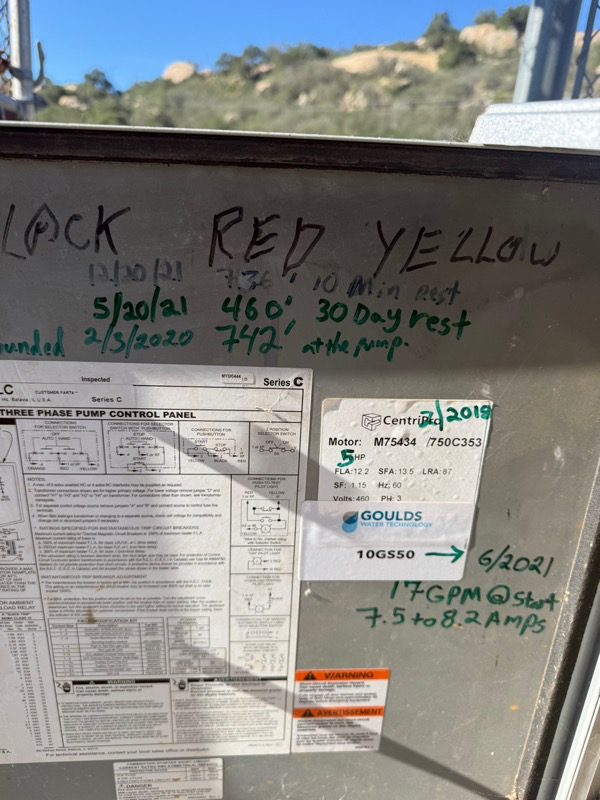
Is your Winchester well not producing enough water for your needs? Low flow wells are frustrating, but there are proven solutions to improve your water supply.
📋 In This Guide
- Understanding Well Yield
- Solutions for Low Flow Wells
- Living with a Low Flow Well
- Free Well Yield Evaluation
- Related Articles
Understanding Well Yield
Well yield is measured in gallons per minute (GPM). Typical requirements:
- Single family home: 3-5 GPM minimum
- Large family/multiple bathrooms: 6-12 GPM
- Small farm/livestock: 10-20 GPM
- Agricultural irrigation: 50-500+ GPM
Many Riverside County wells produce 1-3 GPM—technically "low flow" but manageable with proper system design.
Solutions for Low Flow Wells
Storage Tank Systems
Collect water 24/7 into a large tank, then use a booster pump for household pressure. This multiplies your effective supply.
Hydrofracturing
High-pressure treatment to open fractures in bedrock, often doubling or tripling yield.
Well Deepening
Drilling deeper may reach better-producing zones.
Second Well
Adding a second well to supplement your primary supply.
Living with a Low Flow Well
While improving yield is ideal, you can also adapt:
- Install low-flow fixtures
- Spread water use throughout the day
- Add storage capacity for peak demand
- Use water-efficient appliances
Free Well Yield Evaluation
Not sure how much your well produces? We can perform a flow test and recommend the most cost-effective solution for your situation.
Need Help With Your Well in Winchester?
Our expert technicians serve Winchester and all of Riverside County with professional well services.
Related Articles
Continue learning about well maintenance and troubleshooting

Signs Your Well Pump Is Failing
Catch pump problems early before you lose water completely.

Low Water Pressure From Well
Diagnose and fix pressure problems before they get worse.

Well Maintenance Guide
Keep your well running smoothly with regular maintenance.
Our Locations
1077 Main St, Ramona, CA 92065
57174 CA-371 (US Hwy 79), Anza, CA 92539
Low-Yield Wells in Winchester's Buried Paleocanyon
Winchester sits in the rolling farm country of western Riverside County, between Hemet and Murrieta, in an area with a genuinely interesting groundwater story. Beneath the surface lies the Winchester structural subbasin, a roughly 20-square-mile alluvium-filled paleocanyon that reaches as much as 900 feet deep, carved long ago and later filled with detrital material ranging from clay to fine gravel. The best-quality, most dependable water here tends to come from the deepest wells, those perforated near the contact between the alluvium and the fractured bedrock basement below. Where a well is finished within that buried canyon makes an enormous difference, which is why two neighbors can have very different yields. When a Winchester property struggles with a low-flow or low-yield well, the cause usually involves the depth and zone the well draws from, plus the condition of the well itself.
Low yield is one of the more fixable well problems, but only after an accurate diagnosis. Below we explain how we measure, diagnose, and resolve low-flow wells specifically for the Winchester area.
Measuring Real Yield in Gallons Per Minute
There are two numbers worth knowing: the flow at your fixtures and the sustained yield of the aquifer. For a quick check, run an outdoor spigot into a five-gallon bucket and time the fill. Fifteen to twenty seconds is 15 to 20 GPM; one minute is 5 GPM; two minutes or more means you are at 2.5 GPM or less and have a real low-yield situation.
The decisive measurement, though, is a sustained yield (drawdown) test. Because the pressure tank stores water and can mask a weak well, we run the pump steadily, watch the level fall, and time the recovery. A Winchester household generally needs 3 to 5 GPM of dependable supply, with rural and agricultural parcels needing considerably more. Wells set deep in the paleocanyon's coarser zones can be solid producers, while wells that bottom out in the clay-and-silt-heavy fill, or that sit on the shallow margins of the subbasin, often deliver far less and draw down quickly.
Why Winchester Wells Run Low
- Finished in a low-permeability zone. The subbasin fill includes substantial clay and silt. A well screened across fine material releases water slowly even though plenty of groundwater may sit nearby in coarser layers.
- Declining water table. Western Riverside County has seen long-term groundwater drawdown in places. As static levels fall, shallower and marginal Winchester wells lose saturated screen and yield drops.
- Clogged or encrusted screen. The area's mineral-rich water deposits calcium and iron scale on screen slots and gravel pack, slowly sealing the openings where water enters the well.
- Biofouling. Iron and sulfur bacteria build slimes that plug the intake, often alongside staining or odor.
- Pump set too shallow or oversized. A pump above the productive zone loses prime as the level drops, and an oversized pump outruns a modest well, causing short cycling and air at the taps.
Winchester's mix of established farms, ranchettes, and newer rural homes means demand on a single well can swing dramatically through the day, from quiet overnight hours to a heavy morning of household use, livestock watering, and irrigation all at once. A well that seems adequate on paper can still fall short during those peaks, and that gap between average supply and peak demand is precisely what a well-designed system is meant to close.
Solutions and the Tradeoffs
Well Rehabilitation
For an older well that has gradually slowed, cleaning the screen and casing with brushing, surging, and chemical treatment can recover much of the lost yield. At roughly $1,500 to $5,000, rehabilitation is the sensible first step when a well used to produce more. It restores capacity but cannot supply more than the formation holds.
Deepening to the Bedrock Contact
Because Winchester's best water often lies near the deep alluvium-bedrock contact, deepening an existing shallow well, or drilling a new well to that zone, can substantially improve both quantity and quality. The paleocanyon's depth makes this one of the more promising areas in our service region for gaining yield through depth, though we always check nearby well logs first. This is more involved than rehabilitation and priced accordingly.
Hydrofracturing
Where a well reaches into the fractured bedrock basement, hydrofracturing can open and connect fractures to boost yield, typically $3,000 to $8,000. For a well sitting entirely in fine alluvium it offers little, which is why diagnosis drives the decision.
Storage Cistern With a Booster or Constant-Pressure Pump
For chronic low yield, this is the most reliable fix. A slow well fills a large cistern, commonly 2,500 to 5,000 gallons, around the clock, and a booster or constant-pressure pump then delivers strong, steady household pressure on demand. A 2 GPM well running continuously yields nearly 2,900 gallons a day, more than most homes use, so the tank absorbs your peak demand while the well refills it. Plan on roughly $3,000 to $7,000 installed. The tradeoffs are tank footprint and a little added equipment, but it converts a marginal well into a dependable supply, which is especially valuable on Winchester's farm and ranch parcels where demand swings widely through the day.
Right-Sizing the Pump
Sometimes the answer is simply matching the pump to the well, setting it at the correct depth, or adding a flow-control valve so it cannot outrun the aquifer. A properly sized pump and pressure tank cost $2,500 to $5,500.
When to Call a Professional
A noticeable drop in flow, a short-cycling pump, air sputtering at the taps, or cloudy, sandy water all mean it is time for a professional yield evaluation rather than guesswork. Replacing a pump when the real problem is a clogged screen or a poorly placed intake just wastes money. Our $125 diagnostic, credited toward any repair, identifies precisely which cause applies to your well.
Serving Winchester and Western Riverside County
Southern California Well Service works throughout Winchester and the neighboring Riverside County communities of Hemet, San Jacinto, Menifee, Murrieta, and the surrounding agricultural areas. As a licensed C-57 water well contractor founded in 2020, with 60+ years of family heritage, we handle yield testing, rehabilitation, deepening, hydrofracturing, storage-and-booster systems, and pump work in-house. Crews who understand the Winchester subbasin and its buried paleocanyon get these jobs diagnosed and solved correctly the first time.
Talk to a Low-Yield Well Specialist in Winchester
Southern California Well Service has worked since 2020 coaxing reliable water out of stubborn wells across the region. We are a licensed C-57 water well contractor, licensed C-57 (CSLB #1086994), with same-day emergency response from our Ramona and Anza offices. Our diagnostic visit is $125, and that fee is credited toward any work we perform.
Frequently Asked Questions
Why do Winchester wells vary so much from one property to the next?
Winchester sits over a buried paleocanyon up to 900 feet deep, filled with everything from clay to gravel. A well screened in coarse material near the bedrock contact can be a strong producer, while one in clay-heavy fill nearby yields far less.
Is drilling deeper a good option in Winchester?
Often yes. The best-quality, most dependable water here tends to come from the deepest wells near the alluvium-bedrock contact, so deepening or drilling to that zone can improve both yield and water quality. We check nearby well logs first.
How do I know if it is the well or the pump causing low water?
A sustained yield test tells you. If the well draws down quickly and recovers slowly, the aquifer is the limit; if the level holds but pressure is weak, the pump or pressure tank is the issue.
What is the best solution for a chronically slow Winchester well?
A storage cistern with a booster or constant-pressure pump is usually the most reliable answer. It lets a slow well fill the tank around the clock and delivers full pressure on demand, which suits Winchester's farm and ranch demand swings.
How much does improving a low-yield well cost?
Rehabilitation runs $1,500 to $5,000, hydrofracturing $3,000 to $8,000, a storage-plus-booster system $3,000 to $7,000, and a right-sized pump and tank $2,500 to $5,500, depending on the diagnosis.
Do you offer emergency well service in Winchester?
Yes. We provide same-day emergency response across Winchester and western Riverside County, and we are licensed C-57 (CSLB #1086994) by local customers. Call (760) 440-8520 or text (760) 219-5877 whenever you lose water, day or night.