Low Water Pressure Solutions in Aguanga Valley
Dealing with weak water pressure in Aguanga Valley? Low water pressure can make showers frustrating and appliances ineffective. Our team diagnoses the root cause and restores your water pressure fast.
📋 In This Guide
Need Low Water Pressure Solutions in Aguanga Valley?
We serve Aguanga Valley and all of Riverside County. Licensed C-57 contractor (CSLB #1086994), founded 2020.
Call: (760) 440-8520Low Water Pressure in Aguanga Valley: A Rural Well Guide
Aguanga Valley sits in the rural southeastern corner of Riverside County, where State Route 79 and State Route 371 meet amid the rolling oak-dotted hills and ranch land between Temecula and Anza. There is no municipal water system reaching most of these properties; if you live on acreage off Highway 79, near Cahuilla Creek, or up toward the Anza-Borgo foothills, your home almost certainly runs on a private well. That independence is part of the appeal of valley living, but it also means that when water pressure drops, the responsibility for diagnosing and fixing it lands squarely on you, and the right local well contractor.
Weak pressure here is rarely a sign that the valley's groundwater has vanished. Far more often it traces to a worn pump, a failing pressure tank, a drifting switch, or mineral and sediment buildup in a system that has quietly aged. Understanding how the pieces fit together, and which problems are most common in this terrain, helps you respond fast and avoid an unnecessary repair bill.
How Your Private Well Builds Pressure
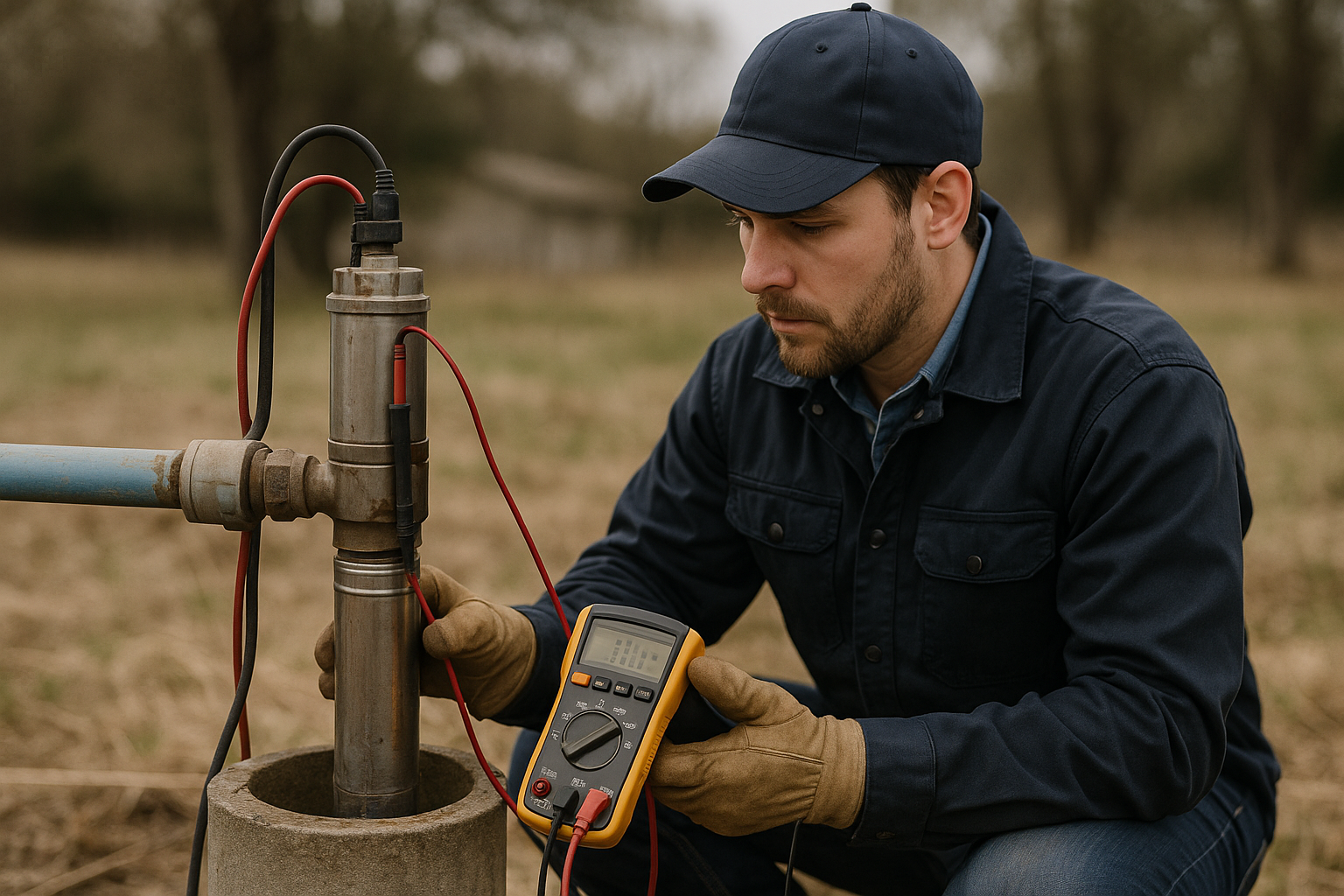
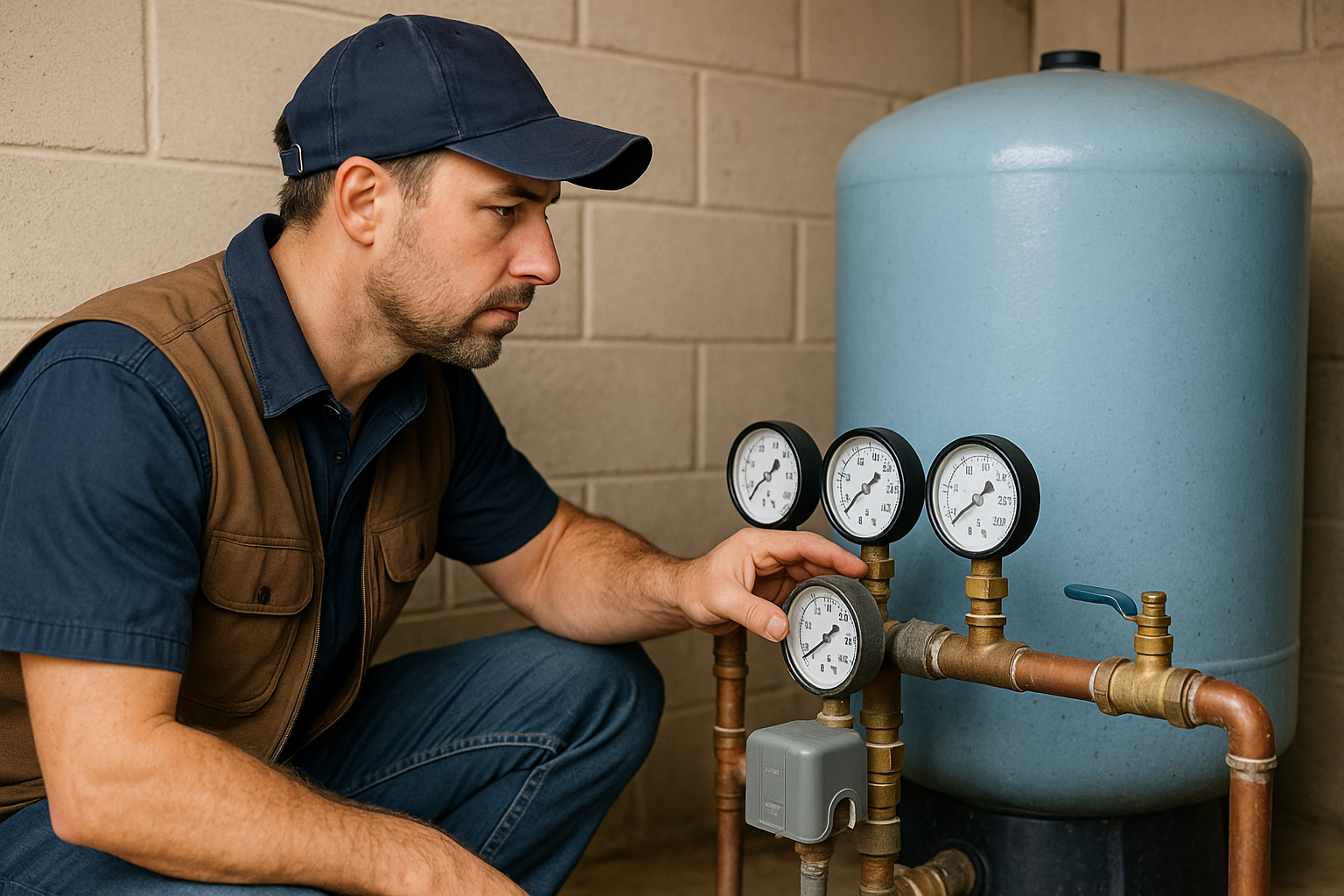
Your faucets do not draw straight from the well. A submersible pump down in the casing lifts water to a pressure tank near the house. Inside that tank, a column of compressed air presses on a rubber bladder, storing the energy that delivers steady pressure between pump cycles. A pressure switch reads the tank and tells the pump when to start (commonly 40 PSI) and stop (commonly 60 PSI). Most homes settle into a 40/60 or 30/50 rhythm.
When one component slips, you feel it at the tap. A waterlogged tank with no air cushion makes the pump cycle on and off rapidly. A tired or corroded switch cuts the pump short. A worn pump cannot move enough water. And in the granitic, decomposed-granite soils common across the Aguanga area, fine sediment can pack a well screen or clog a filter and choke flow even when everything else works. The job of a service call is to find which link in that chain has failed.
Common Causes of Low Pressure in Aguanga Valley
In serving since 2020 the Anza-Aguanga high country and southern Riverside County, these are the culprits we see most often in valley wells:
- Seasonal water-table swings: Wells here often tap fractured granite and shallow alluvial pockets that recharge from winter rain and Cahuilla Creek drainage. In dry years the static level falls, and a pump set too shallow loses prime or struggles, dropping pressure during summer demand.
- Aging submersible pumps: Many valley wells were drilled decades ago. Pumps wear, impellers scale, and output pressure declines gradually until the day it becomes obvious.
- Pressure tank failure: The bladder is a wear item. When it ruptures or the air charge bleeds away, you get rapid cycling and surging pressure, one of the most frequent rural calls we get.
- Hard-water scaling: Groundwater drawn through granitic rock carries calcium and magnesium that plate out on pump parts and pipes, narrowing flow over the years.
- Sediment from decomposed granite: After heavy storms, fine granite particles wash into wells and pack screens, especially on ranch parcels with older casings.
- Long supply runs and elevation changes: Valley homes often sit a good distance, and sometimes uphill, from the wellhead. Friction loss and vertical lift quietly steal pressure before water ever reaches the house.
What You Can Check First
A handful of safe checks can save you a service call, or make ours far more efficient:
- Read the pressure gauge near your tank through a full pump cycle. Healthy pressure runs 40 to 60 PSI. A gauge that barely moves or swings wildly is a strong clue.
- Listen for rapid cycling. A pump snapping on and off every few seconds points to a waterlogged tank or a bad switch.
- One fixture or the whole house? A single weak faucet usually means a clogged aerator; weak everywhere means a system-level problem.
- Tap the tank. Hollow on top, solid on the bottom is healthy. Solid all the way up means the bladder has likely failed.
- Walk the lines for leaks. Wet patches at the wellhead, the tank, or along buried runs across your acreage waste the pressure you are paying for.
- Note the timing. A drop after a storm hints at sediment; after a power flicker, the pump or switch; a slow fade over months, scaling or pump wear.
Do not open the well cap, pull electrical covers, or try to service the pump yourself. Well systems mix 240-volt power with deep equipment, and that is professional territory.
When to Call a Professional in Aguanga Valley
Reach out to Southern California Well Service right away if you experience:
- No water or a sudden, severe pressure loss — possibly a failed pump, lost prime, or a critically low well that needs same-day attention.
- Constant pump cycling audible from inside, a warning that the tank or switch is failing and the pump is at risk.
- Cloudy or gritty water, especially after rain, signaling sediment intrusion that needs screen service or filtration.
- Grinding or humming from the pump, suggesting mechanical wear or an electrical fault.
- Stubborn low pressure after you have ruled out aerators and visible leaks.
We are a licensed C-57 well-drilling contractor founded in 2020, with 60+ years of family heritage and our Anza office sits just up the highway. Our diagnostic visit is a flat $125, credited toward any repair we complete.
What Repairs Typically Cost
These 2026 ranges give Aguanga Valley well owners a realistic sense of investment; site conditions and well depth affect the final figure:
- Pressure switch replacement: $150–$350, the simplest and least expensive fix.
- Pressure tank replacement: $600–$1,500, the cure for waterlogged tanks and rapid cycling.
- Submersible pump replacement: $2,500–$5,500, depending on well depth and pump size.
- Sediment filtration: $300–$900, valuable where decomposed granite washes into the well.
- Iron/manganese filtration or a water softener: $1,500–$3,500 to manage hard, mineral-rich valley water.
- Constant-pressure or booster system: $2,000–$4,500, ideal for long runs and hillside homes.
- Hydrofracturing to boost a low-yield well: $3,000–$8,000.
- New turnkey well: $18,000–$42,000 when an old well is beyond rehabilitation.
- Well abandonment/decommissioning: $1,500–$5,000 to seal a retired well to county code.
Every job comes with a written quote up front, and we will always point you to the most cost-effective fix that actually solves the problem.
Keeping Pressure Steady on a Rural Property
On acreage where you are the water utility, a little prevention protects both comfort and your wallet. We recommend a professional well check every 12 to 18 months so a technician can confirm the pressure tank's air charge, test the switch, and measure the pump's draw before a quiet problem becomes a no-water weekend. Keep an eye on your gauge through the seasons; a slow downward creep in cut-in pressure often signals a tank losing its charge or a pump beginning to scale. If your water runs hard, a softener pays for itself by slowing the mineral buildup that strangles flow and shortens pump life. And because storms can push decomposed-granite sediment into valley wells, check for cloudy water after heavy rain and address it early with screen service or filtration rather than waiting for the pump to suffer. Owners who plan ahead almost always spend less than those who wait for a breakdown during the hottest, driest stretch of the year.
Frequently Asked Questions
Why does my Aguanga Valley well pressure drop in late summer?
By late summer the water table in these fractured-rock and shallow alluvial wells is at its seasonal low, while household and irrigation demand peaks. Any marginal pump, tank or switch shows its weakness then. A flow test and pressure check pinpoint whether the fix is mechanical or yield-related.
Does low pressure mean my well is running out of water?
Usually not. The majority of valley low-pressure calls trace to the tank, switch, pump or scaling, all repairable. We verify true low yield with a flow test before recommending hydrofracturing or a deeper well.
How quickly can you reach Aguanga Valley?
Our Anza office is close by, so we reach the Aguanga area quickly and offer same-day emergency service for no-water situations across southern Riverside County.
Could hard water be hurting my pressure?
Yes. Granitic groundwater here is hard, and scale gradually narrows pump and pipe passages. Descaling or a properly sized softener often restores flow and extends equipment life.
My water turned cloudy after a storm. Why?
Heavy rain can wash decomposed-granite sediment into a well, clouding the water and clogging screens. We diagnose the source and recommend screen cleaning or filtration to protect your pump.
Do you charge for an estimate?
The diagnostic visit is $125, credited back toward any repair we perform, so you get a clear professional read before spending on parts.
Serving Aguanga Valley and Southern Riverside County
From our offices in Anza (57174 CA-371 (US Hwy 79)) and Ramona (1077 Main St), Southern California Well Service supports well owners throughout Aguanga Valley, Aguanga, Anza, Sage and the surrounding ranch country of Riverside County. From a quick pressure-switch swap to a full pump and tank replacement, our crews know these rural wells and arrive ready to work. Call (760) 440-8520 or text (760) 219-5877 today and let us restore the steady water pressure your property depends on.