Low Water Pressure from a Well in Anza, CA: Complete Troubleshooting Guide
Expert Guide: Fixing Low Water Pressure from a Well in Anza, CA
As residents of the beautiful, rugged Anza Valley, we understand that your well isn't just a convenience—it's the lifeblood of your home. Nestled in the high desert chaparral of Southern California, Anza, Aguanga, and the surrounding areas rely almost exclusively on private wells for their water supply. This self-reliance comes with a unique set of challenges, and few are as frustrating as experiencing low water pressure from your well system. When your shower dwindles to a trickle, or your irrigation system barely sputters, it’s more than an inconvenience; it can disrupt daily life and even impact the health of your property.
At [Your Company Name], we've dedicated ourselves to serving the Anza community, understanding the specific geological and hydrological conditions that define the Anza Valley groundwater basin. From the characteristic hard water and occasional iron content to the varying well depths and the critical impact of local drought conditions, we know what makes Anza's well systems unique. This comprehensive guide is designed to empower you with the knowledge to diagnose and, in many cases, resolve low water pressure issues, ensuring your well system operates efficiently and reliably for years to come.
Understanding Your Anza Well System: The Basics
Before diving into troubleshooting, it's crucial to grasp the fundamental components of your well system. In Anza, most residential wells consist of:
- The Well Bore: The drilled hole extending deep into the Anza Valley groundwater basin, tapping into an aquifer.
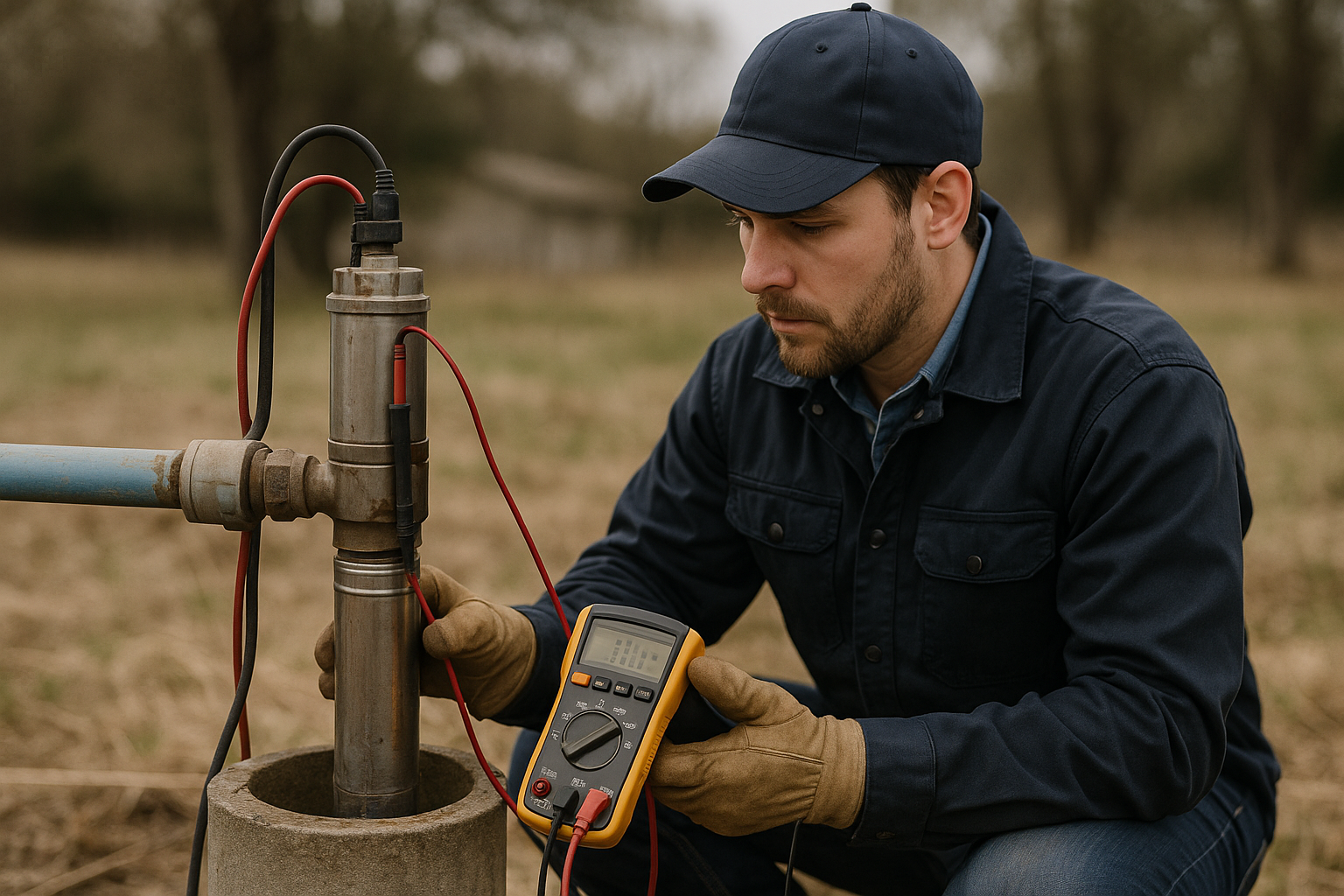
- Well Pump: Typically a submersible pump located deep within the well (common for Anza's deeper wells) or a jet pump located above ground (less common for deep Anza wells but seen in shallower applications). Its job is to draw water from the aquifer.
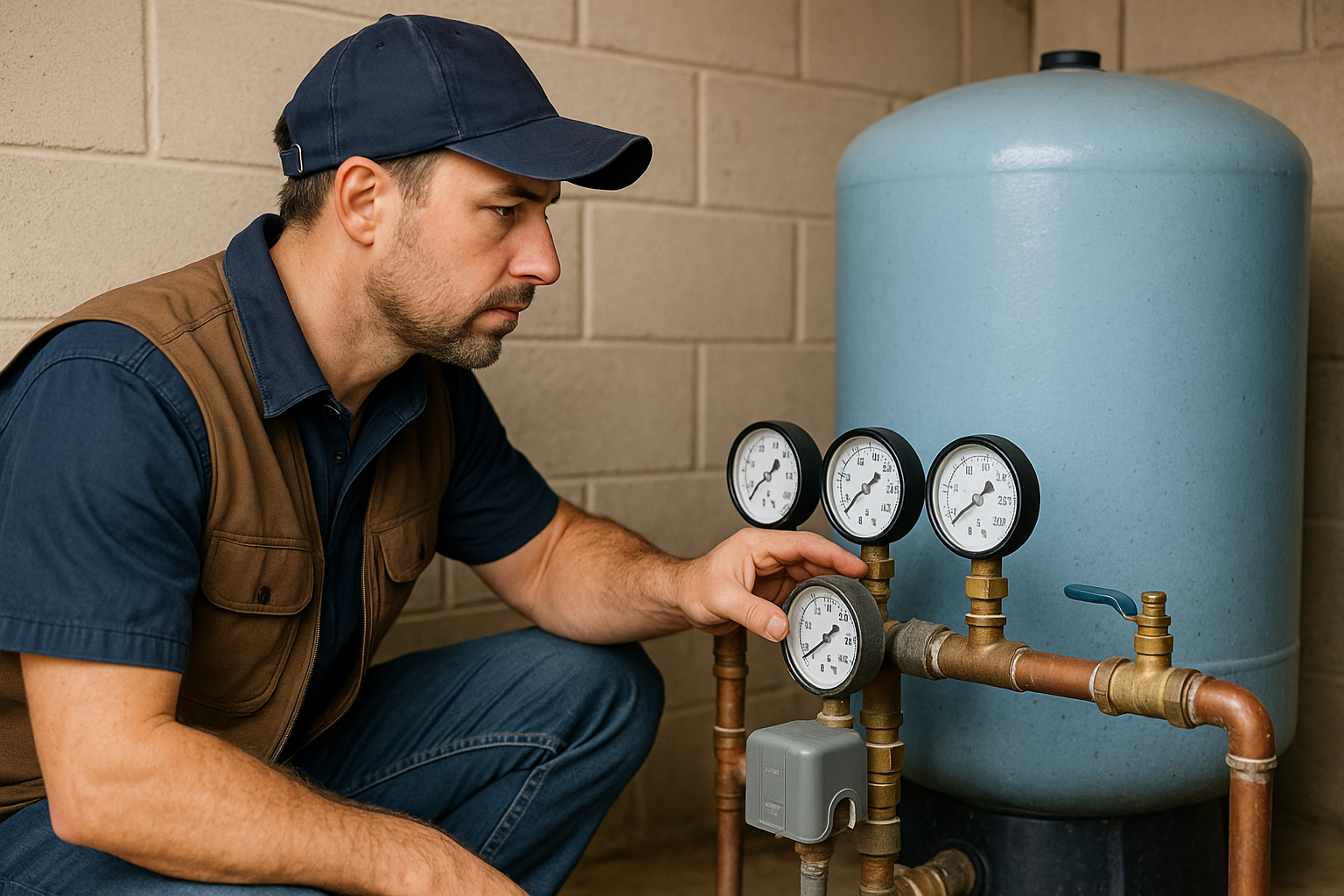
- Pressure Tank: A crucial component that stores water under pressure, providing a consistent supply and preventing the pump from cycling on and off excessively.
- Pressure Switch: The "brain" of your system, which monitors pressure in the tank and tells the pump when to turn on (cut-in pressure) and off (cut-out pressure).
- Piping: Carries water from the well to the tank, and from the tank throughout your home and property.
- Water Treatment/Filters: Given Anza's water quality, many homes have sediment filters, water softeners (for hard water), or iron filters to improve water quality and protect plumbing.
Each of these components plays a vital role in maintaining consistent water pressure. A problem with any one of them can lead to a noticeable drop in performance.
Common Causes of Low Well Water Pressure in Anza, CA
Diagnosing low water pressure often begins by understanding the most frequent culprits. For Anza residents, these issues are often exacerbated by local conditions.
1. Pressure Switch Malfunction
The pressure switch is a small but mighty device, usually mounted near your pressure tank. It contains a spring-loaded diaphragm that senses water pressure. When the pressure drops to a preset "cut-in" level (e.g., 30 PSI), it activates the pump. When the pressure reaches the "cut-out" level (e.g., 50 PSI), it shuts the pump off. Common settings for residential systems in Anza are 30/50 PSI or 40/60 PSI.
- How it Fails: Over time, electrical contacts can burn out, springs can weaken, or the diaphragm can become clogged with sediment—a common issue in Anza due to fine silts and mineral content in the water. Dust, insects, or even moisture can also interfere with its operation.
- Symptoms: The pump may not turn on at all, it might run continuously, or it might cycle on and off erratically. You may experience very low pressure that never seems to recover, or a complete loss of water.
- Anza Context: The arid, dusty environment of Anza can contribute to debris accumulation within the switch, leading to premature failure.
2. Pressure Tank Issues
Your pressure tank is designed to store pressurized water and maintain a consistent pressure within your system, reducing the number of times your pump cycles. It typically contains an air bladder that separates the water from a compressed air charge.
- Loss of Air Charge: Over time, the air charge in the tank can dissipate. When this happens, the tank becomes "waterlogged," meaning it fills completely with water without a sufficient air cushion. Without the air cushion, the pump will short-cycle (turn on and off very frequently) because there's no buffer to absorb the pressure fluctuations. This short cycling leads to rapid wear on your pump and inconsistent pressure.
- Ruptured Bladder: A more severe issue is a ruptured bladder. If the rubber bladder inside the tank tears, water will enter the air side of the tank. You can often detect this by pressing the Schrader valve (like a tire valve) on top of the tank; if water comes out instead of air, your bladder is ruptured, and the tank needs replacement.
- Symptoms: Short cycling of the pump, fluctuating water pressure (strong then weak), and reduced overall pressure are classic signs of a failing pressure tank.
- Anza Context: The significant temperature swings in Anza (hot days, cool nights) can sometimes affect the integrity of air bladders over many years, potentially accelerating air loss or bladder fatigue. Common tank sizes for Anza homes range from 20 to 80 gallons, depending on household size and water demand.
3. Clogged Sediment Filters and Water Treatment Systems
This is a particularly prevalent issue for Anza well owners. The geology of the Anza Valley groundwater basin means well water often contains fine silts, clays, and dissolved minerals. Many Anza homes also contend with hard water (high calcium and magnesium content) and, in some areas, elevated iron levels, which manifest as reddish staining or a metallic taste.
- Sediment Filters: These are your first line of defense against particulate matter. If your whole-house sediment filter (e.g., a spin-down filter or cartridge filter) becomes overloaded with Anza's fine silts and sands, it will restrict water flow, causing a noticeable drop in pressure throughout your home.
- Water Softeners: While essential for combating Anza's hard water, a clogged resin bed or a malfunction in the softener's control valve can impede water flow.
- Iron Filters: If you have an iron filter, it can become saturated or fouled with iron oxides and bacteria, leading to pressure loss.
- Symptoms: Gradual reduction in pressure over weeks or months, often accompanied by visible sediment in the water if filters are bypassed or completely overwhelmed. Pressure may improve slightly after changing filters but then decline again quickly.
- Anza Context: Due to the nature of the local soil and groundwater, Anza residents often need to change sediment filter cartridges more frequently than those in other regions—sometimes as often as every 1-3 months, depending on well conditions and water usage.
4. Failing Well Pump
The well pump is the heart of your system. Whether it's a submersible pump deep in your Anza well or a less common jet pump above ground, its job is to move water. Pumps don't last forever, especially when working hard against high lifts or in water containing abrasive sediments.
- Wear and Tear: Internal components like impellers or motor bearings can wear out. Submersible pumps, common in Anza's deeper wells (which can range from 200 to over 600 feet), are particularly susceptible to wear from abrasive sediments.
- Electrical Failure: The pump motor or its wiring can fail. This could be due to age, power surges, or insulation breakdown.
- Symptoms: Significantly reduced flow, intermittent water supply, no water at all, strange noises coming from the well (if audible) or the control box, and an increased electricity bill (if the pump is struggling).
- Anza Context: The depth of many Anza wells means submersible pumps are under constant strain. Sediment in the aquifer can act like sandpaper on pump components, shortening their lifespan. Replacing a submersible pump in a deep Anza well is a significant undertaking, often requiring specialized equipment to pull the pump, and costs can range from $2,000 to $6,000+ for installation alone, plus the cost of the pump itself ($1,500-$5,000+), depending on depth and horsepower.
5. Drought and Low Water Table (Anza Valley Groundwater Basin)
This is a critical concern for Anza residents. The Anza Valley groundwater basin, like many in Southern California, is susceptible to prolonged drought conditions. When rainfall is scarce and groundwater recharge is minimal, the water table can drop significantly. Over-pumping by numerous wells in the area can further exacerbate this issue.
- Symptoms: Your pump may start "sucking air," leading to sputtering faucets, intermittent water, or the well going completely dry. This is often a gradual decline in pressure and water availability, especially during periods of high demand (summer irrigation).
- Anza Context: Anza has experienced multi-year droughts, impacting groundwater levels. Deeper wells are generally more resilient, but even they can be affected if the water table drops drastically. Shallower wells are particularly vulnerable.
- Solutions: If your well is consistently running dry, solutions include deepening the existing well (if feasible), drilling a new, deeper well, or exploring water conservation measures more aggressively. These are major investments, with new well drilling costs often starting at $15,000 and easily exceeding $40,000 depending on depth and geology.
6. Clogged Well Screen or Pump Intake
The well screen prevents larger sediment from entering the well and damaging the pump. The pump intake is where the pump draws water.
- Mineral Buildup: In Anza's hard water environment, mineral deposits (calcium carbonate, iron oxides) can gradually clog the well screen or the pump's intake, restricting flow. Iron bacteria can also form slimy biofilms.
- Sediment Accumulation: Fine silts and sands from the Anza aquifer can accumulate around the screen, effectively "blinding" it and preventing water from entering the well bore efficiently.
- Symptoms: A gradual but persistent drop in pressure and flow, even when the pump appears to be running normally.
- Anza Context: Both hard water and iron content in Anza wells make this a common problem, requiring professional well rehabilitation in severe cases.
7. Piping Issues
The pipes that carry water from your well to your home can also be a source of low pressure.
- Leaks: A leak anywhere in the system—from the well casing to the main line to your home—will cause a drop in pressure as water escapes. Underground leaks can be difficult to detect.
- Mineral Buildup (Scale): Especially prevalent in Anza due to hard water, calcium and magnesium deposits can accumulate on the interior walls of pipes, particularly older galvanized pipes. This reduces the effective diameter of the pipe, restricting flow and leading to lower pressure.
- Piping Material: Older Anza homes may have galvanized steel pipes, which are highly prone to internal corrosion and scale buildup. Modern PEX or PVC pipes are less susceptible but not entirely immune to issues.
- Symptoms: A sudden drop in pressure might indicate a major leak. Gradual pressure loss, especially in older homes, often points to scale buildup.
8. Electrical Problems
Your well pump relies on a consistent and correct electrical supply. Any issues here can directly impact pump performance and thus water pressure.
- Tripped Breaker: A simple, common cause.
- Faulty Wiring: Damaged wiring to the pump or within the control box can prevent the pump from receiving adequate power.
- Motor Control Box Issues: For submersible pumps, the control box houses capacitors and relays that help start and run the pump motor. A failing component here can cause the pump to run weakly or not at all.
- Symptoms: Pump not running, pump running intermittently, or pump running but delivering very low pressure.
- Anza Context: Power fluctuations are not uncommon in rural areas, and older electrical systems in some Anza homes might be more prone to issues.
Step-by-Step Troubleshooting Guide for Anza Well Owners
Before calling for professional help, you can perform several diagnostic steps. Always prioritize safety, especially when dealing with electricity and heavy equipment.
Safety First!
- Turn off Power: Before inspecting any electrical components (pressure switch, control box), always turn off the circuit breaker that controls your well pump at your main electrical panel.
- Gloves and Eye Protection: Recommended for any hands-on work.
- Heavy Equipment: Do not attempt to pull a pump or well casing without proper training and equipment.
Step 1: Observe Symptoms & Gather Information
- When did the problem start? Suddenly or gradually?
- Is the low pressure throughout the entire house or just at one fixture? (If just one, it's likely a fixture-specific issue like a clogged aerator, not a well problem).
- Does the pump run continuously, short cycle, or not at all?
- Have you noticed any changes in water quality (color, smell, taste)?
- Have there been any recent changes to your property or well system? (e.g., new irrigation, recent repairs, heavy rain/drought).
Step 2: Check Power and Breakers
- Locate the circuit breaker for your well pump in your electrical panel.
- If it's tripped, reset it. If it immediately trips again, there's a serious electrical issue (e.g., short circuit, failing pump motor) requiring professional attention.
- Ensure the main power to your well system is on.
Step 3: Inspect the Pressure Switch
- Turn off power to the pump at the breaker!
- Locate the pressure switch, usually mounted on a small pipe near the pressure tank.
- Remove the cover (typically held by a screw or clips).
- Visually inspect: Look for burned contacts, insect nests, or excessive corrosion.
- Gently tap: Sometimes, a stuck contact can be freed with a gentle tap (power OFF!).
- Check cut-in/cut-out settings: Note the pressure gauge reading when the pump turns on and off. A common setting for Anza homes is 30/50 PSI or 40/60 PSI. If the pump never reaches the cut-out pressure, or the cut-in pressure is too low, it points to another issue.
Step 4: Evaluate the Pressure Tank
- Turn off power to the pump and drain the tank completely. You can do this by opening a faucet in your home and letting the water run until it stops, or by opening the drain valve at the bottom of the tank.
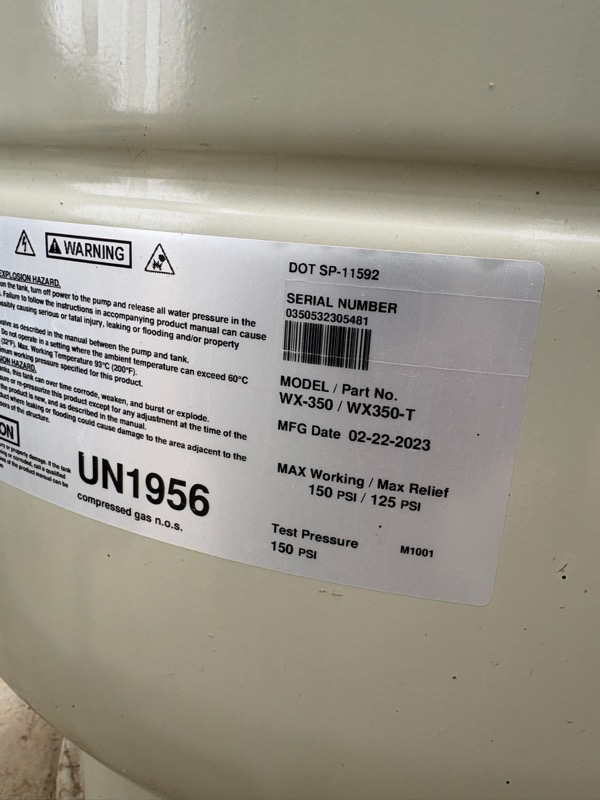
- Check the air charge: Use a tire pressure gauge on the Schrader valve (usually on top of the tank). The air pressure should be 2 PSI below your pump's cut-in pressure (e.g., if your pump cuts in at 30 PSI, the tank should have 28 PSI of air when empty).
- Add air: If the pressure is low, use an air compressor to add air until it reaches the correct PSI.
- Test for ruptured bladder: With the tank drained and power off, press the Schrader valve. If water comes out, the bladder is ruptured, and the tank needs replacement.
- Listen for waterlogging: Tap the side of the tank. A healthy tank will sound hollow on top and solid at the bottom. A waterlogged tank will sound solid throughout.
Step 5: Examine Sediment Filters and Water Treatment Systems
- Locate your whole-house sediment filters. In Anza, these are often visible near the pressure tank or where the main line enters the house.
- Visually inspect: If you have clear filter housings, check the filter cartridge for excessive dirt, discoloration, or slime.
- Bypass (if possible): Some filter systems have a bypass valve. If you can safely bypass the filter, do so and check if the water pressure improves. If it does, a clogged filter is the culprit.
- Clean/Replace: Clean spin-down filters or replace cartridge filters. For Anza's challenging water, consider a high-capacity filter or a multi-stage filtration system.
- If you have a water softener or iron filter, consult its manual or call a professional if you suspect it's the cause.
Step 6: Listen to the Pump (If Audible)
- If you have a jet pump (above ground), listen for unusual noises like grinding, humming without water flow, or a lack of sound when it should be running.
- For submersible pumps (most common in Anza), listen at the wellhead or the control box for signs of the pump trying to start or running continuously without building pressure.
Step 7: Check for Leaks
- Walk your property and inspect for any wet spots, unusually lush green areas, or pooling water, which could indicate an underground leak in your main water line from the well.
- Check all visible plumbing connections, especially around the pressure tank, filters, and water heater.
- Listen for the sound of running water when no faucets are open.
Step 8: Test Water Quality (Anza Specific)
- If you experience reddish water, metallic taste, or excessive scale buildup, consider having your water tested for iron and hardness. High levels of these minerals are common in Anza and can contribute to pipe blockages and pump wear.
Local Anza Context & Specific Considerations
Well Depths in Anza
The Anza Valley is characterized by significant variations in well depth. While some older, shallower wells might be 100-200 feet deep, it's far more common for modern wells in Anza to be drilled to depths of 200 to 600 feet, and sometimes even deeper, exceeding 800 feet, to tap into reliable aquifers within the Anza Valley groundwater basin. This depth directly impacts the type of pump required (almost exclusively powerful submersible pumps) and the complexity and cost of any pump-related repairs or replacements.
Anza's Water Quality Challenges
- Hard Water: Anza is notorious for its hard water, rich in calcium and magnesium carbonates leached from the local geology. This leads to scale buildup in pipes, water heaters, and appliances, reducing efficiency and potentially restricting water flow over time. Water softeners are a common and often necessary solution for Anza residents.
- Iron Content: While not universal, many Anza wells exhibit elevated iron levels. This can cause reddish-brown staining on fixtures, laundry, and impart a metallic taste to the water. Iron can also contribute to clogging well screens and filters, and even promote the growth of iron bacteria. Iron filters or chemical treatment may be required.
- Sediment: The fine silts and clays characteristic of Anza's high desert soil are frequently found in well water, making robust sediment filtration a must.
Rural Infrastructure and Well Service
Unlike urban areas with municipal water, Anza's rural setting means well owners are solely responsible for their water supply. Access to specialized well service technicians who understand the unique challenges of the Anza Valley is crucial. We are equipped with the specific knowledge and tools required for deep well repairs, water quality issues, and understanding the local geology.
Environmental Factors
Beyond drought, Anza's environment presents other factors:
- Wildfire Season: While not directly causing low pressure, potential power outages during wildfire season can disrupt pump operation. Additionally, increased water demand for fire suppression efforts (though less common for private wells) could theoretically impact localized groundwater levels.
- Seismic Activity: While rare, significant seismic events could potentially impact well casings or underground piping, leading to leaks or structural damage.
Real Numbers & Costs for Anza Well Systems
Understanding the potential costs associated with well repairs can help Anza homeowners budget and plan.
- Pressure Switch:
- Part Cost: $50 - $150
- Installed Cost (by professional): $150 - $350 (includes service call, labor)
- Pressure Tank:
- Part Cost (20-80 gallon): $300 - $800
- Installed Cost: $500 - $1,500 (depending on tank size, location, and complexity of installation)
- Sediment Filters/Cartridges:
- Replacement Cartridges: $20 - $100 each (depending on type and micron rating)
- Whole-House Filter Housing: $100 - $300 (not including installation)
- Well Pump Replacement (Submersible - most common in Anza):
- Pump Part Cost (highly dependent on HP and depth rating): $1,500 - $5,000+
- Installation Cost (labor, pulling old pump, new pipe, wire, etc.): $2,000 - $6,000+ (significantly higher for very deep wells, e.g., 600+ feet, or complex issues)
- Total Pump Replacement (Anza deep well): $3,500 - $11,000+
- Well Pump Replacement (Jet Pump - less common for deep Anza wells):
- Pump Part Cost: $500 - $1,500
- Installed Cost: $800 - $2,500
- Well Deepening / New Well Drilling:
- This is a major investment. Costs are highly variable based on depth, geology, casing material, and local permitting. Expect ranges from $15,000 to $40,000+ for a new residential well in Anza.
- Professional Service Call / Diagnostic Fee:
- Typically $150 - $300 (this fee is often waived or applied to the repair cost if you proceed with the recommended service).
- Typical PSI Settings:
- Standard residential systems are often set at 30/50 PSI (pump turns on at 30 PSI, off at 50 PSI) or 40/60 PSI (pump turns on at 40 PSI, off at 60 PSI). Higher settings provide more pressure but put more strain on the pump and plumbing.
When to Call a Southern California Well Service Expert
While DIY troubleshooting can resolve many minor issues, there are times when professional expertise is essential. For Anza residents, this is especially true given the depth of many wells and the complexity of the local groundwater conditions. You should call a professional if:
- You've performed the basic troubleshooting steps and the problem persists.
- You suspect a failing well pump (especially a submersible pump, which requires specialized equipment to extract).
- You have no water at all, and the pump isn't running or is running continuously without delivering water.
- You suspect a major leak in an underground pipe.
- You believe the water table has dropped significantly, or your well is running dry.
- You're uncomfortable working with electrical components or heavy equipment.
- You need to diagnose complex water quality issues like persistent iron or severe hardness.
- Your well is very deep, and the problem seems to originate far down the well bore.
Our team at [Your Company Name] has extensive experience with Anza's unique well systems. We understand the local geology, the common water quality issues, and the specific challenges of maintaining reliable water pressure in the high desert environment. We are equipped with the right tools and knowledge to diagnose accurately and provide lasting solutions.
Frequently Asked Questions (FAQs) for Anza Well Owners
Q: Why is my well water so hard in Anza?
A: The Anza Valley sits on geology rich in calcium and magnesium deposits. As groundwater percolates through the soil and rock, it dissolves these minerals, making the water "hard." This is a natural characteristic of the local groundwater basin. A water softener is often the most effective solution for Anza homes.
Q: What's the typical well depth in Anza?
A: Well depths in Anza vary significantly depending on the specific location and the aquifer being tapped. While some older wells might be around 100-200 feet, it's very common for new wells and many existing ones to be drilled to depths of 200 to 600 feet, and sometimes even deeper, exceeding 800 feet, to ensure a reliable water supply from the Anza Valley groundwater basin.
Q: How often should I change my sediment filters in Anza?
A: Due to the fine silts and clays common in Anza's well water, sediment filters often need more frequent changing than in other areas. While a general guideline is every 3-6 months, many Anza homeowners find they need to change them every 1-3 months, especially during periods of heavy usage or after significant rainfall events that can stir up sediment in the aquifer. Monitor your pressure and water clarity; if pressure drops or water appears cloudy, it's time for a change.
Q: Can drought really affect my well in Anza?
A: Absolutely. Anza, like much of Southern California, is susceptible to multi-year droughts. Prolonged periods of low rainfall mean less groundwater recharge for the Anza Valley groundwater basin. This can cause the water table to drop, making your pump work harder, potentially reducing its output, or even causing your well to go dry, especially if it's a shallower well. Conservation is key during these times.
Q: My water has a reddish tint and metallic taste. Is that common in Anza?
A: Yes, elevated iron levels are common in certain areas of Anza. This can cause reddish-brown staining on plumbing fixtures, laundry, and a distinct metallic taste or odor in your water. While not typically a health hazard, it's an aesthetic nuisance. Iron filters or specialized water treatment systems are effective solutions for this common Anza water quality issue.