Low Water Pressure Solutions in Arrowbear Lake
Dealing with weak water pressure in Arrowbear Lake? Low water pressure can make showers frustrating and appliances ineffective. Our team diagnoses the root cause and restores your water pressure fast.
📋 In This Guide
Need Low Water Pressure Solutions in Arrowbear Lake?
We serve Arrowbear Lake and all of San Bernardino County. Licensed C-57 contractor (CSLB #1086994), founded 2020.
Call: (760) 440-8520Low Water Pressure in Arrowbear Lake: A Mountain Well Guide
Arrowbear Lake is a small forested mountain community in San Bernardino County, perched at roughly 6,000 feet in the San Bernardino Mountains along Highway 18, just east of Running Springs and between Lake Arrowhead and Big Bear. Tucked into the pines of the San Bernardino National Forest, it is a place of steep lots, narrow roads, and four real seasons including heavy winter snow. While many cabins here tap small community systems, a number of properties on the surrounding slopes and the fringes of the hamlet rely on private wells or shared groundwater. When pressure at the taps weakens on one of those systems, the cold-weather stakes are high, especially in the depths of a mountain winter.
The reassuring news is that low water pressure is almost always a fixable mechanical issue rather than a sign your well has failed. But Arrowbear Lake's high elevation, granitic and fractured-rock geology, steep terrain, and hard winters give its wells a distinct profile and a recognizable set of pressure problems. Understanding how your system works and what tends to go wrong up here helps you respond quickly and avoid an unnecessary repair.
How a Private Well Builds Pressure
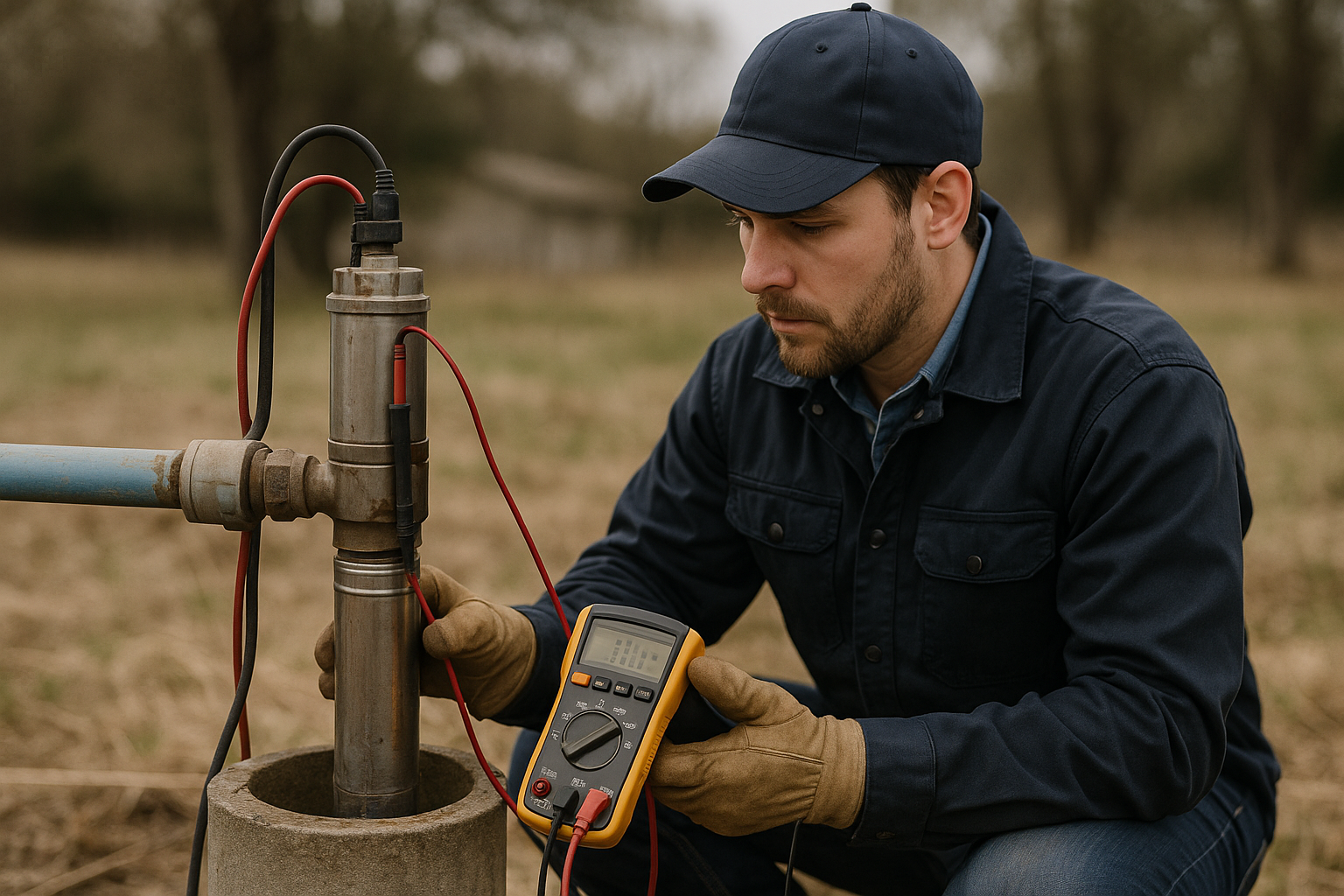
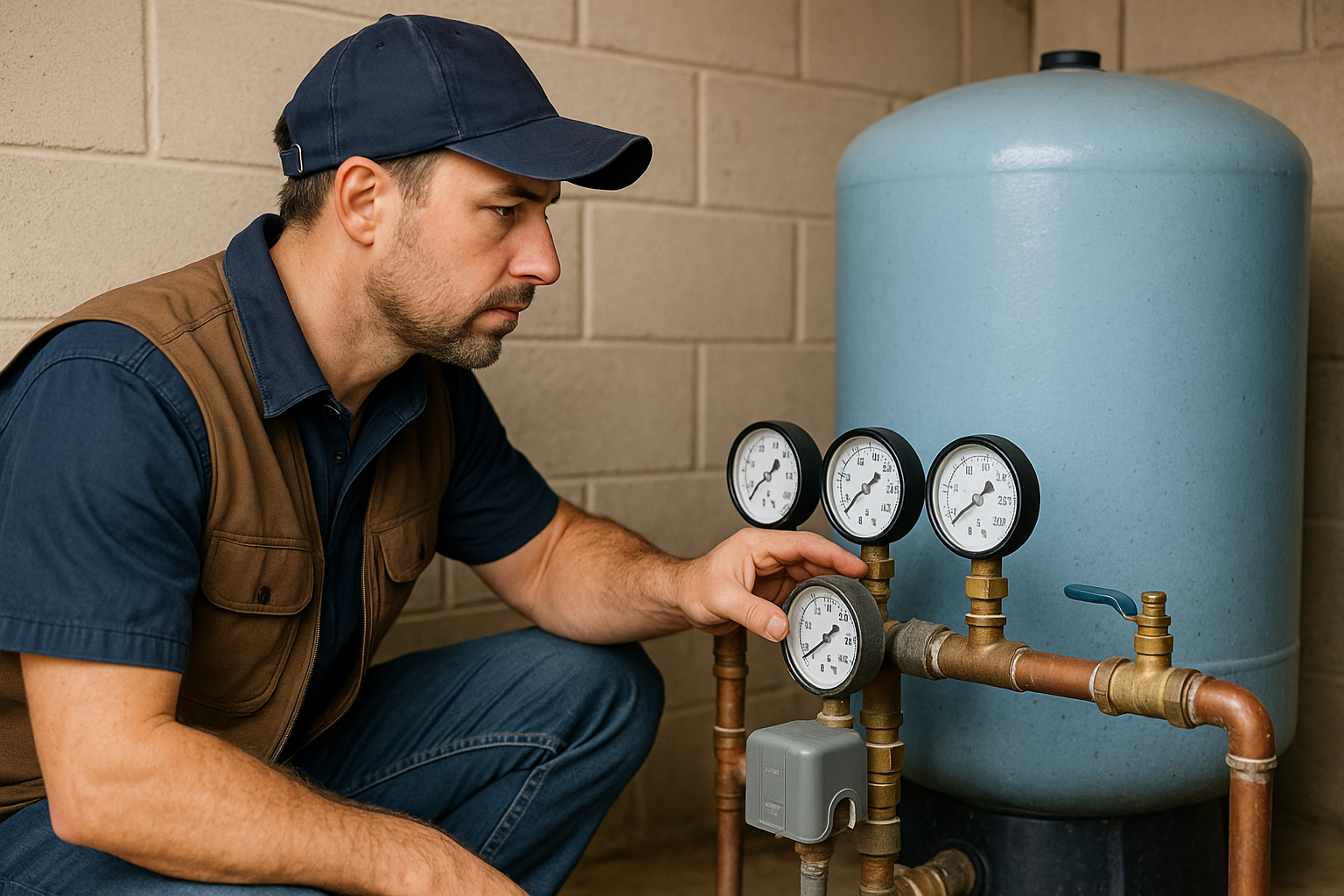
Your faucets are not fed directly by the well. A submersible pump deep in the casing lifts water to a pressure tank near the cabin, where a cushion of compressed air over a rubber bladder stores the pressure that feeds the home between pump runs. A pressure switch watches the tank and turns the pump on (commonly at 40 PSI) and off (commonly at 60 PSI), keeping the system in a 40/60 or 30/50 window.
When any one part slips, you feel weak or surging pressure. A waterlogged tank that has lost its air charge makes the pump short-cycle. A worn switch cuts the pump out early. A scaled or aging pump cannot move enough water. And in the mountain's granitic ground, fine sediment can pack a well screen or clog a filter and choke flow even when the hardware is sound. A good diagnosis finds the failed link before any parts are replaced.
Common Causes of Low Pressure in Arrowbear Lake
In founded in 2020 working wells across San Bernardino County, these are the issues we encounter most in high-mountain systems like those around Arrowbear Lake:
- Winter freeze damage: At 6,000 feet, freezing temperatures are the number-one mountain well issue. Exposed pressure tanks, switches, well caps and above-ground lines can freeze and crack, which shows up as no flow or pressure loss when things thaw.
- Fractured-rock low yield: Many wells here draw from fractured granite that recharges from snowmelt and rain. During dry years the static level falls, and a pump set too high can lose prime or struggle, cutting pressure.
- Pressure tank failure: The bladder eventually ruptures or the air charge bleeds off, producing rapid cycling and pressure that surges then sags, a very common mountain call.
- Hard-water scaling: Granitic groundwater carries calcium and magnesium that deposit on pump parts and pipes, narrowing the flow path over time.
- Steep-terrain elevation loss: On the sharp slopes of Arrowbear, homes often sit well above their wellhead. Every foot of vertical lift costs pressure, so hillside cabins can read low even with a healthy pump.
- Seasonal cabin use: Systems that sit idle through part of the year can develop tank, switch and sediment problems that surface the moment the cabin is reoccupied.
What You Can Check First
Before calling, these safe checks can reveal a lot, particularly when you arrive at a mountain cabin:
- Read the pressure gauge near your tank through a full pump cycle. Healthy pressure is 40 to 60 PSI; numbers that barely rise or swing hard are diagnostic.
- Listen for short-cycling. A pump kicking on and off every few seconds usually means a waterlogged tank or a failing switch.
- Check for freeze damage at the well cap, tank, switch and exposed lines, cracked fittings or split pipe are common after a hard winter.
- Whole house or one tap? If only one fixture is weak, suspect a clogged aerator; if all are weak, the well, pump or tank is involved.
- Knock on the tank. Hollow on top and solid below is normal; solid throughout means a failed bladder.
- Note the timing. A drop after a freeze suggests cold damage; after a storm, sediment; a slow decline, scaling or pump wear.
Leave the wellhead, electrical covers and pump to a licensed professional. These systems combine 240-volt power with deep equipment, and on icy mountain terrain the hazards multiply.
When to Call a Professional in Arrowbear Lake
Contact Southern California Well Service promptly if you have:
- No water or a sudden, dramatic pressure loss — possibly a frozen line, a failed pump, lost prime, or a critically low well needing prompt attention.
- Visible freeze damage to the tank, switch, well cap or above-ground plumbing.
- Continuous pump cycling you can hear indoors, a sign the tank or switch is failing and the pump is at risk.
- Gritty or cloudy water after a storm, pointing to sediment intrusion.
- Persistent low pressure after you have cleared aerators and ruled out leaks.
We are a licensed C-57 well-drilling contractor founded in 2020, with 60+ years of family heritage. Our diagnostic visit is a flat $125, credited toward any repair we complete.
What Repairs Typically Cost
These 2026 ranges help Arrowbear Lake property owners plan; well depth, terrain and site conditions move the final number:
- Pressure switch replacement: $150–$350, the fastest and most affordable fix.
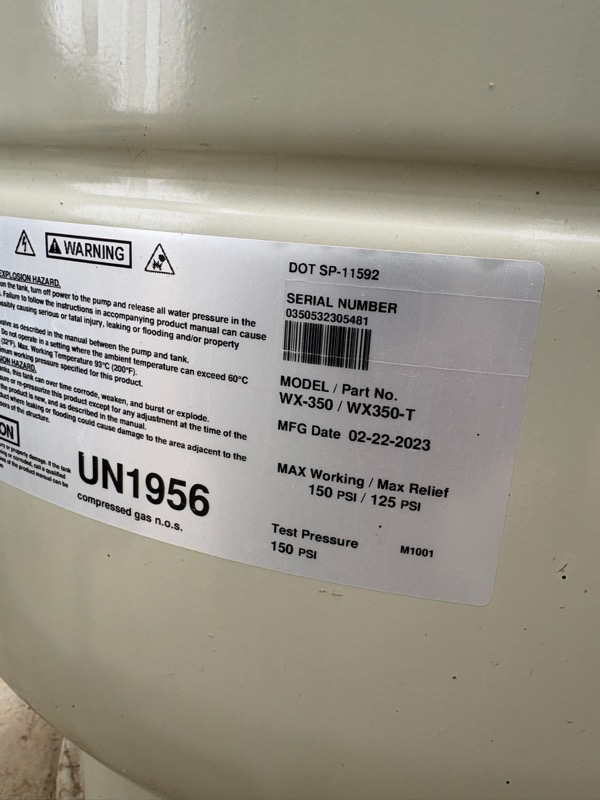
- Pressure tank replacement: $600–$1,500, the answer for waterlogged tanks and short-cycling.
- Submersible pump replacement: $2,500–$5,500, depending on depth and pump size.
- Sediment filtration: $300–$900, useful where decomposed granite enters the well.
- Iron/manganese filtration or a water softener: $1,500–$3,500 to control hard mountain water.
- Constant-pressure or booster system: $2,000–$4,500, well suited to steep lots where elevation steals pressure.
- Hydrofracturing to improve a low-yield well: $3,000–$8,000, a proven option for fractured-rock mountain wells.
- New turnkey well: $18,000–$42,000 when a well cannot be rehabilitated.
- Well abandonment/decommissioning: $1,500–$5,000 to seal a retired well to county code.
You receive a written quote before work starts, and we will recommend the least costly fix that genuinely solves the problem.
Winterizing and Maintaining Mountain Wells
Up at Arrowbear Lake, freeze protection is the single most important thing you can do for your water system. Insulate or heat-tape exposed pressure tanks, switches, well caps and above-ground lines before the first hard freeze, and if your cabin sits empty in winter, consider having the system properly drained or protected. Beyond that, a professional inspection every 12 to 18 months lets a technician verify the tank's air charge, test the switch, and check pump amperage before a small fault becomes an emergency, ideally before the snow flies. Where water is hard, a softener slows the scale that throttles flow and shortens pump life. Catching these issues early is far cheaper, and far less miserable, than a no-water emergency in a January storm.
Frequently Asked Questions
Why did my Arrowbear Lake well lose pressure after winter?
Freezing temperatures at this elevation can crack exposed tanks, switches, well caps and above-ground lines, which shows up as pressure loss or no flow when the system thaws. We locate and repair the freeze damage and can help winterize the system against the next cold snap.
Does low pressure mean my well is running dry?
Usually not. Most mountain low-pressure calls trace to freeze damage, the tank, switch, pump or scaling, all repairable. We confirm true low yield with a flow test before recommending hydrofracturing or a deeper well.
How quickly can you reach Arrowbear Lake?
We serve mountain communities across San Bernardino County and offer same-day emergency service for no-water situations, weather and road conditions permitting.
Can hard water cause low pressure?
Yes. Granitic mountain groundwater is hard, and scale narrows pump and pipe passages over time. Descaling or a softener often restores pressure and protects equipment.
My cabin sits empty part of the year. What should I watch for?
Idle systems can develop tank, switch and sediment problems that surface when you return, and they are especially vulnerable to freeze damage. A pre-season inspection and proper winterizing prevent most surprises.
Do you charge for an estimate?
The diagnostic visit is $125, credited toward any repair we complete, so you get a clear professional diagnosis first.
Serving Arrowbear Lake and the San Bernardino Mountains
From our offices in Ramona (1077 Main St) and Anza (57174 CA-371 (US Hwy 79)), Southern California Well Service supports well owners throughout Arrowbear Lake, Running Springs, Green Valley Lake and the surrounding mountain communities of San Bernardino County. Whether you need a quick pressure-switch swap, freeze-damage repair, or a complete pump and tank replacement, our crews understand high-elevation wells. Call (760) 440-8520 or text (760) 219-5877 today and let us bring your water pressure back to full strength.