
Low Water Pressure Solutions in Bonsall
Dealing with weak water pressure in Bonsall? Low water pressure can make showers frustrating and appliances ineffective. Our team diagnoses the root cause and restores your water pressure fast.
📋 In This Guide
Need Low Water Pressure Solutions in Bonsall?
We serve Bonsall and all of San Diego County. Licensed C-57 contractor (CSLB #1086994), founded 2020.
Call: (760) 440-8520Our Low Water Pressure Solutions Services
- Pressure tank repair and replacement
- Pressure switch adjustment
- Pump upgrades for better pressure
- Constant pressure systems
- Booster pump installation
- Clogged pipe diagnosis
- Well yield testing
- Complete system evaluation
Why Bonsall Chooses SCWS
✓ Local Expertise
We know San Diego County geology and wells
✓ Fast Response
Same-day service for Bonsall
✓ Fair Pricing
Honest quotes, no surprises
✓ Quality Work
CSLB #1086994 · founded 2020
Our Locations
Related Articles
Continue learning about well maintenance and troubleshooting

Low Water Pressure Solutions for Bonsall Properties
In Bonsall, water is not just a household convenience — it is the lifeblood of the avocado and citrus groves that define the community. So when a well's pressure starts to fade, the stakes are higher than a disappointing shower: irrigation falters, trees suffer, and a growing season can be put at risk. The good news is that nearly every low-pressure problem is diagnosable and fixable, and dealing with it early is far cheaper than letting a pump fail at the worst possible time. As a licensed C-57 well contractor founded in 2020, with 60+ years of family heritage across San Diego County, we understand the agricultural well systems Bonsall depends on.
Bonsall lies in North County inland San Diego, set along the San Luis Rey River valley near Fallbrook. It is rural and agricultural by character, with rolling groves and larger parcels drawing from river-valley and fractured-rock aquifers. Wells here commonly run 200 to 450 feet, and many are agricultural wells sized for sustained, heavy irrigation rather than a single household. That distinctive demand profile is exactly why Bonsall pressure problems need a contractor who understands grove irrigation, not just house plumbing.
How Your Well System Creates Pressure
Pressure comes from a chain of components, not the well alone. A typical Bonsall property includes:
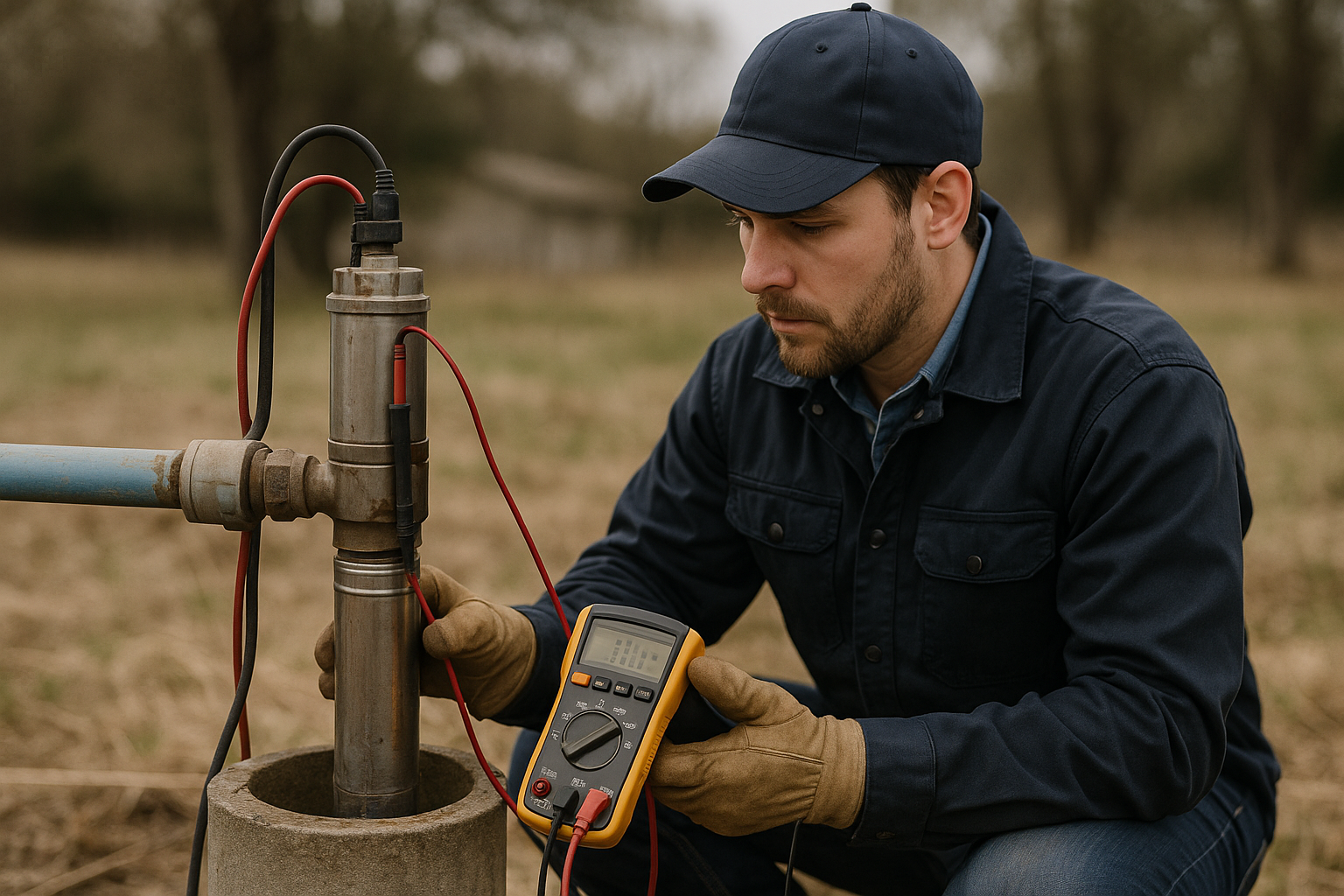
- A submersible pump set in the casing to lift water to the surface. Bonsall wells commonly run 200 to 450 feet, drawing from the San Luis Rey valley and fractured-rock aquifers.
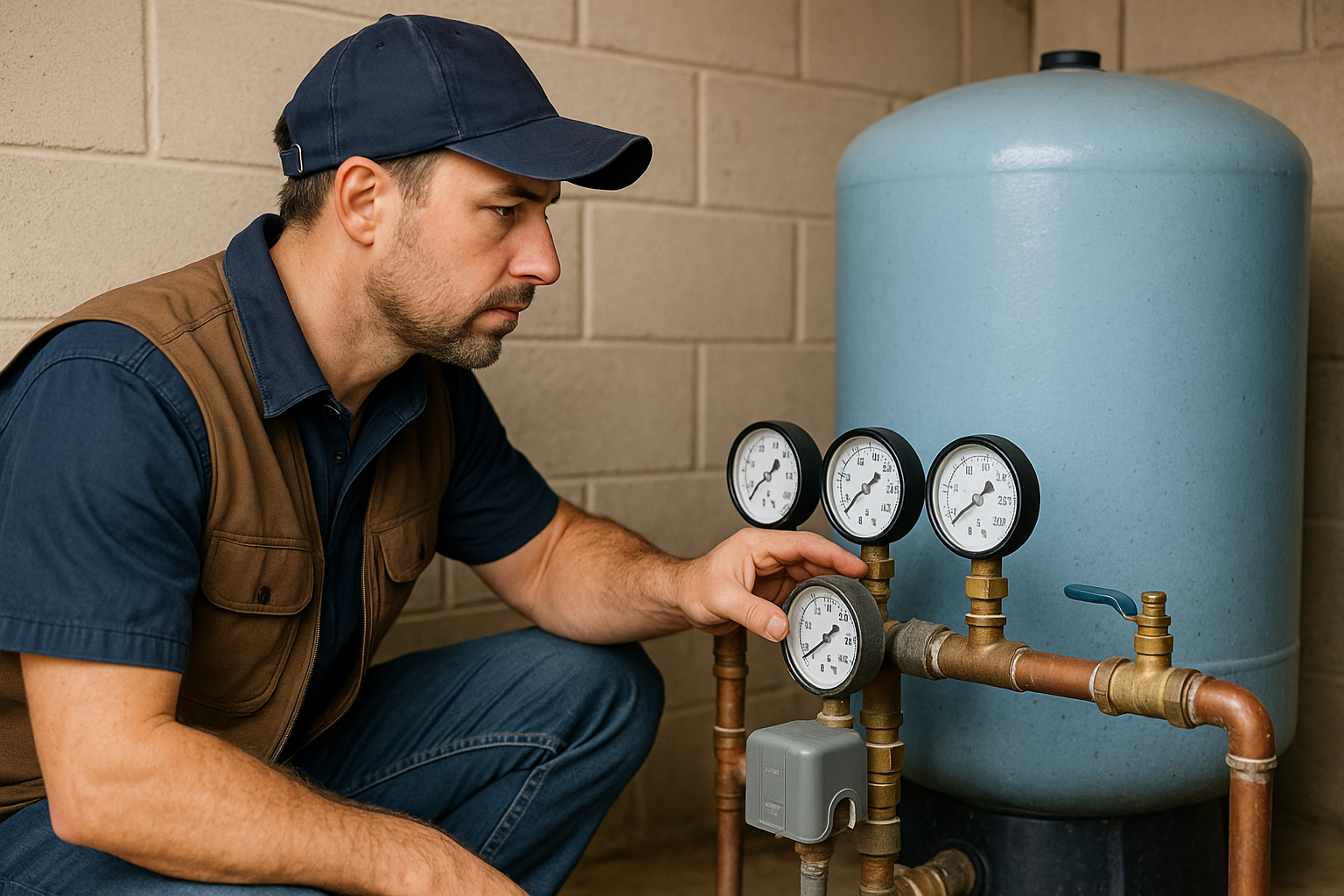
- A pressure tank whose air-cushioned bladder stores water under pressure so the pump is not constantly cycling.
- A pressure switch that starts and stops the pump at preset points, typically 40 PSI on and 60 PSI off, though irrigation systems are often set differently.
- Filtration and treatment to handle the sediment and minerals carried by valley-aquifer water.
- The piping and electrical service, which on grove properties feed extensive irrigation lines as well as the home.
When pressure drops — whether at the kitchen tap or the grove's drip lines — it is almost always one weak link in this chain.
Why Bonsall Wells Lose Pressure
- Heavy, sustained irrigation demand. Avocado and citrus groves draw large volumes for long stretches. A well or pump that suits a household can fall behind when the grove is on, dragging pressure down everywhere.
- Drought and a declining water table. The San Luis Rey valley is sensitive to dry cycles, and a falling table reduces yield and can leave a pump drawing air — a serious concern for irrigation reliability.
- Sediment and sand from valley wells. River-valley aquifers can carry fine sand that clogs filters and screens and abrades pump impellers.
- Hard, mineral-rich water. Calcium and magnesium build scale that narrows pipes, fouls drip emitters, and wears pump parts over time.
- Rural power and long runs. Long supply lines to distant groves and voltage swings on rural circuits both chip away at delivered pressure.
The Most Common Causes We Find
1. A Waterlogged Pressure Tank
This is the most common cause we find on Bonsall service calls. When the tank loses its air cushion, the pump short-cycles, switching on and off every few seconds, and pressure collapses each time it stops. On a grove property the cycling can be relentless and will quickly wear out a sound pump. The fix is a properly sized replacement tank with the air pre-charge set 2 PSI below cut-in (38 PSI for a 40/60 system); larger agricultural systems may use bigger or multiple tanks.
2. A Failing or Misadjusted Pressure Switch
The switch is the brain of the system, and its sensing port clogs easily with the sediment Bonsall's valley water can carry. Contacts wear and settings drift. Tuning the setpoints to match both household and irrigation needs often restores steady performance.
3. Clogged Filters or a Sand-Fouled Well Screen
A clogged sediment filter throttles the entire property, and on a grove that means weak irrigation as well as weak house pressure. Because valley water can carry fine sand, Bonsall filters often need frequent changing. Down in the well, sand and mineral buildup on the screen restricts intake — a condition addressed by professional well rehabilitation.
4. A Worn or Undersized Pump
Agricultural pumps work hard and wear, especially in sandy or hard water. A pump that runs constantly but delivers weak pressure points to wear, a dropping table, or a leak. For Bonsall groves, proper sizing — often with a storage tank and booster to meet peak irrigation demand — is the key to dependable pressure.
5. A Low Water Table or Over-Pumped Well
In dry years the level can fall below the pump's best depth, producing air at the tap and pressure that fades during long irrigation cycles. Lowering the pump, adjusting setpoints, rehabilitating the well, or adding storage are the usual answers, guided by measured yield.
6. Hidden Leaks and Pipe Scale
A buried leak in a long line to a far block of trees, or scale in older pipe, quietly drains pressure and wastes precious water. A gauge test — closing every outlet and watching for a slow drop — confirms a leak before any digging.
What You Can Safely Check First
Safety first: always shut off power to the well pump at the breaker before inspecting or adjusting any electrical or pressure component. Water and electricity are a dangerous mix.
- Listen to the pump. Rapid cycling points to the tank; constant running with weak pressure points to the pump, a leak, or a low table.
- Read the gauge. A healthy system holds a steady band such as 40 to 60 PSI.
- Test with the grove running. If pressure only fails during irrigation, the system may be undersized for peak demand or the water table may be low.
- Inspect the filter. Swap a sediment-clogged cartridge for the correct micron rating and check for recovery.
- Tap the tank. With power off and the tank drained, a solid-sounding tank is waterlogged.
- Watch for leaks. Close every outlet and watch the gauge for a slow drop.
When to Call a Professional
Call us if the pump will not run, runs constantly with little pressure, keeps short-cycling, spits air or sand, or cannot keep up with grove irrigation. These point to pump failure, a sand-fouled screen, a falling water table, or electrical faults — problems that demand proper diagnostic tools and a licensed well technician, especially when a crop is on the line.
What Pressure Repairs Typically Cost in Bonsall
- Pressure switch replacement — $150 to $350 including parts and labor
- Pressure tank replacement — $600 to $1,500 depending on tank size
- Submersible pump replacement — $2,500 to $5,500 depending on depth and horsepower
- Whole-house or grove sediment filtration — $300 to $900 installed
- Water softener for hard water — $1,500 to $3,500 installed
- Constant-pressure or booster system — $2,000 to $4,500, often essential for steady grove irrigation pressure
- Diagnostic service call — $125, credited toward the repair if you proceed
For working groves, the most cost-effective answer is frequently a booster or constant-pressure system paired with adequate storage and filtration, so the trees get reliable water even at peak demand. Every job starts with a clear written estimate.
Serving Bonsall and North County Inland
We provide well pressure diagnosis and repair throughout Bonsall and the surrounding North County communities of Fallbrook, Valley Center, Pala, Pauma Valley, and the San Luis Rey River valley. With offices in Ramona and Anza, our trucks roll stocked with pumps, tanks, switches, and pressure components so we can keep both homes and groves running.
Frequently Asked Questions
Why does my Bonsall well lose pressure when the grove is irrigating?
Avocado and citrus groves draw large volumes for long periods, and a well or pump sized mainly for a household will fall behind when the grove is on. The result is weak pressure everywhere. A properly sized pump, often paired with storage and a booster or constant-pressure system, restores reliable flow.
How deep are wells in Bonsall?
Bonsall wells commonly run 200 to 450 feet, drawing from the San Luis Rey River valley and fractured-rock aquifers. Agricultural wells are often sized for sustained irrigation, so we confirm depth and yield before recommending equipment.
How does drought affect my agricultural well?
Dry cycles lower the water table in the San Luis Rey valley, which reduces yield and can leave the pump drawing air during long irrigation runs. Lowering the pump, adding storage, or rehabilitating the well can protect your supply, and we can test your well's yield to plan accordingly.
Can sand in my water damage my pump or clog my drip lines?
Yes. Valley-aquifer wells can pull fine sand that abrades pump impellers and clogs filters and drip emitters, costing you pressure and uniformity in the grove. Proper filtration and, if needed, well rehabilitation address both problems.
Is low pressure always a failing pump?
No. A waterlogged pressure tank or a clogged sediment filter causes low pressure far more often than a dead pump. We diagnose the whole system first so we fix the actual cause rather than replacing an expensive pump unnecessarily.
Do you offer emergency service for Bonsall groves?
Yes. We know a pressure failure during the growing season is urgent, so we prioritize Bonsall emergencies and aim for same-day response during business hours, with trucks stocked for immediate repairs. Call (760) 440-8520 or text (760) 219-5877.
Restore Your Water Pressure Today
If your Bonsall well can no longer keep your home and your groves supplied, we will pinpoint exactly why and fix it right the first time. Call (760) 440-8520, text (760) 219-5877, or request a free estimate online. Honest diagnosis, fair pricing, and dependable water are what we deliver to North County growers and homeowners every day.