
Low Water Pressure Solutions in Cahuilla
Dealing with weak water pressure in Cahuilla? Low water pressure can make showers frustrating and appliances ineffective. Our team diagnoses the root cause and restores your water pressure fast.
In This Guide
Need Low Water Pressure Solutions in Cahuilla?
We serve Cahuilla and all of Riverside County. Licensed C-57 contractor (CSLB #1086994), founded 2020.
Call: (760) 440-8520Our Low Water Pressure Solutions Services
- Pressure tank repair and replacement
- Pressure switch adjustment
- Pump upgrades for better pressure
- Constant pressure systems
- Booster pump installation
- Clogged pipe diagnosis
- Well yield testing
- Complete system evaluation
Why Cahuilla Chooses SCWS
Local Expertise
We know Riverside County geology and wells
Fast Response
Same-day service for Cahuilla
Fair Pricing
Honest quotes, no surprises
Quality Work
CSLB #1086994, hundreds of reviews
Our Locations
Related Articles
Continue learning about well maintenance and troubleshooting
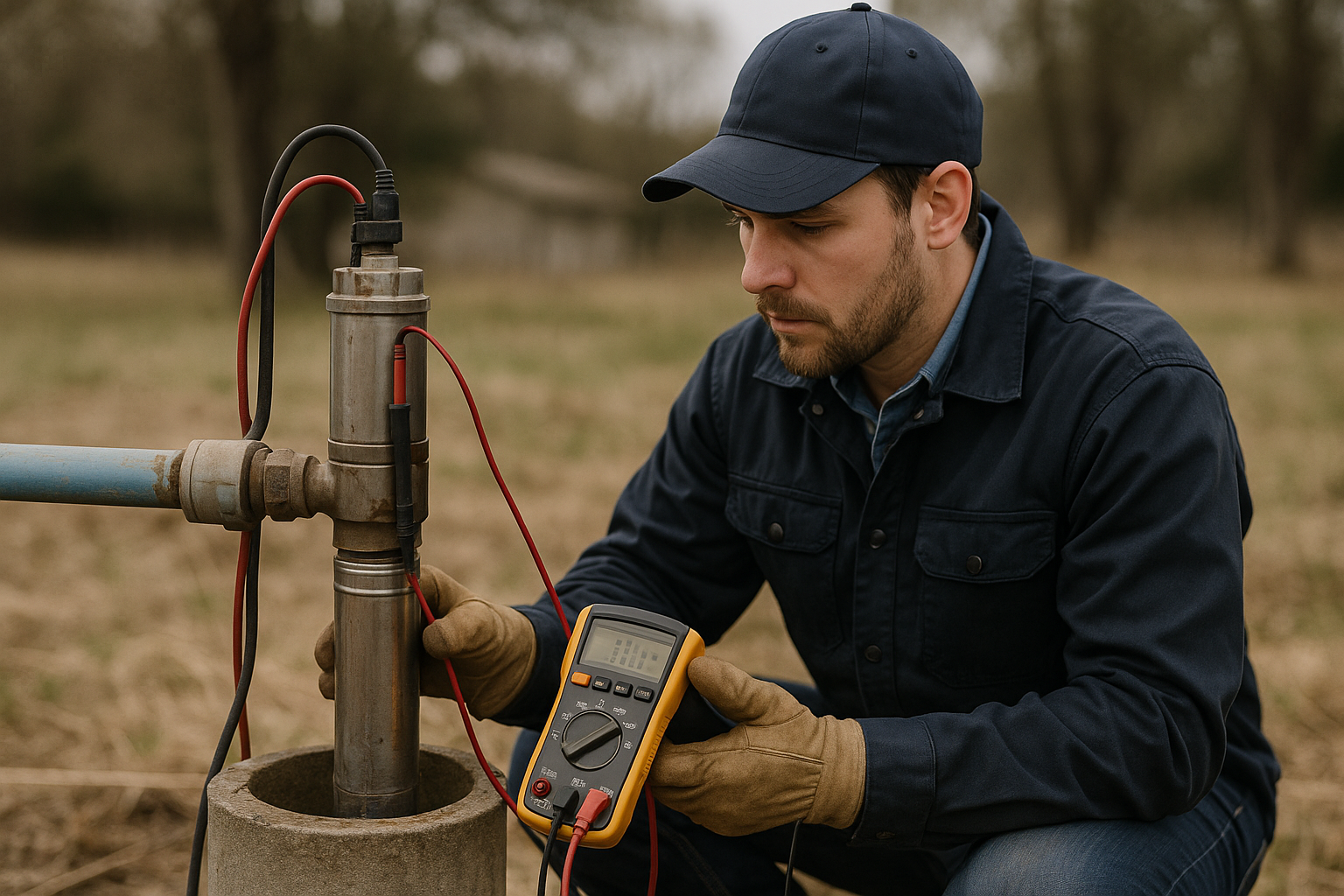
Low Water Pressure From Well: Complete Fix Guide
Diagnose and solve low pressure problems
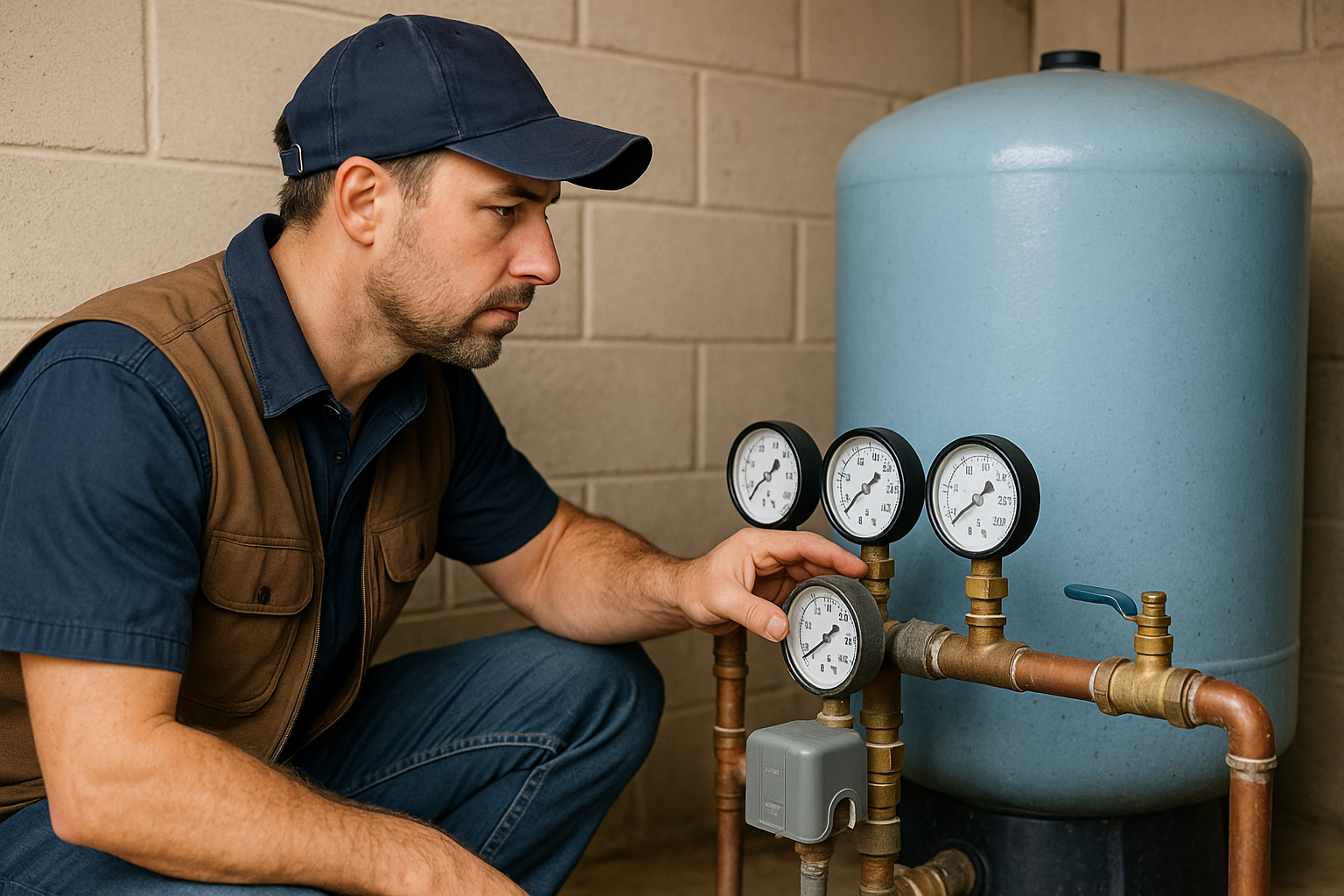
Well Pressure Switch: Settings, Adjustment & Replacement
Everything about pressure switches
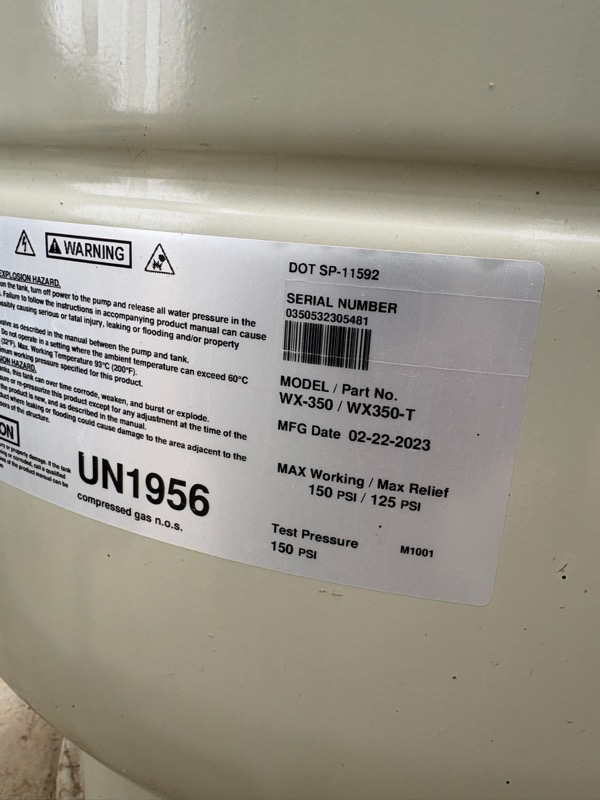
Pressure Tank Maintenance: Complete Guide
Keep your pressure tank working properly
Fixing Low Well Water Pressure in Cahuilla, California
Cahuilla is a quiet, high-desert community in southwestern Riverside County, strung along State Route 371 a few miles west of Anza and tucked into the foothills below Cahuilla Mountain and the Santa Rosa range. At roughly 3,600 feet of elevation, with much of the area on or around the Cahuilla Reservation, nearly every home and ranch here depends on a private well. There is no municipal main to fall back on. So when your water pressure sags — weak showers, a garden hose that barely reaches, irrigation lines that will not build pressure — it is more than an annoyance. This guide explains how your well system makes pressure, why Cahuilla's granite-and-drought geology makes pressure problems common, and what you can do about it.
The Parts That Make Your Pressure
A Cahuilla well system is a chain of components, and pressure is only as good as the weakest link. The submersible pump, set deep in the casing, lifts water against both depth and elevation. It fills a pressure tank whose internal bladder traps a cushion of air; that air is what actually pushes water to your fixtures between pump cycles. A pressure switch starts and stops the pump at set points (commonly 40/60 PSI here, where a little extra pressure helps homes on slopes). Sediment filters guard against the decomposed-granite grit that local aquifers carry. If the pump weakens, the bladder fails, the switch drifts, or the filters clog, you feel it as low pressure at the tap.
Why Cahuilla Wells Struggle to Hold Pressure
The geology around Anza and Cahuilla is fractured crystalline rock and decomposed granite overlain by thin alluvial pockets. Aquifers here tend to be shallow, compartmentalized, and slow to recharge, with only 12 to 15 inches of mostly winter rain each year. Static water levels swing widely — often 150 to 400 feet down — and drop hard in drought. On top of that, the granitic groundwater is mineral-rich and hard, so scale builds steadily in pipes and equipment. Add the gravitational penalty of pumping uphill to homes on the foothills, and you have an environment that is genuinely tough on well systems. These are the most common pressure problems we find in Cahuilla:
- Low well yield in dry months. Shallow fractured-rock wells lose output as the water table drops in late summer, starving the pump and dropping pressure.
- Pump wear accelerated by elevation and minerals. Pumps work hard here and wear faster, especially when hard water leaves abrasive scale on impellers.
- Pressure tank faults. Bladders fail and air charges drift, worsened by big day-to-night temperature swings at altitude.
- Scaled and clogged pipes or filters. Limescale narrows pipes while granite sediment blinds filters.
- Leaking buried lines. Ground movement on hilly, eroding terrain cracks underground pipe, bleeding pressure before water reaches the house.
Diagnosing the Problem Step by Step
At Southern California Well Service we follow a methodical sequence built for Cahuilla's conditions. You can do the early steps yourself — just cut power to the pump at the breaker before touching anything electrical.
- Note the symptoms. Is pressure weak everywhere or at one fixture? Worse in the afternoon or in dry season? Those patterns point toward yield versus equipment.
- Measure pressure. A gauge at the tank should read in the 40–60 PSI band. Readings below 30 PSI in Cahuilla often signal elevation losses or a struggling well.
- Check the tank. Tap it for the hollow-top, solid-bottom sound, and verify the air charge sits about 2 PSI under cut-in with the system drained.
- Watch for short-cycling. A pump snapping on and off points to a waterlogged tank or bad switch.
- Inspect filters. Granite sediment loads filters quickly; swap clogged cartridges.
- Run a yield check. If a five-gallon bucket takes well over a minute to fill, your well output may be the limiting factor.
Targeted Solutions for Cahuilla Properties
Once we know the cause, the fix is specific. For tanks, we correct the air charge or install a corrosion-resistant replacement suited to hard water and temperature extremes. For homes high on the foothills, a booster pump or a constant-pressure controller delivers steady flow to the uphill fixtures that elevation tends to starve. For weak, drought-stressed wells in fractured rock, hydrofracturing or well rehabilitation can reopen flow paths without the cost of drilling deeper. Worn pumps are repaired or upgraded to high-efficiency submersibles built for elevation and abrasive water, and a variable-speed drive adapts to a fluctuating water table. Where scale has narrowed the plumbing, we descale or repipe the worst runs and recommend a softener to slow future buildup.
When to Bring in a Professional
Minor steps like clearing a filter are fair game, but most Cahuilla pressure issues need a licensed contractor because of how deep, remote, and electrically demanding these systems are. Call us at (760) 440-8520 if you have lost pressure across every fixture for more than a day, hear grinding or humming from the pump, see wet spots suggesting a buried leak, lose water entirely, or notice pressure that collapses in dry season. DIY work on a deep submersible or its wiring risks injury and expensive damage, and out here, going without water is not a safe option.
Honest Cost Ranges for Cahuilla
Our diagnostic visit is $125 and is credited toward any repair. Typical local pricing: pressure switch $150–$350; pressure tank $600–$1,500; submersible pump replacement $2,500–$5,500; sediment filtration $300–$900; iron, manganese, or softening systems $1,500–$3,500; constant-pressure or booster systems $2,000–$4,500; hydrofracturing $3,000–$8,000; a turnkey new well $18,000–$42,000; and decommissioning an old well $1,500–$5,000. We give clear, written quotes with no surprises, and financing is available for major work.
Local Service Across the Anza Valley
Southern California Well Service holds an active C-57 license (#1086994), brings founded in 2020, with 60+ years of family heritage carries CSLB #1086994. Our Anza office at 57174 CA-371 (US Hwy 79) is just minutes from Cahuilla, so we reach the community quickly, often the same day. We also operate from Ramona (1077 Main St, Ramona, CA 92065) and serve Anza, Aguanga, Sage, and the wider high country.
Preventing the Next Pressure Problem
In a place like Cahuilla, a little routine care prevents most emergencies. Check the pressure tank's air charge once a year with a tire gauge and keep it about 2 PSI below the pump's cut-in. Run every fixture monthly to flush minor sediment, and consider a softener to slow the scaling that hard granite water causes. Track your well's output during the dry months; if fill times start creeping up, ask us for a flow test before the situation becomes urgent. Shield the pump's control box from dust, heat, and winter cold, and inspect visible wiring after storms. A professional inspection every one to two years from a C-57 contractor catches small issues — a drifting switch, a weeping fitting, an aging pump — long before they leave you without water on a hot afternoon.
Frequently Asked Questions
Why is my Cahuilla well pressure worse in late summer?
Shallow fractured-rock aquifers near Anza recharge slowly and draw down through the dry season. As the water level falls toward the pump intake, output and pressure both drop. A yield test confirms whether the well, rather than the equipment, is the limiting factor.
Would a booster pump help my home on a slope?
Often yes. On Cahuilla's foothill lots, elevation robs pressure at the highest fixtures. A booster pump or constant-pressure controller restores steady flow throughout the house without overworking the well pump.
What pressure should I expect at my fixtures?
A healthy residential system delivers 40 to 60 PSI. Many Cahuilla homes run a 40/60 switch for extra margin on slopes. Readings below 30 PSI usually mean elevation losses, a clogged restriction, or a weak well.
Is hard water really damaging my system?
The granitic groundwater here is mineral-rich, so scale accumulates in pipes, the pressure tank, and on the pump, gradually choking flow. A softener and periodic descaling protect your equipment and preserve pressure.
Can you hydrofracture instead of drilling a new well?
In fractured-rock terrain like Cahuilla, hydrofracturing can reopen water-bearing fractures and boost a weak well's yield for far less than a new well, when conditions are right. We assess whether your well is a good candidate.
How fast can you get to Cahuilla?
Our Anza office is only a few miles away, so we frequently offer same-day service. Call (760) 440-8520 or text (760) 219-5877.
Get Reliable Water Pressure Back
Cahuilla's remoteness and rugged geology make dependable water more important than ever. From worn pumps to clogged pipes to drought-stressed aquifers, Southern California Well Service has the local knowledge to restore your flow. Call (760) 440-8520, text (760) 219-5877, or request a free estimate, and let our founded in 2020, with 60+ years of family heritage work for you.