
Low Water Pressure Solutions in Campo
Dealing with weak water pressure in Campo? Low water pressure can make showers frustrating and appliances ineffective. Our team diagnoses the root cause and restores your water pressure fast.
In This Guide
Need Low Water Pressure Solutions in Campo?
We serve Campo and all of San Diego County. Licensed C-57 contractor (CSLB #1086994), founded 2020.
Call: (760) 440-8520Our Low Water Pressure Solutions Services
- Pressure tank repair and replacement
- Pressure switch adjustment
- Pump upgrades for better pressure
- Constant pressure systems
- Booster pump installation
- Clogged pipe diagnosis
- Well yield testing
- Complete system evaluation
Why Campo Chooses SCWS
Local Expertise
We know San Diego County geology and wells
Fast Response
Same-day service for Campo
Fair Pricing
Honest quotes, no surprises
Quality Work
CSLB #1086994, hundreds of reviews
Our Locations
Related Articles
Continue learning about well maintenance and troubleshooting
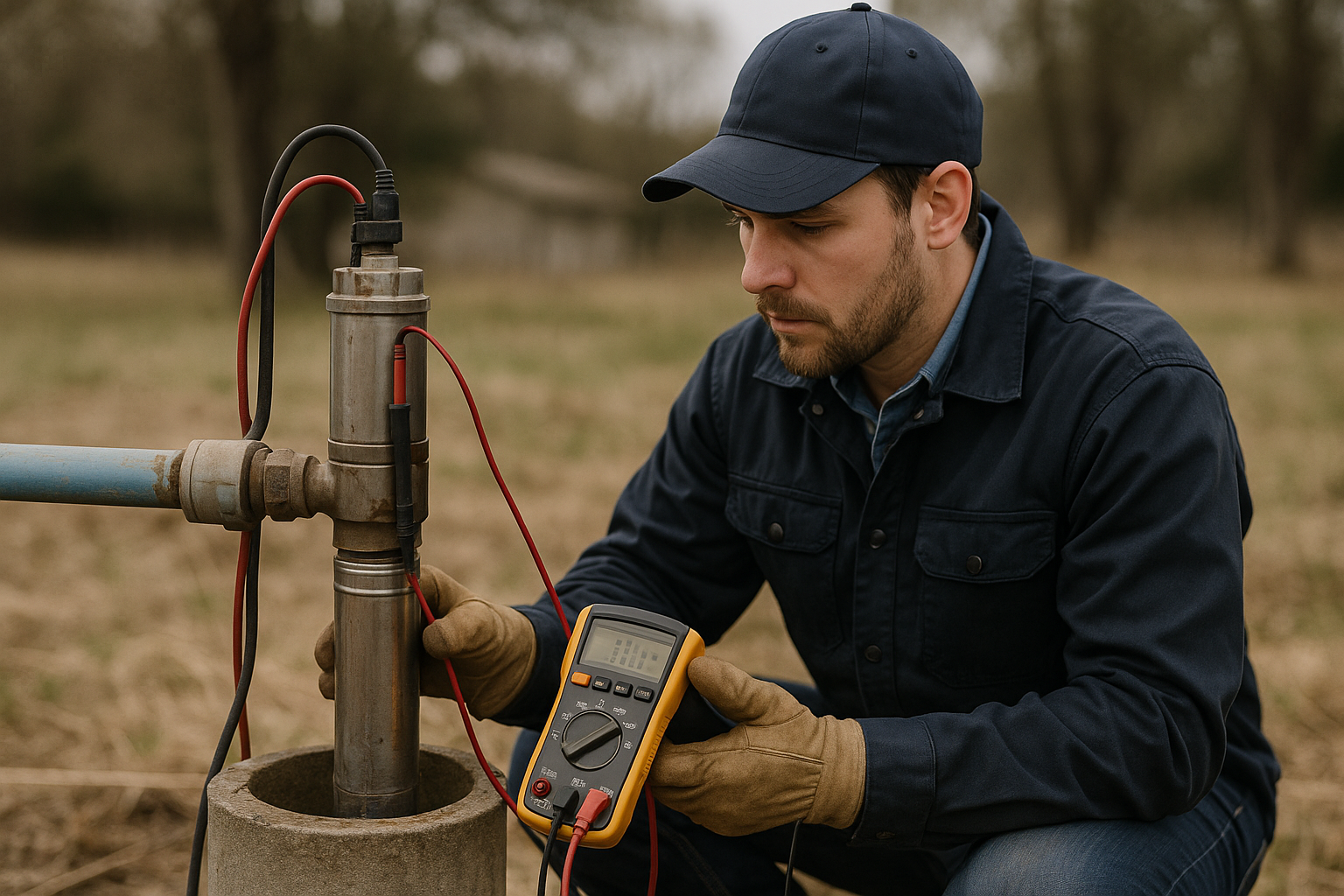
Low Water Pressure From Well: Complete Fix Guide
Diagnose and solve low pressure problems

Well Pressure Switch: Settings, Adjustment & Replacement
Everything about pressure switches
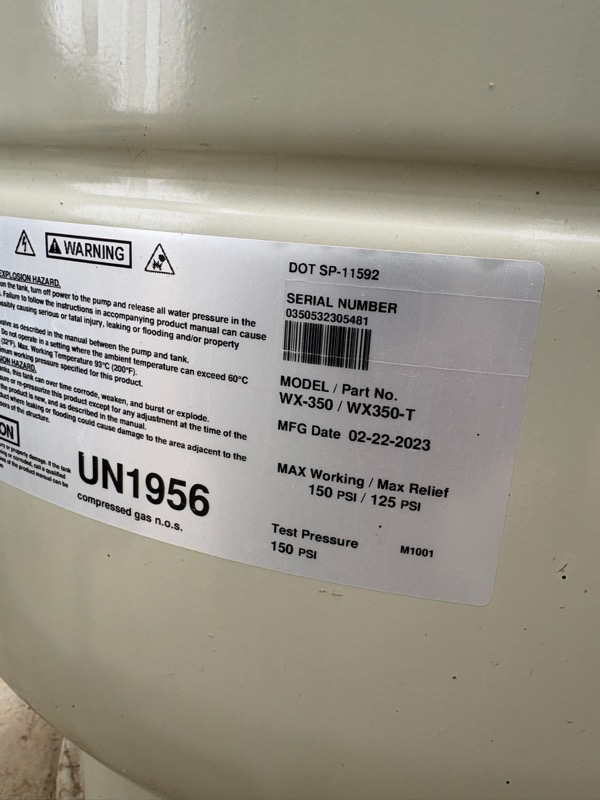
Pressure Tank Maintenance: Complete Guide
Keep your pressure tank working properly
Low Well Water Pressure in Campo, California: Causes and Fixes
Campo lies in the Mountain Empire region of southeastern San Diego County, a rugged stretch of high chaparral and granite boulders near the U.S.-Mexico border just west of Tecate. At about 2,600 feet, with neighboring communities like Cameron Corners, Lake Morena, and Potrero close by, Campo is true well country — most homes and ranches here have no choice but to rely on groundwater. When pressure drops, there is no city utility to call; it is your well, and getting it right matters. This guide explains how your system builds pressure, why Campo's fractured-granite terrain creates specific challenges, and the practical steps to restore strong, steady flow.
How Your Campo Well Makes Pressure
The system that pressurizes your home has four key players. The pump — nearly always a submersible in Campo's deeper boulder-country wells — lifts water up the casing. A pressure tank stores that water under pressure; inside, a flexible bladder keeps a charge of compressed air that does the actual pushing when you open a faucet. A pressure switch monitors the tank and cycles the pump between a cut-in pressure and a cut-out pressure, often 40/60 PSI here. Finally, sediment filtration traps the decomposed-granite grit common to fractured-rock wells. Each part depends on the others; weakness in any one shows up as poor pressure throughout the house.
Think of the pressure tank as a reservoir of stored energy. The pump does not need to run every time you crack a tap; the compressed air in the tank pushes water out until the pressure falls to the cut-in point, at which the pump kicks on to refill and re-pressurize. This is what protects the pump from constantly starting and stopping, which is the fastest way to burn one out. In Campo's fracture-fed wells, where you want to draw water gently and steadily rather than hammering the well, a properly charged tank of the right size is genuinely protective — both for your pressure and for the longevity of the whole system.
Why Campo Wells Lose Pressure
Campo's geology is hard, fractured granite and decomposed granite with limited soil cover. Wells draw from fractures and joints in the bedrock rather than from a broad, sandy aquifer, which makes yields variable from one property to the next and sensitive to drought. The semi-arid climate delivers modest rainfall, so the water table can drop meaningfully in dry years. The groundwater is often hard and can carry iron or manganese. Those conditions produce a familiar list of pressure problems:
- Variable or declining well yield. Fracture-fed wells can lose output as the water table falls, especially late in a dry summer, leaving the pump starved and pressure weak.
- Worn submersible pump. Lifting from depth in abrasive, mineral-laden water wears impellers and motors, slowly cutting the pressure a pump can produce.
- Waterlogged pressure tank. A ruptured bladder eliminates the air cushion, causing short-cycling and surging pressure.
- Sediment-clogged filters and screens. Granite grit and biofouling blind filters and can coat the well screen, restricting flow.
- Iron or mineral buildup. Scale and iron deposits accumulate in pipes and on screens over time, narrowing the path water takes.
- Buried line leaks. On rocky, shifting ground, underground pipe between a distant wellhead and the house can crack and bleed pressure.
Sudden Drop Versus Gradual Decline
A useful first question is whether your pressure collapsed suddenly or slipped away over weeks and months. A sudden loss usually indicates a hard failure — a tripped breaker, a dead pump, a torn tank bladder, or a failed switch. A gradual decline more often means an accumulating restriction: filters loading up, scale or iron building in the lines, the well screen fouling, or a water table sinking through a drought. In remote Campo, where wellheads are sometimes far from the home, this distinction also helps us decide whether to focus near the house or out at the well.
What You Can Check Yourself
Begin by turning off power to the well pump at the breaker. With the system safely de-energized, work through these checks:
- Read the gauge near the tank. A pump that snaps on and off every few seconds with minimal water use is a classic short-cycling symptom.
- Tap the pressure tank. Hollow on top, solid on the bottom is normal. Solid all over usually means it is waterlogged.
- Check the air pre-charge. Drained and depressurized, the Schrader valve should read roughly 2 PSI under cut-in. Water out of that valve confirms a failed bladder.
- Inspect and swap filters. Granite sediment loads cartridges quickly in Campo; a fresh filter often restores noticeable flow.
- Look and listen at the wellhead. Air spitting from faucets or a pump that runs without producing water can mean the water level has dropped near the intake.
- Hunt for leaks. A pressure gauge that bleeds down with everything off points to a leak in the line.
When to Call a Campo Well Professional
Some problems require professional tools and judgment. Call us if the pump needs to be pulled or replaced, if you suspect the water table or well yield has dropped, if iron and scale have fouled your screen or pipes, or if there is any electrical fault. Pulling a submersible from a deep boulder-country well is heavy, technical work, and attempting it without the right rig risks dropping the pump or damaging the casing. Given how isolated Campo is, we prioritize fast response so you are not left without water.
Realistic Cost Ranges
Our diagnostic visit is $125 and is credited toward your repair. Typical Campo pricing: pressure switch $150–$350; pressure tank $600–$1,500; submersible pump replacement $2,500–$5,500; sediment filtration $300–$900; iron, manganese, or softening systems $1,500–$3,500; constant-pressure or booster systems $2,000–$4,500; hydrofracturing to enhance a weak fractured-rock well $3,000–$8,000; a turnkey new well $18,000–$42,000; and well abandonment or decommissioning $1,500–$5,000. You get an up-front quote every time, and financing is available for larger jobs.
Preventive Care in the Mountain Empire
Out here, prevention pays. Check the tank's air charge yearly, replace filters on a schedule, and add iron filtration or softening if your water leaves stains and scale. Watch your output through the dry season — a slowing fill time is an early warning of falling yield — and consider a storage tank as a buffer against drought or pump failure, which is especially valuable in a remote community with few alternatives. A licensed C-57 inspection every year or two keeps small problems from becoming midnight emergencies.
Serving Campo and the Mountain Empire
Southern California Well Service is a C-57 licensed contractor (License #1086994) founded in 2020, with 60+ years of family heritage across hundreds of jobs. We serve Campo, Cameron Corners, Lake Morena, Potrero, Boulevard, and the surrounding Mountain Empire from our offices in Ramona (1077 Main St, Ramona, CA 92065) and Anza (57174 CA-371 (US Hwy 79), Anza, CA 92539). Same-day emergency service is available throughout the area.
Frequently Asked Questions
Why does my Campo well lose pressure in late summer?
Many Campo wells draw from fractures in granite that recharge slowly. As the dry season wears on, the water table can fall toward the pump intake, reducing yield and pressure. A flow test tells us whether the well or the equipment is the limiting factor.
What county is Campo in for service purposes?
Campo is an unincorporated community in San Diego County, in the Mountain Empire region near the Tecate border crossing. We serve it from both our Ramona and Anza offices.
My water has iron stains and weak pressure. Are they related?
They can be. Iron and mineral deposits build up in pipes and on the well screen over time, which both stains fixtures and restricts flow. Iron filtration plus a screen cleaning often improves pressure and water quality together.
Can hydrofracturing help my low-yield Campo well?
In fractured-granite terrain, hydrofracturing can open up water-bearing fractures and raise a weak well's yield, frequently for far less than drilling a new well. We evaluate whether your well is a strong candidate first.
How deep are wells around Campo?
Depths vary widely with the fractured bedrock, but many reliable wells in the area run several hundred feet to reach productive fractures. Your specific depth determines the pump and the pressure it can sustain.
Do you provide same-day service in Campo?
Yes. We hold emergency capacity for the Mountain Empire and can usually reach Campo the same day. Call (760) 440-8520 or text (760) 219-5877.
Get Your Campo Water Pressure Back
Whether it is a starved well, a worn pump, iron-fouled pipes, or a failed tank, Southern California Well Service has the Mountain Empire experience to fix it correctly. Call (760) 440-8520, text (760) 219-5877, or request a free estimate, and let since 2020 of local well expertise restore your flow.