
Low Water Pressure Solutions in Carmel Valley
Dealing with weak water pressure in Carmel Valley? Low water pressure can make showers frustrating and appliances ineffective. Our team diagnoses the root cause and restores your water pressure fast.
In This Guide
Need Low Water Pressure Solutions in Carmel Valley?
We serve Carmel Valley and all of San Diego County. Licensed C-57 contractor (CSLB #1086994), founded 2020.
Call: (760) 440-8520Our Low Water Pressure Solutions Services
- Pressure tank repair and replacement
- Pressure switch adjustment
- Pump upgrades for better pressure
- Constant pressure systems
- Booster pump installation
- Clogged pipe diagnosis
- Well yield testing
- Complete system evaluation
Why Carmel Valley Chooses SCWS
Local Expertise
We know San Diego County geology and wells
Fast Response
Same-day service for Carmel Valley
Fair Pricing
Honest quotes, no surprises
Quality Work
CSLB #1086994, hundreds of reviews
Our Locations
Related Articles
Continue learning about well maintenance and troubleshooting
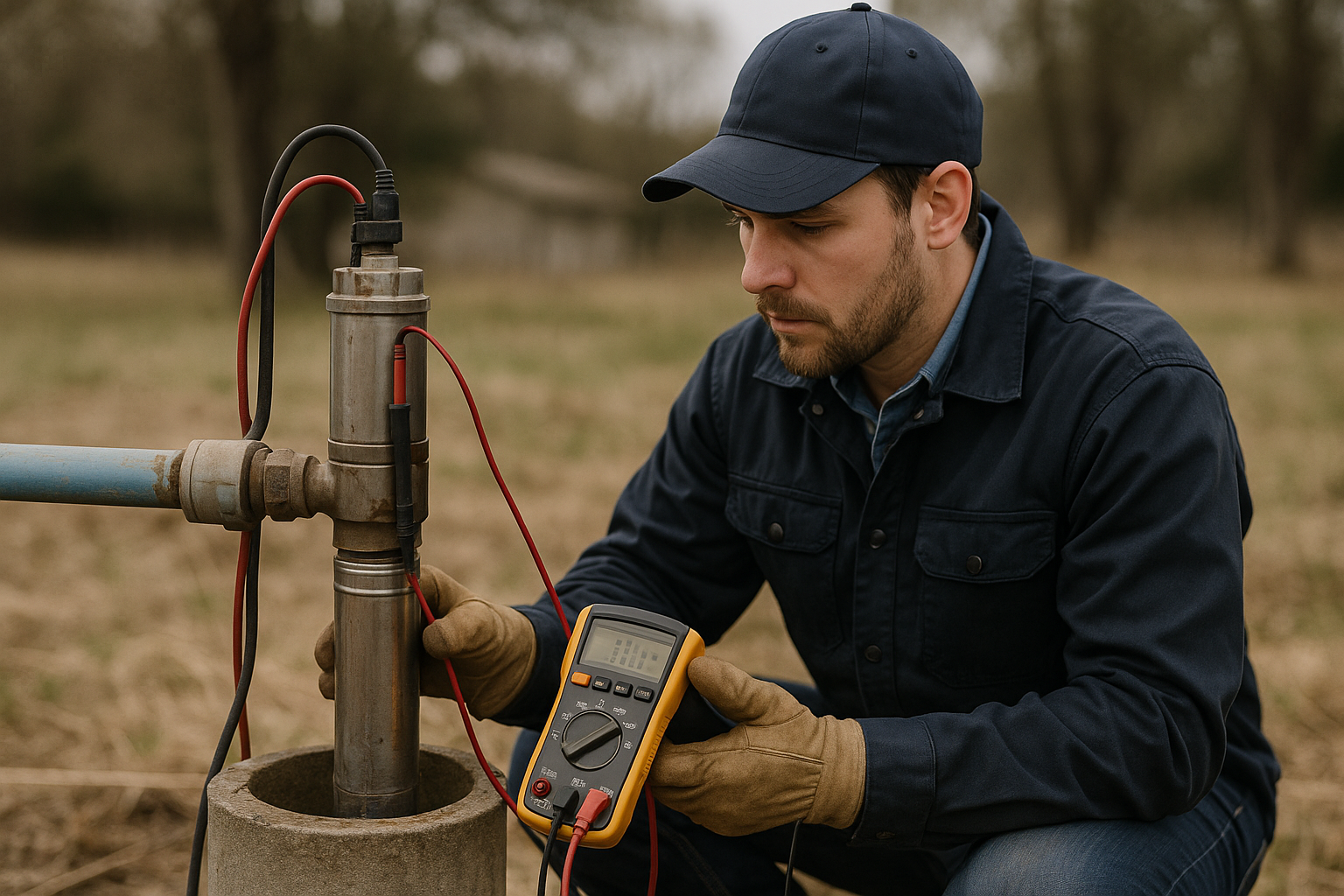
Low Water Pressure From Well: Complete Fix Guide
Diagnose and solve low pressure problems
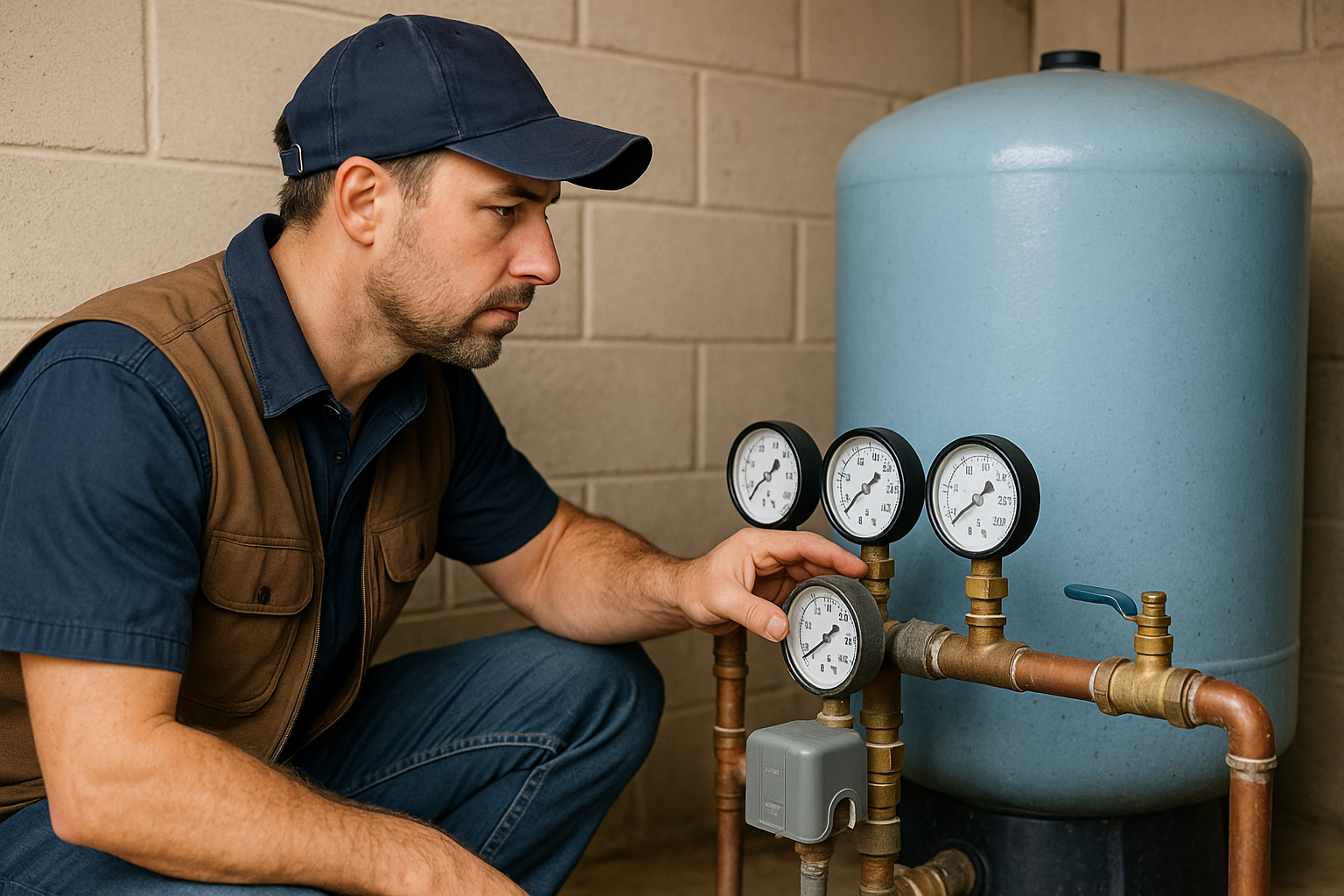
Well Pressure Switch: Settings, Adjustment & Replacement
Everything about pressure switches
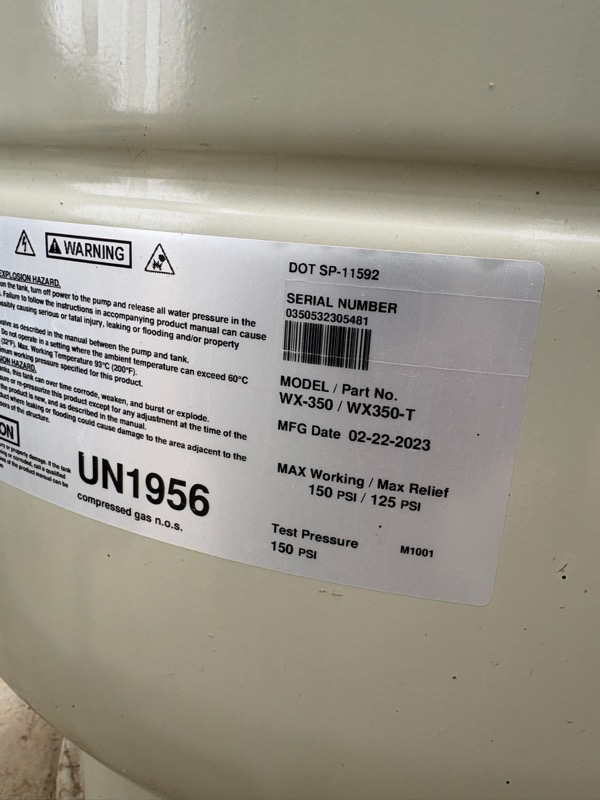
Pressure Tank Maintenance: Complete Guide
Keep your pressure tank working properly
Low Well Water Pressure in Carmel Valley, San Diego
Carmel Valley is a coastal community in the northwestern corner of the City of San Diego, in San Diego County — bordered by Del Mar to the west, Torrey Pines to the south, Pacific Highlands Ranch to the north, and Rancho Peñasquitos to the east. Though much of the 92130 area is modern suburb on municipal water, the canyon edges and older estate parcels around Del Mar Mesa, Los Peñasquitos Canyon, and the rural pockets nearby still include properties served by private wells for landscape irrigation and household use. For those owners, low water pressure is a genuine headache: weak showers, sluggish irrigation across mature landscaping, and warning signs of a component on its way out. This guide explains how your well makes pressure, what tends to fail in this coastal-canyon setting, and how to restore strong flow.
The System Behind Your Pressure
A private well builds pressure through four parts. The pump — typically submersible, sometimes a jet pump on shallower wells — lifts groundwater from the casing. A pressure tank stores it under pressure, using a bladder that holds a charge of compressed air; that air is what drives water to your fixtures while the pump rests. A pressure switch cycles the pump on and off at preset points, often 40/60 PSI. Sediment filters trap the silt and sand carried by canyon and coastal aquifers. When all four are healthy and matched, pressure holds steady; when one drifts, low or surging pressure shows up across the whole property.
The pressure tank deserves a closer look, because it is central to how your system feels day to day. It behaves like a battery: while the pump runs it supplies your fixtures and recompresses the air cushion, and once you stop drawing water that cushion delivers smooth pressure until the cut-in point calls the pump back on. This buffering keeps the pump from starting every time someone runs a tap, which is precisely what prevents premature pump failure. A correctly sized tank, usually 20 to 80 gallons for a home, gives the pump a healthy rest; lose the air charge or tear the bladder and the pump is forced to short-cycle, punishing both pressure and the pump itself.
Why Carmel Valley Wells Lose Pressure
The terrain here runs from coastal mesa to steep canyon, with the Los Peñasquitos drainage cutting through. Wells in this setting can draw from variable, sometimes shallow aquifers with mineral-rich and occasionally iron-bearing water, and estate landscaping puts heavy demand on irrigation. That combination yields a familiar list of problems:
- Waterlogged pressure tank. A ruptured bladder is the most common cause of low, surging pressure and a short-cycling pump.
- Elevation losses on canyon-rim lots. Homes set well above their wellhead lose pressure to gravity, hitting the highest fixtures first.
- Scale and iron buildup. Hard, mineral-rich water deposits scale in pipes and on well screens, narrowing flow over time.
- Clogged sediment filters. Silt loads filters quickly where wells feed large irrigation systems.
- Worn pump. Heavy irrigation duty and abrasive water wear impellers and reduce achievable pressure.
- Pressure switch faults. Corroded contacts or a plugged sensing port disrupt cycling.
Sudden Loss Versus Gradual Fade
How the problem arrived narrows the cause quickly. A sudden loss usually means a hard failure — a tripped breaker, a quit pump, a torn bladder, or a stuck switch. A slow fade over weeks or months points to a building restriction such as scale or iron in the lines, a loading filter, or a seasonal water-table dip. On Carmel Valley's canyon-rim lots, a complaint that is worst at the uphill fixtures often points to an elevation or booster issue rather than the well.
What You Can Check Yourself
First, turn off the well pump at the breaker so no electrical component is live. Then run through these checks:
- Whole-system or single fixture? If only one tap is weak, inspect its aerator or valve before suspecting the well.
- Watch the gauge. Rapid pump cycling with light water use indicates a tank or switch fault.
- Sound the tank. A fully solid tank usually means it is waterlogged.
- Check the air charge. Drained and depressurized, the Schrader valve should read about 2 PSI below cut-in; water from it confirms a failed bladder.
- Swap the filter. A packed cartridge is a quick, common fix.
- Test for leaks. A gauge that bleeds down with all water off points to a leak.
When to Call a Professional
Call us when the basics do not solve it, when the pump needs pulling or replacement, when canyon elevation is starving your upper fixtures, or whenever wiring and controls are involved. Persistent low pressure across the home, a pump that hums without delivering water, grinding sounds, or sudden total loss of water all warrant a service visit. Pulling and resetting a submersible safely requires the right equipment and experience — it is not a do-it-yourself task.
Solutions for Carmel Valley Properties
Once we know the cause, the fix is targeted. We replace failed tanks, rebuild or swap worn switches, and repair or upgrade aging pumps to high-efficiency models. For canyon-rim homes losing pressure to elevation, a booster pump or constant-pressure controller delivers even flow to every fixture. For iron, manganese, or hardness, we install filtration and softening that protect the system and improve water quality. Where scale has closed up plumbing, we descale or repipe the worst runs, and for high-demand irrigation, a constant-pressure system keeps flow steady across multiple zones.
Realistic Cost Ranges
Our diagnostic visit is $125, credited toward the repair. In the Carmel Valley area, expect: pressure switch $150–$350; pressure tank $600–$1,500; submersible pump replacement $2,500–$5,500; sediment filtration $300–$900; iron, manganese, or softening systems $1,500–$3,500; constant-pressure or booster systems $2,000–$4,500; hydrofracturing $3,000–$8,000; a turnkey new well $18,000–$42,000; and well abandonment $1,500–$5,000. Every quote is up front, with financing available on larger projects.
Preventive Maintenance
Routine care prevents most emergencies. Check the pressure tank's air charge yearly, replace filters on a schedule, and run iron filtration or softening if your water stains fixtures or scales pipes. On canyon-rim lots, have any booster or constant-pressure system inspected so it keeps delivering even flow. A licensed C-57 inspection every year or two catches a tired pump, a corroding fitting, or a fouling screen before it leaves your landscaping or home without water.
Serving Carmel Valley and Coastal North San Diego
Southern California Well Service is a C-57 licensed contractor (License #1086994) founded in 2020, with 60+ years of family heritage. We serve Carmel Valley, Del Mar, Pacific Highlands Ranch, Rancho Peñasquitos, and the surrounding San Diego County communities from our offices in Ramona (1077 Main St, Ramona, CA 92065) and Anza (57174 CA-371 (US Hwy 79), Anza, CA 92539). Same-day emergency service is available.
Because Carmel Valley blends modern subdivisions with older estate and canyon-edge parcels, the wells we service here vary widely — from relatively new variable-speed systems to older equipment installed decades ago. That range is exactly why local diagnosis beats assumptions. We match every recommendation to your particular well depth, pump type, water chemistry, and lot elevation, so you invest only in what your system actually needs.
Frequently Asked Questions
What county is Carmel Valley in?
This Carmel Valley is a neighborhood of the City of San Diego, in San Diego County — not to be confused with the Carmel Valley in Monterey County. We serve it from both our Ramona and Anza offices.
My home sits on a canyon rim and the upstairs pressure is weak. Why?
Elevation is the likely cause. Every foot a fixture rises above the wellhead and tank costs pressure, so upper and uphill fixtures suffer first. A booster pump or constant-pressure controller restores even flow throughout the home.
What is the most common pressure problem you see?
A waterlogged pressure tank from a ruptured bladder, which causes surging pressure and rapid pump cycling. Checking the tank's air charge is usually the first diagnostic step.
Does mineral-rich water affect my pressure here?
Yes. Hard, sometimes iron-bearing water deposits scale in pipes and on well screens, gradually restricting flow. Filtration, softening, and periodic descaling protect both pressure and equipment.
My irrigation drops in pressure when several zones run. What helps?
High simultaneous demand can outpace a standard system. A constant-pressure controller holds steady pressure across multiple zones, ideal for the mature landscaping common in the Carmel Valley area.
Do you offer same-day service in Carmel Valley?
Yes, we keep emergency capacity for coastal North County and can usually respond the same day. Call (760) 440-8520 or text (760) 219-5877.
Restore Your Carmel Valley Water Pressure
From a failed tank to elevation losses to scale and worn pumps, Southern California Well Service finds the real cause and fixes it right. Call (760) 440-8520, text (760) 219-5877, or request a free estimate, and bring strong, dependable water pressure back to your Carmel Valley property.