
Low Water Pressure Solutions in Dehesa
Dealing with weak water pressure in Dehesa? Low water pressure can make showers frustrating and appliances ineffective. Our team diagnoses the root cause and restores your water pressure fast.
📋 In This Guide
Need Low Water Pressure Solutions in Dehesa?
We serve Dehesa and all of San Diego County. Licensed C-57 contractor (CSLB #1086994), founded 2020.
Call: (760) 440-8520Our Low Water Pressure Solutions Services
- Pressure tank repair and replacement
- Pressure switch adjustment
- Pump upgrades for better pressure
- Constant pressure systems
- Booster pump installation
- Clogged pipe diagnosis
- Well yield testing
- Complete system evaluation
Why Dehesa Chooses SCWS
✓ Local Expertise
We know San Diego County geology and wells
✓ Fast Response
Same-day service for Dehesa
✓ Fair Pricing
Honest quotes, no surprises
✓ Quality Work
CSLB #1086994 · founded 2020
Our Locations
Related Articles
Continue learning about well maintenance and troubleshooting
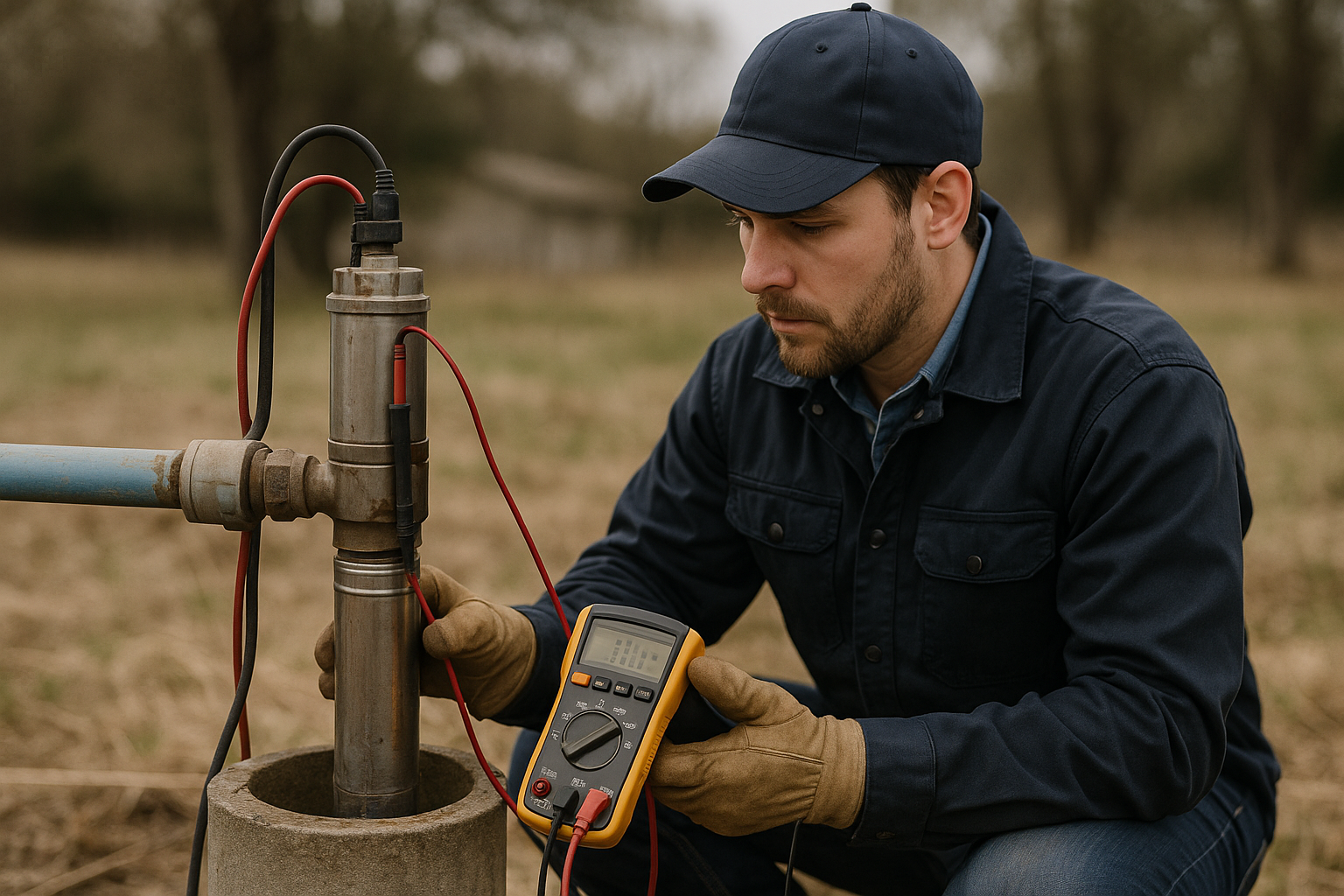
Low Water Pressure From Well: Complete Fix Guide
Diagnose and solve low pressure problems
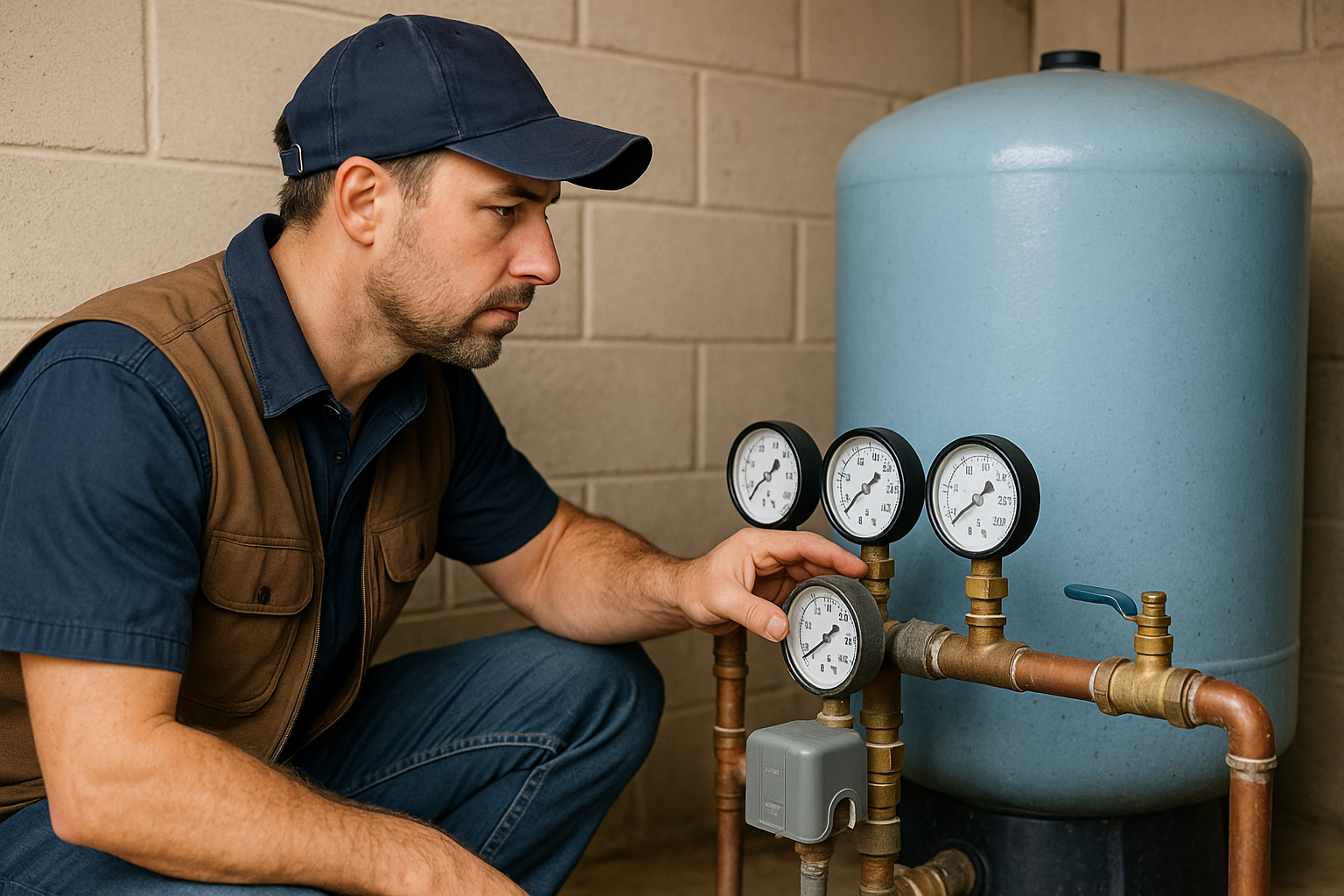
Well Pressure Switch: Settings, Adjustment & Replacement
Everything about pressure switches
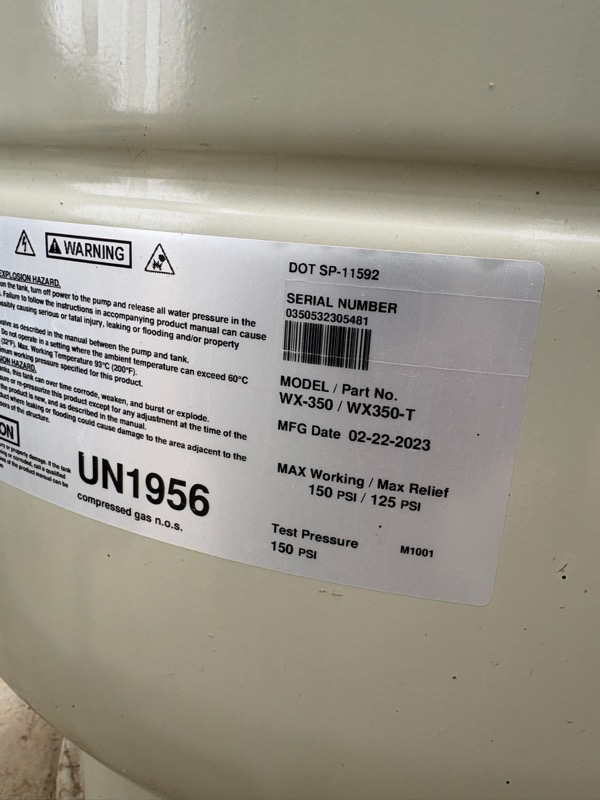
Pressure Tank Maintenance: Complete Guide
Keep your pressure tank working properly
Comprehensive Low Water Pressure Solutions for Dehesa Well Owners
If your faucets have slowed to a trickle, your shower has lost its punch, or your irrigation can no longer reach the back of the property, you are not alone. Low water pressure is one of the most common calls we field from the Dehesa Valley and Sloane Canyon area east of El Cajon and Rancho San Diego. Out here, near Harbison Canyon, Crest, and Singing Hills, nearly every home runs on a private well drilled into decomposed-granite and hard-rock terrain. That fractured-bedrock geology is part of what makes Dehesa such a beautiful, rural place to live, and it is also exactly why pressure problems behave a little differently here than they do on a city water main. At Southern California Well Service, we have, since 2020, diagnosing and repairing well systems across eastern San Diego County, and we know how to get your pressure back fast. We are a licensed C-57 well contractor, we hold we offer same-day emergency service when you are completely out of water. Call (760) 440-8520 or text us at (760) 219-5877.
How a Residential Well and Pressure System Actually Works
Understanding the basics makes it much easier to recognize what is going wrong. A typical Dehesa well system has four main parts working together. First, a submersible pump sits deep in the well casing, often hundreds of feet down in fractured granite, and pushes water up to the surface. Second, that water flows into a pressure tank, which stores water under pressure using a captive cushion of air behind a rubber bladder. The tank is what lets you run a faucet without the pump kicking on every few seconds. Third, a pressure switch acts as the brain: it senses when pressure drops to a set "cut-in" point (commonly 40 psi) and starts the pump, then shuts it off again at the "cut-out" point (commonly 60 psi). Fourth, the water travels through service lines, filters, and any treatment equipment before it reaches your taps.
When all four parts are healthy, you get steady, comfortable pressure in that 40 to 60 psi range. When any single component drifts out of spec, the whole system feels weak. A waterlogged tank makes the pump short-cycle, a tired pump cannot build pressure against Dehesa's deep lift, a misadjusted switch caps your pressure too low, and a clogged screen or scaled-up pipe strangles flow no matter how strong the pump is. The trick is figuring out which one, and that is where local experience pays off.
Common Causes of Low Water Pressure in Dehesa Wells
Based on decades of service calls in this corner of San Diego County, here are the culprits we see most often:
- Waterlogged or failed pressure tank: If the bladder ruptures or the tank loses its air charge, pressure swings wildly and the pump cycles on and off rapidly. Dehesa's hard water accelerates corrosion and shortens tank life, so a tank older than 7 to 10 years is a prime suspect.
- Worn or failing submersible pump: Pumps out here work hard, lifting water from deep, fractured-granite wells against significant elevation. After 10 to 15 years, impellers wear and output drops, leaving you with weak pressure even though the pump still runs.
- Misadjusted or faulty pressure switch: A switch set to a low range such as 20/40 psi instead of 40/60 psi directly limits your household pressure. Rural power fluctuations common in the Dehesa foothills can also pit the switch contacts and cause erratic behavior.
- Sediment and clogged well screens: Decomposed granite is sandy and porous, so fine sediment migrates into the well and packs against intake screens. This restricts flow and mimics low pressure even when the pump is healthy. Iron bacteria can add slimy buildup on top of that.
- Mineral scale and hard water: The granite geology produces hard, mineral-rich water. Over time, calcium and magnesium deposits coat the inside of pipes, the tank, and pump components, narrowing the path water has to travel.
- Low well yield in dry seasons: Fractured-bedrock aquifers recharge slowly. During drought, the well may simply not produce enough water to keep up with demand. This is not a pressure fault, but it feels exactly like one as flow fades during heavy use.
- Leaks and aging pipe: Older Dehesa properties still have galvanized lines that corrode and leak, bleeding off pressure before water reaches your taps. Buried lines disturbed by shifting, rocky soil or tree roots are common here too.
What to Check Before You Call a Pro
A few safe, simple checks can help you describe the problem and sometimes pinpoint an easy fix:
- Is it the whole house or just one fixture? If only one faucet or showerhead is weak, the problem is likely a clogged aerator or cartridge, not your well. If every tap is affected, the issue is at the pump, tank, or switch.
- Watch the pressure gauge near the tank. Note the pressure where the pump turns on and where it shuts off. If it never climbs above the low 30s, your switch may be set low or your pump may be struggling.
- Listen to the pump cycle. If the pump rapidly clicks on and off every few seconds while water runs, that short-cycling almost always points to a waterlogged tank that has lost its air charge.
- Tap the side of the pressure tank. With the system off, the top should sound hollow and the bottom dull. If the whole tank sounds full and dull, the bladder has likely failed.
- Look for wet spots. Damp ground near the wellhead, pump house, or along buried line routes can reveal a leak that is stealing your pressure.
- Note the timing. Pressure that fades only during long irrigation runs or late in a dry summer can signal a yield problem rather than a hardware failure.
What you should not do is open the well cap, pull wiring, or attempt to adjust the pressure switch springs while the system is energized. Well systems combine high-voltage electricity and pressurized water, and a wrong move can be dangerous or costly. When the simple checks point past your taps, it is time to bring in a licensed technician.
When to Call a Professional in Dehesa
Some symptoms mean it is time to call (760) 440-8520 right away rather than wait:
- No water at all. A complete loss of flow is an emergency, usually a failed pump or electrical fault. We offer same-day service across Dehesa for exactly this.
- Sudden pressure loss with no obvious cause, which can mean a burst line or pump failure.
- Rapid pump cycling that strains the motor and risks burning it out if left unaddressed.
- Grinding, humming, or rattling from the pump or pressure tank area.
- Cloudy, sandy, or metallic-tasting water, which often accompanies clogged screens or a casing breach in granite-heavy ground.
- Visible leaks or unexplained wet spots that can hide underground for months in Dehesa's rocky soil.
Well work in San Diego County frequently requires permits and must meet county and Department of Water Resources standards. As a licensed C-57 contractor, we handle all permitting and ensure the job is done to code, protecting your investment and your water supply.
Realistic Cost Ranges for Dehesa Well Pressure Repairs
Every property is different, but these are honest, current ranges for the most common low-pressure fixes. We always quote in writing before any work begins, and there are no surprise upcharges.
- Diagnostic visit: $125, and it is credited toward any repair you approve.
- Pressure switch replacement: $150 to $350. Often the simplest, fastest fix when the switch is the culprit.
- Pressure tank replacement: $600 to $1,500, depending on tank size and the condition of the surrounding plumbing.
- Sediment filtration system: $300 to $900 to keep decomposed-granite sand out of your fixtures and appliances.
- Iron, manganese, or water softener system: $1,500 to $3,500 to tackle Dehesa's hard, mineral-rich water and protect your pipes and pump.
- Constant-pressure or booster system: $2,000 to $4,500. Ideal for hillside Dehesa homes where elevation robs pressure, delivering steady psi regardless of demand.
- Submersible pump replacement: $2,500 to $5,500, including labor to pull and reset the pump in a deep granite well.
- New well, turnkey: $18,000 to $42,000 if a well is beyond rehabilitation and a replacement is the right long-term answer.
For most pressure complaints, the fix lands at the lower end of this list. We never push an upgrade you do not need, and we use parts rated for hard-water conditions so your repair lasts.
Serving Dehesa and All of Eastern San Diego County
From our offices in Ramona (1077 Main St, Ramona, CA 92065) and Anza (57174 CA-371 (US Hwy 79), Anza, CA 92539), we are well positioned to reach Dehesa quickly. We regularly service the Dehesa Valley, Sloane Canyon, Harbison Canyon, Crest, Singing Hills, Rancho San Diego, and the surrounding rural communities east of El Cajon. Because our technicians work in this fractured-bedrock, decomposed-granite terrain every week, we arrive already knowing what tends to fail here and how to fix it the first time. When you are out of water in a rural area, that speed and familiarity matter.
Frequently Asked Questions
Why is my well water pressure low in Dehesa?
The most common causes are a waterlogged or failed pressure tank, a worn submersible pump, a misadjusted pressure switch, sediment from decomposed granite clogging the well screen or pipes, mineral scale from hard water, or reduced well yield from the fractured-bedrock aquifer during dry months. A quick pressure reading plus a pump and tank inspection usually identifies the exact cause.
How much does it cost to fix low water pressure on a Dehesa well?
A diagnostic visit is $125 and is credited toward the repair. A pressure switch runs $150 to $350, a pressure tank $600 to $1,500, sediment filtration $300 to $900, an iron, manganese, or softener system $1,500 to $3,500, a constant-pressure or booster system $2,000 to $4,500, and a submersible pump $2,500 to $5,500. A complete turnkey new well, if it comes to that, ranges from $18,000 to $42,000.
What water pressure should my well system hold?
Most homes are set to a 40/60 psi cut-in/cut-out range for steady, comfortable flow. A switch set too low, such as 20/40 psi, makes every tap feel weak even when the system is otherwise healthy. On hillside Dehesa lots we also account for elevation, since pressure drops about 0.43 psi for every foot your home sits above the wellhead.
Do you offer same-day service in Dehesa?
Yes. From our Ramona and Anza offices we provide same-day emergency service throughout eastern San Diego County, including Dehesa, Harbison Canyon, Crest, Singing Hills, and Rancho San Diego. Call (760) 440-8520 or text (760) 219-5877.
How long do a pump and pressure tank last in Dehesa's hard water?
Submersible pumps generally last 10 to 15 years, though hard water and deep granite lift can shorten that. Pressure tanks usually last 7 to 10 years in hard-water areas like Dehesa. Annual inspections and a softener or iron filter help both components last considerably longer.
Is a permit required for well work in San Diego County?
Yes. Well construction, deepening, and many repairs require permits and must meet county and Department of Water Resources standards. As a licensed C-57 contractor, we handle all permitting and compliance so the work is fully up to code.
Get Your Dehesa Water Pressure Back Today
Low water pressure does not have to disrupt your day. Whether it turns out to be a quick pressure switch adjustment, a new tank, or a full constant-pressure system for a hillside property, Southern California Well Service has the tools, the founded in 2020, with 60+ years of family heritage the same-day availability to restore your Dehesa well to peak performance. Call us now at (760) 440-8520 or text (760) 219-5877 for a free estimate or emergency service. Your diagnostic is $125 and credited toward the repair, so let us solve your water pressure problem and get you back to enjoying your rural San Diego County retreat.