
Low Water Pressure Solutions in El Cajon
Dealing with weak water pressure in El Cajon? Low water pressure can make showers frustrating and appliances ineffective. Our team diagnoses the root cause and restores your water pressure fast.
📋 In This Guide
Need Low Water Pressure Solutions in El Cajon?
We serve El Cajon and all of San Diego County. Licensed C-57 contractor (CSLB #1086994), founded 2020.
Call: (760) 440-8520Our Low Water Pressure Solutions Services
- Pressure tank repair and replacement
- Pressure switch adjustment
- Pump upgrades for better pressure
- Constant pressure systems
- Booster pump installation
- Clogged pipe diagnosis
- Well yield testing
- Complete system evaluation
Why El Cajon Chooses SCWS
✓ Local Expertise
We know San Diego County geology and wells
✓ Fast Response
Same-day service for El Cajon
✓ Fair Pricing
Honest quotes, no surprises
✓ Quality Work
CSLB #1086994 · founded 2020
Our Locations
Related Articles
Continue learning about well maintenance and troubleshooting

Low Water Pressure Solutions for El Cajon Properties
El Cajon sits in east San Diego County, cradled in the El Cajon Valley and surrounded by the Cuyamaca and Jamul foothills, a natural bowl that locals nickname "The Box." That ring of mountains shapes the valley's hydrology and the wells that draw from it. Across El Cajon's mix of suburban neighborhoods and outlying agricultural parcels, many property owners rely on private wells, and when pressure fades, daily routines stall. Southern California Well Service (SCWS) is a licensed C-57 contractor with since 2020 in San Diego County and we diagnose and fix the underlying cause rather than the symptom. Call (760) 440-8520 for fast, local service.
How a Well Water Pressure System Works
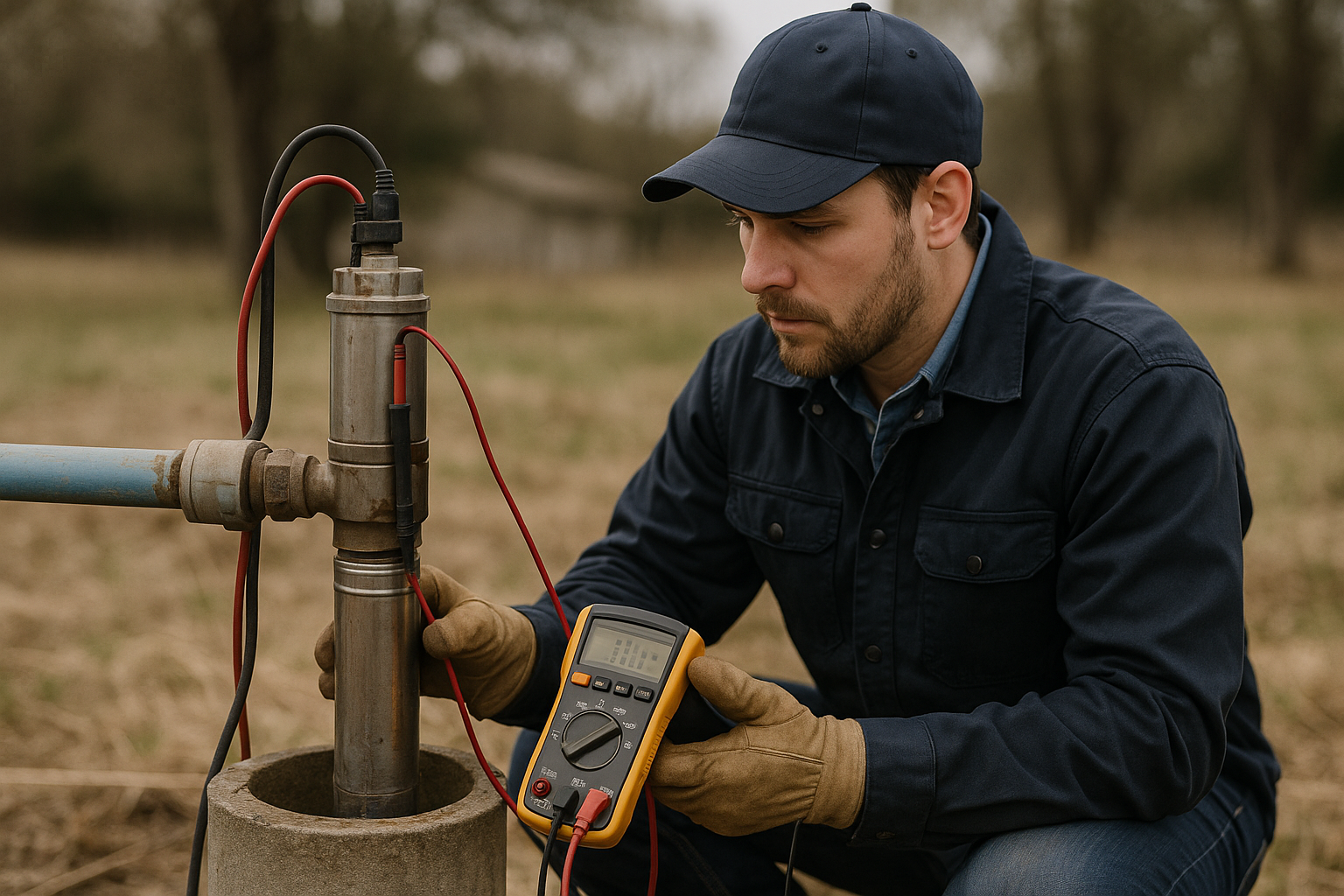
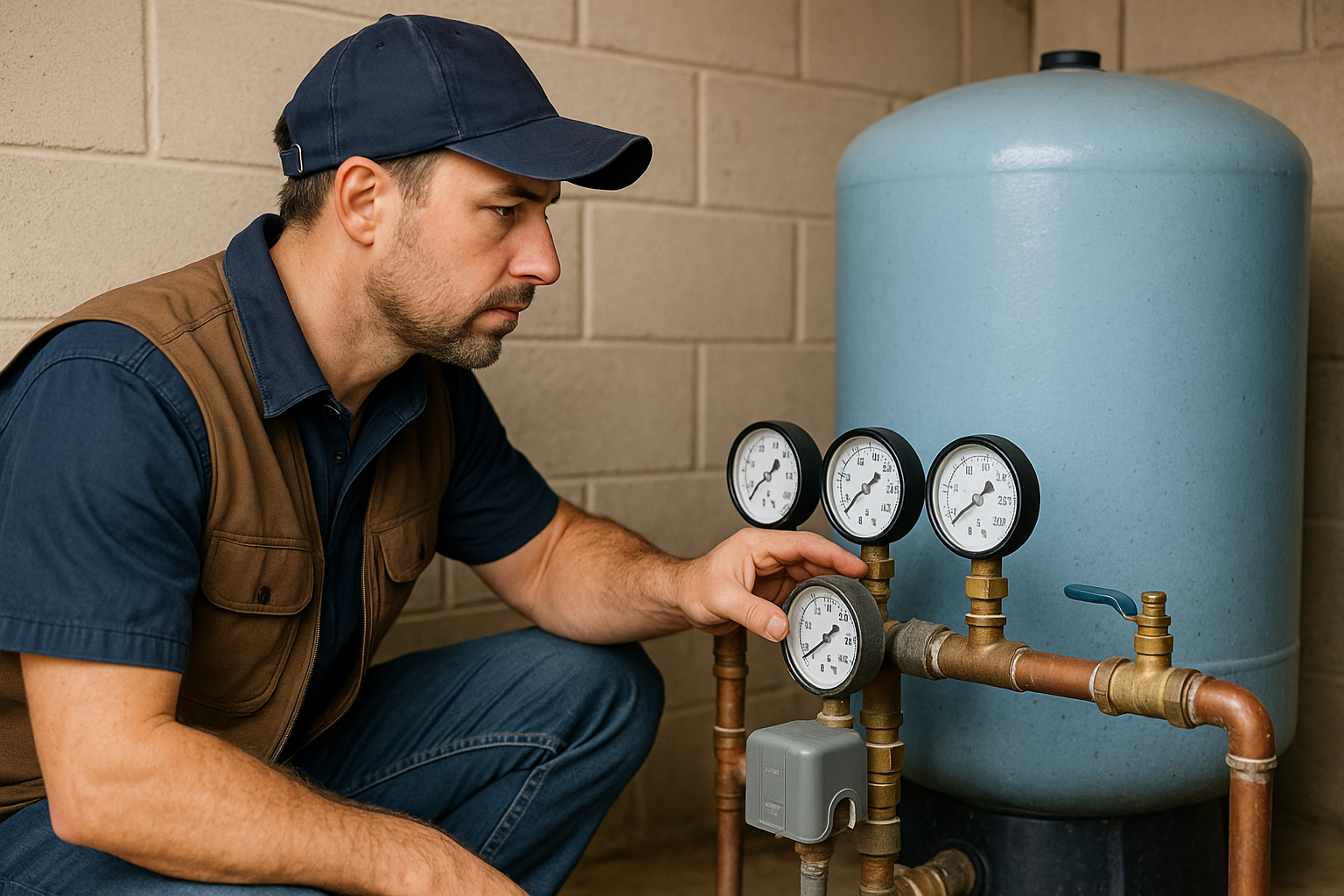
Four components keep your water flowing. The pump lifts groundwater from the aquifer. A pressure tank stores it under compressed air so the pump does not run every time you open a tap. The pressure switch starts the pump at its cut-in pressure and stops it at cut-out, commonly a 40/60 PSI range. The water delivered between those points is the drawdown. When drawdown shrinks, the pump short-cycles and faucet pressure turns weak and surging. Identifying which part is failing is what makes a repair last.
El Cajon Geology and Why Pressure Suffers
The El Cajon Valley is a broad basin floored by alluvial fill, mixtures of sand, gravel, and silt, over the decomposed granite and fractured crystalline rock typical of San Diego County. Those alluvial layers hold groundwater in unconfined aquifers, often at depths of 100 to 300 feet, but the surrounding hard rock limits how quickly the basin recharges. During the region's frequent droughts, water tables in the valley drop, reducing yield and pressure. Because the valley collects runoff from the encircling hills, that runoff can carry sediment and minerals into wells, and iron bacteria are common locally. Fractured granite bedrock stores water in cracks but delivers it inconsistently, especially in dry months when irrigation demand spikes across El Cajon's residential and agricultural mix. This geology calls for solutions matched to the valley's specific subsurface.
Common Causes of Low Pressure in El Cajon
- Pump scale from hard water: Calcium and magnesium from granite and alluvial deposits build up on pump components, cutting efficiency and pressure.
- Pressure tank problems: Mineral-rich water corrodes tanks or clogs internal diaphragms, and older systems lose air charge and short-cycle.
- Low yield during drought: Limited basin recharge means dry seasons frequently pull down groundwater levels and pressure.
- Sediment in pipes and filters: Runoff-borne sand and silt, plus iron-bacteria biofilm, accumulate in plumbing and screens, restricting flow.
- Aging or undersized infrastructure: Older distribution lines not matched to current demand lose pressure between the well and the home or irrigation system.
What to Check Before You Call
A quick self-check helps. Test pressure across fixtures: weak flow everywhere points to the pump or tank, while a single weak tap suggests a clog. Watch the pump for rapid cycling (tank or switch) versus constant running without pressure (mechanical failure or low yield). Look at the water: brown or gritty water points to sediment from valley runoff. Check the tank air charge with a tire gauge, pump off and tank drained, about 2 PSI below cut-in. Note the season, since a summer-only drop usually means yield. These details let us focus the diagnosis fast.
When to Call a Professional in El Cajon
Call SCWS at (760) 440-8520 for no water or pressure below 20 PSI, which risks pump damage; frequent pump cycling that signals a tank or switch problem; visible sediment or discoloration from valley runoff; grinding or humming pump noises indicating mechanical failure or air in the system; a sudden spike in your electric bill, which can mean the pump is overworking against a clog or low yield; or persistent low pressure after DIY fixes. We bring the diagnostic tools to resolve each.
Realistic Cost Ranges for El Cajon Repairs
Every quote is in writing before work begins. Typical 2026 ranges: pressure switch $150-$350; pressure tank $600-$1,500 installed; sediment filtration $300-$900; iron, manganese, or softening $1,500-$3,500; constant-pressure or booster $2,000-$4,500; and a full pump replacement $2,500-$5,500. For deeper supply issues, hydrofracturing runs $3,000-$8,000, a turnkey new well runs $18,000-$42,000, and abandonment or decommissioning runs $1,500-$5,000. The diagnostic visit is $125, credited toward your repair. Financing is available for larger El Cajon projects.
Serving El Cajon and All of San Diego County
From our Ramona office at 1077 Main St, we cover El Cajon and the surrounding east-county communities, including Santee, Lakeside, Bostonia, and the foothills toward Jamul and Crest. We know the El Cajon Valley's box-canyon hydrology and the specific challenges of its alluvial wells, and we respond quickly to keep your household or business running.
Why El Cajon Owners Choose SCWS
Generic companies from outside the region often miss San Diego County's diverse terrain, and El Cajon's box-canyon valley is a prime example, where well depths, water tables, and rock formations vary over short distances. A technician familiar with these local conditions diagnoses low pressure faster and recommends fixes that actually fit the area, saving you time and avoiding unnecessary costs. SCWS offers full-service expertise from drilling to pump repair to water treatment, transparent assessments with no upselling, and same-day emergency response for critical situations like complete water loss. Backed by our C-57 license and, we focus on durable, honest solutions for every El Cajon property.
Preventive Maintenance for El Cajon Wells
Preventive care extends the life of your system in El Cajon's challenging valley environment. Schedule an annual inspection of the pump, tank, and pressure switch to catch issues early. Check the tank air charge monthly with a tire gauge, keeping it about 2 PSI below cut-in. Flush sediment regularly by opening a drain valve near the tank every few months to clear valley runoff, while staying mindful of drought conservation. Test water quality yearly for minerals, sediment, and bacteria so clogs and corrosion are addressed before they cut pressure. And protect electrical components with a surge protector on the pump controls to guard against the power fluctuations common in semi-rural El Cajon.
Restore Your Water Pressure in El Cajon
Do not let low water pressure affect your daily life in El Cajon. Founded in 2020, with 60+ years of family heritage, SCWS is ready to restore strong, steady flow, whether through a quick pressure-switch fix or a full system evaluation. Call (760) 440-8520 or text (760) 219-5877 for same-day emergency service or to schedule a comprehensive assessment. Our team is ready to help.
Frequently Asked Questions
What county is El Cajon in?
El Cajon is a city in east San Diego County, set in the El Cajon Valley and ringed by mountains, which earned it the nickname 'The Box.' Southern California Well Service covers El Cajon and the surrounding San Diego County from its Ramona office.
How deep are El Cajon wells and what do they yield?
Many El Cajon wells draw from alluvial fill in the valley floor at depths of roughly 100 to 300 feet, with typical yields around 5 to 12 gallons per minute. Surrounding hard granite limits recharge, so drought can lower yields significantly; a drawdown test confirms what your well can sustain.
Why is there sediment in my El Cajon well water?
Runoff from the granite hills around the valley carries sand and silt into the basin's groundwater, and iron bacteria are also common locally. Both can settle in pipes, filters, and well screens, restricting flow. Sediment filtration ($300-$900) and a screen cleaning usually resolve it.
How much does it cost to fix low water pressure in El Cajon?
Common ranges are $150-$350 for a pressure switch, $600-$1,500 for a pressure tank, $300-$900 for sediment filtration, $2,000-$4,500 for a constant-pressure system, and $2,500-$5,500 for a pump replacement. Hydrofracturing for low yield runs $3,000-$8,000. We credit our $125 diagnostic toward the repair.
My El Cajon well pressure drops in summer. Why?
El Cajon's valley aquifer recharges slowly because the surrounding hard rock limits inflow, so dry summers and droughts pull the water table down and reduce yield. Conserving during peak months and properly sizing the pump usually keeps pressure stable.
Do you provide emergency well service in El Cajon?
Yes. For no water, pressure below 20 PSI, or a sudden drop, call (760) 440-8520 or text (760) 219-5877. We offer same-day emergency response across east San Diego County.