
Low Water Pressure Solutions in Fletcher Hills
Dealing with weak water pressure in Fletcher Hills? Low water pressure can make showers frustrating and appliances ineffective. Our team diagnoses the root cause and restores your water pressure fast.
📋 In This Guide
Need Low Water Pressure Solutions in Fletcher Hills?
We serve Fletcher Hills and all of San Diego County. Licensed C-57 contractor (CSLB #1086994), founded 2020.
Call: (760) 440-8520Our Low Water Pressure Solutions Services
- Pressure tank repair and replacement
- Pressure switch adjustment
- Pump upgrades for better pressure
- Constant pressure systems
- Booster pump installation
- Clogged pipe diagnosis
- Well yield testing
- Complete system evaluation
Why Fletcher Hills Chooses SCWS
✓ Local Expertise
We know San Diego County geology and wells
✓ Fast Response
Same-day service for Fletcher Hills
✓ Fair Pricing
Honest quotes, no surprises
✓ Quality Work
CSLB #1086994 · founded 2020
Our Locations
Related Articles
Continue learning about well maintenance and troubleshooting
Low Water Pressure From Well: Complete Fix Guide
Diagnose and solve low pressure problems
Well Pressure Switch: Settings, Adjustment & Replacement
Everything about pressure switches
Pressure Tank Maintenance: Complete Guide
Keep your pressure tank working properly
Low Water Pressure Solutions for Fletcher Hills Properties
As a Fletcher Hills property owner with a private well, you rely on your water system daily. Located in an unincorporated community near El Cajon in east San Diego County, Fletcher Hills is characterized by its hillside homes and scenic terrain. The local geology, combined with Southern California’s arid climate, presents unique challenges for well owners that require experienced, local technicians who understand the area’s specific conditions to ensure consistent water pressure.
Why Local Expertise Matters in Fletcher Hills
Generic well companies from outside the region often lack insight into the diverse terrain of east San Diego County, particularly in hillside communities like Fletcher Hills. Well depths, water tables, and geological formations can vary significantly even within short distances. In Fletcher Hills, the elevated topography and underlying rock structures impact groundwater availability and flow. A technician familiar with these local nuances can diagnose low water pressure issues more quickly and recommend solutions tailored to the area’s environmental factors, saving you time and ensuring effective results.
What Sets Southern California Well Service Apart
- Local Presence — With offices in Ramona and Anza, we ensure quick response times to Fletcher Hills and throughout San Diego County.
- Full-Service Expertise — We manage all aspects of well systems, from drilling to pump repair to water treatment, even in challenging hillside terrains.
- Licensed C-57 Contractor — As a licensed well drilling contractor (CSLB #1086994), we’re equipped to handle complex well issues beyond basic plumbing services.
- Fair Pricing — We provide transparent assessments and avoid unnecessary upsells, ensuring value for Fletcher Hills residents.
- Emergency Service — We offer same-day response for critical situations like total water loss, minimizing disruption in residential areas.
Understanding Low Water Pressure in Fletcher Hills: Local Geology
Fletcher Hills, an unincorporated community near El Cajon in east San Diego County, sits on hilly terrain shaped by tectonic activity and erosion, underlain by decomposed granite and fractured crystalline bedrock typical of the region. The hillside geography means groundwater is often found in confined aquifers within these fractured rock formations at depths of 150 to 400 feet. However, the elevated position limits natural recharge from rainfall, as water tends to run off slopes rather than infiltrate deeply, making wells vulnerable to seasonal depletion during Southern California’s dry periods.
Additionally, the mix of clay, sand, and gravel deposits on Fletcher Hills’ slopes can restrict water flow to wells, creating inconsistent yield and pressure challenges. The proximity to the El Cajon Valley also introduces sediment from runoff during rare heavy rains, which can affect water quality and system performance. These geological and topographic factors require specialized approaches to maintain reliable water pressure in this hillside community.
Common Causes of Low Water Pressure in Fletcher Hills
Founded in 2020, with 60+ years of family heritage in San Diego County, we’ve identified several frequent causes of low water pressure specific to Fletcher Hills properties with private wells:
- Pump Failures Due to Elevation Strain — The hillside location of Fletcher Hills requires pumps to work harder to lift water to elevated homes, accelerating wear on components and reducing pressure output over time.
- Pressure Tank Issues — Mineral-rich groundwater from granite formations can corrode tanks or clog diaphragms, impairing their ability to maintain steady pressure, especially under uphill demand.
- Low Well Yield During Droughts — Southern California’s arid climate, combined with limited recharge on hillsides, often results in diminished aquifer levels, directly lowering water pressure.
- Sediment from Slope Runoff — Clay and silt from hillside soils can infiltrate wells during heavy rains, accumulating in pipes or filters and restricting flow, a common issue in Fletcher Hills.
- Electrical Instability — Power fluctuations in semi-rural east San Diego County can disrupt pump operation, leading to inconsistent pressure or temporary system shutdowns.
- Pressure Loss in Uphill Distribution — The natural elevation of Fletcher Hills causes pressure drops in distribution lines to higher properties, especially if pipes are aging or undersized for the terrain.
Diagnosing Low Water Pressure in Fletcher Hills
At Southern California Well Service, we use a systematic diagnostic approach tailored to Fletcher Hills’ hillside environment to pinpoint the cause of low water pressure:
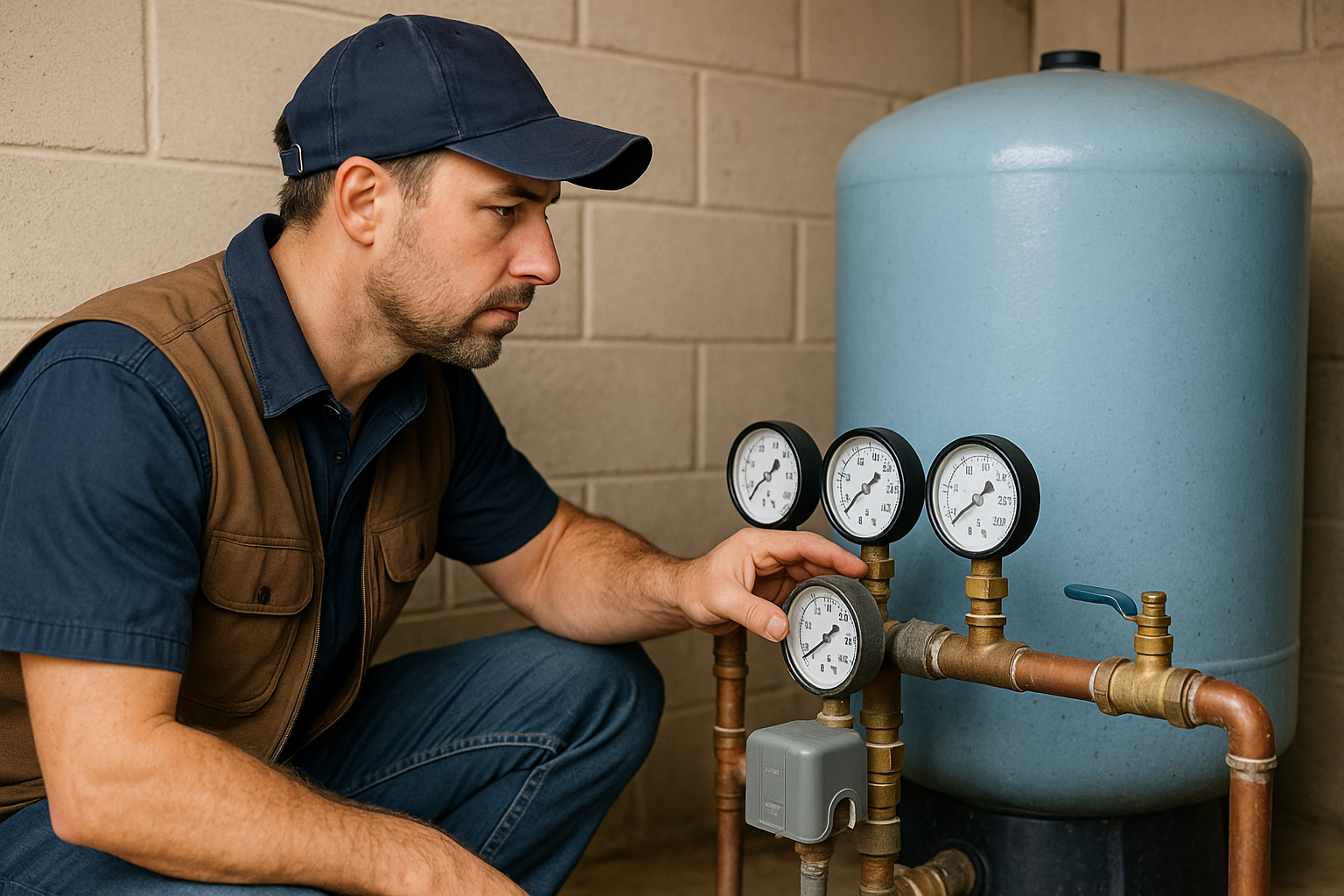
- Pressure Testing — We measure pressure at multiple points (wellhead, pressure tank, and household taps) to identify where losses occur. Normal household pressure should be 40-60 PSI; below 30 PSI signals a problem, often amplified by elevation.
- Flow Rate Assessment — We test well yield in gallons per minute (GPM) to determine if aquifer depletion or pump capacity is limiting supply. Fletcher Hills wells typically yield 4-10 GPM, with reductions during dry seasons.
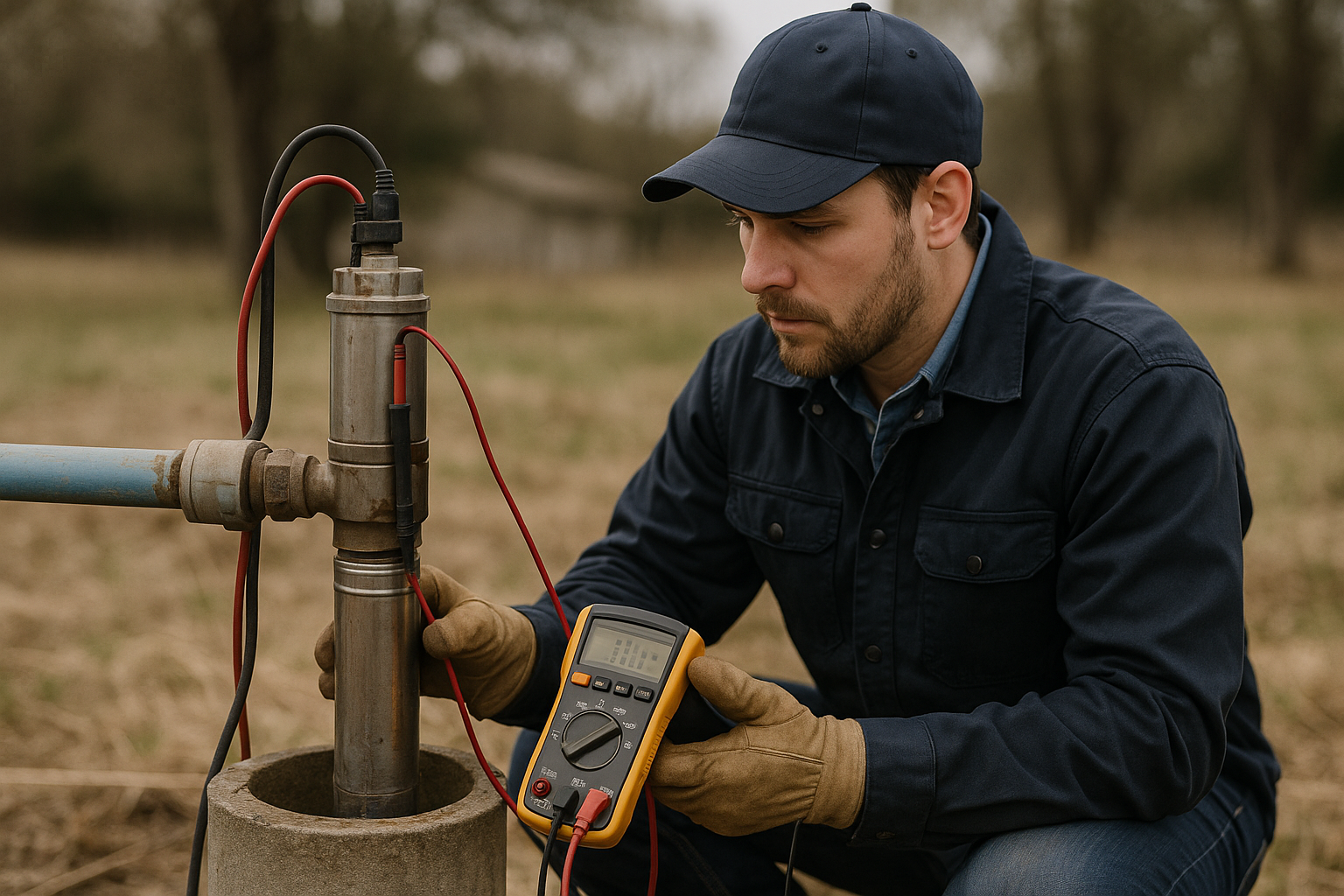
- Pump Inspection — We check for wear or strain in pumps, especially submersible models lifting water uphill. Voltage and amperage readings detect motor issues from overwork or power inconsistency.
- Pressure Tank Evaluation — We inspect for waterlogging, corrosion, or diaphragm failures, ensuring tanks can handle the pressure demands of elevated properties.
- Water Quality Analysis — Given potential runoff and sediment in Fletcher Hills, we test for particulates or minerals that could clog systems, impacting flow and pressure.
- Pipe and Elevation Checks — We examine distribution lines for blockages or leaks, considering the uphill layout, using video tools for underground sections to avoid disrupting residential landscapes.
Our diagnostics are adapted to Fletcher Hills’ unique topographic and geological challenges, ensuring we address the root cause rather than applying generic fixes.
Solutions for Low Water Pressure in Fletcher Hills (With Costs)
Once we’ve identified the issue, we offer targeted solutions suited to Fletcher Hills’ hillside residential wells. Here are common fixes with estimated costs (as of 2026, subject to change based on equipment and labor rates):
- Pump Repair or Replacement — Addressing wear from uphill strain or replacing impellers can restore output. Repairs cost $300-$600, while a new high-capacity submersible pump ranges from $1,200-$2,500 installed.
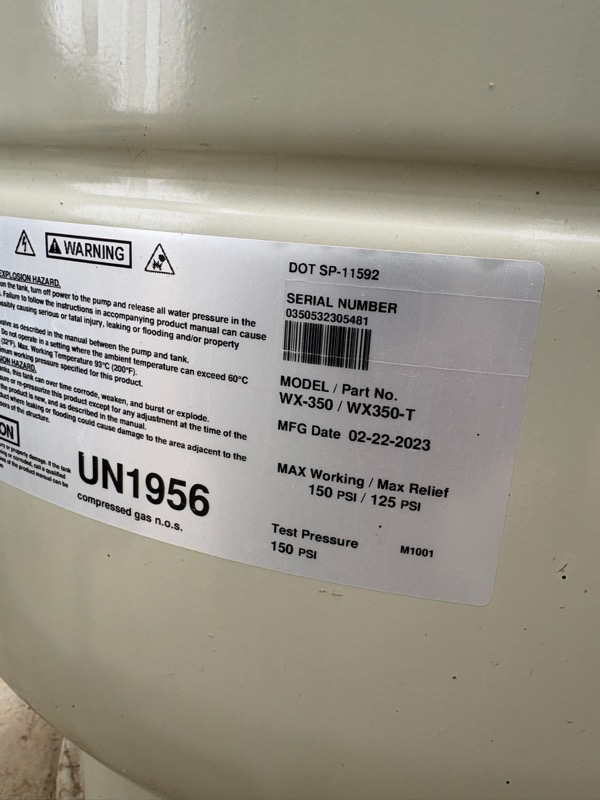
- Pressure Tank Replacement — If a tank is corroded or waterlogged, replacing it with a 20-40 gallon model costs $500-$1,000. We recommend durable materials for mineral-heavy water in Fletcher Hills.
- Booster Pump Installation — Essential for hillside homes with pressure loss due to elevation, a booster pump increases PSI. Installation costs $800-$1,500, based on required lift capacity.
- Constant Pressure System — Variable frequency drive (VFD) systems maintain steady pressure despite elevation or demand fluctuations, ideal for Fletcher Hills. Costs range from $2,000-$4,000.
- Pipe Cleaning or Replacement — Flushing sediment from clay soils costs $200-$800. Replacing undersized or damaged uphill lines may run $1,500-$3,000, depending on access and length.
- Water Treatment for Sediment and Minerals — Sediment filters or softeners prevent clogs from local soils and runoff, starting at $500-$1,200, with annual maintenance at $100-$200.
- Well Rehabilitation — For low-yield wells affected by drought or casing issues, techniques like hydrofracking or deepening can improve flow. Costs range from $3,000-$10,000+, based on depth and terrain.
We provide detailed quotes after diagnosis, ensuring clarity on scope and cost. Financing options are available for larger projects in Fletcher Hills.
Maintenance Tips to Prevent Low Water Pressure in Fletcher Hills
Preventive care can extend your well system’s life and minimize pressure issues in Fletcher Hills’ elevated environment. We recommend the following:
- Annual System Inspections — Schedule a professional check of your pump, tank, and switch every 12-18 months to catch elevation-related wear early. Cost: $150-$300 per visit.
- Monitor Pressure Tank Air Charge — Check the tank’s air pressure monthly (with water off) using a tire gauge, ensuring it matches the pump’s cut-in pressure (usually 2 PSI below). Adjust or call us if needed.
- Flush Sediment Regularly — Open outdoor spigots or drain valves near the tank every 3-6 months to clear clay and silt from runoff. Be mindful of water waste on hillsides during droughts.
- Test Water Quality — Conduct annual tests for minerals, sediment, and contaminants to address clogs before they impact pressure. DIY kits cost $20-$50, or we offer lab tests for $100-$200.
- Conserve During Dry Seasons — Reduce irrigation and non-essential use in summer to ease strain on your well, critical in Fletcher Hills where recharge is limited by slope runoff.
- Protect Uphill Lines — Insulate or secure exposed distribution lines to prevent leaks or damage from weather or elevation stress, preserving pressure to higher points.
When to Call a Professional in Fletcher Hills
While some maintenance can be handled independently, certain signs in a hillside area like Fletcher Hills indicate it’s time to contact Southern California Well Service for expert help:
- No Water or Severe Pressure Loss — If taps run dry or pressure drops below 20 PSI, immediate action prevents pump damage, especially critical for uphill systems.
- Frequent Pump Cycling — Rapid on-off cycles suggest tank or switch issues needing technical adjustment, often worsened by elevation demands.
- Visible Sediment or Discoloration — Brown or cloudy water points to clay infiltration or pipe issues, requiring professional cleaning or treatment.
- Unusual Pump Noises — Grinding or cavitation sounds indicate mechanical failure or air in the system, risking breakdown under uphill strain if ignored.
- Spike in Electric Bills — A sudden increase may mean your pump is overworking due to elevation or clogs, needing diagnostic tools to assess.
- Persistent Issues After DIY Fixes — If adjusting the pressure switch or flushing lines doesn’t resolve problems, deeper system faults tied to topography likely require our expertise.
Founded in 2020, with 60+ years of family heritage, Southern California Well Service is ready to restore water pressure in Fletcher Hills’ unique hillside setting. Call us at (760) 440-8520 for same-day emergency service or to schedule a comprehensive system evaluation. Don’t let low water pressure disrupt your residential comfort—our team is just a call away.
Frequently Asked Questions
Why does my Fletcher Hills well lose pressure on the uphill side of my property?
Fletcher Hills is a hillside community near El Cajon in east San Diego County, and elevation is the single biggest pressure killer here. Every foot of vertical rise costs you roughly 0.43 PSI, so a home perched 60 to 80 feet above the wellhead can lose 25 to 35 PSI before water ever reaches the tap. Your submersible pump also works harder lifting water up that slope, which accelerates wear. We commonly solve this with a booster pump ($2,000-$4,500) or a constant-pressure (VFD) system that holds steady PSI regardless of how high or far the water has to travel.
How deep are wells in Fletcher Hills and does depth affect my water pressure?
Most wells in the Fletcher Hills area are drilled 150 to 400 feet into the decomposed granite and fractured crystalline bedrock that underlies this part of east San Diego County. Greater depth means your pump has to lift water farther, and in fractured-rock aquifers the yield can be modest and inconsistent. If your well is on the deeper end and the pump is undersized for the lift, you will see chronic low pressure. We measure your pumping water level and yield during a $125 diagnostic (credited toward any repair) before recommending a pump that matches your specific depth.
Could the decomposed granite and hard water around Fletcher Hills be clogging my system?
Yes. The mineral-rich groundwater drawn from granite formations in Fletcher Hills is typically hard, and over time scale builds up in pipes, fixtures, and the pressure tank diaphragm, slowly choking flow. Fine sediment from decomposed granite can also pack screens and filters. A sediment filtration setup runs $300-$900, and a whole-house water softener to control the hardness runs $1,500-$3,500. Treating the water protects your pump and tank and keeps pressure from creeping down month after month.
My pressure swings between strong and weak in my Fletcher Hills home. What is wrong?
Cycling or swinging pressure almost always traces back to the pressure tank or pressure switch. A waterlogged tank that has lost its air charge makes the pump short-cycle, producing those surges and drops, and the hard water common in Fletcher Hills corrodes tank components faster than average. A worn pressure switch is an inexpensive fix at $150-$350, while a replacement pressure tank runs $600-$1,500. We test the tank's air charge and switch settings as part of every diagnostic visit.
Does the dry climate and limited rainfall on Fletcher Hills slopes hurt my well yield?
It can. Because Fletcher Hills sits on slopes, rainfall tends to run off rather than soak in and recharge the aquifer, so during Southern California's dry stretches water levels can drop and your pump may draw air or struggle to keep up, which shows up as falling pressure. If your well yield has genuinely declined, hydrofracturing to open up the fractured bedrock runs $3,000-$8,000 and often restores flow. When a well is beyond rehabilitation, a turnkey replacement well runs $18,000-$42,000. We always test yield first before recommending anything that drastic.
How fast can Southern California Well Service reach Fletcher Hills, and what will a visit cost?
We are a licensed C-57 contractor founded in 2020, with 60+ years of family heritage, operating from offices in Ramona (1077 Main St) and Anza (57174 CA-371 (US Hwy 79)), and we offer same-day emergency service to Fletcher Hills and the surrounding east San Diego County area. Our diagnostic visit is $125 and is credited toward any repair we perform. Call us at (760) 440-8520 or text (760) 219-5877. We hold, give honest quotes up front, and never push work your hillside well does not need.