
Low Water Pressure Solutions in Green Valley Lake
Dealing with weak water pressure in Green Valley Lake? Low water pressure can make showers frustrating and appliances ineffective. Our team diagnoses the root cause and restores your water pressure fast.
📋 In This Guide
Need Low Water Pressure Solutions in Green Valley Lake?
We serve Green Valley Lake and all of San Bernardino County. Licensed C-57 contractor (CSLB #1086994), founded 2020.
Call: (760) 440-8520Our Low Water Pressure Solutions Services
- Pressure tank repair and replacement
- Pressure switch adjustment
- Pump upgrades for better pressure
- Constant pressure systems
- Booster pump installation
- Clogged pipe diagnosis
- Well yield testing
- Complete system evaluation
Why Green Valley Lake Chooses SCWS
✓ Local Expertise
We know San Bernardino County geology and wells
✓ Fast Response
Same-day service for Green Valley Lake
✓ Fair Pricing
Honest quotes, no surprises
✓ Quality Work
CSLB #1086994 · founded 2020
Our Locations
Related Articles
Continue learning about well maintenance and troubleshooting
Low Water Pressure From Well: Complete Fix Guide
Diagnose and solve low pressure problems
Well Pressure Switch: Settings, Adjustment & Replacement
Everything about pressure switches
Pressure Tank Maintenance: Complete Guide
Keep your pressure tank working properly
Restoring Well Water Pressure at Green Valley Lake
Green Valley Lake is the highest community in the San Bernardino Mountains, perched at roughly 7,200 feet in the San Bernardino National Forest in San Bernardino County. It is a small, tight-knit lake town — only a few hundred year-round residents among the cabins ringing the little 9-acre lake — surrounded by neighbors like Running Springs, Arrowbear Lake, and Big Bear to the east. At this elevation, a private well or a small community water source is the lifeline for many cabins, and low water pressure up here is shaped by conditions you simply do not see down the hill. Southern California Well Service has founded in 2020 of mountain well experience, and we know what a 7,000-foot winter does to a water system.
The geology here is hard granitic and metamorphic bedrock of the San Bernardino range, fractured and faulted, with thin mountain soils on top. Wells often draw from fractures in the granite rather than a broad sand aquifer, so yields can be modest and water levels can swing with snowmelt and season. Many local wells are drilled 200 to 600 feet deep chasing productive fractures. Add freezing temperatures, steep driveways, and snow-buried wellheads, and you have a setting where local know-how matters more than almost anywhere we serve.
That is why we approach every Green Valley Lake call methodically. Before quoting anything, we measure static and pumping water levels, time the pump's recovery, check the pressure tank's pre-charge, and inspect for freeze damage on exposed lines and fittings. A weak shower at 7,200 feet can be a $200 switch, a frozen pipe, or a low-yield fracture well — and the only way to know is to test, not guess.
How Your Mountain Well Pressure System Works
Your water does not arrive pressurized on its own. A submersible pump down in the borehole pushes water up to a pressure tank, where a compressed-air cushion presses on the water so your faucets flow steadily. A pressure switch starts and stops the pump, usually holding 40 to 60 PSI. At Green Valley Lake, the pressure tank, switch, and pipes are often in an unheated crawlspace, well house, or cabin basement — which means cold is a constant threat. When any part of that chain weakens or freezes, you feel it instantly as weak or no flow.
Common Causes of Low Pressure at Green Valley Lake
- Frozen lines and equipment. The single biggest mountain culprit. Water freezing in an exposed line, a pressure tank in an unheated space, or a wellhead under snow can cut pressure to nothing — and burst pipes when it thaws.
- Waterlogged pressure tank. A failed bladder causes pressure to swing and the pump to short-cycle, and freeze-thaw stress accelerates tank failure up here.
- Low-yield fractured-rock wells. Granite wells depend on fractures; if the fractures produce slowly, heavy use draws the water down and pressure sags until the well recovers.
- Seasonal water-level swings. After a dry winter with little snowpack, mountain water tables drop and wells that were fine in spring struggle by fall.
- Pressure switch problems. Cold and moisture pit and foul switch contacts, capping pressure below where it should be.
- Sediment from fractured rock. Fine rock sediment can clog screens, filters, and aerators after seismic or seasonal shifts.
What to Check Before You Call
- Rule out a freeze first. In cold months, suspect frozen lines if pressure drops overnight. Check exposed pipe and the area around the pressure tank — but never apply open flame to thaw a pipe.
- One fixture or the whole cabin? A single weak faucet is usually a clogged aerator; whole-cabin loss points upstream to the well, pump, or a freeze.
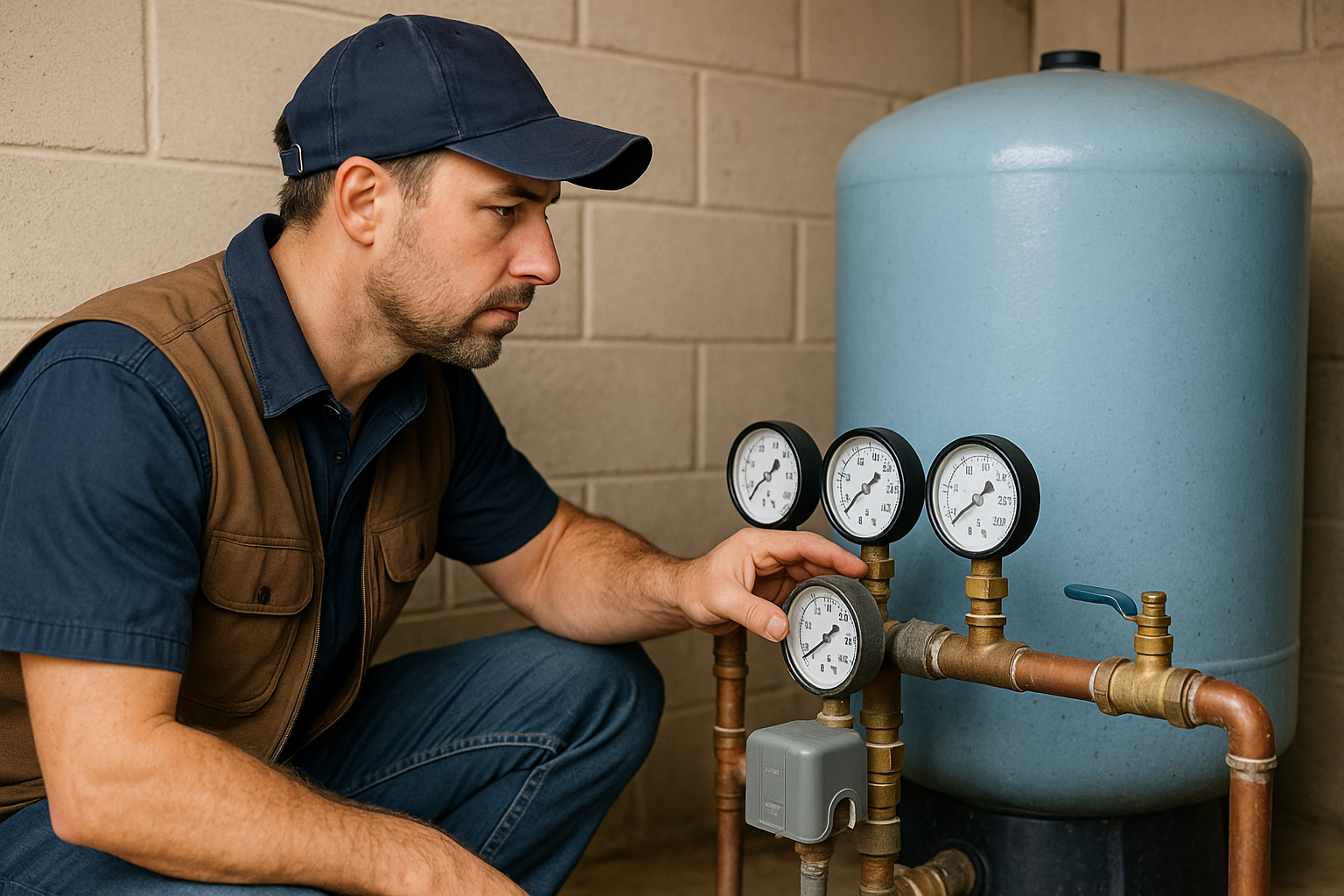
- Read the gauge. Healthy pressure cycles between roughly 40 and 60 PSI. A stuck-low or wildly bouncing needle is a strong clue.
- Tap the tank. Hollow on top, solid on the bottom is normal; full-sounding all the way up means a dead bladder.
- Listen for short-cycling. Rapid pump clicking points to a waterlogged tank or a failing switch.
If you cannot find an obvious freeze and pressure is still weak, it is time to bring in a professional who works at elevation.
When to Call a Professional
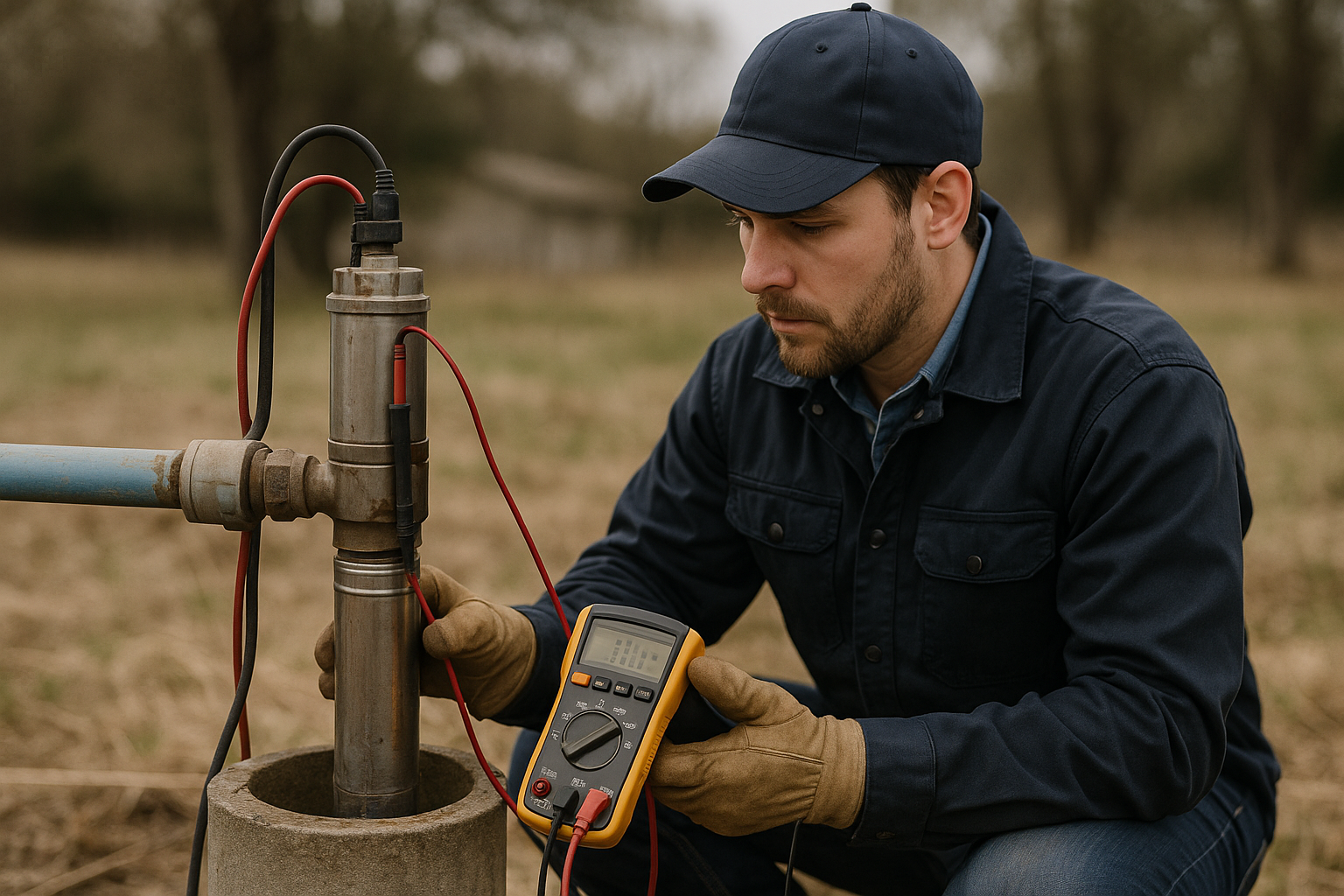
Call us right away if you have no water, suspect a frozen or burst line, hear the pump running nonstop, or see sediment in the water. Mountain well work demands the right equipment and a C-57 licensed contractor — pulling a pump from a 400-foot granite well, thawing and repairing a freeze break, or testing a low-yield fracture well is not a job to attempt on an icy slope. We come prepared for winter access and the realities of working at 7,000 feet.
What Repairs Cost at Green Valley Lake
We quote honestly and explain everything up front. Typical ranges:
- Pressure switch replacement: $150–$350
- Pressure tank replacement: $600–$1,500
- Submersible pump replacement: $2,500–$5,500
- Sediment filtration: $300–$900
- Iron / manganese filtration or softener: $1,500–$3,500
- Constant-pressure or booster system: $2,000–$4,500
- Hydrofracturing to boost a low-yield granite well: $3,000–$8,000
- New turnkey well: $18,000–$42,000
Every visit starts with a flat $125 diagnostic, credited toward any repair we complete. For low-yield granite wells, hydrofracturing — pumping water under pressure to widen existing fractures — is often the most cost-effective way to boost a marginal mountain well before considering a whole new borehole.
Protecting Your System Against the Cold
Much of what we do at Green Valley Lake is preventive. Heat tape on exposed lines, insulated well houses, a properly drained system for cabins left vacant in winter, and a pressure tank kept in conditioned space all dramatically cut the risk of a freeze-related failure. If you only use your cabin seasonally, we can show you how to winterize the water system so you do not return in spring to burst pipes and a ruined pump. A little planning at 7,200 feet saves a great deal of money and heartache, and we are always glad to walk you through the right approach for your specific cabin and elevation.
Serving Green Valley Lake and the San Bernardino Mountains
From our Ramona and Anza offices we reach Green Valley Lake and the surrounding mountain communities — Running Springs, Arrowbear Lake, Lake Arrowhead, and the ridgeline toward Big Bear. We plan mountain calls around weather and access, and we come equipped for snow, ice, and the freeze-related failures that define water service at this elevation. When a cabin loses water in winter, fast help can mean the difference between a simple thaw and a flooded basement.
Frequently Asked Questions
Why does my Green Valley Lake cabin lose pressure in winter?
At 7,200 feet, freezing is the most common cause. Water freezing in an exposed pipe, a pressure tank in an unheated space, or a snow-covered wellhead can stop flow entirely. The fix ranges from thawing and insulating to repairing a burst line, and we always check for hidden freeze damage before refilling the system.
My well was fine in spring but weak by fall — what happened?
Mountain wells here draw from rock fractures fed by snowmelt and seasonal recharge. After a dry winter the water table drops, and a well that produced well in spring can run low by late season. We test yield and recovery to confirm whether it is a seasonal dip or a deeper problem.
How deep are wells at Green Valley Lake?
Because they chase fractures in granite, many local wells are drilled 200 to 600 feet deep. Depth and the location of productive fractures drive pump sizing, so we review your well log whenever one is available.
Can a low-producing granite well be improved without drilling a new one?
Often, yes. Hydrofracturing injects water under high pressure to open and connect existing fractures, frequently increasing yield at a fraction of the cost of a new well. We will tell you honestly whether your well is a good candidate.
Do you really come up to Green Valley Lake?
Yes. The San Bernardino Mountains are part of our regular service area, and we plan around weather and road conditions. Call (760) 440-8520 or text (760) 219-5877 and we will schedule a visit.
What does diagnosis cost?
A flat $125, credited toward any repair we perform. You get a clear explanation and honest options before any work begins.
Get Your Water Pressure Back at Green Valley Lake
Licensed C-57 contractor, founded in 2020 of mountain well experience, CSLB #1086994 service.
Call (760) 440-8520