
Low Water Pressure Solutions in Guatay
Dealing with weak water pressure in Guatay? Low water pressure can make showers frustrating and appliances ineffective. Our team diagnoses the root cause and restores your water pressure fast.
📋 In This Guide
Need Low Water Pressure Solutions in Guatay?
We serve Guatay and all of San Diego County. Licensed C-57 contractor (CSLB #1086994), founded 2020.
Call: (760) 440-8520Our Low Water Pressure Solutions Services
- Pressure tank repair and replacement
- Pressure switch adjustment
- Pump upgrades for better pressure
- Constant pressure systems
- Booster pump installation
- Clogged pipe diagnosis
- Well yield testing
- Complete system evaluation
Why Guatay Chooses SCWS
✓ Local Expertise
We know San Diego County geology and wells
✓ Fast Response
Same-day service for Guatay
✓ Fair Pricing
Honest quotes, no surprises
✓ Quality Work
CSLB #1086994 · founded 2020
Our Locations
Related Articles
Continue learning about well maintenance and troubleshooting
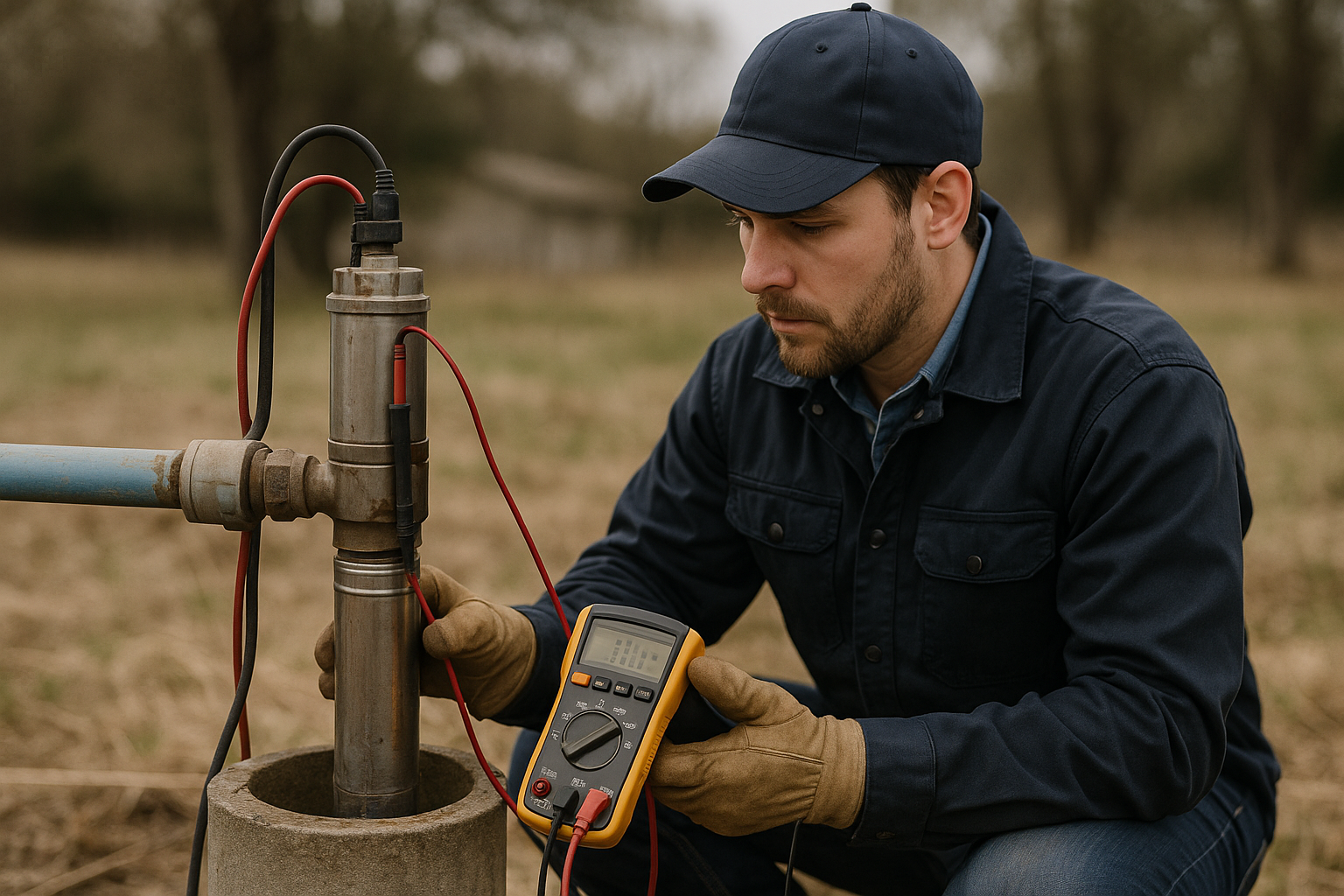
Low Water Pressure From Well: Complete Fix Guide
Diagnose and solve low pressure problems
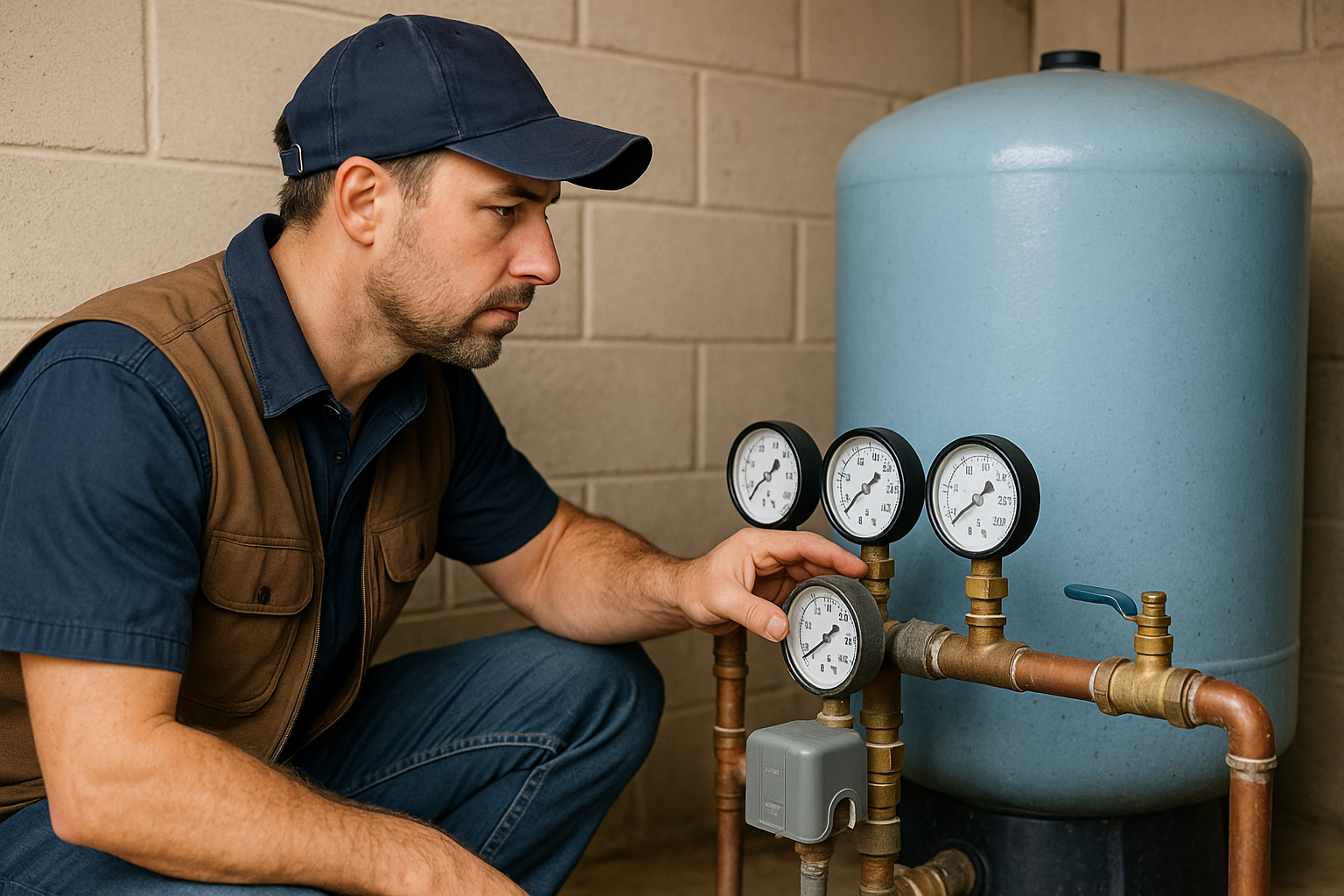
Well Pressure Switch: Settings, Adjustment & Replacement
Everything about pressure switches
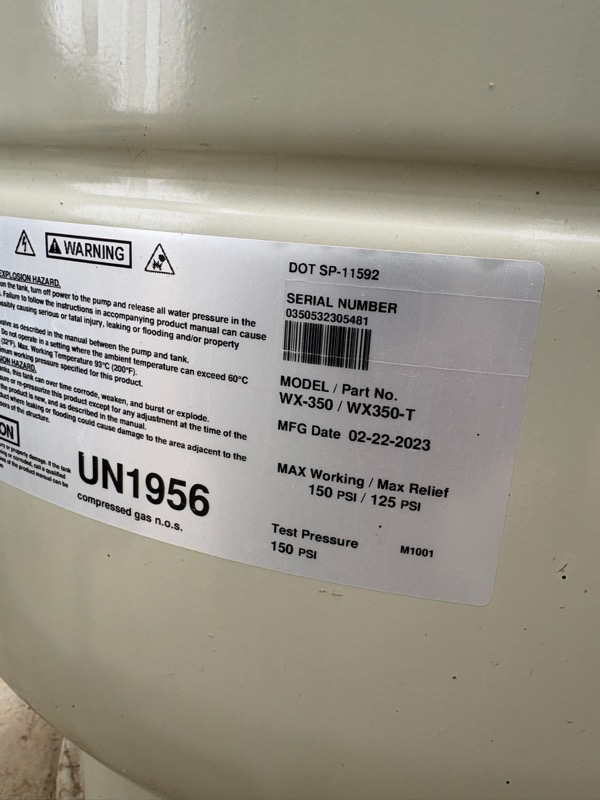
Pressure Tank Maintenance: Complete Guide
Keep your pressure tank working properly
Mountain Well Pressure Solutions for Guatay
Guatay is a small mountain community in the Cuyamaca range of southeastern San Diego County, sitting near 4,000 feet of elevation along old Highway 80 between Descanso and Pine Valley, inside the Mountain Empire. Homes here are scattered across forested slopes beneath Guatay Mountain and its rare Tecate cypress, and nearly all of them depend on private wells drilled into hard mountain rock. At this altitude and on this terrain, low water pressure has its own distinct fingerprint — and after work since 2020 the backcountry, Southern California Well Service knows it well.
Guatay's Geology and What It Means for Your Well
The Cuyamaca foothills around Guatay are built of decomposed granite over fractured crystalline bedrock. Water doesn't sit in a broad sandy aquifer here; it moves through fissures in the rock. That means yields vary dramatically from parcel to parcel, recharge depends heavily on winter rain and snowmelt, and dry years hit hard. Local wells typically run from about 100 to 400 feet to reach productive fractures. The granite also loads the water with calcium and magnesium, producing hard water that scales pumps and pipes, and Guatay's steep grades mean many homes sit well above their wellheads — every foot of rise costs pressure.
Why Pressure Drops in Guatay
- Pump wear from scale and grit: Submersibles in mountain wells fight both mineral scale and fine granite sediment, which steadily saps output.
- Pressure tank failure: A waterlogged tank short-cycles the pump and makes pressure surge and fade.
- Low fracture yield in drought: When the fissure network drains, a Guatay well can run short during evening peak use.
- Clogged pipes and screens: Decomposed-granite particles pack screens and inline filters; scale narrows the lines.
- Elevation lift: Pumping uphill on these slopes demands a correctly sized pump and often a booster.
- Power fluctuations: Remote mountain power can sag and damage pressure switches and motors.
Checks You Can Safely Make
- Read the tank gauge — a 40–60 PSI cycle is healthy; under 30 is a flag.
- Watch for rapid pump cycling, the classic sign of a tank problem.
- With power off and pressure drained, check the tank air charge (about 38 PSI); water at the valve means the bladder failed.
- Flush an outdoor tap to clear sediment and see if flow improves.
- Clean mineral-clogged aerators and showerheads, common on hard mountain water.
When to Bring in a Professional
Call us for no water, pressure below 20 PSI, a pump that runs without building pressure, grinding or humming at the wellhead, or any leak or sparking near the control box. At Guatay's elevation, cavitation from a low water level is a real risk during drought, and these symptoms need professional, licensed attention. We provide same-day emergency response to the Mountain Empire.
Solutions and Cost Ranges
We start with a diagnostic (the $125 fee is credited to your repair) and recommend the most economical fix that lasts:
- Pressure switch: $150–$350
- Pressure tank: $600–$1,500
- Submersible pump sized for depth and lift: $2,500–$5,500
- Sediment filtration: $300–$900
- Iron/manganese or softener: $1,500–$3,500
- Constant-pressure / booster for hillside homes: $2,000–$4,500
- Hydrofracturing for low-yield bedrock wells: $3,000–$8,000
- New turnkey well: $18,000–$42,000; decommissioning: $1,500–$5,000
Serving Guatay and the Mountain Empire
From Ramona and Anza we serve Guatay, Descanso, Pine Valley, Mount Laguna, and the surrounding backcountry. We are licensed C-57 well contractors with CSLB #1086994 across founded in 2020 of mountain and rural service — equipped for the steep access and deep wells these communities demand.
How Your Guatay Mountain Well System Works
Every Guatay well relies on a small chain of equipment. A submersible pump, set deep in the bedrock bore, lifts water from the fractures to the surface and into a pressure tank, which banks a reserve under compressed air so the pump does not run constantly. A pressure switch tells the pump when to start and stop, usually cycling between 40 and 60 PSI, while sediment filters trap the granite grit common in mountain groundwater. On Guatay's steep lots that water may then climb a considerable rise to reach the house, which is why pump sizing must account for both depth and lift. A weak pump, a flooded tank, a faulty switch, or clogged screens each shows up as low pressure — and at this elevation, an undersized pump struggling against the grade is a frequent culprit.
Maintenance for Reliable Mountain Pressure
Proactive care matters even more on remote mountain wells. Check the pressure tank's air charge a few times a year and keep it near 38 PSI for a 40/60 system. Flush an outdoor tap quarterly to clear decomposed-granite sediment, and change filters on schedule, since hard mountain water clogs them fast. Descale accessible pump and tank fittings annually. Through the dry season, watch for sputtering taps that hint at a falling fracture level, and cut back usage while you arrange a yield test. Because mountain power can be unstable, inspect the switch and wiring after storms or outages. An annual professional inspection keeps your Guatay system ahead of trouble — far better than a no-water call when the nearest help is a mountain drive away.
Low-Pressure Scenarios We See in Guatay
Mountain wells tend to fail in recognizable ways. The most common Guatay scenario is the dry-season fade: a home that runs fine through spring finds its pressure thinning by September as the fracture network drains. When a yield test confirms the well itself is the limit rather than the equipment, hydrofracturing to open new seams — or in stubborn cases a deeper bore — restores reliable output. A second pattern is the uphill-room complaint, where the kitchen at the wellhead level has good flow but the upstairs bath barely trickles. On Guatay's steep lots that is pure elevation loss, and a booster or constant-pressure system is the clean answer.
A third recurring call is the storm-related outage. Mountain power flickers and surges, and a pressure switch or pump motor that takes a hit can leave a household suddenly without water. Because Guatay sits a real drive from town, we encourage owners to treat any grinding, humming, or rapid cycling as an early warning rather than waiting for total failure. Catching a tired pump or a waterlogged tank during a routine visit is far less disruptive than an emergency repair in winter weather. Across all of these scenarios, our approach is the same: diagnose the true cause first, then recommend the most economical lasting fix — whether that is a simple switch swap, a new tank, a booster for the grade, or work on the well itself to lift a genuinely low yield.
Why Local Mountain Experience Makes the Difference in Guatay
Servicing wells at 4,000 feet in the Cuyamacas is not the same as working a flat valley lot, and that difference shows up in the results. The fractured granite beneath Guatay means yields can vary wildly within a single property, access roads are steep and narrow, and recharge depends almost entirely on what the winter delivers. A contractor unfamiliar with these conditions may oversize a pump that then cavitates against a low fracture level, or undersize one that cannot overcome the grade to a hillside home. since 2020 serving the Mountain Empire, Southern California Well Service has learned to read these wells — to match pump, tank, and lift to the specific bore, to anticipate the dry-season fade, and to plan for the long response distances that make reliability so important up here. That hard-won local knowledge is exactly what turns a frustrating, recurring pressure problem into a lasting fix, which is why so many Guatay and backcountry households call us first.
Frequently Asked Questions
Why does Guatay's elevation affect my water pressure?
At nearly 4,000 feet with steep lots, water often has to be pumped uphill from the wellhead to the house. Each foot of rise costs roughly 0.43 PSI, so without a correctly sized pump or a booster, upper rooms can run weak even when the well is healthy.
How deep should a well be in Guatay?
Most reach productive fractures somewhere between 100 and 400 feet. Because the rock is fractured rather than uniformly porous, the right depth and pump setting differ from one property to the next.
My well runs low every dry summer — can it be improved?
Often yes. If a yield test shows the fracture network is the limit, hydrofracturing can open new water-bearing seams and lift output, typically for $3,000–$8,000, frequently restoring reliable summer pressure.
Does the hard mountain water hurt my system?
Over time, yes. Calcium and magnesium scale builds on pump parts and inside pipes, slowly choking flow. A softener or treatment system protects the equipment and keeps pressure steady longer.
Can you reach Guatay quickly in an emergency?
Yes. We run same-day emergency service into the Mountain Empire. Call (760) 440-8520 or text (760) 219-5877 and we will dispatch a technician as soon as possible.
Is the diagnostic fee wasted if I go ahead with repairs?
No. The $125 diagnostic is credited toward the cost of any repair we perform, so the assessment effectively becomes part of the fix.
Restore Strong Pressure at Your Guatay Home
Mountain wells have their quirks, and we know them. Call Southern California Well Service at (760) 440-8520 or text (760) 219-5877 for a free estimate or same-day emergency help in Guatay.