
Low Water Pressure Solutions in Highgrove
Dealing with weak water pressure in Highgrove? Low water pressure can make showers frustrating and appliances ineffective. Our team diagnoses the root cause and restores your water pressure fast.
📋 In This Guide
Need Low Water Pressure Solutions in Highgrove?
We serve Highgrove and all of Riverside County. Licensed C-57 contractor (CSLB #1086994), founded 2020.
Call: (760) 440-8520Our Low Water Pressure Solutions Services
- Pressure tank repair and replacement
- Pressure switch adjustment
- Pump upgrades for better pressure
- Constant pressure systems
- Booster pump installation
- Clogged pipe diagnosis
- Well yield testing
- Complete system evaluation
Why Highgrove Chooses SCWS
✓ Local Expertise
We know Riverside County geology and wells
✓ Fast Response
Same-day service for Highgrove
✓ Fair Pricing
Honest quotes, no surprises
✓ Quality Work
CSLB #1086994 · founded 2020
Our Locations
Related Articles
Continue learning about well maintenance and troubleshooting
Low Water Pressure From Well: Complete Fix Guide
Diagnose and solve low pressure problems
Well Pressure Switch: Settings, Adjustment & Replacement
Everything about pressure switches
Pressure Tank Maintenance: Complete Guide
Keep your pressure tank working properly
Comprehensive Low Water Pressure Solutions for Highgrove Properties
Highgrove sits in the northwest corner of Riverside County, tucked between the city of Riverside, Grand Terrace, and the San Bernardino County line, with the Santa Ana River corridor and the Box Springs Mountains framing the community. It is a small, semi-rural pocket where older citrus-era parcels still rely on private wells even as municipal lines have crept outward from Riverside. For those Highgrove homeowners, a dependable water supply is not a convenience but a daily necessity, and few problems are as disruptive as low water pressure. When the shower trickles, the washing machine takes forever to fill, and the drip irrigation barely reaches the back of the lot, the cause almost always traces back to the well system. At Southern California Well Service (SCWS), we have, since 2020, diagnosing and correcting these issues across the Inland Empire, and we bring that experience directly to Highgrove.
How a Highgrove Well Water Pressure System Actually Works
Before you can fix low pressure, it helps to understand the four parts that create it. A private well system in Highgrove typically delivers water through a coordinated chain of components, and a fault in any one of them shows up at your faucet as weak flow.
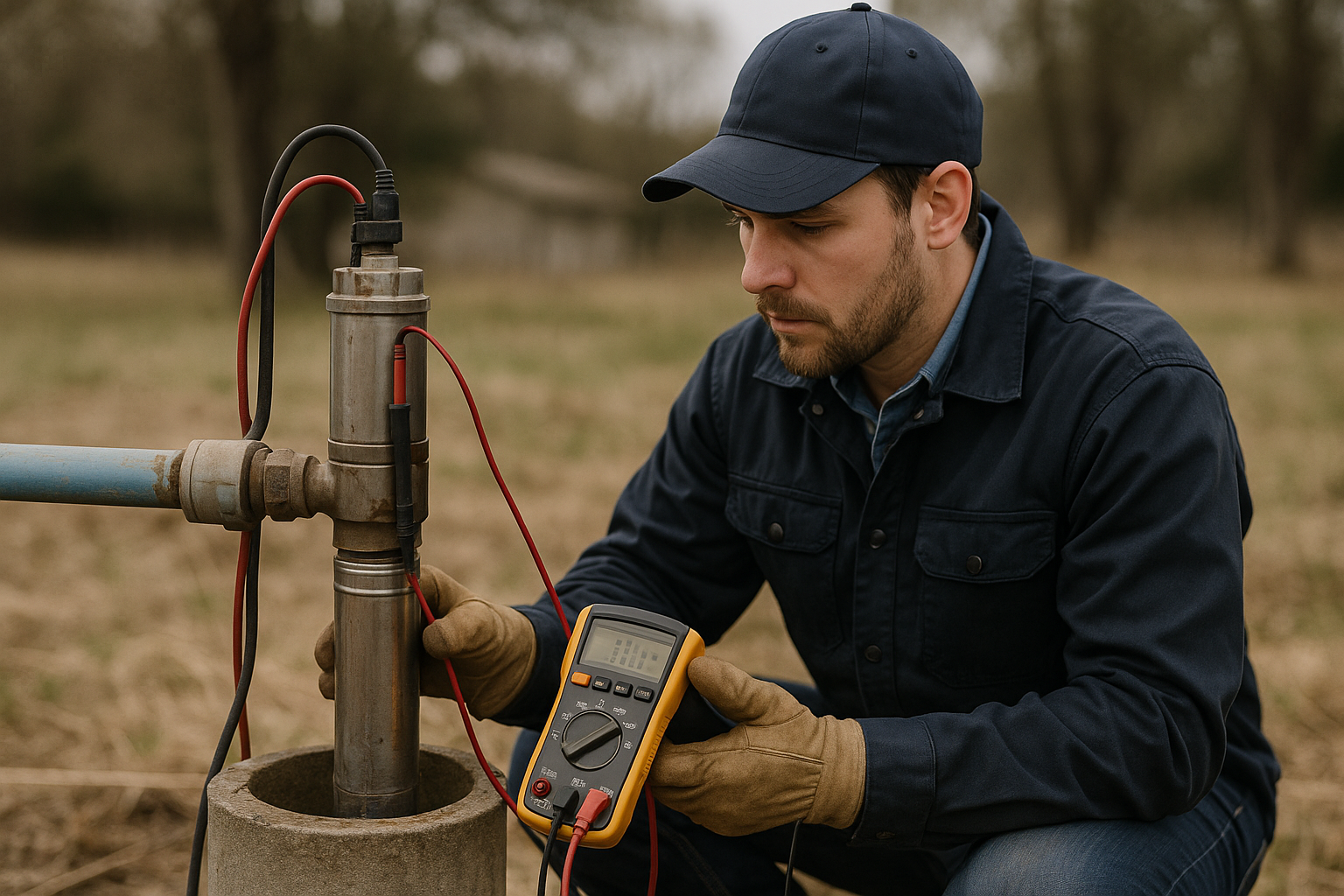
- The pump: Most Highgrove wells use a submersible pump set down in the casing, often 50 to 150 feet deep depending on the parcel and the depth to the Riverside groundwater basin. The pump is the muscle of the system; it lifts water from the aquifer and pushes it toward the house. A worn impeller, a failing motor, or a pump that was undersized for the home's demand will never build adequate pressure.
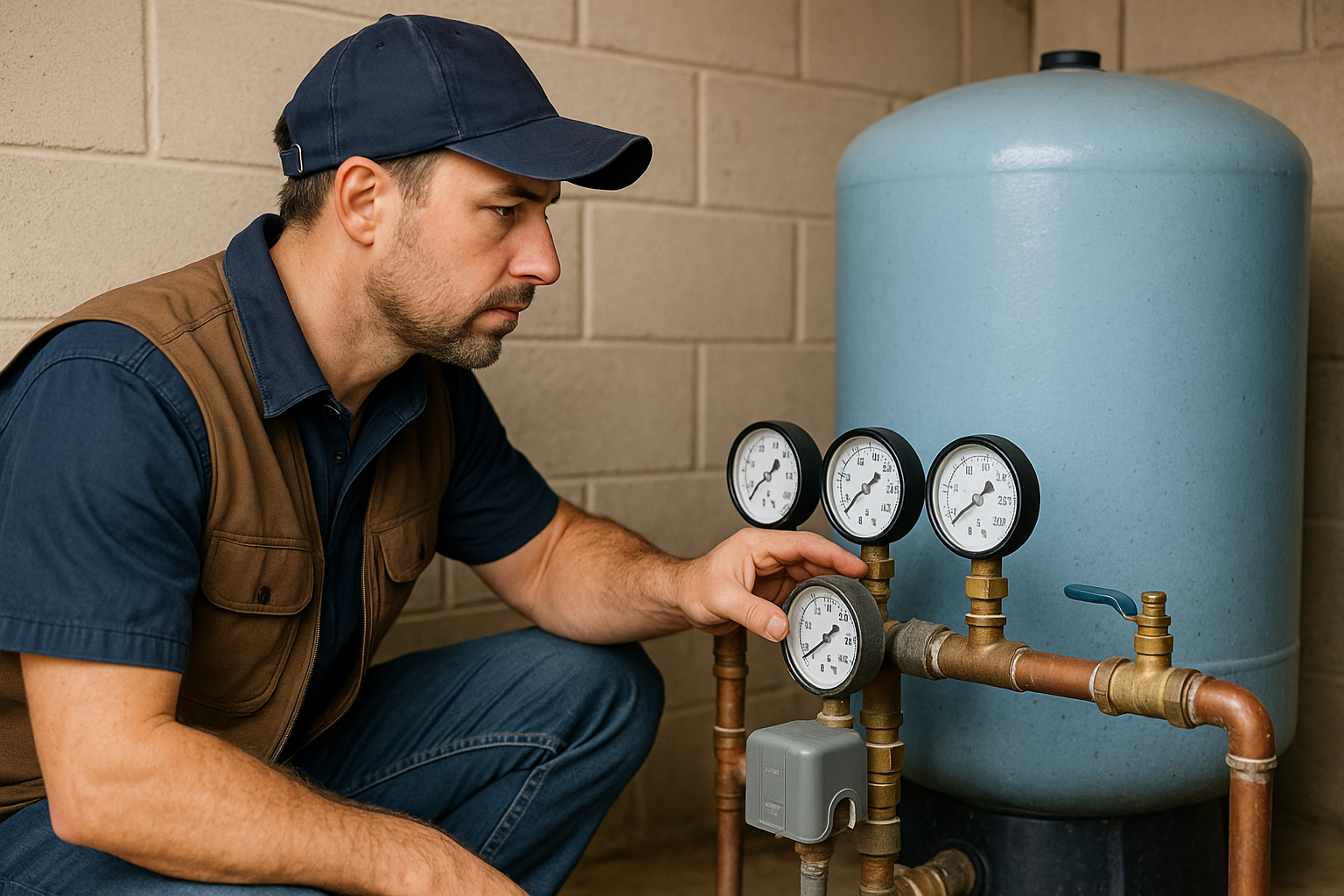
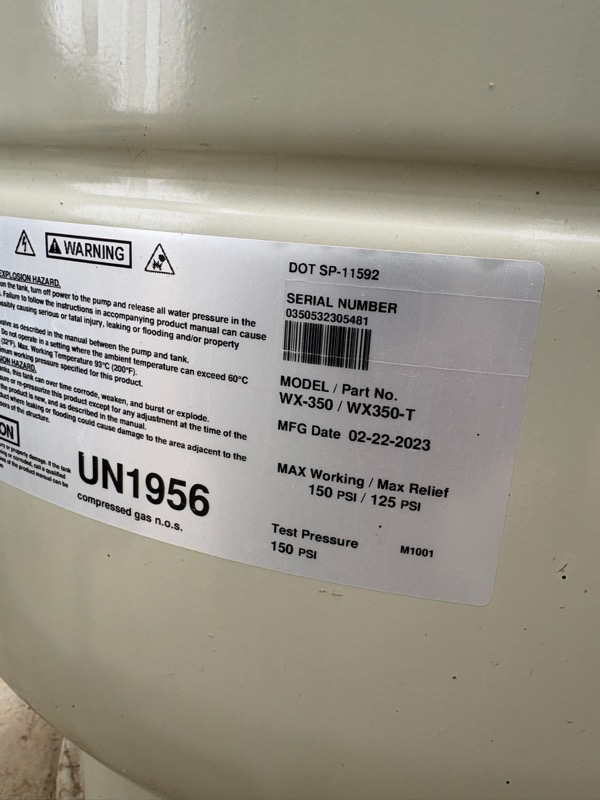
- The pressure tank: This steel tank holds a cushion of pressurized air above a rubber bladder. It stores water under pressure so the pump does not have to run every time you open a tap. When the bladder fails or the air charge bleeds off, you feel pressure that surges and collapses within seconds of turning on the water.
- The pressure switch: This small electrical device tells the pump when to turn on and off, usually at a 30/50 or 40/60 PSI range. If it is corroded, miscalibrated, or has burned contacts, the pump may cut out early and leave you with chronically low pressure.
- Constant-pressure (VFD) controls: Newer systems use a variable frequency drive that ramps the pump speed up and down to hold a steady pressure regardless of how many fixtures are running. These are an excellent upgrade for Highgrove homes that run irrigation and household demand at the same time.
Common Local Causes of Low Pressure in Highgrove
Highgrove's position in the Santa Ana River watershed gives its wells a distinct character. The alluvial soils of sand, silt, and gravel that the river deposited over millennia make for productive aquifers, but they also introduce specific failure modes we see again and again.
- Sediment from alluvial aquifers: The same river-deposited sand that recharges local wells can be drawn into the pump and clog impellers, screens, and downstream filters, steadily choking off flow.
- Hard-water scaling: Inland Empire groundwater is mineral-rich. Calcium and carbonate scale builds inside pipes, tanks, and pump components, narrowing the path water has to travel.
- Seasonal water-table swings: Recharge from the Santa Ana River and regional pumping for agriculture and urban use both rise and fall with the seasons, so a marginal well can drop in yield during a dry stretch.
- Aging infrastructure: Many Highgrove wells and the galvanized plumbing serving older homes were installed decades ago and were never sized for today's fixtures, multiple bathrooms, and landscape irrigation.
- Pressure tank waterlogging: A tank that has lost its air charge cycles the pump rapidly and delivers pulsing, inconsistent pressure.
What You Can Check Before Calling a Pro
A few simple checks can tell you whether you are facing a quick fix or a deeper problem. Always put safety first and never open electrical components on a live system.
- Read your pressure gauge. Most systems have a gauge near the pressure tank. Healthy household pressure is 40 to 60 PSI. If you watch the needle climb and the pump never reaches its cut-out point, the pump or well yield may be the issue.
- Check the pressure tank's air charge. With the pump off and the tank drained, the air valve on top should read about 2 PSI below the switch cut-in. A reading near zero points to a failed bladder.
- Look for a clogged sediment filter. A whole-house filter cartridge caked with Highgrove's fine river sediment can drop pressure dramatically. Replacing a $20 to $50 cartridge sometimes solves the whole problem.
- Test more than one fixture. If only one faucet is weak, the problem is local plumbing, not the well. If every fixture is weak, the well system is the culprit.
- Listen to the pump. Rapid clicking on and off, or a pump that runs constantly, is a sign of a tank or switch fault that warrants a service call.
When to Call a Professional
Some situations call for a licensed C-57 well contractor rather than a DIY fix. Call SCWS at (760) 440-8520 if you experience a sudden total loss of pressure, no water at all, repeated short-cycling that risks burning out the pump, visible rust or cracks on the pressure tank, scorched wiring at the wellhead, or low pressure paired with cloudy, gritty, or rusty water. These point to pump failure, tank rupture, aquifer stress, or sediment intrusion, all of which can cascade into expensive damage if ignored. We offer same-day emergency service to Highgrove because we know a household cannot wait days for water.
Realistic Cost Ranges for Highgrove Repairs
We give a clear written quote after diagnosis, and our $125 diagnostic fee is credited toward any repair we perform. The following ranges reflect typical 2026 pricing in the Highgrove area; your final cost depends on well depth, equipment, and access.
- Pressure switch replacement: $150 to $350
- Pressure tank replacement: $600 to $1,500
- Pump replacement: $2,500 to $5,500
- Sediment filtration: $300 to $900
- Iron, manganese, or water softener systems: $1,500 to $3,500
- Constant-pressure or booster system: $2,000 to $4,500
- Hydrofracturing to improve a low-yield well: $3,000 to $8,000
- New well, turnkey: $18,000 to $42,000
- Well abandonment or decommissioning: $1,500 to $5,000
Most Highgrove pressure problems resolve well under the cost of a new well, and financing is available for larger repairs.
Serving Highgrove and the Surrounding Communities
From our offices in Ramona and Anza, SCWS reaches Highgrove and the neighboring communities of Grand Terrace, Loma Linda, east Riverside, Pedley, and Rubidoux quickly. Crews familiar with the Santa Ana River basin and the wells around Spring Mountain Ranch and the Center Street and Iowa Avenue corridors arrive ready to diagnose your specific system rather than guess at a generic fix. Whether you own a single-family home on an older citrus parcel or a small ranch on the edge of the river bottom, we tailor the solution to your well.
Frequently Asked Questions About Low Water Pressure in Highgrove
Why does my Highgrove well lose pressure during the summer?
Summer combines two stresses: higher household and irrigation demand, and a seasonal dip in the water table as recharge from the Santa Ana River slows. A marginal well that copes in winter can fall short in July. We test your well's yield in gallons per minute to determine whether the issue is demand-related or a true supply problem.
How can I tell if it is my pump or my pressure tank?
If pressure surges strong then collapses within seconds and the pump clicks on and off rapidly, the tank's bladder or air charge is usually the culprit. If pressure is uniformly weak and the pump runs and runs without building to its cut-out point, the pump or the well yield is more likely at fault. A professional pressure and flow test confirms which one it is.
Is the hard water in Highgrove really affecting my pressure?
Yes. Inland Empire groundwater carries significant calcium and carbonate, and over years that scale narrows pipes and coats pump and tank components. Descaling, sediment filtration, or a softener can restore lost flow and extend the life of your equipment.
How quickly can SCWS respond to a no-water emergency in Highgrove?
We offer same-day emergency service to Highgrove whenever possible. A complete loss of water usually means a failed pump, a tripped breaker, or a major leak, and we prioritize getting your system back online the same day you call.
Should I repair my old well or drill a new one?
Repair is almost always the first option. Pump, tank, switch, and filtration fixes resolve the large majority of Highgrove pressure complaints. A new well only makes sense when the existing well has collapsed, run dry, or become uneconomical to maintain, and we will tell you honestly which path makes sense for your property.
Do you charge for an estimate?
Our diagnostic visit is $125, and that amount is credited toward any repair we complete, so the diagnosis effectively becomes free when you move forward with the work.
Call SCWS for Reliable Water Pressure in Highgrove
Do not let weak water pressure disrupt your home another day. As a licensed C-57 contractor with CSLB #1086994 and since 2020 of experience in Riverside County wells, SCWS has the tools and knowledge to restore your pressure and keep it there. Call (760) 440-8520 or text (760) 219-5877 for a fast diagnosis and same-day emergency service in Highgrove.