
Low Water Pressure Solutions in La Presa
Dealing with weak water pressure in La Presa? Low water pressure can make showers frustrating and appliances ineffective. Our team diagnoses the root cause and restores your water pressure fast.
📋 In This Guide
Need Low Water Pressure Solutions in La Presa?
We serve La Presa and all of San Diego County. Licensed C-57 contractor (CSLB #1086994), founded 2020.
Call: (760) 440-8520Our Low Water Pressure Solutions Services
- Pressure tank repair and replacement
- Pressure switch adjustment
- Pump upgrades for better pressure
- Constant pressure systems
- Booster pump installation
- Clogged pipe diagnosis
- Well yield testing
- Complete system evaluation
Why La Presa Chooses SCWS
✓ Local Expertise
We know San Diego County geology and wells
✓ Fast Response
Same-day service for La Presa
✓ Fair Pricing
Honest quotes, no surprises
✓ Quality Work
CSLB #1086994 · founded 2020
Our Locations
Related Articles
Continue learning about well maintenance and troubleshooting

Low Water Pressure Solutions for La Presa Properties
A weak shower, a slow-filling washing machine, or sprinklers that no longer cover the yard are frustrating in any home, but for La Presa residents on a private well they usually signal that one part of the well system needs attention. The encouraging news is that the great majority of pressure problems are straightforward to diagnose and repair, and dealing with them early almost always costs less than waiting for a complete failure. As a licensed C-57 well contractor serving East County since 2020, we know how La Presa wells behave and how to bring them back to full pressure.
La Presa is an unincorporated community in southern San Diego County, sitting just east of Spring Valley and wrapping around the hills near the Sweetwater Reservoir. The terrain here is classic East County granite — hilly, with weathered crystalline rock that stores water in fractures rather than broad aquifers. That, combined with the area's notably hard groundwater, gives La Presa wells a personality all their own and is exactly why local experience matters when pressure starts to fade.
How Water Pressure Is Actually Created
Pressure is the product of several components working in concert, not the well by itself. A typical La Presa system includes:
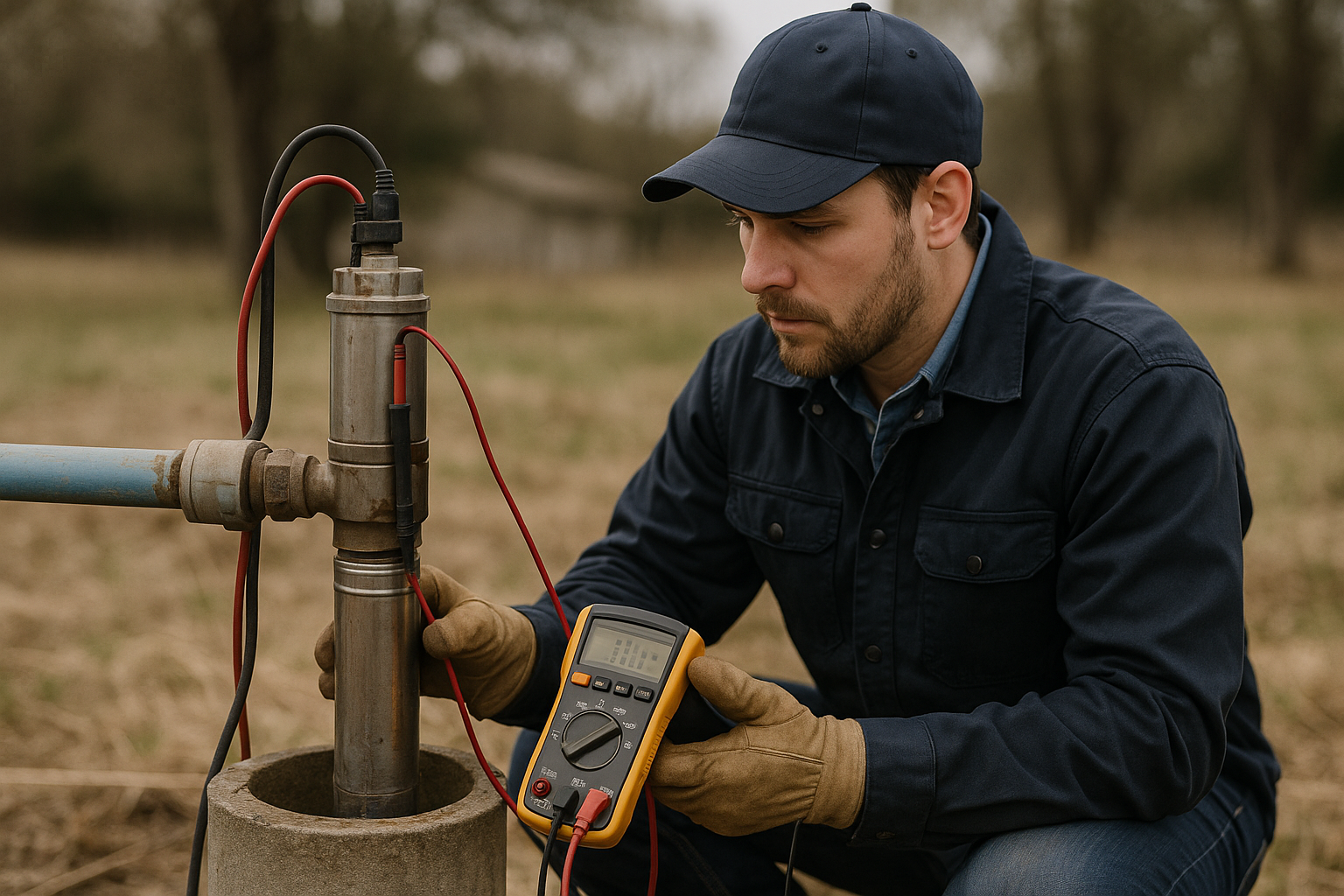
- A submersible pump set in the casing to lift water to the surface. Wells in the La Presa hills commonly run 200 to 400 feet deep.
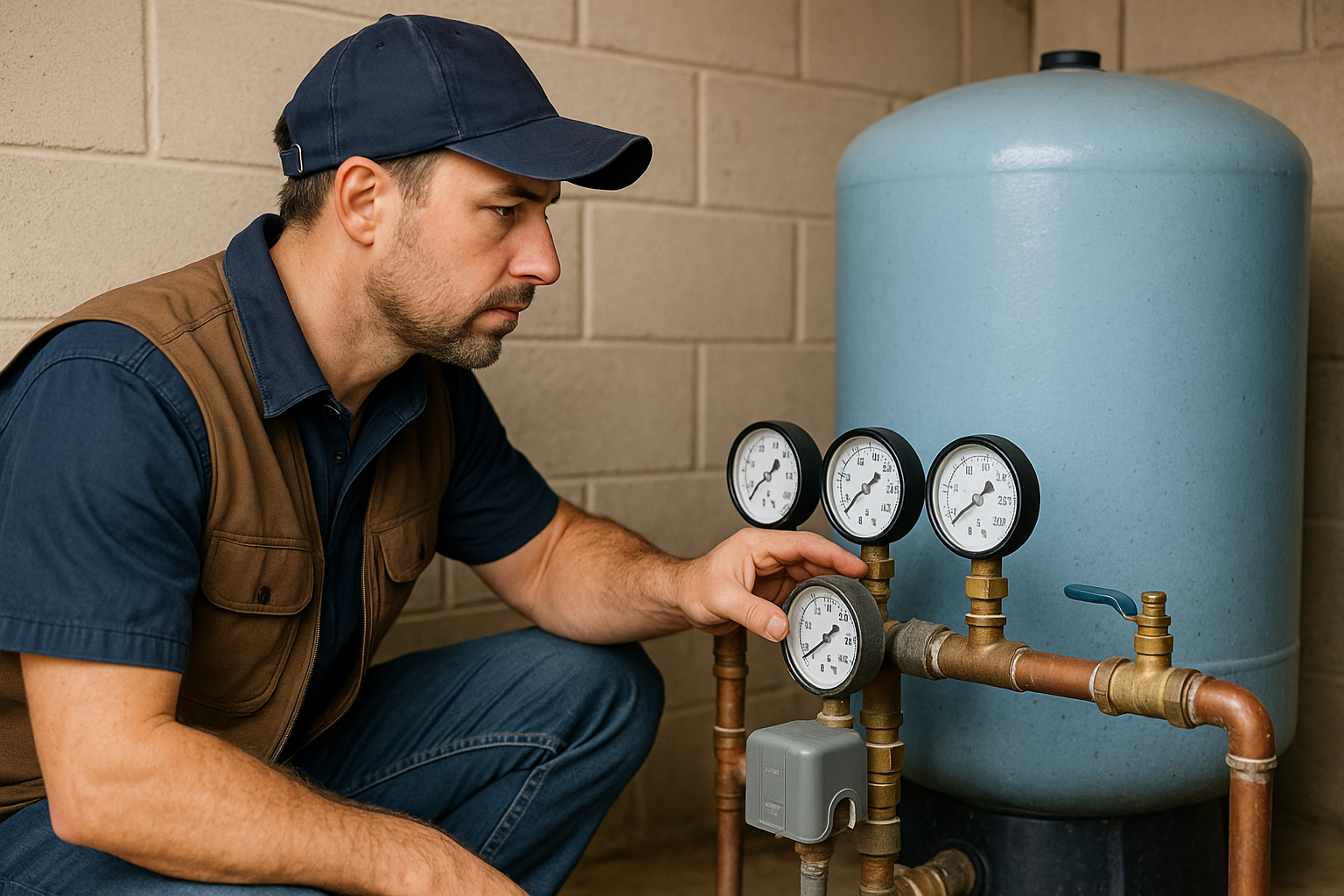
- A pressure tank whose air-filled bladder stores water under pressure so the pump need not run for every tap.
- A pressure switch that turns the pump on and off at preset points, usually 40 PSI on and 60 PSI off.
- Filtration and softening equipment to manage the mineral content typical of granite groundwater near the reservoir.
- The piping and wiring that connect the system to the home.
Whenever one of these drifts out of spec, the symptom at the tap is the same: weak or inconsistent flow. Identifying the failing link is the whole job.
Why La Presa Wells Lose Pressure
- Hard water and scale. Water drawn from the granite around the Sweetwater drainage carries high calcium and magnesium. The scale it leaves behind steadily narrows pipes, clogs filters, and fouls pump parts.
- Fracture-fed wells with modest yield. Because many La Presa wells produce from cracks in the bedrock, they refill at a limited rate. Overdrawing a low-yield well makes pressure droop during heavy use.
- Seasonal water-table swings. The hills near the reservoir see real changes in groundwater level between wet and dry years, and a low table can leave a pump drawing air.
- Older galvanized plumbing. Established La Presa homes often still have galvanized steel pipe that rusts and scales internally, shrinking the effective diameter and killing pressure even when the well is healthy.
- Rural power fluctuations. Outlying parts of the community can see voltage swings that wear out switches and capacitors over time.
The Most Common Causes We Find
1. A Waterlogged Pressure Tank
By a wide margin, this is the most frequent cause we see in La Presa. When the tank loses its air cushion, the pump begins short-cycling — flicking on and off rapidly — and pressure drops the instant the pump stops. Left unchecked, the cycling will burn out an otherwise sound pump. The fix is a properly sized replacement tank with the air pre-charge set 2 PSI below cut-in (38 PSI for a 40/60 system).
2. A Failing or Misadjusted Pressure Switch
The pressure switch governs the whole system, and its sensing port clogs easily with La Presa's fine mineral sediment. Contacts wear, and settings drift. Many homes here still run a soft 30/50 setting; stepping up to 40/60, with the tank pre-charge adjusted to match, often noticeably improves shower and appliance performance.
3. Clogged Filters or a Scaled Well Screen
A neglected sediment filter can throttle the entire house. Local water carries enough fine material that cartridges often need changing every few months. Deeper in the well, mineral and iron scale on the intake screen restricts how much water can enter the casing — a problem solved by well rehabilitation, not a filter swap.
4. A Worn or Undersized Pump
Submersible pumps last about 10 to 15 years, less in hard water. As impellers wear, output and pressure fall. A pump that runs constantly but still delivers weak pressure usually means wear, a dropping table, or a leak. Most La Presa homes are well served by a 3/4 to 1.5 HP submersible.
5. A Low Water Table or Over-Pumped Well
In dry years the level can fall below the pump's ideal depth, producing air bursts at the tap and pressure that fades during extended use. Lowering the pump, adjusting setpoints, or rehabilitating the well are the typical remedies, guided by the well's true yield.
6. Hidden Leaks and Pipe Scale
A concealed leak between well and house, or scaled-up galvanized pipe inside the walls, quietly steals pressure. A gauge test — closing every fixture and watching for a slow drop — confirms a leak before any excavation.
What You Can Safely Check First
Safety first: switch off power to the well pump at the breaker before inspecting or adjusting any electrical or pressure component. Water and electricity together are dangerous.
- Listen to the pump. Rapid cycling points to the tank; constant running with weak pressure points to the pump, a leak, or a low table.
- Read the gauge. A healthy system holds a steady band such as 40 to 60 PSI.
- Single fixture or whole house? Low pressure at one faucet is usually a clogged aerator, not the well. Low pressure everywhere is systemic.
- Inspect the filter. Replace a clogged cartridge with the correct micron rating and see if pressure recovers.
- Tap the tank. With power off and the tank drained, a tank that sounds solid throughout is waterlogged.
- Watch for leaks. Close everything and watch the gauge for a slow drop.
When to Call a Professional
Call us if the pump will not run, runs constantly with little pressure, keeps short-cycling after a tank check, spits air, or if you suspect the well is running low. These point to pump failure, a clogged screen, a falling water table, or electrical faults — all of which need proper diagnostic tools and a licensed well technician.
What Pressure Repairs Typically Cost in La Presa
- Pressure switch replacement — $150 to $350 including parts and labor
- Pressure tank replacement — $600 to $1,500 depending on tank size
- Submersible pump replacement — $2,500 to $5,500 depending on depth and horsepower
- Whole-house sediment filtration — $300 to $900 installed
- Water softener for hard water — $1,500 to $3,500 installed
- Constant-pressure or booster system — $2,000 to $4,500 for hillside lots needing steady pressure
- Diagnostic service call — $125, credited toward the repair if you proceed
Every job starts with a clear written estimate — no surprises and no upselling.
Serving La Presa and Neighboring Communities
We provide well pressure diagnosis and repair throughout La Presa and the surrounding communities of Spring Valley, Casa de Oro, Mount Helix, Rancho San Diego, Lemon Grove, Bonita, and the Sweetwater Reservoir area. With offices in Ramona and Anza, our trucks carry pumps, tanks, switches, and pressure components for same-day repairs whenever possible.
Frequently Asked Questions
Why does my La Presa well pressure drop in late summer?
Late summer pairs peak household and irrigation demand with a seasonally lower water table in the hills near the Sweetwater Reservoir. On a modest-yield fractured-rock well, heavy use can outpace how fast the well refills, so pressure sags. Lowering the pump, adjusting setpoints, or adding a constant-pressure controller usually fixes it.
How deep are wells in La Presa?
Residential wells around La Presa typically run 200 to 400 feet, reflecting the hilly granite terrain east of Spring Valley. We confirm your well's depth before recommending a pump, since depth determines the right horsepower and setting.
What pressure setting is best for a La Presa home?
A 40/60 PSI setting suits most homes, with the pressure tank pre-charged to 38 PSI, which is 2 PSI below cut-in. Homes still running an older 30/50 setting often feel underpowered and benefit from an upgrade once the tank charge is matched.
Could a clogged filter be causing my low pressure?
Very possibly. La Presa's mineral-rich water loads sediment filters quickly, and a clogged whole-house cartridge can throttle flow to the entire home. Replacing it with the correct micron rating is one of the first things we check.
Why is my pump turning on and off so quickly?
Rapid on-off cycling almost always means the pressure tank has lost its air charge or its bladder has failed. Short-cycling can destroy a pump if ignored, so it should be addressed promptly with a tank check and, if needed, replacement.
Do you offer emergency service in La Presa?
Yes. We prioritize no-water emergencies in La Presa and aim for same-day response during business hours, with trucks stocked for immediate repairs. Call (760) 440-8520 or text (760) 219-5877.
Restore Your Water Pressure Today
If your La Presa well is not delivering the pressure it should, we will find out exactly why and fix it right the first time. Call (760) 440-8520, text (760) 219-5877, or request a free estimate online. Honest diagnosis, fair pricing, and reliable water are what we deliver to East County well owners every day.