
Low Water Pressure Solutions in Lake Hodges
Dealing with weak water pressure in Lake Hodges? Low water pressure can make showers frustrating and appliances ineffective. Our team diagnoses the root cause and restores your water pressure fast.
📋 In This Guide
Need Low Water Pressure Solutions in Lake Hodges?
We serve Lake Hodges and all of San Diego County. Licensed C-57 contractor (CSLB #1086994), founded 2020.
Call: (760) 440-8520Our Low Water Pressure Solutions Services
- Pressure tank repair and replacement
- Pressure switch adjustment
- Pump upgrades for better pressure
- Constant pressure systems
- Booster pump installation
- Clogged pipe diagnosis
- Well yield testing
- Complete system evaluation
Why Lake Hodges Chooses SCWS
✓ Local Expertise
We know San Diego County geology and wells
✓ Fast Response
Same-day service for Lake Hodges
✓ Fair Pricing
Honest quotes, no surprises
✓ Quality Work
CSLB #1086994 · founded 2020
Our Locations
Related Articles
Continue learning about well maintenance and troubleshooting
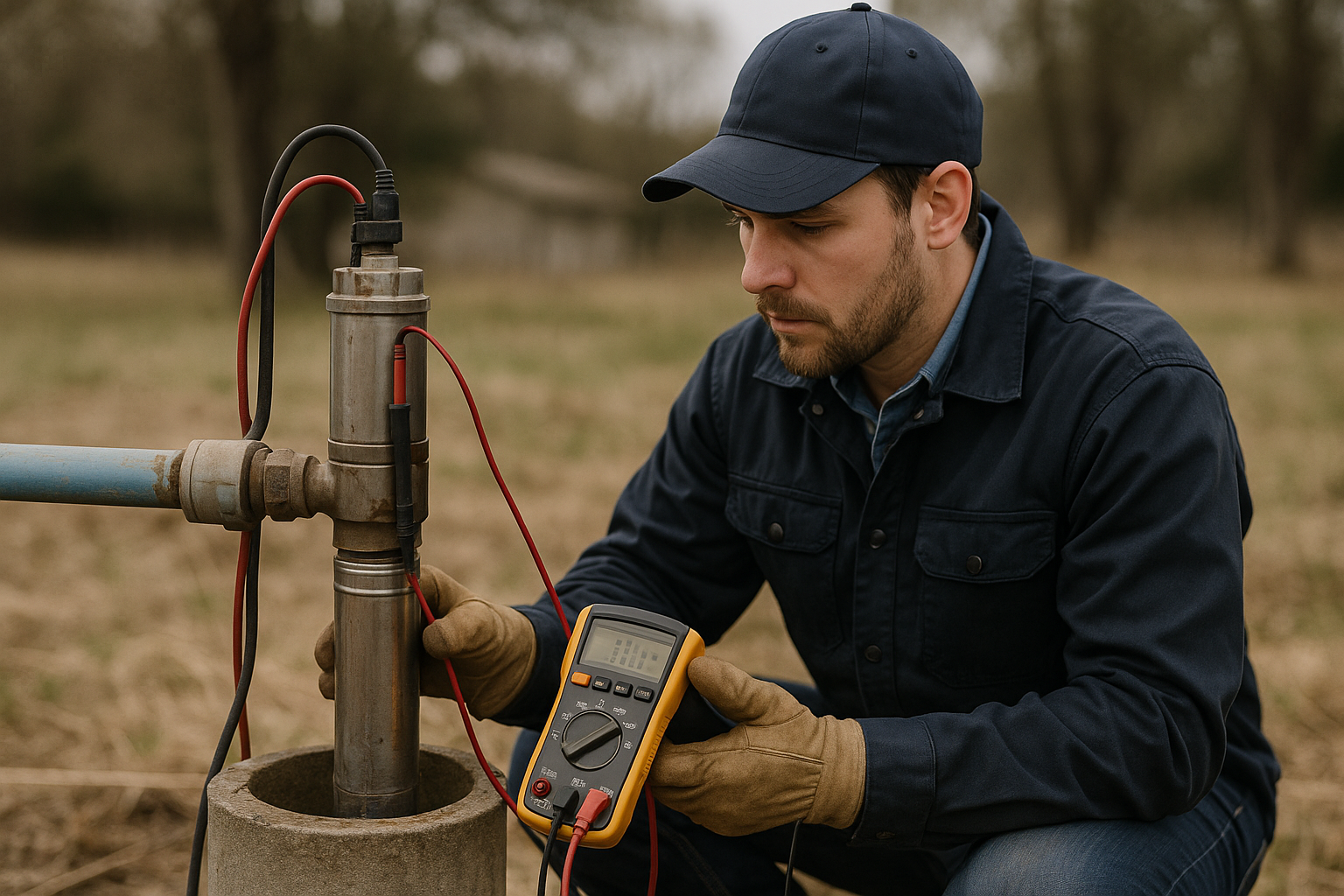
Low Water Pressure From Well: Complete Fix Guide
Diagnose and solve low pressure problems
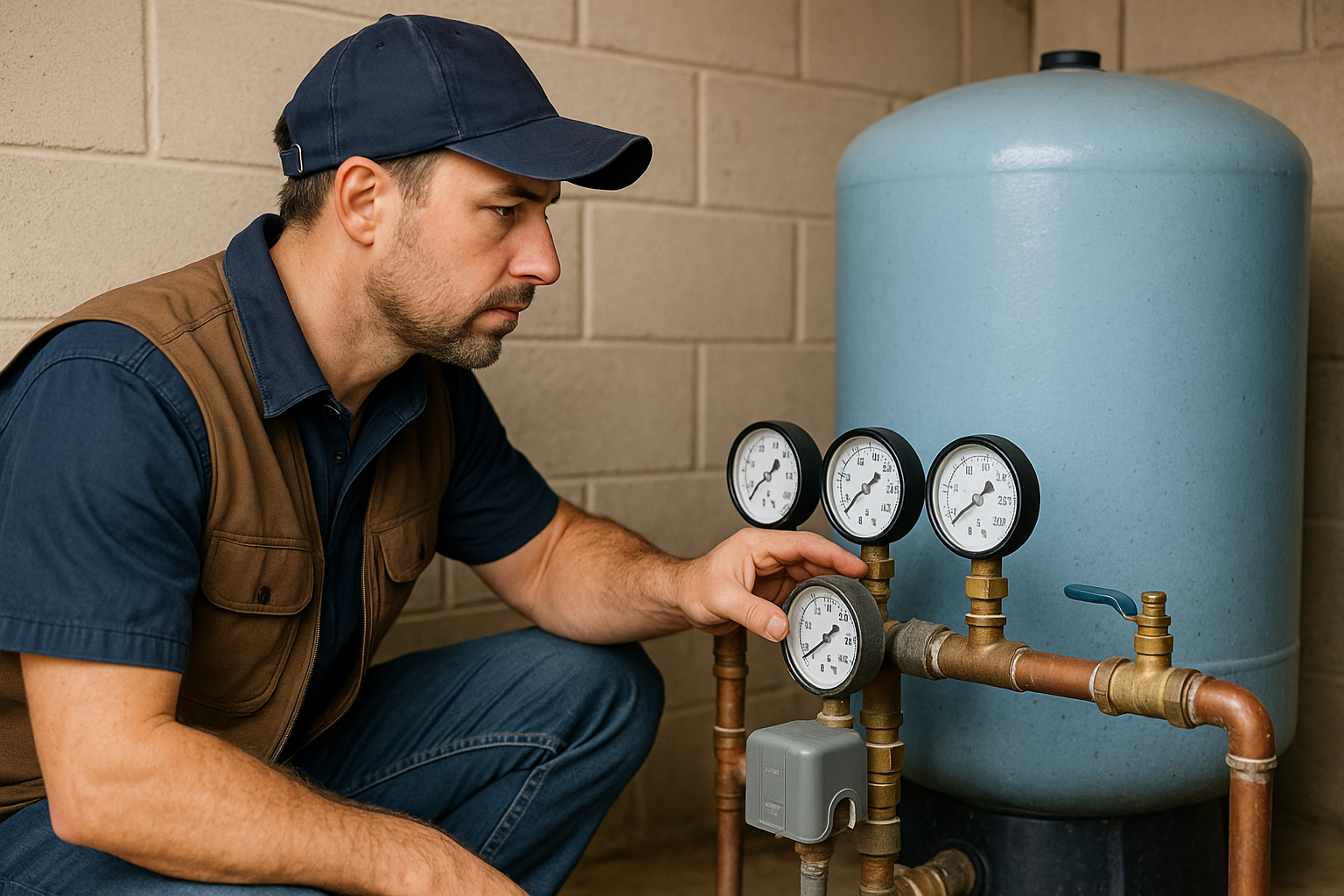
Well Pressure Switch: Settings, Adjustment & Replacement
Everything about pressure switches
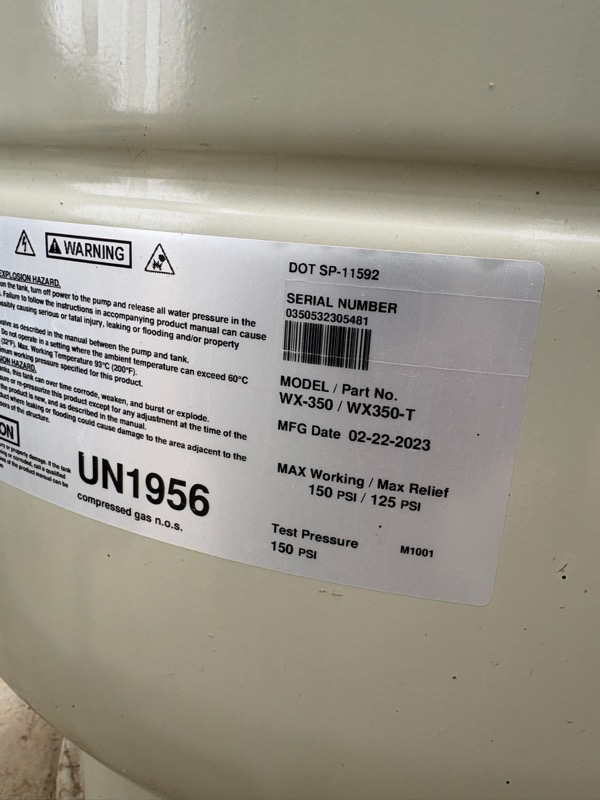
Pressure Tank Maintenance: Complete Guide
Keep your pressure tank working properly
Restoring Strong Well Water Pressure Around Lake Hodges
Lake Hodges sits in northern San Diego County, cradled in the San Dieguito River valley between Escondido and Rancho Santa Fe and just north of Rancho Bernardo. If you draw your water from a private well in this stretch of chaparral foothills, near Del Dios or out toward 4S Ranch, your daily life depends on a system that has to cope with hard water, a semi-arid climate, and the granitic and metamorphic bedrock that defines the watershed. Low pressure here rarely has a single, obvious cause. More often it is the slow result of mineral scaling, a struggling pump, or a well drawing from a fracture network that thins out during the region's long dry stretches. Southern California Well Service is a licensed C-57 well contractor founded in 2020, with 60+ years of family heritage we focus on finding the true source of the problem rather than guessing.
How a Well Water Pressure System Works
Understanding the moving parts makes it far easier to know where your pressure is being lost. A typical Lake Hodges well system relies on four key components working in concert.
- The well pump: In most San Dieguito valley wells, a submersible pump is set deep in the casing and pushes water up toward the home. The pump must overcome both the depth of the water and any rise in elevation on hillside lots. When it wears out or scales over, weak pressure is usually the first symptom you notice.
- The pressure tank: The tank holds a reserve of pressurized water using an internal bladder and a charge of compressed air, so the pump is not forced to start every time you turn on a tap. When the bladder fails or the air charge bleeds off, the tank can no longer hold pressure and your taps surge or sputter.
- The pressure switch: This switch monitors system pressure and signals the pump to cut in and cut out, typically across a 40-60 PSI band. A miscalibrated or corroded switch can shut the pump down early, capping your pressure below where it should be.
- Constant-pressure systems: A constant-pressure setup uses a variable-speed drive to keep output steady as demand rises and falls. For larger Lake Hodges properties or homes set up on the valley's slopes, this technology smooths out the pressure swings that a conventional on-off system cannot.
Common Local Causes of Low Pressure Near Lake Hodges
Years of well work across San Diego County's foothills have shown us the patterns specific to the Lake Hodges area:
- Hard-water mineral scaling: Water moving through granitic and metamorphic rock here is typically high in calcium and magnesium. That hardness builds scale inside pumps, pipes, and tanks, narrowing flow paths and steadily eroding pressure year after year.
- Low yield in a semi-arid climate: The San Dieguito watershed sees long dry seasons and recurring drought. When recharge slows, fracture-fed wells can draw down faster than they refill, and pressure falls off, especially late in summer and fall.
- Corroded galvanized pipe: Older ranches and homesteads around Del Dios and Escondido's rural edges often still run galvanized steel pipe that rusts and constricts internally, choking flow even when the well and pump are sound.
- Pump wear and improper sizing: A pump that was undersized for the lift, or one worn down by abrasive sediment and scale, simply cannot maintain the pressure a modern household expects.
- Elevation on chaparral hillsides: Homes set higher on the foothills above Lake Hodges lose pressure to gravity. Without a properly sized pump or a booster, upper-floor and far-end fixtures feel weak.
What You Can Check Yourself First
A handful of simple, safe checks can help you understand the problem before our technician arrives:
- Test several fixtures. If only one is weak, the issue is likely a clogged aerator or fixture, not the well system itself.
- Read the pressure gauge at the tank. Healthy systems cycle within roughly 40-60 PSI; a gauge stuck low points toward the pump, switch, or tank.
- Watch the pump cycle. Frequent, rapid on-off cycling commonly signals a waterlogged tank or a lost air charge.
- With the system depressurized, check the tank's air charge using a tire gauge. It should read about 2 PSI under the pump cut-in pressure.
- Inspect visible piping and the well head for leaks or damp ground, which can quietly steal pressure.
- Confirm the pump breaker has not tripped, particularly after a power flicker common in semi-rural areas.
When to Call a Professional
Certain symptoms call for trained help and the right equipment rather than further do-it-yourself attempts. Reach out to Southern California Well Service if your taps run dry or barely trickle, if pressure keeps fading through a dry season, if the pump short-cycles and risks burning out, if you hear grinding or cavitation noises that suggest low water in the well, if you find leaks or wet spots near the well head or tank, or if basic adjustments have not restored normal flow. Pulling a submersible pump or diagnosing a low-yield well is not a safe weekend project, and getting it wrong can be costly.
Realistic Cost Ranges in Lake Hodges
Costs vary with each property, but the following 2026 ranges give Lake Hodges homeowners a grounded idea of what to expect. We start with a diagnostic visit of about $125, which is credited toward your repair when you proceed with us.
- Pressure switch replacement: $150-$350
- Pressure tank replacement: $600-$1,500
- Pump replacement: $2,500-$5,500
- Sediment filtration: $300-$900
- Iron/manganese filter or water softener: $1,500-$3,500
- Constant-pressure or booster system: $2,000-$4,500
- New well, turnkey: $18,000-$42,000
- Hydrofracturing to improve low yield: $3,000-$8,000
- Well abandonment/decommissioning: $1,500-$5,000
You always receive a clear, written estimate before any work begins, and we favor cost-effective repairs over unnecessary replacement whenever the system allows it.
Serving Lake Hodges and the Surrounding North County Communities
We regularly serve Lake Hodges, Escondido, Rancho Bernardo, Del Dios, Rancho Santa Fe, and 4S Ranch throughout northern San Diego County. Our two offices keep us close to the work: the Ramona office at 1077 Main St, Ramona, CA 92065 and the Anza office at 57174 CA-371 (US Hwy 79), Anza, CA 92539. Same-day emergency service is available when you have no water, because in a semi-rural area a sudden well failure cannot wait. As a C-57 licensed contractor, we bring well-specific knowledge that general plumbing outfits simply do not carry.
Frequently Asked Questions About Low Water Pressure in Lake Hodges
Why is my Lake Hodges water so hard, and does it hurt my pressure?
The granitic and metamorphic rock of the San Dieguito watershed leaves local groundwater high in calcium and magnesium. Over time that hardness scales up pumps, pipes, and tanks, narrowing flow paths and reducing pressure. A softener or filtration system protects your equipment and helps maintain flow.
Could the drought be why my well pressure dropped?
It often is. The semi-arid climate around Lake Hodges brings long dry seasons, and fracture-fed wells can draw down faster than they recharge during droughts. A yield test shows whether the well is keeping up with your household demand or needs rehabilitation.
Does being near the reservoir help my well?
Sometimes. Wells closer to Lake Hodges may benefit from nearby surface-water influence and shallower groundwater, while properties uphill toward the chaparral foothills often tap drier, less productive fractures. We assess your specific location rather than assuming.
My home is up a hill near Del Dios. Why is pressure weak upstairs?
Elevation works against you. Water pushed up a foothill lot loses pressure to gravity, so far and upper fixtures suffer first. A properly sized pump or a booster/constant-pressure system restores even pressure throughout the house.
How quickly can you get to a Lake Hodges property?
We dispatch from our Ramona and Anza offices and offer same-day emergency service for no-water calls across Escondido, Rancho Bernardo, and the wider North County area. We prioritize emergencies so you are not left without water.
Is replacing old galvanized pipe really worth it?
If your home still has galvanized steel pipe that has corroded internally, it is likely a major drag on your pressure. Replacing the worst sections with PEX or copper, or cleaning scaled lines, frequently restores flow that no pump adjustment alone can recover.
Ready to fix low water pressure at your Lake Hodges property? Call Southern California Well Service at (760) 440-8520 or text (760) 219-5877 for same-day service. Licensed C-57, founded 2020.