
Low Water Pressure Solutions in Lake Riverside
Dealing with weak water pressure in Lake Riverside? Low water pressure can make showers frustrating and appliances ineffective. Our team diagnoses the root cause and restores your water pressure fast.
📋 In This Guide
Need Low Water Pressure Solutions in Lake Riverside?
We serve Lake Riverside and all of Riverside County. Licensed C-57 contractor (CSLB #1086994), founded 2020.
Call: (760) 440-8520Our Low Water Pressure Solutions Services
- Pressure tank repair and replacement
- Pressure switch adjustment
- Pump upgrades for better pressure
- Constant pressure systems
- Booster pump installation
- Clogged pipe diagnosis
- Well yield testing
- Complete system evaluation
Why Lake Riverside Chooses SCWS
✓ Local Expertise
We know Riverside County geology and wells
✓ Fast Response
Same-day service for Lake Riverside
✓ Fair Pricing
Honest quotes, no surprises
✓ Quality Work
CSLB #1086994 · founded 2020
Our Locations
Related Articles
Continue learning about well maintenance and troubleshooting
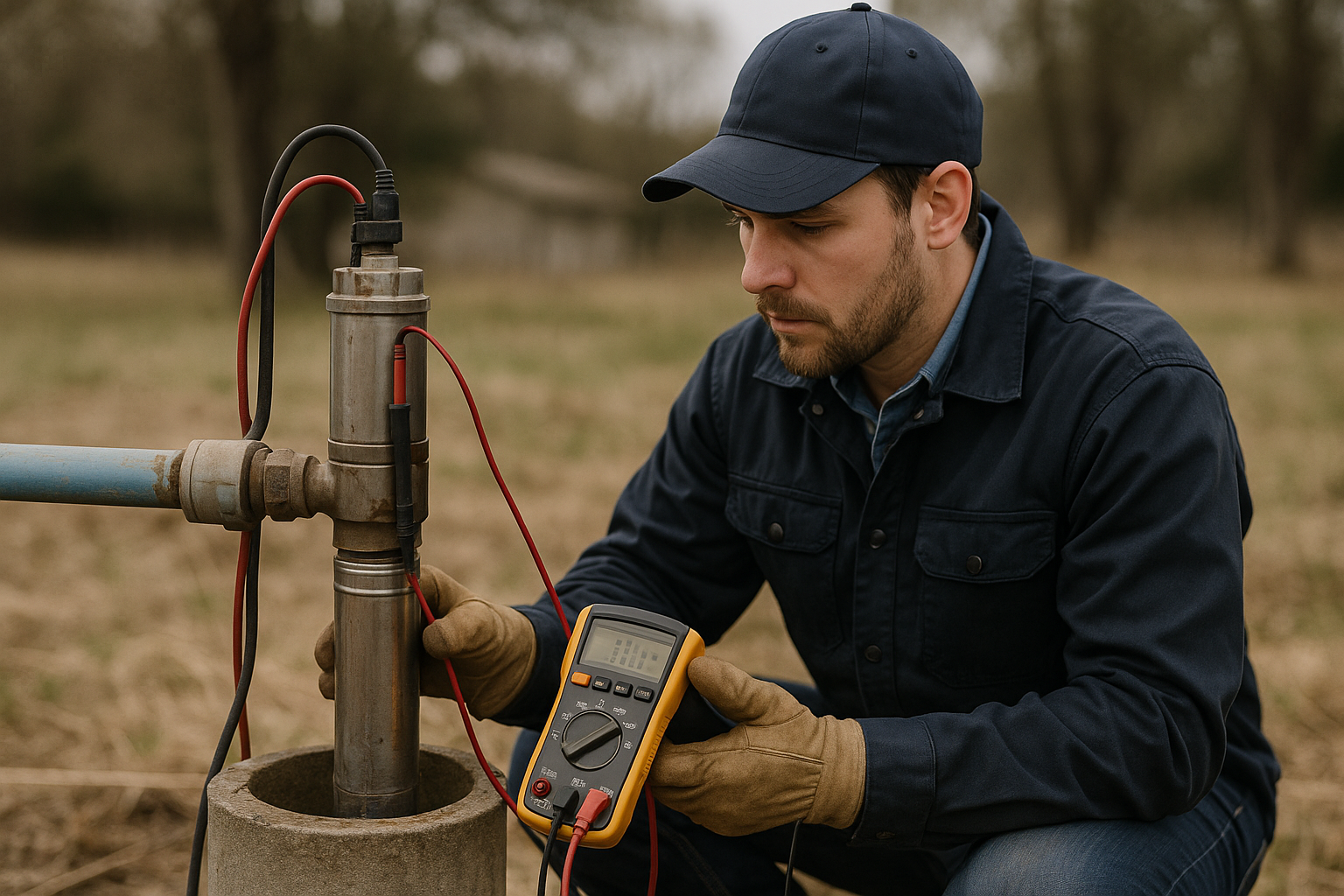
Low Water Pressure From Well: Complete Fix Guide
Diagnose and solve low pressure problems
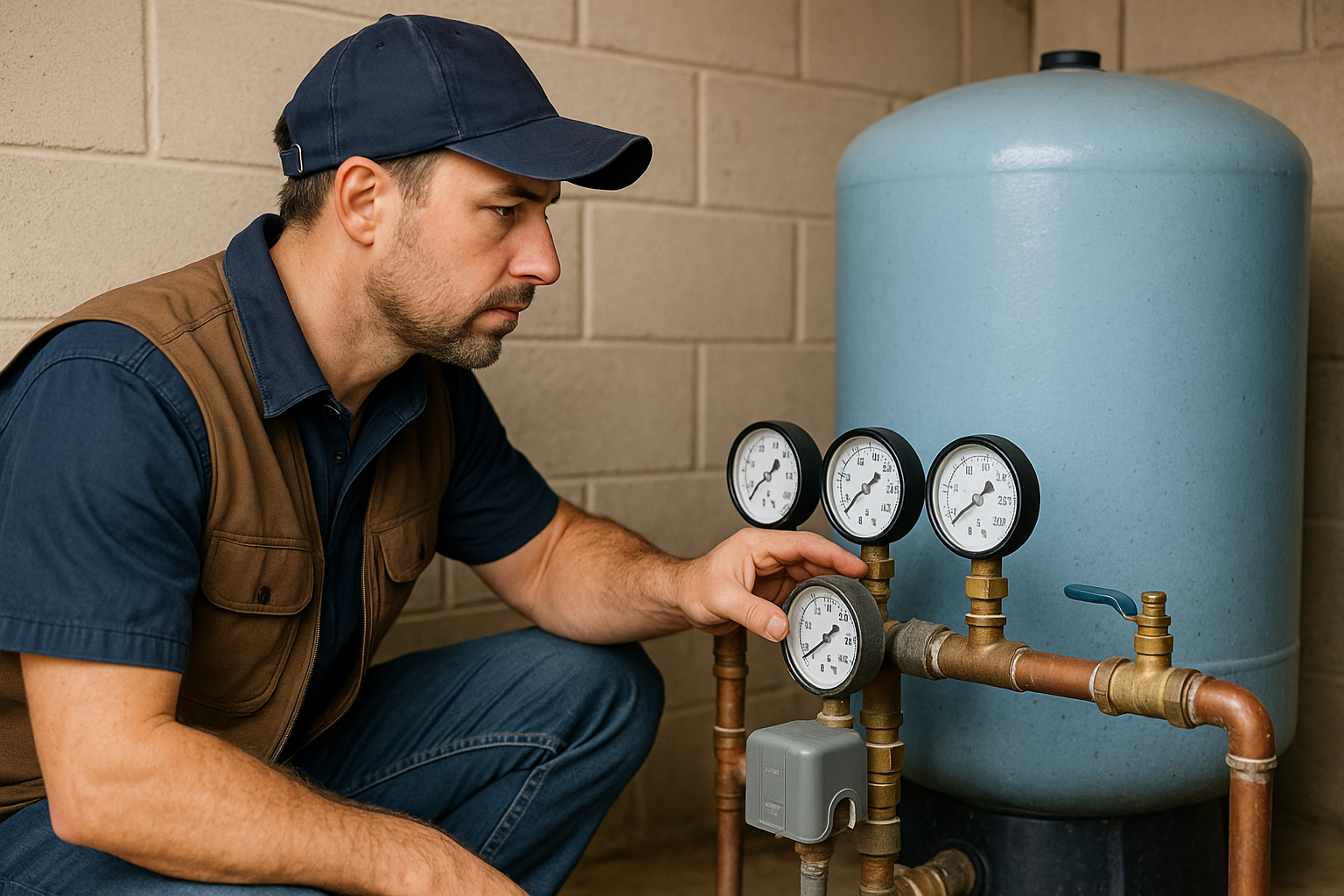
Well Pressure Switch: Settings, Adjustment & Replacement
Everything about pressure switches
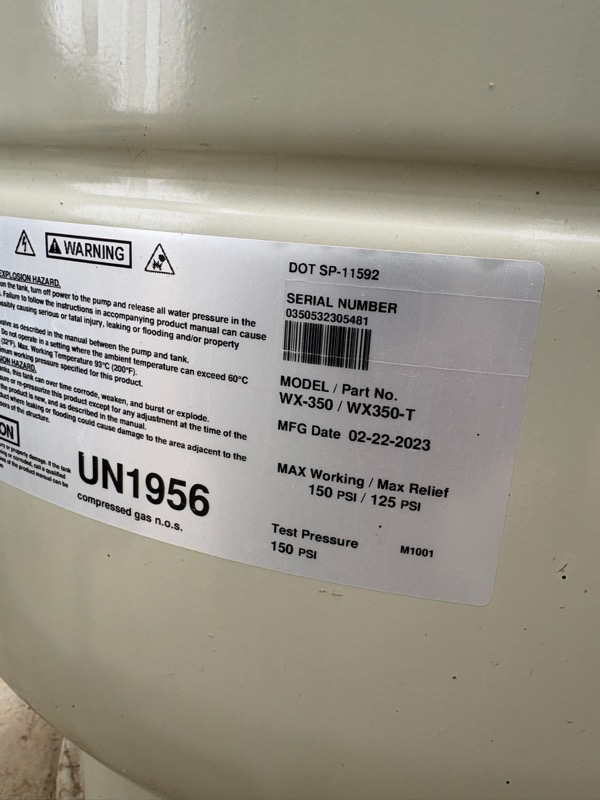
Pressure Tank Maintenance: Complete Guide
Keep your pressure tank working properly
Solving Low Water Pressure at Lake Riverside Estates and the Aguanga Backcountry
For a property owner at Lake Riverside Estates, water pressure is not a convenience you take for granted. This private, gated rural community sits in the high country of southern Riverside County near Aguanga, just southeast of Anza, built around a private 55-acre lake with equestrian parcels, a private airstrip and large lots that run almost entirely on individual private wells. At an elevation above 3,000 feet in a high-desert mountain valley, the land is shaped by decomposed granite and fractured bedrock, with hot dry summers, cold nights and seasonal recharge that the local geology doles out grudgingly. Those conditions make low pressure a recurring story here. The good news is that our Anza office is just minutes away, so Southern California Well Service, a C-57 licensed contractor founded in 2020, with 60+ years of family heritage, can respond fast across Lake Riverside, Aguanga, Anza, Sage and Radec.
How a Well Water Pressure System Works
Your water system has four parts that work in concert, and knowing them helps you describe a problem accurately. The pump, most often a submersible unit hung deep in the borehole on these high-elevation wells, lifts water and drives it toward the house. It delivers that water into a pressure tank, a vessel holding compressed air over a bladder; the air cushion is what keeps your taps flowing steadily between pump runs. A pressure switch senses tank pressure and cycles the pump on at a low point and off at a high one, classically 40/60 PSI. Larger parcels and irrigation-heavy or equestrian properties often step up to a constant-pressure system, where a variable-speed drive continuously adjusts pump speed so pressure stays flat whether you are running a single shower or filling stock troughs. Pressure complaints almost always trace back to one of these four components slipping out of tune.
Common Local Causes of Low Pressure in the Lake Riverside Area
The geology and climate above Aguanga create a distinct set of pressure problems we see again and again:
- Low-yield fractured-rock wells: Water in this decomposed-granite country lives in narrow seams. Deep wells around Lake Riverside and Sage are frequently low-yield, and during the dry season the well may not recover fast enough to keep the pump supplied.
- Seasonal water-table drop: With recharge concentrated in a short wet window, the static water level can fall sharply through a hot summer, pulling the available column below the pump intake and starving pressure.
- High vertical lift: Deep wells at 3,000-plus feet demand powerful pumps, and an undersized or aging unit simply cannot maintain pressure up to a hilltop home or a distant barn.
- Hard-water and mineral scaling: Mineral-rich groundwater scales impellers, pipes and tanks, quietly eroding output over the years.
- Pressure tank failure: A tank that has lost its air charge short-cycles the pump and makes pressure surge and sag, a common and inexpensive repair.
- Power fluctuations: Rural service along SR-371 and SR-79 can deliver voltage swings that keep a pump from running at full capacity until the electrical side is sorted out.
What to Check Yourself First
Before you call, a handful of safe checks help narrow things down:
- See whether every fixture is weak or just one. A single slow faucet usually means a clogged aerator, not a well problem.
- Read the pressure gauge at the tank and note the on and off points. A range far from 40/60 PSI points to a switch or tank fault.
- Rap on the pressure tank. A waterlogged thud all the way up the side suggests a lost air charge.
- Inspect the pressure switch and breaker for scorching, insects or corrosion, which are common in exposed rural equipment.
- Listen for short-cycling, the pump snapping on and off rapidly. If you hear it, shut the system off and call us before the motor burns out.
When to Call a Professional
Certain signs call for immediate help: no water at all, an overnight pressure collapse, a pump that runs without ever building pressure, or grinding and hammering noises from the equipment. Sandy or cloudy water, leaks at the wellhead or tank, and any electrical odor around the controls also mean it is time to stop and call. Pulling a submersible pump from a deep Aguanga-area well and accurately testing yield and recovery take specialized rigs and real experience, and at this elevation a wrong guess gets costly. Because our Anza office is so close, professional help is rarely far off when a DIY check does not bring pressure back.
Realistic Cost Ranges in Lake Riverside
Final pricing depends on your well depth, equipment and the underlying cause, but these ranges reflect typical work in the Lake Riverside and Aguanga area:
- Pressure switch replacement: $150 to $350
- Pressure tank replacement: $600 to $1,500
- Pump replacement: $2,500 to $5,500
- Sediment filtration: $300 to $900
- Iron/manganese filter or water softener: $1,500 to $3,500
- Constant-pressure or booster system: $2,000 to $4,500
- New well, turnkey: $18,000 to $42,000
- Hydrofracturing to improve a low-yield well: $3,000 to $8,000
- Well abandonment or decommissioning: $1,500 to $5,000
Our diagnostic visit is $125 and is credited toward any repair you approve, so the evaluation that finds the problem also offsets the cost of the fix.
Serving Lake Riverside and the Surrounding Area
Southern California Well Service covers Lake Riverside Estates and the wider Aguanga backcountry, including Anza, Sage, Radec and the rural corridors along SR-371 and SR-79, with Temecula to the west also within our reach. We operate two offices, Ramona at 1077 Main St, Ramona, CA 92065 and Anza at 57174 CA-371 (US Hwy 79), Anza, CA 92539, and that Anza location sits just minutes from Lake Riverside, which means genuinely fast local response. Same-day emergency service is available when you have no water, and every job carries our C-57 license, founded in 2020 of Riverside County well experience.
Frequently Asked Questions About Low Water Pressure in Lake Riverside
How quickly can you reach my Lake Riverside Estates property from the Anza office?
Very quickly. Our Anza office at 57174 CA-371 (US Hwy 79) is only minutes from Lake Riverside Estates by way of SR-371 and SR-79, so we routinely offer same-day service to Aguanga and Anza well owners. When you have no water or a sudden pressure drop, call (760) 440-8520 or text (760) 219-5877 and we will get a technician out fast.
Why does my well lose pressure during the summer in Aguanga?
At roughly 3,000 feet in this high-desert mountain valley, summers are hot and dry and the seasonal recharge that feeds fractured-rock wells slows to a trickle. As the water table drops, a low-yield well may fall below the pump's intake by late afternoon, weakening pressure. We assess yield and recovery to determine whether the fix is a deeper setting, storage, or hydrofracturing.
My Lake Riverside parcel is on a certified private well. Do you service those?
Yes. Lake Riverside Estates is almost entirely individual private wells, many of them certified, and we work on them routinely. Whether it is a routine pressure repair, a pump pull, water treatment or supporting a certification, our C-57 licensed crew handles the full system, not just the plumbing past the tank.
What water pressure is normal, and when should I worry?
A healthy home runs 40 to 60 PSI, usually on a 40/60 pump and switch setting. Out here on large rural parcels with equestrian set-ups and long supply runs, pressure that reads below 30 PSI or surges and sags while a faucet runs signals a pump, switch or tank problem worth checking before it worsens.
Is hydrofracturing worth it for a low-yield well near Anza?
It often is. The decomposed granite and fractured bedrock around Aguanga and Sage store water in tight seams, and deep wells here can be chronically low-yield. Hydrofracturing uses high-pressure water to open new fractures and connect existing ones, frequently boosting output. At 3,000 to 8,000 dollars it is far cheaper than a new well and worth evaluating before any drilling decision.
How much will it cost to fix my low water pressure?
It depends on the cause. A pressure switch is 150 to 350 dollars, a pressure tank 600 to 1,500 dollars, and a pump replacement 2,500 to 5,500 dollars, which can run higher for the deep wells common at this elevation. Sediment filtration is 300 to 900 dollars, an iron, manganese or softener system 1,500 to 3,500 dollars, and a constant-pressure or booster system 2,000 to 4,500 dollars. Our diagnostic visit is 125 dollars, credited toward any repair you approve.
Ready to fix low water pressure at your Lake Riverside property? Call Southern California Well Service at (760) 440-8520 or text (760) 219-5877 for same-day service. Licensed C-57, founded 2020.