
Low Water Pressure Solutions in North Shore
Dealing with weak water pressure in North Shore? Low water pressure can make showers frustrating and appliances ineffective. Our team diagnoses the root cause and restores your water pressure fast.
📋 In This Guide
Need Low Water Pressure Solutions in North Shore?
We serve North Shore and all of Riverside County. Licensed C-57 contractor (CSLB #1086994), founded 2020.
Call: (760) 440-8520Our Low Water Pressure Solutions Services
- Pressure tank repair and replacement
- Pressure switch adjustment
- Pump upgrades for better pressure
- Constant pressure systems
- Booster pump installation
- Clogged pipe diagnosis
- Well yield testing
- Complete system evaluation
Why North Shore Chooses SCWS
✓ Local Expertise
We know Riverside County geology and wells
✓ Fast Response
Same-day service for North Shore
✓ Fair Pricing
Honest quotes, no surprises
✓ Quality Work
CSLB #1086994 · founded 2020
Our Locations
Related Articles
Continue learning about well maintenance and troubleshooting
Low Water Pressure From Well: Complete Fix Guide
Diagnose and solve low pressure problems
Well Pressure Switch: Settings, Adjustment & Replacement
Everything about pressure switches
Pressure Tank Maintenance: Complete Guide
Keep your pressure tank working properly
Low Water Pressure Solutions for North Shore Wells on the Salton Sea
North Shore sits on the northeastern edge of the Salton Sea in eastern Riverside County, a remote desert community where a reliable private well is not a convenience but a lifeline. When pressure fades here, the heat, the distance from town, and the area's mineral-heavy groundwater all stack the odds against an easy fix. That is exactly the environment Southern California Well Service was built for. With founded in 2020 working Riverside County's desert wells and, we diagnose low-pressure problems that other contractors will not drive out to see. Call (760) 440-8520 or text (760) 219-5877 for fast, expert help.
The Parts of Your Pressure System and Why Each One Matters
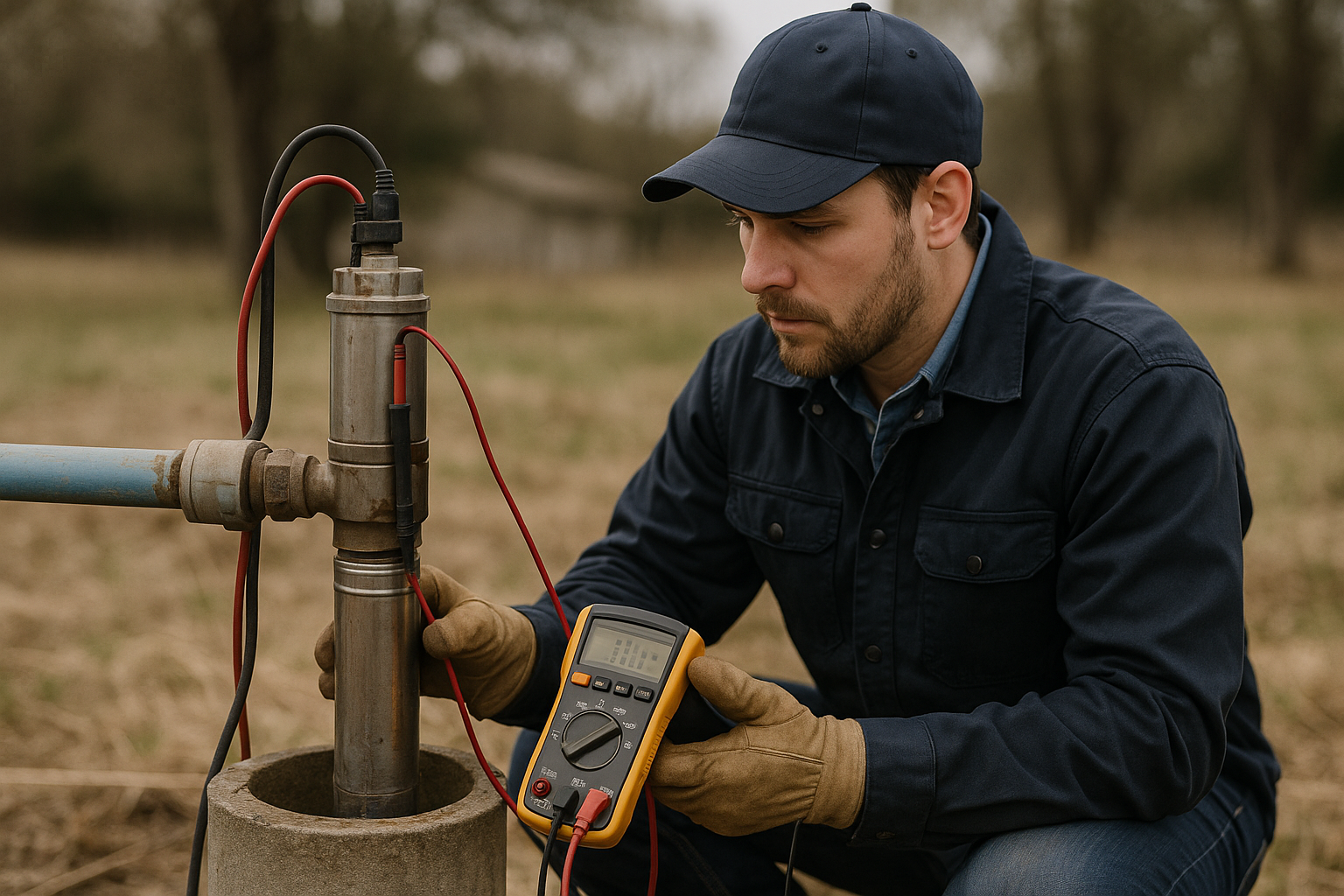
Every private well in North Shore relies on the same four components. A submersible pump lifts water from deep in the casing. A pressure tank stores that water under a compressed-air cushion so your taps stay pressurized between pump runs. A pressure switch starts and stops the pump at preset cut-in and cut-out points, typically a 30/50 or 40/60 PSI range. And the well's own drawdown and recovery rate, how fast water flows back to the pump as you use it, determines how much you can draw before the level drops. In a desert aquifer like North Shore's, that recovery rate is the link most likely to fail you, because there is little rainfall to recharge the groundwater.
Desert Causes of Low Pressure in North Shore
The Salton Sea basin creates conditions you simply do not find in coastal San Diego. The most common reasons we find for low pressure in North Shore include:
- Saline and sulfate-driven corrosion: Groundwater near the Salton Sea often carries elevated salts and sulfates that corrode pump components, check valves, and metal fittings far faster than ordinary hard water, slowly choking output and weakening pressure.
- Severe drought drawdown: With annual rainfall often under three inches, North Shore aquifers recharge slowly. A well that kept up a decade ago may now draw down past the pump intake during summer demand, causing pressure to collapse in the afternoon heat.
- Heat-degraded pressure tanks: Tanks installed outdoors bake in summer temperatures above 110°F. The bladder hardens and ruptures years early, leaving the pump to short-cycle and pressure to swing.
- Sediment and scale in long supply runs: Many North Shore parcels are large, with long buried lines between well and house. Mineral scale and sand accumulate in those runs, narrowing them and bleeding pressure before water reaches the tap.
- Seismic-related casing damage: The San Andreas fault zone runs through the region, and ground movement can crack a casing or distribution line, creating hidden leaks that sap pressure unseen in the sandy soil.
A Practical Checklist Before You Call
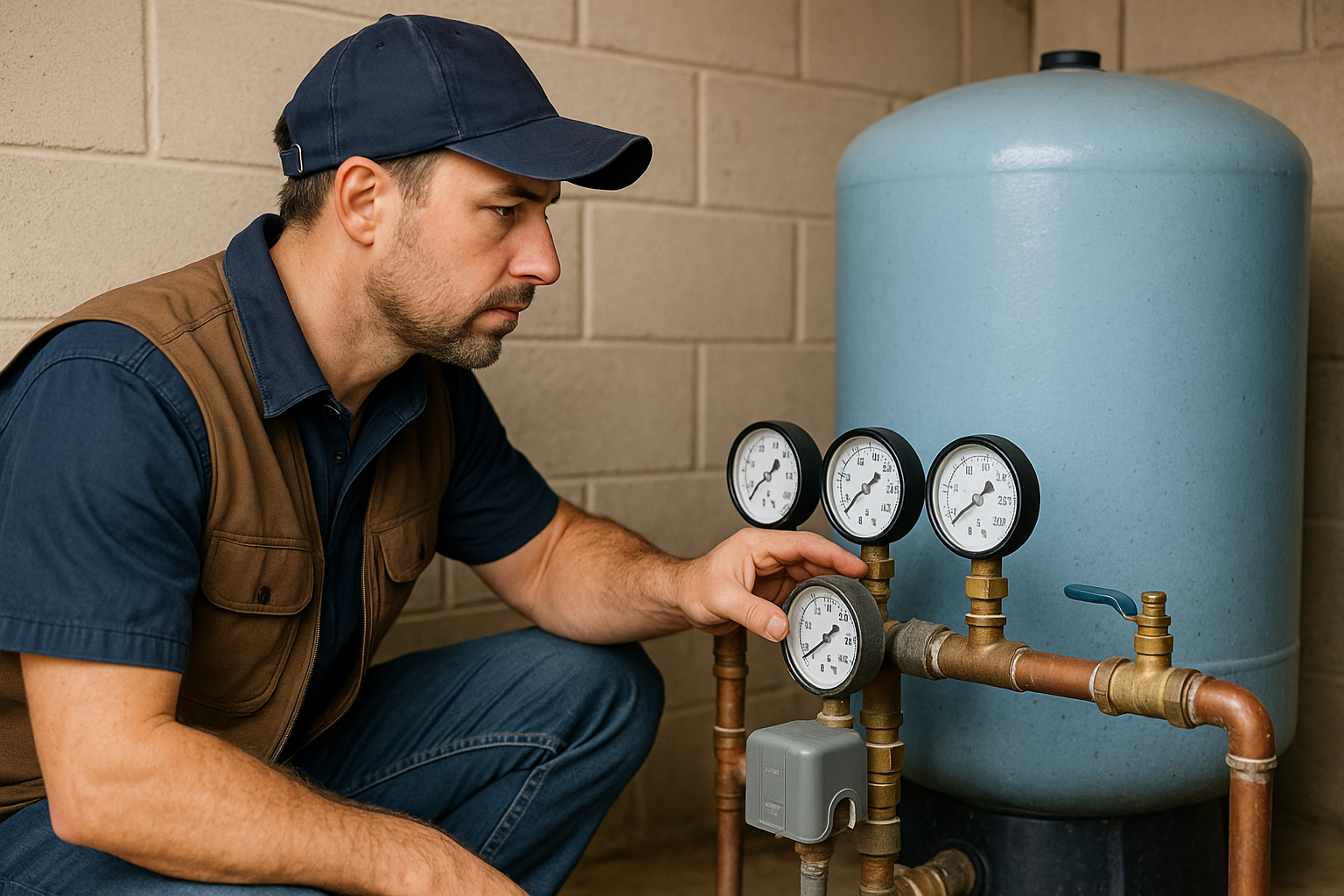
In a remote area, a few minutes of self-diagnosis can save a service trip. Read your pressure-tank gauge during use: a steady 40 to 60 PSI is healthy, while a needle that swings or barely rises tells a story. With the pump breaker off and the system drained, check the tank's air charge with a tire gauge; it should sit about 2 PSI below the pump cut-in, and a near-zero reading or water at the valve means the bladder is gone. Pull and soak your aerators and showerheads in vinegar to clear mineral and salt deposits. Listen at the pump or pressure switch for rapid clicking, which signals short-cycling. And scan large parcels for damp ground or salt-crusted wet spots that point to a buried leak.
When You Need a Professional
Call SCWS at (760) 440-8520 if you lose water entirely, hear grinding or humming from the pump, see heavy white scale or rust on equipment, notice a salty taste or sulfur odor with the pressure drop, or find that basic fixes do not restore flow. In North Shore, a delay can mean days without water, so we prioritize desert emergencies and offer same-day response despite the distance.
What Repairs Cost in North Shore
We quote every job upfront, and our $125 diagnostic is credited toward the repair. Typical ranges, with labor, are: pressure switch $150 to $350; pressure tank $600 to $1,500; submersible pump replacement $2,500 to $5,500; sediment filtration $300 to $900; and a reverse-osmosis, iron, or softening system to fight saline and mineral damage $1,500 to $3,500. A constant-pressure or booster system that steadies PSI across long runs and variable yield is $2,000 to $4,500. For a depleted desert well, hydrofracturing to improve recovery is $3,000 to $8,000, and a complete new well runs $18,000 to $42,000. Properly decommissioning an abandoned well is $1,500 to $5,000. Remote travel can affect scheduling, but our quotes remain transparent.
Serving North Shore and the Eastern Coachella Valley
Our Ramona and Anza offices put crews within reach of North Shore and the nearby Riverside County communities of Mecca, Thermal, Oasis, Bombay Beach, and the broader eastern Coachella Valley. We understand the saline aquifers, the heat, and the seismic realities of Salton Sea-adjacent wells, and we carry corrosion-resistant pumps, tanks, and treatment gear suited to this terrain. For isolated desert properties where backup water is scarce, that preparation is the difference between a single visit and a week of waiting.
Protecting a Desert Well for the Long Term in North Shore
Beyond fixing today's pressure problem, North Shore well owners benefit from a few habits suited to this extreme environment. Check the pressure-tank air charge every two to three months, since desert heat shortens bladder life. Shade or insulate exposed pumps, tanks, and switches to blunt summer temperatures that routinely top 110°F. Test water quality twice a year to track salinity and sulfate levels, because the Salton Sea's shrinking footprint can raise the mineral content of nearby groundwater over time and accelerate corrosion. Use drip irrigation and low-flow fixtures to ease demand on a slowly recharging aquifer, and after any noticeable earthquake, have your casing inspected for cracks before a small leak becomes a major one. A full system audit, which maps your well depth, casing integrity, and aquifer health, is especially valuable here because original well records are often missing and backup water sources are scarce. Planning ahead in an isolated community like North Shore is far cheaper than reacting to a dry tap in the middle of summer, and our crews can build a maintenance schedule tailored to your specific well and water chemistry.
Frequently Asked Questions About Low Water Pressure in North Shore
Why does my North Shore well lose pressure in the summer?
Summer pressure loss in the desert is usually drawdown. With almost no rainfall to recharge the aquifer, heavy summer demand and high evaporation can pull the water level below the pump intake, starving it during peak hours. A drawdown test shows whether the well, the pump depth, or the tank is the limiting factor.
Does the Salton Sea affect my well water and pressure?
Yes. Groundwater near the Salton Sea often carries elevated salinity, sulfates, and minerals that corrode and scale pump components and pipes faster than normal, gradually weakening pressure. We test water chemistry and can install reverse-osmosis or descaling systems to protect your equipment and flow.
How fast can you reach North Shore for an emergency?
We offer same-day emergency service to North Shore from our Ramona and Anza offices. Because the area is remote, we prioritize total water-loss calls and arrive stocked with the pumps, tanks, and fittings most likely needed so we can restore flow in one trip whenever possible.
Why is my pressure tank failing so quickly out here?
Desert heat is the main reason. Tanks installed outdoors endure summer temperatures above 110°F, which hardens and cracks the internal bladder years before it would fail in a milder climate. Shading or insulating the tank helps, and we size replacements to handle the heat and your well's output.
Could an earthquake have caused my low water pressure?
It is possible. North Shore lies near the San Andreas fault zone, and ground movement can crack a well casing or buried supply line, creating a hidden leak that drains pressure. If your pressure dropped after noticeable shaking, we can inspect the casing and lines for damage, which typically costs $1,000 to $3,000 to repair.
What does it cost to fix low pressure on a North Shore well?
Common repairs range from $150 to $350 for a pressure switch and $600 to $1,500 for a pressure tank, up to $2,500 to $5,500 for a new pump. Our $125 diagnostic identifies the real cause and is credited toward the repair, so you invest only in what your system needs.