
Low Water Pressure Solutions in Ocean Beach
Dealing with weak water pressure in Ocean Beach? Low water pressure can make showers frustrating and appliances ineffective. Our team diagnoses the root cause and restores your water pressure fast.
📋 In This Guide
Need Low Water Pressure Solutions in Ocean Beach?
We serve Ocean Beach and all of San Diego County. Licensed C-57 contractor (CSLB #1086994), founded 2020.
Call: (760) 440-8520Our Low Water Pressure Solutions Services
- Pressure tank repair and replacement
- Pressure switch adjustment
- Pump upgrades for better pressure
- Constant pressure systems
- Booster pump installation
- Clogged pipe diagnosis
- Well yield testing
- Complete system evaluation
Why Ocean Beach Chooses SCWS
✓ Local Expertise
We know San Diego County geology and wells
✓ Fast Response
Same-day service for Ocean Beach
✓ Fair Pricing
Honest quotes, no surprises
✓ Quality Work
CSLB #1086994 · founded 2020
Our Locations
Related Articles
Continue learning about well maintenance and troubleshooting
Low Water Pressure From Well: Complete Fix Guide
Diagnose and solve low pressure problems
Well Pressure Switch: Settings, Adjustment & Replacement
Everything about pressure switches
Pressure Tank Maintenance: Complete Guide
Keep your pressure tank working properly
Low Water Pressure Solutions for Ocean Beach Properties
When the shower fades mid-rinse, the kitchen tap loses its punch, or the irrigation barely keeps the front yard green, low water pressure quickly moves from minor irritation to daily disruption. For Ocean Beach residents who draw water from a private well, that weak flow is usually a sign that a component in the well system needs attention — and catching it early almost always costs far less than waiting for a pump to fail. Most causes are diagnosable and fixable once you understand how pressure reaches your faucets.
Ocean Beach — "OB" to locals — sits at the western edge of the city of San Diego, San Diego County, where the San Diego River meets the Pacific just north of the Point Loma peninsula. The neighborhood runs from the pier and Newport Avenue back toward the river mouth and the slopes below Sunset Cliffs Boulevard. The setting is classic coastal: sandy river-delta soils near the flats, sedimentary marine bedrock on the higher ground, and a salt-laden marine layer that never really leaves. Those conditions shape how local wells perform. As a licensed C-57 well contractor serving San Diego County since 2020, we understand the specific pressure problems Ocean Beach properties face and how to solve them for good.
How a Well Pressure System Actually Works
Diagnosing pressure starts with understanding the parts that create it. A typical Ocean Beach residential well system has five working components:
- The well and pump — a submersible or jet pump draws water up from the casing to the surface.
- The pressure tank — stores water under pressure with an internal air bladder so the pump cycles less often.
- The pressure switch — reads tank pressure and turns the pump on and off, usually around 40 PSI cut-in and 60 PSI cut-off.
- Filtration and treatment — sediment filters and softeners that keep grit and minerals out of the plumbing.
- Piping and wiring — the connections that carry water and power through the system and into the home.
When any single part falls out of spec, the result at the tap is the same familiar symptom: weak, surging, or fading pressure. The skill is figuring out which link is the weak one.
Why Ocean Beach Wells Lose Pressure
Several causes are universal, but a few are intensified by Ocean Beach's river-mouth and coastal conditions:
- Sand and silt from delta soils. Wells near the San Diego River flats can pull fine sand that clogs screens, filter cartridges, and aerators, steadily choking flow.
- Salt-air corrosion. The persistent marine layer rusts pressure switches, wiring, and exposed fittings faster than inland, wearing out the parts that govern pressure.
- Shallow, fluctuating water table. Low-lying lots near the river can see the water level swing with seasons and tides, leading to air in the lines and pressure that fades during heavy use.
- Hard, mineral-rich water. Calcium and magnesium scale narrows pipes and coats pump parts over time, reducing flow even in an otherwise sound system.
- Older galvanized plumbing. Many of OB's vintage cottages and bungalows still carry galvanized steel pipe that rusts internally and shrinks the usable diameter.
The Most Common Causes — and What They Mean
1. A Waterlogged Pressure Tank
The most frequent cause we find anywhere. The tank's bladder separates water from a cushion of air; when it fails or the charge leaks away, the tank waterlogs and loses its cushion. The pump then short-cycles — flicking on and off every few seconds — and pressure drops the moment it shuts off. Unchecked, short cycling burns out a good pump in months. The fix is a properly sized replacement tank with the pre-charge set 2 PSI below cut-in (38 PSI for a 40/60 system).
2. A Failing or Misadjusted Pressure Switch
The switch is the system's brain, and in OB's salty air it corrodes quickly. Its sensing port can plug with sediment, its contacts can burn, and its settings can drift. Homes still on a 30/50 setting often feel underpowered; moving to 40/60 usually improves showers and appliances — as long as the tank pre-charge is adjusted to match.
3. Clogged Sediment Filters or Well Screen
A neglected whole-house filter can throttle the entire home. Because Ocean Beach's river-influenced water carries fine sand, filters here may need changing every two to four months. Down in the well, the intake screen can clog with sand and iron bacteria, limiting how much water enters the well — a problem that requires professional rehabilitation.
4. A Worn or Undersized Pump
Pumps last about 10 to 15 years, and abrasive sand shortens that life. As impellers wear, output and pressure decline. A pump running constantly but delivering weak pressure suggests wear, a dropping water level, or a leak. Most OB homes are well served by a 3/4 to 1.5 HP pump; an undersized or worn unit cannot keep up.
5. A Low or Fluctuating Water Table
Near the river mouth, the water level can fall seasonally and during dry years, sometimes dipping toward the pump intake. You will notice intermittent air bursts and pressure that sags during long use. Solutions range from lowering the pump to adding flow management, depending on the well's true yield.
6. Leaks and Pipe Scale
A hidden leak between the well and house, or scaled galvanized pipe in the walls, quietly drains pressure. A gauge test — watching for a drop with all water off — confirms a leak before any digging begins.
Step-by-Step: What You Can Safely Check First
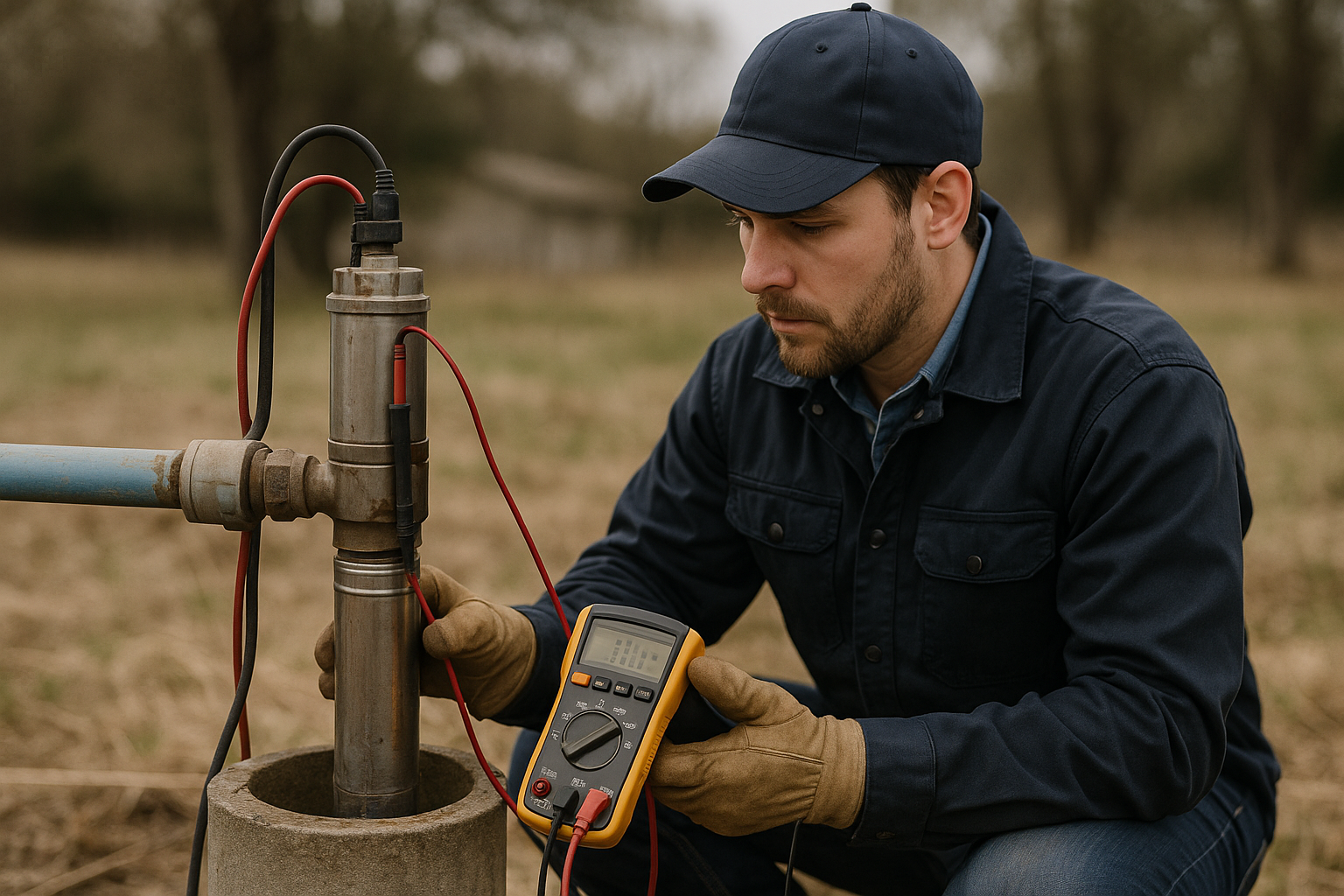
Safety first: always shut off power to the well pump at the breaker before inspecting or adjusting any electrical or pressure component. Water and electricity together are dangerous.
- Listen to the pump. Constant running, rapid cycling, or silence each tells a different story. Rapid cycling points to the tank; constant running with low pressure points to the pump, a leak, or low water level.
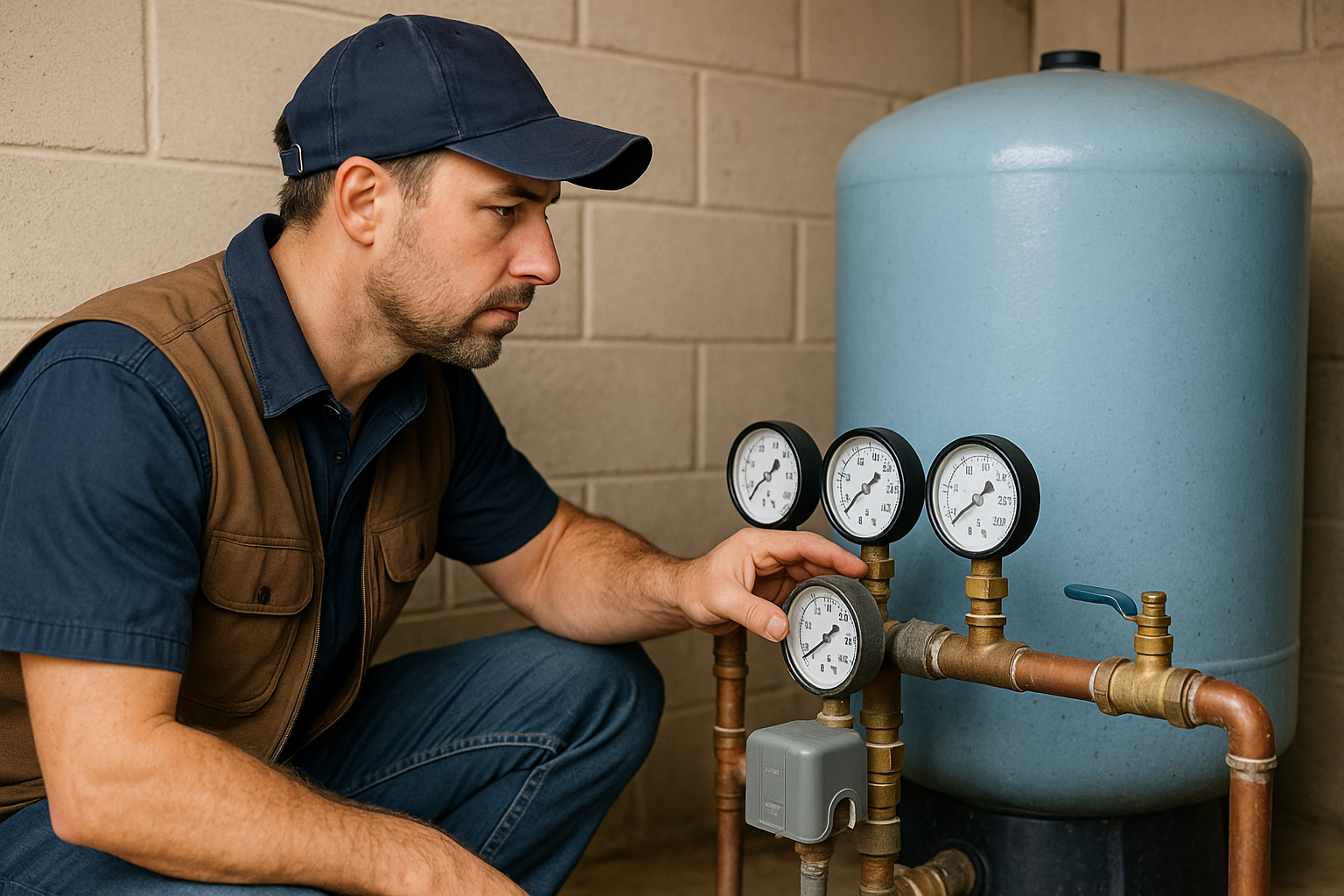
- Read the pressure gauge. A healthy system holds a steady band like 40–60 PSI; wild swings signal trouble.
- Check whole-house versus one fixture. One weak faucet usually means a clogged aerator. Weak everywhere is a system problem.
- Inspect the sediment filter. A sandy, brown cartridge can choke the house; replace it with the right micron rating and recheck.
- Tap the pressure tank. With power off and the tank drained, a tank that sounds solid throughout is waterlogged.
- Watch for leaks. Shut every fixture and watch the gauge; a slow drop means a leak.
When to Call a Professional
Call us if the pump will not run, runs nonstop with little pressure, keeps short-cycling after a tank check, spits air or sand, or if you suspect the screen is clogging. These point to pump failure, a fouled screen, a dropping water table, or corroded wiring — issues that need proper tools and a licensed well technician.
What Pressure Repairs Typically Cost in Ocean Beach
- Pressure switch replacement — $150 to $350 including parts and labor
- Pressure tank replacement — $600 to $1,500 depending on tank size
- Submersible pump replacement — $2,500 to $5,500 depending on depth and horsepower
- Whole-house sediment filtration — $300 to $900 installed (often worth it near the river)
- Water softener for hard water — $1,500 to $3,500 installed
- Constant-pressure / booster system — $2,000 to $4,500
- Diagnostic service call — $125, credited toward the repair if you proceed
Every job begins with a clear written estimate — no surprises, no pressure to buy what you do not need.
Serving Ocean Beach and the San Diego Coast
We provide well pressure diagnosis and repair throughout Ocean Beach and the neighboring communities of Point Loma, Sunset Cliffs, Midway, Loma Portal, and the wider San Diego coastline. With offices in Ramona and Anza, our trucks carry pumps, tanks, switches, and pressure components for same-day repairs whenever possible.
Frequently Asked Questions
Why does my Ocean Beach well produce sandy water?
Wells near the San Diego River flats often draw through sandy delta soils, and fine sand can pass the well screen as it wears. Sand clogs filters and aerators and erodes pump parts. We diagnose whether the fix is a new screen, a deeper pump setting, or upgraded sediment filtration.
What PSI should my well pressure be set to?
Most homes run best at 40/60 PSI. The tank's air pre-charge should be 2 PSI below cut-in — 38 PSI for a 40/60 system. Older homes on 30/50 often feel weak and benefit from an upgrade once the tank charge is matched.
Does the coastal air affect my well equipment?
Yes. Ocean Beach's marine layer accelerates corrosion on pressure switches, wiring, and fittings. Corrosion-resistant components and protected enclosures noticeably extend equipment life in this environment.
Is low pressure a sign my pump is failing?
Not necessarily. A waterlogged tank or clogged filter is a far more common cause. We diagnose the whole system before recommending a pump — replacing a $200 part beats an unnecessary $4,000 pump job.
How much does it cost to fix low water pressure?
It depends on the cause: a pressure switch is $150–$350, a tank $600–$1,500, and a full pump replacement $2,500–$5,500. Our $125 diagnostic call identifies the real issue and is credited toward the repair.
How fast can you respond to a no-pressure emergency?
We prioritize emergency calls in Ocean Beach and aim for same-day response during business hours. Call (760) 440-8520 or text (760) 219-5877.
Restore Your Water Pressure Today
If your Ocean Beach well is not delivering the pressure it should, we will pinpoint exactly why and fix it right the first time. Call (760) 440-8520, text (760) 219-5877, or request a free estimate online. Honest diagnosis, fair pricing, and reliable water are what we deliver to San Diego County well owners every day.