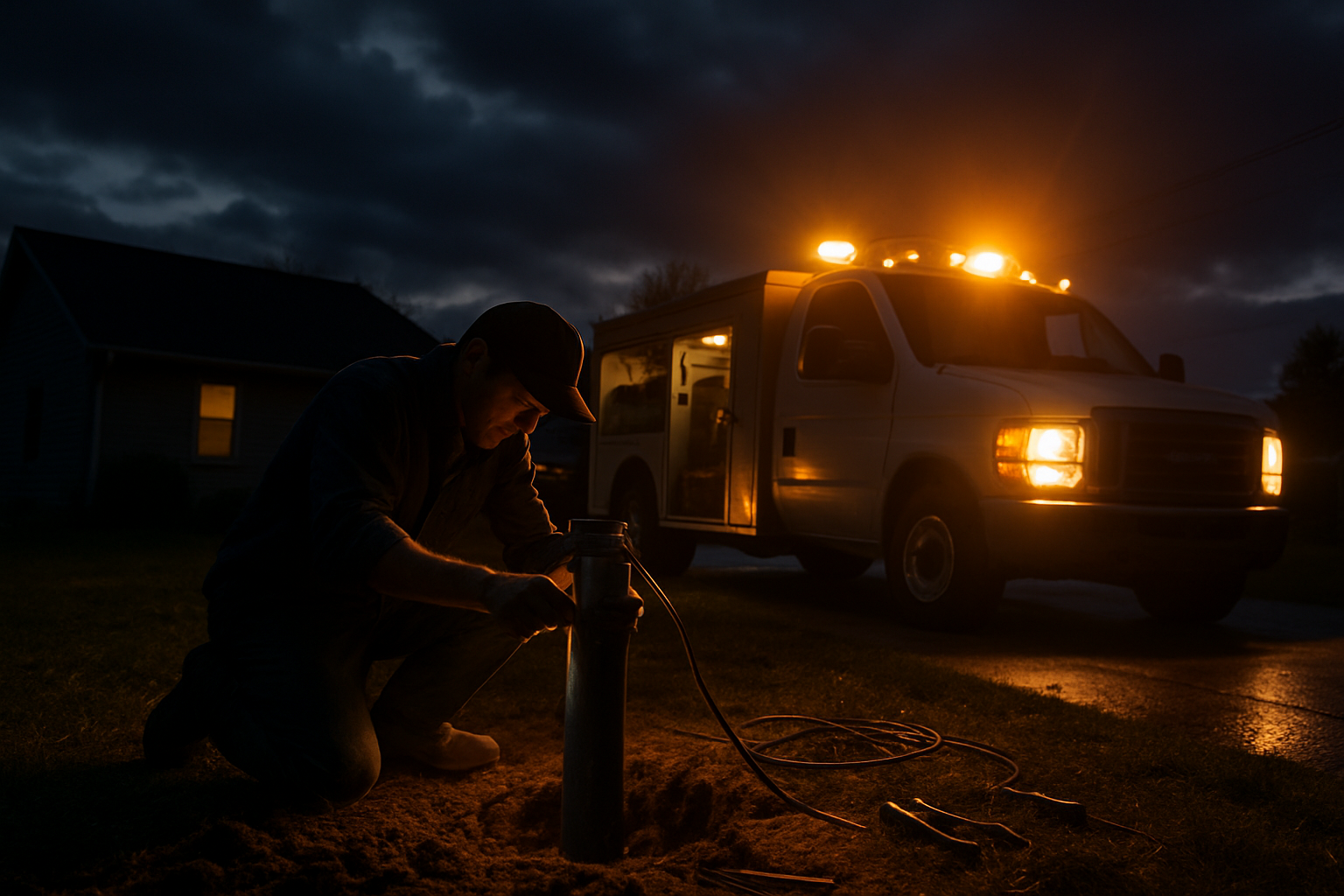
No Water From Your Well? Ramona and Anza Shops Can Help

You turn on the faucet and nothing comes out. Few household emergencies create panic faster than discovering you have no water from your well. Before you assume the worst, there's a systematic approach to understanding what's wrong—and in some cases, you might be able to restore water yourself. If not, Southern California Well Service provides emergency response throughout San Diego County to get your water flowing again fast.
📋 In This Guide
This guide walks you through the common causes of sudden water loss, basic troubleshooting steps you can safely perform, and when it's time to call for professional emergency help. Remember: if you're uncomfortable performing any of these checks, or if you smell burning or see visible damage, skip straight to calling us at (760) 440-8520.
First: Check the Obvious Things
Before assuming your well has failed, verify that the problem is actually with your well system and not something simpler:
- Check Multiple Fixtures: Try faucets in different parts of the house. If only one area is affected, you may have a plumbing problem, not a well problem.
- Check Hot and Cold: If cold water works but hot doesn't, your water heater may have failed—not your well.
- Ask Neighbors: If you share a well or are on a community system, check if neighbors are also affected.
- Look for Visible Leaks: A major pipe break can drain your pressure tank and cause apparent "no water" situations.
Check Your Electrical System
The majority of "no water" emergencies are electrical problems, not pump failures. Your well pump needs electricity to run, and there are several points where power can be interrupted:
Main Breaker Panel: Find the breaker labeled "Well" or "Well Pump" and check if it's tripped. If it is, reset it once. If it trips again immediately, do NOT keep resetting it—this indicates a short circuit or other serious electrical problem that needs professional diagnosis.
Pressure Switch: Located on or near your pressure tank, the pressure switch turns the pump on and off. Look at it while someone turns on a faucet. You should hear a click when the switch activates. If nothing happens, the switch may have failed.
Control Box (if present): Deeper wells often have a control box mounted near the pressure tank. These boxes contain capacitors and relays that can fail. Check for any burning smell or visible damage.
GFCI Outlets: Some well systems are protected by GFCI outlets that can trip without being obvious. Check any GFCI outlets in the vicinity of your well equipment.
Check Your Pressure Tank
The pressure tank is the large tank (usually blue or gray) near where your well water enters the house. It maintains pressure in your system and can cause no-water situations when it fails:
- Feel the Tank: A working pressure tank should feel different temperatures at different heights due to the water level inside. If the entire tank feels the same temperature, the internal bladder may have failed.
- Check the Pressure Gauge: Most tanks have a gauge showing system pressure (typically 40-60 PSI). If the gauge shows zero, either the tank is empty or the gauge has failed.
- Listen for Rapid Cycling: If the pump seems to turn on and off very rapidly (every few seconds), the tank has likely lost its air charge.
Common Causes of Sudden Water Loss
Understanding why wells suddenly stop producing water helps set expectations for repair. Here are the most common causes we encounter:
Pump Failure: Submersible well pumps are remarkably reliable, but they don't last forever. Most last 10-15 years before failing. When they go, they often go suddenly—working fine one moment, dead the next.
Electrical Component Failure: Pressure switches, capacitors, and control boxes fail more often than pumps themselves. The good news: these repairs are typically faster and less expensive than pump replacement.
Power Surge Damage: Lightning strikes and power surges can damage well electrical systems instantly. After a thunderstorm is a common time for well failures.
Dry Well: If groundwater levels drop below your pump intake, you'll lose water. This is more common during droughts and extended dry periods.
Broken Water Line: Underground pipe breaks can drain your pressure tank and prevent water from reaching the house, even if the pump is running fine.
Frozen Components: While less common in San Diego, cold snaps can freeze above-ground well components, stopping water flow.
Warning Signs You Might Have Missed
Wells rarely fail without warning. Looking back, many homeowners realize they noticed these signs before their total water loss:
- Sputtering or Air in Lines: Air bursts from faucets can indicate a failing pump or dropping water level.
- Decreasing Water Pressure: Gradual pressure loss often precedes complete failure.
- Pump Running Longer Than Usual: If you notice the pump running more frequently or for longer periods, it's working harder than it should.
- Unusual Noises: Clicking, humming, or grinding sounds from well equipment warrant investigation.
- Higher Electric Bills: A struggling pump uses more electricity—sometimes noticeably so.
- Dirty or Discolored Water: Sediment in your water can indicate pump problems.
What NOT to Do
When facing a no-water emergency, avoid these common mistakes:
- Don't repeatedly reset tripping breakers - This can cause electrical fires or further damage.
- Don't try to pull your own pump - Without proper equipment, you risk losing the pump down the well.
- Don't pour water down the well - This won't help and can introduce contamination.
- Don't ignore the problem hoping it resolves - Well problems don't fix themselves.
- Don't call a general plumber - Well systems require specialized knowledge and equipment.
When to Call for Emergency Help
Call Southern California Well Service immediately if:
- You've checked the basics and still have no water
- You smell burning or see smoke from any well component
- The breaker trips repeatedly when reset
- You have vulnerable household members (infants, elderly, medical needs)
- You have livestock or animals needing water
- You're simply unsure about any troubleshooting step
Our Emergency Response for No-Water Situations
When you call SCWS with a no-water emergency, we respond quickly. Our technicians arrive with diagnostic equipment to pinpoint the exact cause of your water loss. We carry common parts like pressure switches, capacitors, and control boxes for on-the-spot repairs.
If pump replacement is required, we can often complete the work the same day for wells of typical depth. Our goal is always to restore your water as quickly as possible—we understand you can't wait days for repairs.
For no-water emergencies in San Diego County, call Southern California Well Service at (760) 440-8520. We offer 24/7 emergency response and same-day service. Visit www.scwellservice.com for more information.
🚨 Need Emergency Well Service?
We respond 24/7 across San Diego, Riverside & San Bernardino Counties.
Learn About Our Emergency Service →