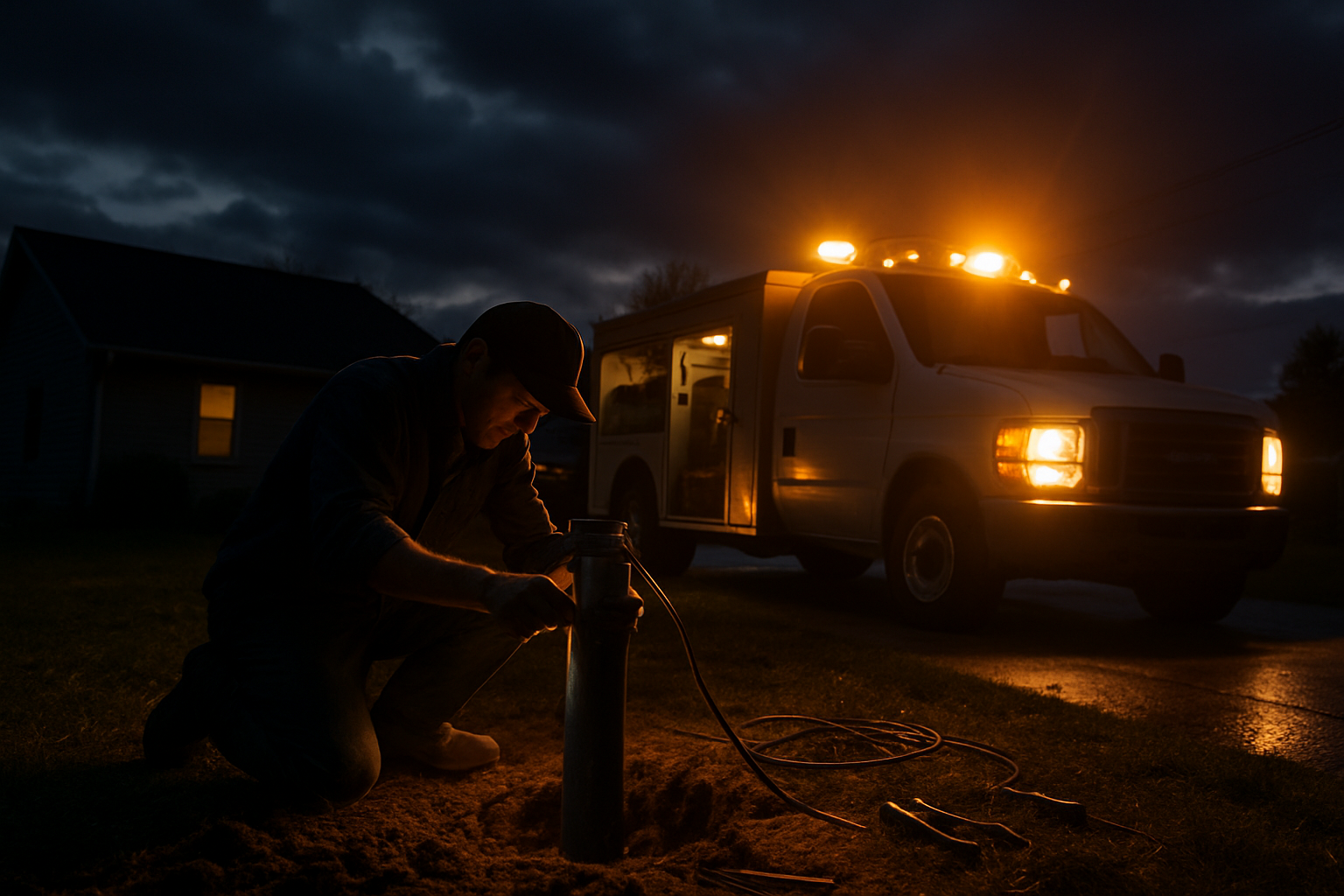
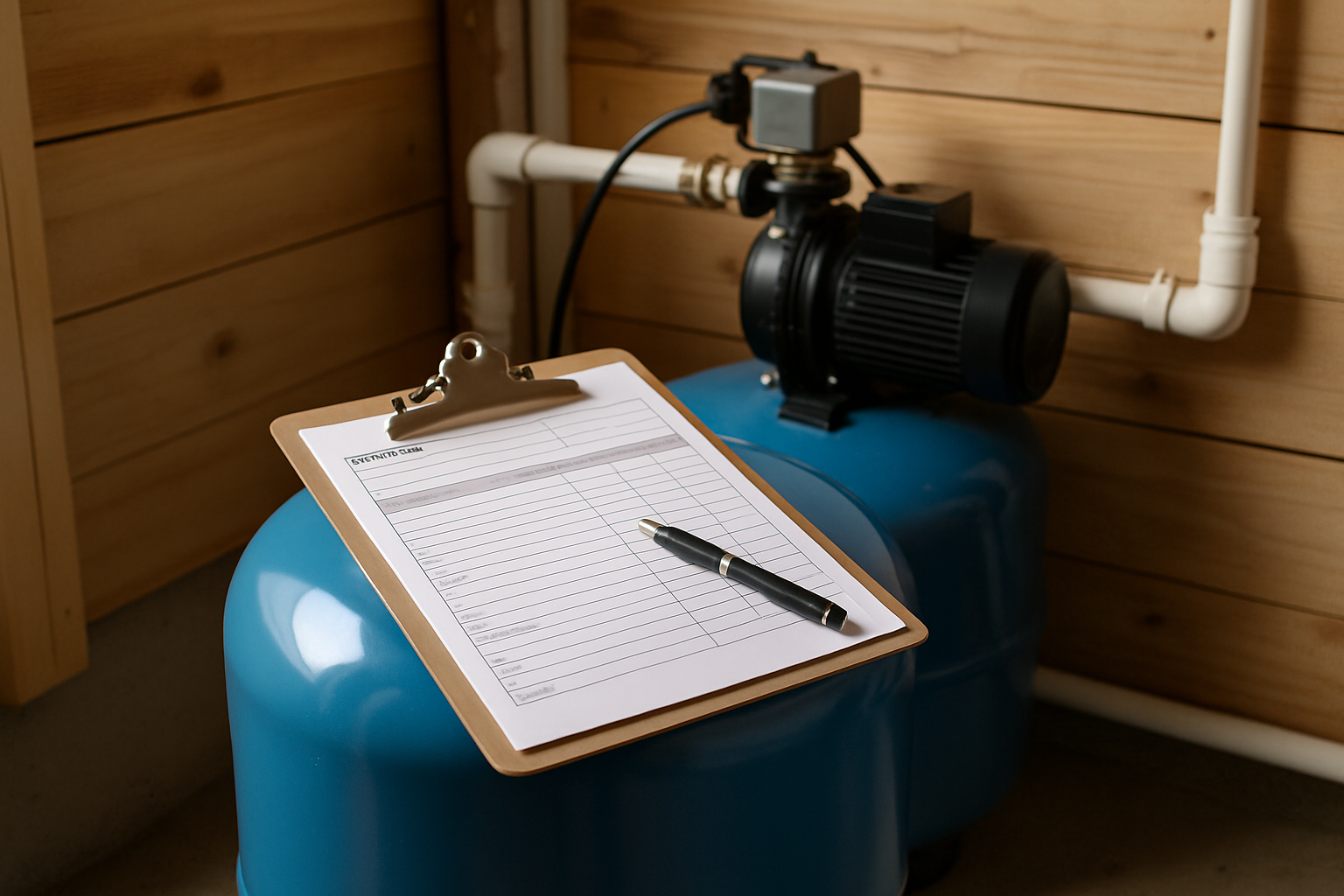
Well Pump Stopped Working: Diagnostic Steps and Repair Options
Your well pump provides every drop of water your household uses. When it stops working, life comes to a halt. Before you panic or start searching for new pumps online, understand that many "pump failures" are actually electrical or control system problems that are faster and cheaper to fix than replacing the pump itself.
📋 In This Guide
This guide helps you understand what might have gone wrong, what diagnostics are performed, and what repair options exist. Whether you're trying to troubleshoot before calling for help or just want to understand what the technician will tell you, this information will make you a more informed well owner.
Is It Really the Pump?
Only about 40% of "well pump stopped working" calls actually involve a failed pump motor. The other 60% are problems with the electrical supply, control systems, or pressure equipment that keeps the pump running. Here's how to begin narrowing down the problem:
- Check the breaker: Is the well circuit tripped? Reset once. If it trips again immediately, stop—there's an electrical fault.
- Listen at the wellhead: Can you hear the pump running when someone turns on water? A running pump with no water is different from a dead pump.
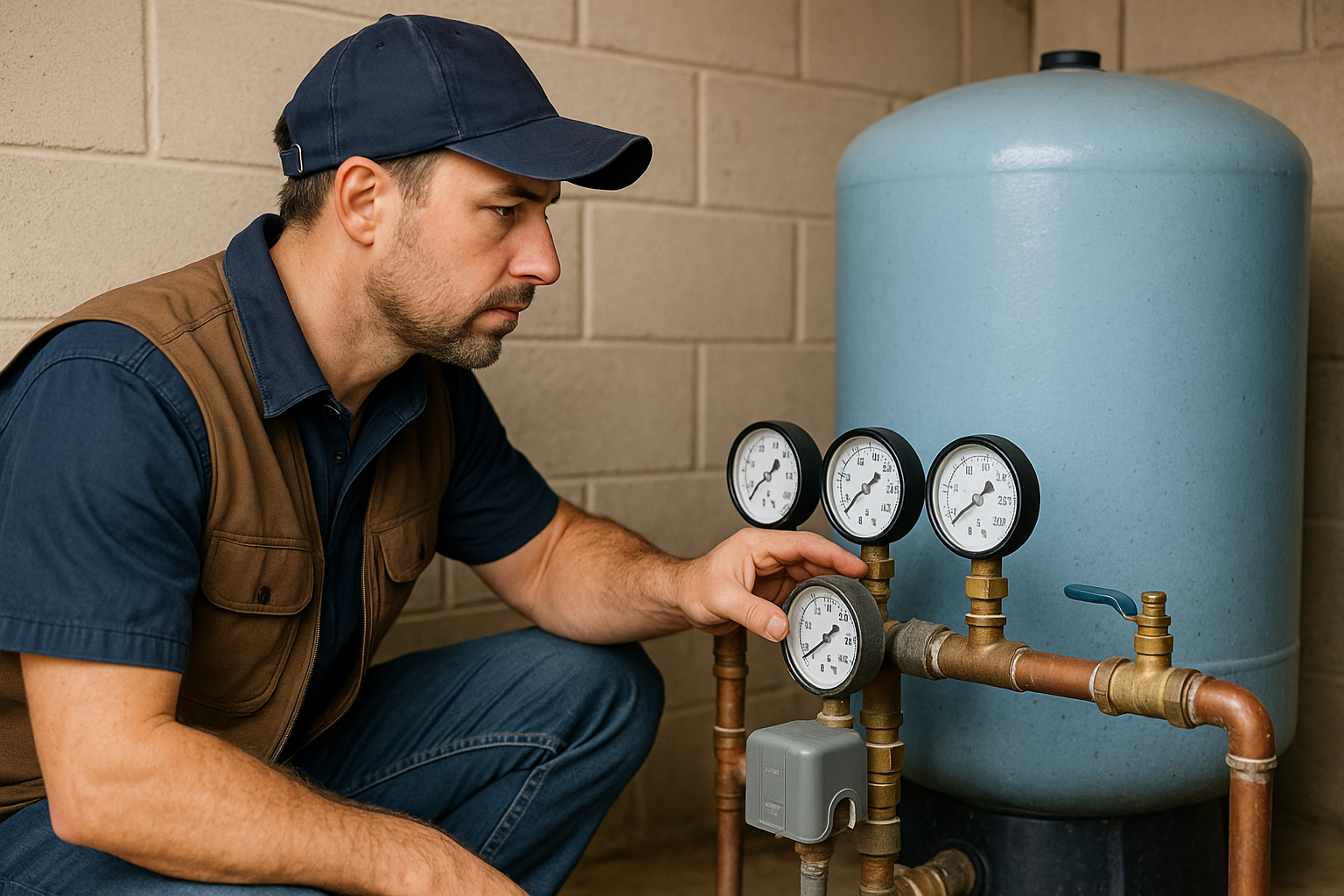
- Check the pressure gauge: Does the gauge show any pressure? A zero reading might indicate a failed pump, but could also mean a broken line or failed gauge.
- Feel the motor wire: If accessible, feel the electrical wire running to your well. If it's hot, the pump is drawing power (even if not pumping).
The Submersible Well Pump
Most residential wells in San Diego County use submersible pumps—sealed motor/pump units that sit underwater inside the well casing, sometimes hundreds of feet down. These are remarkably reliable but do eventually fail.
How Submersible Pumps Fail:
- Motor Burnout: The most common failure. Motors can burn out from age, overheating, voltage problems, or running dry.
- Impeller Wear: Pumping sand and sediment wears the impellers that move water, reducing output until failure.
- Seal Failure: When seals fail, water enters the motor housing, causing rapid destruction.
- Wiring Failure: The submersible cable connecting the pump to surface power can fail, especially at splice points.
Average submersible pump lifespan is 10-15 years, though some last 20+ years and others fail sooner due to poor water quality, electrical problems, or installation issues.
Electrical System Components
Your well pump relies on several electrical components that can fail independently of the pump motor:
Pressure Switch: This mechanical switch turns the pump on when pressure drops and off when target pressure is reached. Failed contacts, worn diaphragms, and clogged sensing ports cause pressure switch failures. Cost to replace: typically $100-200 installed.
Control Box: For larger pumps (typically 1 HP and above), a control box mounted above ground contains the starting capacitor and relay. These components fail more often than the pump motor and are much easier to replace. Cost: typically $150-400 installed.
Capacitors: Starting and running capacitors store electrical energy to help motors start and run efficiently. Failed capacitors can prevent starting or cause weak operation. Cost: typically $50-150 installed.
Wiring and Connections: Corroded connections, damaged wire insulation, and loose terminals can all interrupt power to your pump.
Professional Diagnosis Process
When a SCWS technician arrives to diagnose your well pump problem, they follow a systematic process:
Step 1 - Visual Inspection: Check for obvious problems like tripped breakers, burned components, or physical damage to equipment.
Step 2 - Electrical Testing: Using specialized meters, test voltage at various points in the system. This identifies whether power is reaching the pump and whether the motor is drawing appropriate current.
Step 3 - Resistance Testing: Measure the resistance (ohms) of the pump motor windings. This test, performed with power off, indicates whether the motor is shorted, open, or grounded—common failure modes.
Step 4 - Capacitor Testing: Test starting and running capacitors for proper capacitance and condition.
Step 5 - Pressure System Evaluation: Check tank pre-charge pressure, pressure switch calibration, and overall system operation.
This diagnostic process typically identifies the problem without pulling the pump—saving time and money if the issue is above-ground.
Repair Options When the Pump Has Failed
If diagnosis confirms the submersible pump has failed, you have several options:
Standard Replacement: Replace with a similar pump of appropriate size and quality. This is the most common choice for straightforward pump failures.
Upgraded Replacement: Install a higher-quality pump with better materials, higher efficiency, or additional features like built-in protection against dry running.
Variable Frequency Drive (VFD) System: For premium installations, a VFD controller adjusts pump speed to match demand, extending pump life and reducing energy costs.
Well Rehabilitation: Sometimes declining pump output indicates well problems rather than pump problems. We may recommend well cleaning or hydrofracturing before installing a new pump.
What Pump Replacement Involves
Replacing a submersible pump is a significant job that requires specialized equipment and experience:
- Pulling the Old Pump: The pump must be pulled from the well using a service rig. For deep wells, this can involve hundreds of feet of heavy pipe and cable.
- Inspection: The old pump is inspected to understand the failure mode and check for well problems.
- New Installation: The new pump is assembled with fresh drop pipe, wire, and safety rope, then carefully lowered into the well.
- Testing: The system is tested for proper operation, pressure, and water quality.
- Cleanup: We leave your property clean and return the old pump for your inspection.
Timeline for Repair
How quickly can you have water again?
- Electrical repairs (switches, capacitors, control boxes): Often completed same visit, within 1-2 hours.
- Pressure tank replacement: Usually completed same day, 2-4 hours.
- Pump replacement (standard depth): Typically same day or next day, 4-8 hours of work.
- Pump replacement (deep well): May require 1-2 days depending on depth and conditions.
For emergency situations, we prioritize getting you water as quickly as possible. If parts must be ordered, we discuss temporary water solutions while waiting.
Get Your Pump Diagnosed Now
A well pump that's stopped working needs professional diagnosis to determine the actual problem and best repair approach. Don't assume you need an expensive pump replacement until proper testing is performed—you might have a $200 repair, not a $2,000 replacement.
When your well pump stops working, call Southern California Well Service at (760) 440-8520. We offer same-day emergency service and honest diagnosis. Visit www.scwellservice.com to learn more about our well pump services.