
No Water Pressure in the Morning: Causes & Fixes
You turn on the shower and... nothing. Or just a weak trickle. But by the time you're making coffee, pressure is fine. If this sounds familiar, you have a nighttime drain problem—and it's fixable.
📋 In This Guide
Tired of waiting for pressure every morning? We diagnose and fix overnight drain issues throughout San Diego County.
Call (760) 440-8520Why This Happens
Your well system is designed to maintain pressure even when you're not using water. The pressure tank stores pressurized water so you don't have to wait for the pump every time you turn on a faucet.
When you wake up to low or no pressure, it means water drained out of the system overnight. There are only two ways this can happen:
- Water is draining back down the well (check valve failure)
- Water is leaking somewhere in your plumbing (leak)
Cause #1: Failed Check Valve
This is the most common cause of morning pressure problems.
What the Check Valve Does
A check valve is a one-way valve that lets water flow UP from the pump but prevents it from flowing back down. Most well systems have one or two:
- In the well: Above the pump (most important)
- At the wellhead: Where pipe exits the ground
Signs of Check Valve Failure
- Low/no pressure in the morning, normal later
- Pump runs briefly when you first use water (refilling tank)
- Pressure gauge reads low before first water use
- No visible leaks anywhere in the house
- Problem is consistent every morning
The Fix
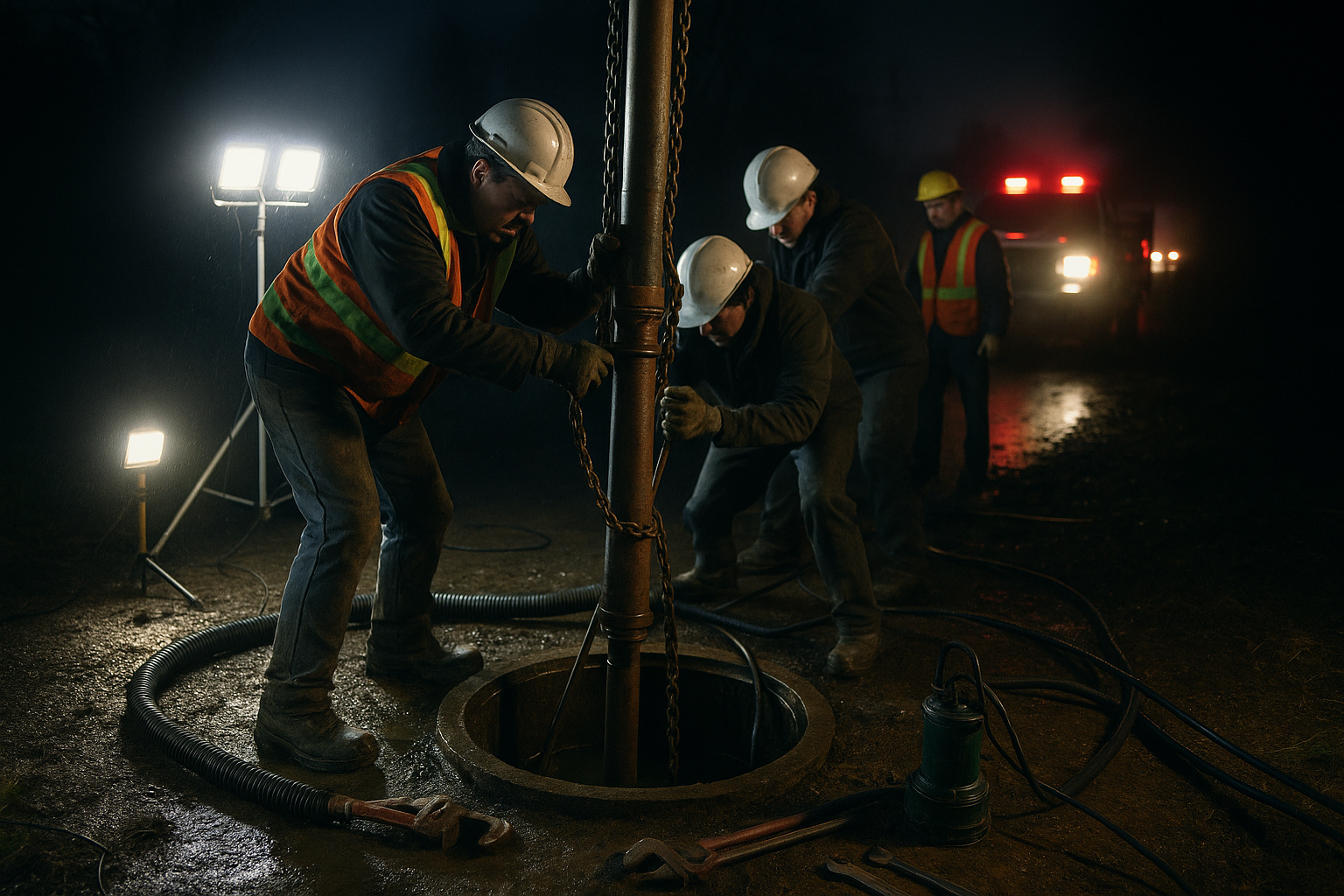
Replace the check valve(s). If the failed valve is in the well (most common), this requires pulling the pump—a professional job.
- Wellhead check valve replacement: $150-$300
- In-well check valve replacement: $400-$800 (includes pump pull)
Cause #2: Slow Leak Somewhere
If water is escaping through a leak, the tank drains overnight.
Common Leak Sources
- Running toilet: Even a slow leak can drain the tank overnight
- Leaky toilet flapper: Most common culprit
- Dripping faucet: Adds up over 8 hours
- Irrigation system: Stuck valve, cracked line
- Underground pipe leak: Hard to detect
- Water heater relief valve: May drain outside
- Softener/filter backwash: Stuck in regeneration
How to Check for Leaks
- Check toilets: Add food coloring to tank—if color appears in bowl without flushing, flapper is leaking
- Listen at night: Hear the pump running occasionally when no water is being used? There's a leak.
- Check the pressure gauge: Write down the reading before bed. Check it in the morning before using water. If it dropped, water escaped.
- Walk the yard: Look for wet spots, especially along pipe routes
- Check irrigation system: Inspect valve boxes for standing water
The Morning Pressure Test
Here's how to diagnose the exact cause:
Step 1: Check Pressure Before Using Water
First thing in the morning, before anyone uses water, read the pressure gauge near your tank.
- Normal (40-60 PSI): Tank held pressure—problem is elsewhere
- Low (under 30 PSI): Tank drained overnight—continue diagnosis
- Zero: Complete drain—significant failure
Step 2: Eliminate Leak Sources
If pressure is low:
- Shut off water to all toilets (angle stops under tank)
- Shut off irrigation system at the valve
- Check that all faucets are fully closed
Wait 24 hours. If pressure holds overnight now, you found a leak in one of those systems.
Step 3: Isolate the Well
If pressure still drops with all house water shut off:
- Find the main shutoff at the wellhead or where pipe enters house
- Close it before bed
- Check pressure in morning
- If pressure holds: Leak is between wellhead and house (underground pipe)
- If pressure still drops: Check valve is failing (water draining back down well)
Quick Fixes vs. Real Repairs
Temporary Workaround
Some people install a second check valve at the wellhead to compensate for a failed in-well valve. This may help temporarily, but:
- Doesn't fix the actual problem
- Adds restriction to water flow
- May mask other developing issues
The Right Fix
Replace the failed check valve. If it's in the well, this requires pulling the pump—but it's the proper solution that prevents future problems.
Preventing Future Problems
- Use quality check valves: Brass or stainless, not cheap plastic
- Spring-loaded valves: More reliable than swing-type in vertical applications
- Annual inspection: Check valve function during regular service
- Fix small leaks promptly: Running toilets stress the whole system
Related Problems
Pump Runs Often at Night
If you hear your pump cycling at night, water is definitely leaking somewhere. The pump is trying to maintain pressure against the loss. This wastes electricity and wears out your pump faster.
Pressure Fine But Water Takes a While
If pressure is normal but it takes several seconds for water to reach the faucet, air may be entering the system—another sign of check valve problems.
Ready to Fix Morning Pressure Problems?
We diagnose check valve failures, locate hidden leaks, and restore reliable pressure.
See our overnight pressure drop guide or pump cycling guide.
Call (760) 440-8520Serving San Diego, Riverside & San Bernardino Counties
Frequently Asked Questions
Why do I have no water pressure in the morning?
Your pressure tank is likely draining overnight. This happens when the check valve in your well fails and water slowly drains back down the well, or when there's a leak somewhere in the system. The pump refills the tank when you turn on a faucet, causing a delay before pressure builds.
Why does my pump run first thing in the morning before I use water?
If you hear your pump kick on before you've used any water, that confirms the tank drained overnight. Either the check valve isn't holding, or there's a slow leak somewhere between the well and your house—possibly a toilet flapper, irrigation system, or underground pipe leak.
How do I fix morning water pressure problems?
First, identify the cause: check for running toilets or leaks. If no visible leaks, the check valve at the wellhead or in the well pipe likely needs replacement. A professional can test check valve integrity and locate any hidden leaks.
How much does it cost to fix this?
Depends on the cause. Toilet flapper: $10 DIY. Wellhead check valve: $150-$300. In-well check valve (requires pulling pump): $400-$800. Underground leak repair: $500-$2,000+ depending on location and difficulty.
Is this bad for my pump?
Yes. If the pump has to refill an empty tank every morning, that's extra cycles and wear. More importantly, if the check valve fails completely, the pump may run dry when it starts—which can damage it quickly.
Get Expert Help
Contact Southern California Well Service for pressure system diagnosis and repair.
Call (760) 440-8520Serving San Diego, Riverside & San Bernardino Counties
Related Articles
Continue learning about well maintenance and troubleshooting
No Water From Well? Emergency Troubleshooting Guide
Step-by-step guide to diagnose and fix no water emergencies

Emergency Well No Water Checklist
Quick checklist for when your well stops producing water
No Water Emergency: What to Check First
Essential first steps when facing a water emergency