
Well Pressure Gauge Stuck at Zero - Causes & Fixes
Well Pressure Gauge Stuck at Zero: Diagnosis and Solutions
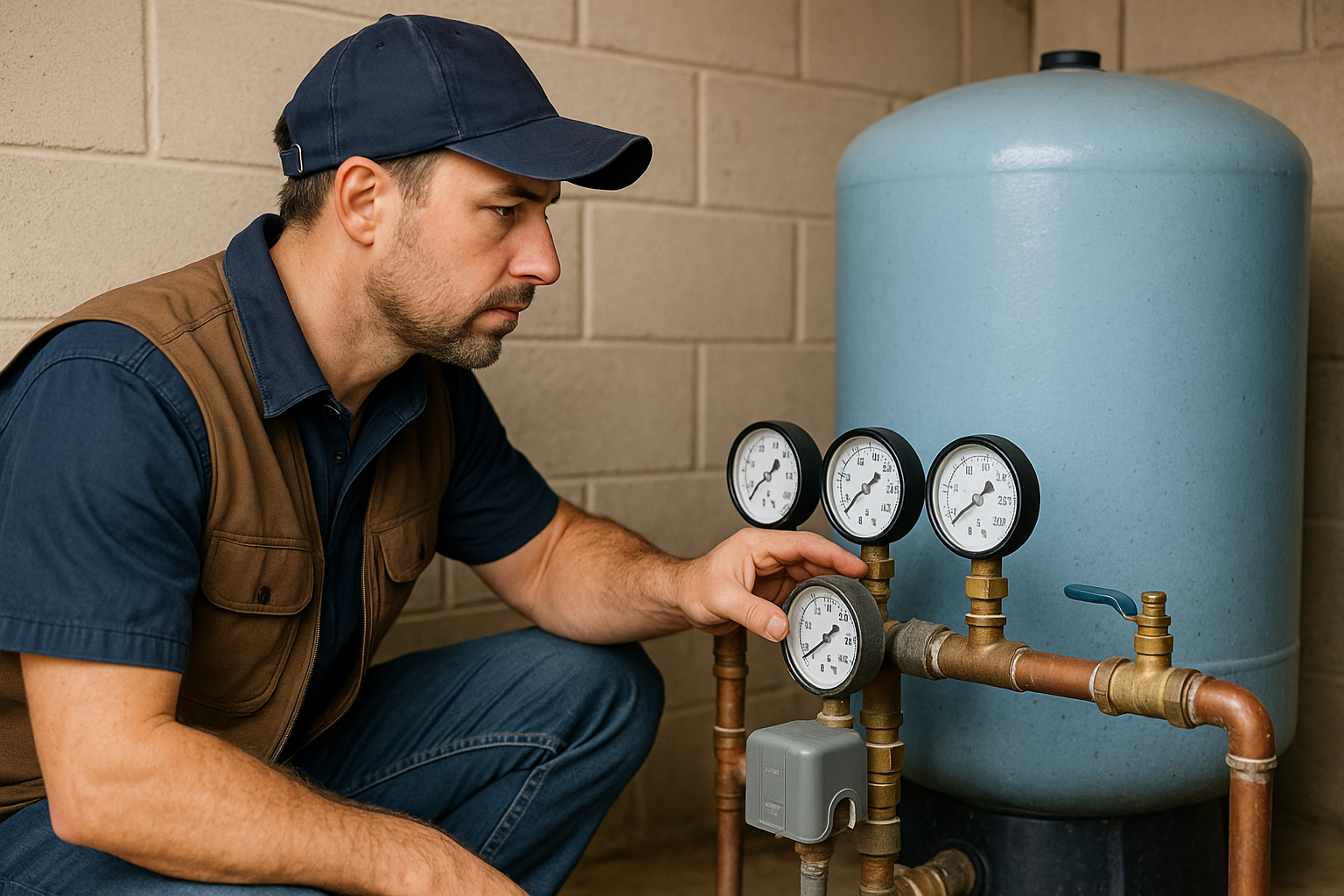
Your well system's pressure gauge is your window into system health—it tells you when the pump should turn on and off, and helps diagnose problems. When that gauge shows zero, you need to determine whether the gauge itself has failed or if you actually have no pressure in your system. This guide will help you figure out which situation you're facing and what to do about it.
The Three Possible Causes
A pressure gauge reading zero typically means one of three things:
- The gauge has failed and can no longer register pressure
- The gauge port is clogged and water can't reach the gauge
- There really is zero pressure in your system
Determining which scenario you're dealing with is the first step toward fixing the problem.
Quick Diagnosis: Do You Have Water?
The fastest way to narrow down the cause:
- Turn on a faucet. Does water come out with normal pressure?
- If YES: Your gauge is likely failed or clogged. The system has pressure; the gauge just can't measure it.
- If NO (no water or very weak flow): You may actually have zero or very low pressure—this is a bigger problem requiring pump/system diagnosis.
Cause #1: Failed Pressure Gauge
Pressure gauges are relatively simple mechanical devices, and they do fail over time. Common failure modes include:
- Stuck needle: Internal mechanism seized from corrosion or debris
- Broken bourdon tube: The pressure-sensing element cracked or fatigued
- Water damage: Moisture inside the gauge case caused corrosion
- Overpressure damage: Pressure spike bent or damaged internal parts
How to Test the Gauge
- Turn off power to the pump
- Open a faucet to relieve any pressure
- Carefully remove the gauge (turn counterclockwise)
- Check if the port is blocked with debris
- Install a new gauge and restore power
- If the new gauge reads properly, the old gauge was bad
Cause #2: Clogged Gauge Port
The small opening where the gauge connects can become blocked by:
- Mineral scale buildup (especially with hard water)
- Sediment from the well
- Teflon tape debris from previous installations
- Rust and corrosion products
Clearing a Clogged Port
- Turn off pump power and relieve pressure
- Remove the gauge
- Look into the port opening with a flashlight
- Use a small pick or wire to clear any debris
- Flush the port by briefly turning on the pump with gauge removed (be ready for water spray)
- Reinstall gauge with fresh Teflon tape
Cause #3: Actual Zero Pressure
If you have no water pressure at your faucets, the gauge may be accurately reading zero. This indicates a more serious problem:
- Pump not running: Check breaker, pressure switch, and control box
- Pump running but not pumping: Lost prime, worn impeller, or broken drop pipe
- Major leak: System losing water faster than pump can supply
- Check valve failure: Water draining back into well
- Pressure tank failure: Completely waterlogged tank
⚠️ No Water Emergency
If you have zero pressure AND no water coming from faucets, this requires immediate attention. Check your circuit breaker first. If the breaker is on but you have no water, your pump may have failed or your well may have run dry. Call a professional for diagnosis.
When to Call a Professional
Contact a well service technician when:
- You have zero pressure AND no water
- You're not comfortable working with plumbing or electrical systems
- Replacing the gauge doesn't solve the problem
- You suspect pump or pressure tank issues
- The problem recurs after you've fixed it
Choosing a Replacement Gauge
When replacing your pressure gauge, consider:
- Range: 0-100 PSI is standard for most residential well systems
- Connection size: 1/4" NPT is most common
- Lower mount vs. back mount: Match your existing configuration
- Liquid-filled: Glycerin-filled gauges last longer and resist vibration
- Quality: Spend a few extra dollars—cheap gauges fail quickly
Installation Tips
- Use 2-3 wraps of Teflon tape on threads, applied clockwise
- Don't overtighten—finger tight plus 1/4 turn with a wrench
- Make sure gauge face is readable from your normal viewing angle
- Consider adding a gauge snubber if your system has pressure spikes
Frequently Asked Questions
How much does a replacement pressure gauge cost?
Basic gauges cost $5-15. Quality liquid-filled gauges run $15-30. Given how important accurate pressure readings are, spending a bit more for a quality gauge is worthwhile.
Can a bad pressure gauge cause pump problems?
The gauge itself is just a visual indicator—it doesn't control anything. However, if you ignore a real zero-pressure situation (thinking the gauge is just broken), you could damage your pump by running it without water.
Why does my gauge read zero when the pump is off but works when it's running?
This suggests your check valve may be failing, allowing water to drain back into the well when the pump stops. The gauge accurately shows the dropping pressure as water drains away.
How long do pressure gauges last?
In well systems with sediment or hard water, expect 3-5 years. With clean water and a snubber to prevent pressure spikes, gauges can last 10+ years.
If the gauge is at zero because the tank or the switch failed, the local service call is pressure tanks and pressure switches. This page stays the gauge diagnosis.
We service all major pump brands including Franklin Electric, Grundfos, Goulds (Xylem), and Sta-Rite (Pentair). Our trucks carry common parts and components for same-day repairs.
Related Articles
Continue learning about well maintenance and troubleshooting
Low Water Pressure From Well: Complete Fix Guide
Diagnose and solve low pressure problems
Well Pressure Switch: Settings, Adjustment & Replacement
Everything about pressure switches
Pressure Tank Maintenance: Complete Guide
Keep your pressure tank working properly