
Pressure Tank Service in Banning Pass
Southern California Well Service provides professional pressure tank repair, replacement, and installation to the Banning Pass area and surrounding Riverside County communities. The San Gorgonio Pass presents unique challenges for well systems — extreme wind, desert heat, and variable water quality — and we've been solving them for over 30 years with a 4.9-star Google rating.
📋 In This Guide
Need Pressure Tank Service in Banning Pass?
We serve the Banning Pass corridor (92220, 92223) and all of western Riverside County. Licensed C-57 contractor with 24/7 emergency service available. Our crews service the pass area regularly from both our Ramona and Anza offices.
Call: (760) 440-8520Understanding Your Pressure Tank
Your pressure tank is the critical bridge between your well pump and your home's plumbing system. It performs three essential functions that most homeowners never think about until something breaks down.
Maintaining consistent water pressure. Without a pressure tank, your water pressure would spike when the pump kicks on and drop to nothing when it cycles off. The tank uses a pressurized air bladder to deliver steady pressure — typically between 40 and 60 PSI — giving you reliable flow at every faucet, shower, and irrigation line. That consistency is what makes living on well water feel no different from being on municipal water.
Reducing pump cycling. Every time your well pump starts, it draws 3 to 5 times its running amperage in startup current. A properly sized pressure tank stores enough water so the pump doesn't need to start every time someone washes their hands or flushes a toilet. Instead of cycling 50+ times per hour, a good tank reduces that to 5-10 cycles, dramatically extending pump life and lowering your electricity costs.
Protecting against water hammer. When you quickly close a faucet, the momentum of moving water creates a pressure spike — water hammer — that can damage pipes and fittings over time. Your pressure tank acts as a shock absorber, cushioning those spikes and protecting your entire plumbing system.
In the Banning Pass area, where summer heat and extreme wind stress equipment continuously, a failed pressure tank accelerates wear on a submersible pump that could cost $3,000 to $7,000 to replace. Catching pressure tank problems early saves significant money and prevents emergency situations in this demanding environment.
Signs Your Pressure Tank Is Failing
Pressure tanks degrade gradually. Recognizing the warning signs early can save you from losing water during a Banning Pass heat wave — when you need it most. Here's what to watch for:
🔴 Pump Short Cycling
The most common and damaging symptom. If your well pump turns on and off every few seconds — or every time a faucet opens — the tank has lost its air charge. The pump is now doing all the work the tank should handle, and it's burning out fast. In Banning Pass's hot summers, where electrical components already run warm from ambient heat, short cycling can destroy a pump in months rather than its typical 10-15 year lifespan.
🟡 Fluctuating Water Pressure
If your shower surges and drops rhythmically, or pressure changes when someone else turns on water, the tank's bladder may be compromised. A healthy tank delivers smooth, consistent pressure between pump cycles. Rhythmic fluctuation means the air and water chambers are no longer properly separated — the bladder has developed a leak or has stretched beyond capacity.
🟡 Waterlogged Tank
Tap on the side of your pressure tank from top to bottom. A healthy tank sounds hollow (air) in the upper portion and solid (water) in the lower portion. If the entire tank sounds full of water all the way up, the bladder has ruptured or the air charge has leaked completely. The tank is functionally useless at this point.
🟡 Visible Rust or Corrosion
Exterior rust on the shell, corrosion around fittings, or mineral deposits at connections indicate the tank is nearing end of life. The windblown sand and dust common in the Banning Pass corridor can accelerate exterior corrosion, particularly on tanks installed outdoors without protective enclosures.
🟠 Water Spitting from the Air Valve
The Schrader valve on top of your tank (looks like a tire valve) should only release air. If water sprays out when you depress the valve, the internal bladder has failed and water has invaded the air chamber. This is not repairable — the tank needs replacement.
If you notice any of these symptoms, call us at (760) 440-8520 for same-day diagnostics. Don't wait — a failing tank is actively damaging your pump.
Banning Pass: Unique Challenges for Well Systems
The San Gorgonio Pass — commonly called Banning Pass — is one of the most environmentally demanding areas in Southern California for well equipment. The corridor between the San Bernardino and San Jacinto mountain ranges creates conditions that accelerate wear on pressure tanks and well systems in ways that homeowners in more sheltered locations don't experience.
Extreme Wind Exposure
The Banning Pass is one of the windiest corridors in California — it's why the area is filled with wind turbines. Sustained winds of 40-60 mph are common, with gusts exceeding 80 mph during Santa Ana events. This relentless wind affects pressure tanks in several ways. Outdoor tanks experience constant sandblasting that strips protective coatings and accelerates surface corrosion. Wind-driven debris can damage plumbing connections, electrical wiring, and the Schrader valve. And during the strongest wind events, structures sheltering well equipment can be damaged or destroyed, leaving tanks and controls exposed to the elements. We strongly recommend enclosed installations — either indoor or in a reinforced pump house — for all Banning Pass properties.
Desert Heat and Temperature Swings
Summer temperatures in the Banning Pass regularly exceed 105°F, and equipment in direct sunlight can reach 140°F or higher. The butyl rubber bladders in most pressure tanks are rated for continuous operation up to about 120°F — meaning exposed tanks are routinely operating beyond spec during the hottest months. But it's not just the heat itself. Banning Pass also sees dramatic day-to-night temperature swings — sometimes 40-50°F in a single day during spring and fall. This thermal cycling stresses the bladder material, the air charge fluctuates significantly, and seal materials expand and contract repeatedly. Over years, this cycling fatigues components faster than steady heat alone.
San Gorgonio Pass Water Basin
Wells in the Banning Pass area draw from the San Gorgonio Pass subbasin, part of the larger Coachella Valley Groundwater Basin system. Water quality varies significantly depending on well depth and location within the pass. Wells on the western (Beaumont) side tend to have lower TDS and better quality water, while wells further east toward Cabazon and the desert floor can have elevated TDS, hardness, and iron content. High-mineral water accelerates internal corrosion of pressure tanks, deposits scale on bladders, and can reduce the effective drawdown volume over time. Understanding your specific water quality helps us recommend the right tank material and maintenance schedule.
Power Reliability and PSPS Events
The Banning Pass corridor is particularly susceptible to Public Safety Power Shutoff (PSPS) events during high-wind fire weather. When SCE cuts power, your well pump stops and the only water available is what's stored in your pressure tank. A properly sized tank provides 10-20 minutes of light household use during an outage — enough time to start a generator. Properties that experience frequent PSPS events should consider a larger tank or dedicated water storage to maintain supply during extended outages, which can last 24-72 hours in this area.
Pressure Tank Types We Install
Given the harsh conditions in the Banning Pass corridor, tank selection matters more here than in most locations. Here's what we recommend:
Well-X-Trol (Amtrol) — Our Top Recommendation
The industry standard for residential well systems. Heavy-duty butyl rubber bladder, replaceable on larger models, with consistent drawdown throughout the pressure range. For Banning Pass installations, we particularly recommend the WX-203 and larger models with their thicker gauge steel and enhanced corrosion resistance.
- Available in 20 to 119 gallon capacities
- Replaceable bladder on 44 gallon and larger models
- Heavy-gauge steel shell with baked enamel finish
- 5-year manufacturer warranty (7-year on select models)
Flexcon Industries — Great for Hard Water
Flexcon's polypropylene-lined interior resists corrosion better than bare steel — a significant advantage for Banning Pass properties with mineral-heavy well water. Their deep-drawn steel construction means fewer welds, which translates to fewer failure points under the thermal stress this environment delivers.
- Polypropylene-lined interior resists mineral corrosion
- Available in 14 to 120 gallon capacities
- Deep-drawn steel construction
- Competitive pricing with excellent reliability
Wellmate (Pentair) — Best for Outdoor Installations
If your tank must be installed outdoors and exposed to Banning Pass wind and sun, Wellmate's fiberglass composite tanks are the best investment. The fiberglass shell will never rust, shrugs off sandblasting from wind-driven grit, and handles UV exposure without degradation. They weigh half what a comparable steel tank weighs — an advantage in the pass where strong wind loads can stress mounting points.
- Fiberglass composite — zero corrosion, UV-resistant, wind-proof
- 50% lighter than equivalent steel tanks
- Available up to 120 gallons
- Higher upfront cost, longest lifespan in harsh environments
Pressure Tank Sizing for Banning Pass Properties
Proper sizing prevents pump cycling issues and ensures adequate water supply during peak demand periods. Here's our sizing guide for Banning Pass homes:
| Property Type | Pump Flow (GPM) | Minimum Tank | Recommended |
|---|---|---|---|
| 1-2 people, 1-2 bath | 5-10 GPM | 30 gallon | 44-62 gallon |
| 3-4 people, 2-3 bath | 10-15 GPM | 44 gallon | 62-86 gallon |
| 4+ people or heavy irrigation | 15-25 GPM | 62 gallon | 86-119 gallon |
| PSPS-prone / generator backup | Any | 62 gallon | 86+ gallon (extra buffer) |
Remember: A 44-gallon tank doesn't hold 44 gallons of usable water. It holds about 14 gallons of drawdown between cut-in and cut-out pressure. The rest is pressurized air. That drawdown volume is what determines pump cycling frequency — and it's why going up one tank size is often the smartest investment in your well system's longevity.
For Banning Pass properties that experience frequent PSPS events, we recommend sizing up at least one category from minimum. The extra drawdown gives you more water buffer when the power goes out and you're waiting to start a generator.
Maintenance Tips for Banning Pass Well Owners
The Banning Pass environment demands more attention to well equipment than sheltered locations. These maintenance steps can add years to your pressure tank's life.
✅ Check Air Pressure Quarterly (Monthly in Summer)
With the pump off and tank drained, use a tire pressure gauge on the Schrader valve. Pre-charge should be 2 PSI below your switch's cut-in setting (38 PSI for 40/60 systems). The dramatic temperature swings in Banning Pass cause air pressure to fluctuate more than in stable-temperature areas — check monthly from June through September when the swings are most extreme.
✅ Protect Tanks from Wind and Sand
Outdoor tanks in the Banning Pass take a beating from windblown sand and debris. Inspect the tank shell for paint erosion and bare metal exposure after major wind events. A purpose-built enclosure or pump house is the best protection — it blocks wind, provides shade from summer heat, and keeps debris out of electrical components. Even a simple wind break on the prevailing wind side helps significantly.
✅ Listen for Pump Cycling Monthly
Turn on a single faucet at moderate flow and listen. The pump should start once and run steadily for a minute or more before shutting off. If it's cycling every 10-30 seconds, you have a problem — lost air charge, bad bladder, or waterlogged tank. Don't ignore rapid cycling; it's destroying your pump with every cycle.
✅ Inspect Electrical Connections After Wind Events
High winds can loosen electrical connections at the pressure switch, vibrate wiring insulation, and blow debris into junction boxes. After major wind events, visually inspect all wiring and connections near your pressure tank. Look for scorched contact points, loose wires, and ant or insect infestations — ants are attracted to electrical components and cause erratic pressure switch behavior throughout the pass area.
✅ Annual Professional Inspection
Given the extreme environmental stresses in the Banning Pass corridor, we recommend an annual professional well system inspection. We check the pressure tank, pressure switch, wiring, plumbing connections, and pump performance in a single visit. Catching a $200 problem early prevents a $5,000 pump replacement later.
Our Services in the Banning Pass Area
🔧 Pressure Tank Diagnostics
We test air charge, bladder integrity, drawdown volume, and pressure switch operation. Many times a simple air charge adjustment solves the problem without replacing anything — saving you hundreds of dollars.
🔄 Tank Replacement
Full replacement service including draining, disconnecting, installing the new unit, setting the correct pre-charge, and verifying system operation. Most replacements completed in 2-3 hours.
📐 New Installation & Upsizing
If your current tank is undersized — or you've added irrigation, an ADU, or increased household size — we'll design the right configuration. This includes single tank upgrades, dual-tank parallel systems, and protected enclosure recommendations for the wind corridor.
⚡ 24/7 Emergency Service
No water is an emergency — especially in 105°F Banning Pass heat. Call us any time, day or night. We stock common tank sizes on our trucks for same-day resolution when possible.
🔬 Water Quality Testing
We test for hardness, iron, TDS, pH, and bacteria — all factors that affect pressure tank longevity. If treatment is needed, we recommend solutions matched to your specific water chemistry.
🛡️ Full System Inspections
Every tank service includes a check of the pressure switch, wiring, connections, and pump performance. We look at the whole system so you don't need a separate visit for related issues.
Pressure Tank Replacement Cost
| Service | Typical Cost Range |
|---|---|
| Diagnostics & air charge adjustment | $150 – $250 |
| 20-44 gallon tank replacement (installed) | $800 – $1,400 |
| 62-86 gallon tank replacement (installed) | $1,200 – $2,000 |
| 119 gallon tank replacement (installed) | $1,800 – $2,800 |
| Pressure switch replacement (add-on) | $150 – $300 |
Upfront pricing before any work begins — no surprises, no hidden fees. If a simple repair solves the problem, we'll tell you rather than sell you equipment you don't need.
Service Area
We serve the entire Banning Pass corridor and surrounding communities:
We install Well-X-Trol (Amtrol) and Flexcon pressure tanks — industry-leading bladder tanks that outlast standard diaphragm models. Proper sizing with a quality tank can double your pump's lifespan.
Frequently Asked Questions
What size pressure tank do I need?
For most residential wells, we recommend a minimum 30-gallon pressure tank. Homes with higher water demand or multiple bathrooms benefit from 50-85 gallon tanks. Proper sizing reduces pump cycling and extends pump life.
How do I know if my pressure tank is failing?
Signs of a failing pressure tank include: pump short cycling (turning on and off frequently), waterlogged tank (heavy when you tap it), fluctuating water pressure, and the tank feeling uniformly heavy rather than having an air-filled top section.
How long do pressure tanks last?
Quality pressure tanks typically last 10-15 years. Bladder-type tanks (like Well-X-Trol) tend to last longer than diaphragm tanks. Annual pressure checks can extend tank life significantly.
Related Articles
Continue learning about well maintenance and troubleshooting
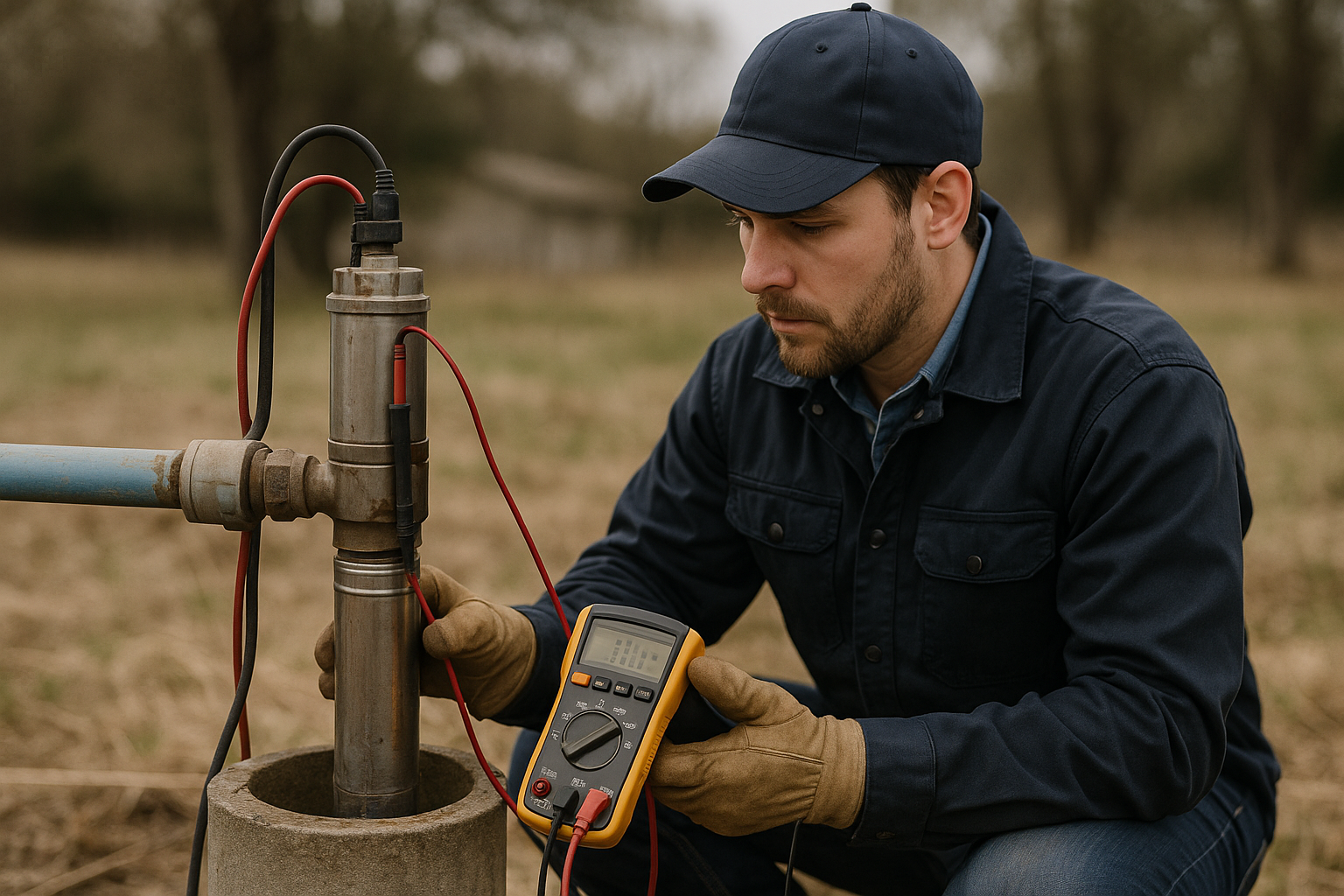
Low Water Pressure From Well: Complete Fix Guide
Diagnose and solve low pressure problems
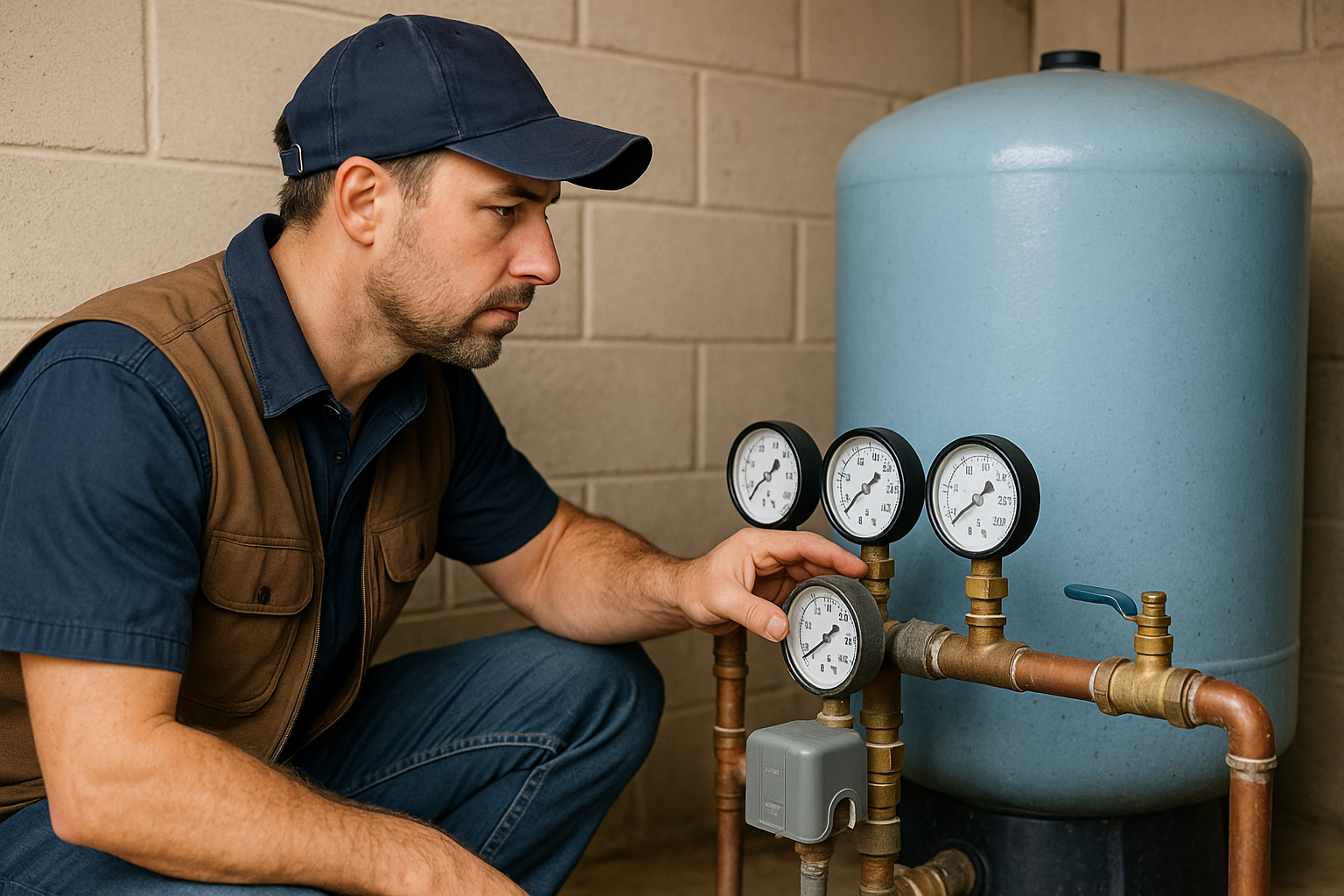
Well Pressure Switch: Settings, Adjustment & Replacement
Everything about pressure switches
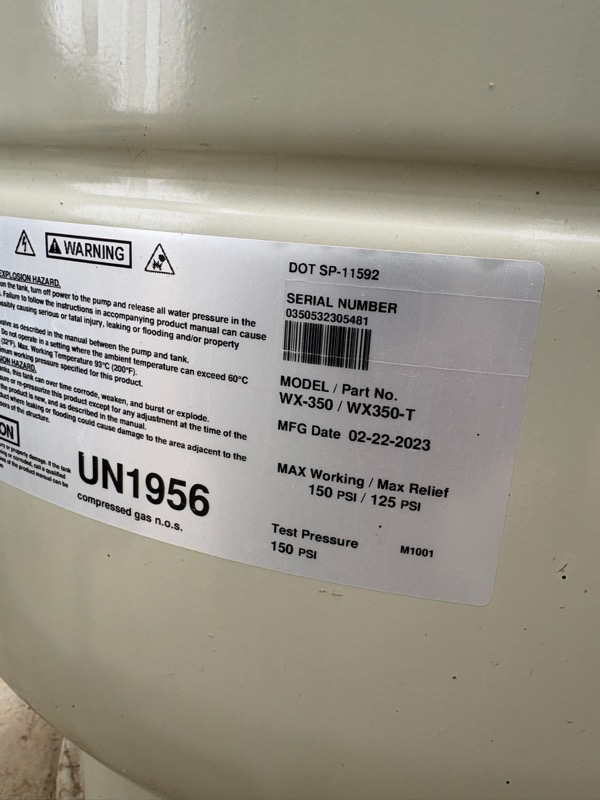
Pressure Tank Maintenance: Complete Guide
Keep your pressure tank working properly