
Pressure Tank Service in Kensington
Southern California Well Service provides professional pressure tank repair, replacement, and installation to Kensington and surrounding San Diego communities. With over 60 years of family experience and a 4.9-star Google rating, we're the trusted choice for Kensington well owners dealing with pressure tank problems.
📋 In This Guide
- Need Pressure Tank Service in Kensington?
- How Your Pressure Tank Works
- Signs Your Pressure Tank Is Failing
- Well Challenges Specific to Kensington
- Our Pressure Tank Services
- Pressure Tank Sizing Guide
- Pressure Tank Replacement Cost
- Why Kensington Residents Choose SCWS
- Pressure Tank Maintenance Tips
- Service Area
- Frequently Asked Questions
Need Pressure Tank Service in Kensington?
We serve Kensington (92116) and all of San Diego County. Licensed C-57 contractor with 24/7 emergency service available. If your pump is short cycling or your water pressure is inconsistent, call us for a same-day diagnosis.
Call: (760) 440-8520How Your Pressure Tank Works
Your pressure tank is one of the most critical components in your well system — and the one most homeowners understand least. It acts as a buffer between your well pump and your household plumbing, storing pressurized water so the pump doesn't need to start every time someone opens a faucet, flushes a toilet, or runs the washing machine.
Inside a modern bladder-type pressure tank, a heavy-duty rubber bladder separates the water from a pre-charged air pocket. When the pump fills the tank, water enters the bladder and compresses the air pocket above it, building pressure. When you open a faucet, the compressed air pushes water out of the bladder and into your plumbing. The pump stays off until tank pressure drops to the cut-in setting — typically 30 PSI for a standard 30/50 system — then the pump kicks back on to refill the tank.
This on-off cycle is called the pump duty cycle, and keeping it controlled is critical to your pump's longevity. A properly sized pressure tank keeps pump starts to a minimum — ideally 6 to 8 cycles per hour during peak demand. Without a functioning pressure tank, your pump would start and stop with every glass of water, every toilet flush, every sprinkler head. That rapid cycling — called short cycling — destroys pump motors, stresses electrical connections, damages pipe fittings, and drives your electric bill up significantly.
Many properties in Kensington have well systems that date back decades, some to the original construction era of the 1920s through 1940s. We regularly encounter older galvanized steel tanks, undersized diaphragm models, and equipment that hasn't been updated in years. While these tanks may still hold water, they're often operating well below design capacity and putting unnecessary strain on the well pump — leading to premature pump failure that costs thousands more than a timely tank replacement would have.
Signs Your Pressure Tank Is Failing
Pressure tanks almost never fail all at once. Instead, they degrade gradually over months or even years, and homeowners often adjust to the worsening performance without recognizing there's a problem until the pump burns out or water stops flowing entirely. Here are the warning signs we see most often when servicing pressure tanks in the Kensington area:
- Pump short cycling: Your pump turns on and off every few seconds or kicks on every time any faucet is opened. This is the number one indicator of a waterlogged pressure tank. The bladder has ruptured, the air charge has leaked out, or the tank has otherwise lost its ability to store pressurized water. Short cycling can reduce a pump's lifespan from 15 years down to 2 or 3 years.
- Fluctuating water pressure: Pressure spikes briefly when the pump kicks on, then drops off rapidly before the pump restarts. You may notice this as a pulsing sensation in the shower or water that surges strong for a moment then weakens.
- Waterlogged tank: Tap on the side of your pressure tank from top to bottom. A healthy tank sounds hollow near the top (where the air pocket is) and solid near the bottom (where water sits). If the entire tank sounds solid and feels uniformly heavy, it's waterlogged — the air cushion is gone and the tank isn't providing the pressure buffer your pump needs.
- Visible rust or corrosion: Look for rust at the tank base, around pipe connections, and near the Schrader valve on top. Kensington's proximity to the coast means salt air can accelerate external corrosion, especially on tanks installed outdoors or in older wellhouses with limited ventilation.
- Water leaking from the tank body: Any water dripping from the tank shell itself — not from pipe connections or fittings — means the tank has corroded through and needs immediate replacement. Do not attempt to patch, weld, or repair a leaking tank body.
- Air spurting from faucets: If you get bursts of air mixed with water when you turn on a tap, the bladder inside the tank has likely ruptured, allowing the air charge to mix directly with the water instead of staying separated.
- Pump running continuously without building pressure: If your pump runs for extended periods without the pressure gauge climbing to the cut-off point, the tank may have a ruptured bladder or severe air charge loss. The pump will eventually overheat or burn out if this continues unchecked.
Well Challenges Specific to Kensington
Kensington is one of San Diego's most charming historic neighborhoods, originally developed in the 1920s and 1930s with Spanish Revival and Craftsman-style homes clustered along tree-lined streets near Adams Avenue. While the vast majority of Kensington homes now connect to City of San Diego municipal water, a handful of older properties — particularly those bordering the canyon edges along Terrace Drive and the eastern slopes near Fairmount Avenue — still maintain private well systems for irrigation, backup water supply, or landscape use. The local geology and aging infrastructure create specific challenges for pressure tank performance.
Aging infrastructure on historic properties: Kensington's housing stock is predominantly 80 to 100 years old. Properties that retained well systems often have original-era equipment including galvanized steel piping, outdated air-over-water tanks with no bladder at all, and pressure switches that have been bypassed or jury-rigged over the decades. When we service a pressure tank in Kensington, we always inspect the entire system because a new tank connected to corroded 1930s galvanized piping is a problem waiting to happen. Older galvanized fittings restrict flow, accumulate mineral scale internally, and can introduce rust particles that damage the new tank's bladder.
Canyon-edge geology and shallow wells: Kensington sits on the elevated terraces above Mission Valley, with steep canyon slopes along its southern and eastern edges. Wells on canyon-edge properties often draw from shallow alluvial deposits or fractured bedrock formations that can vary significantly in yield depending on season and rainfall. These wells may produce adequate water during wet winters but experience reduced flow during San Diego's long dry season. A properly sized pressure tank is especially important for low-yield wells because it maximizes the usable water from each pump cycle and prevents the pump from running dry during periods of low aquifer recharge.
Moderate coastal influence: Kensington sits about 6 miles inland from the Pacific coast — close enough that marine moisture, morning fog, and salt air reach the neighborhood regularly, especially during May Gray and June Gloom season. This coastal influence accelerates corrosion on pressure tanks and metal fittings, particularly on equipment installed outdoors or in poorly ventilated wellhouses. We recommend Kensington well owners inspect tank exteriors and fittings at least twice per year for early signs of surface rust and salt deposit accumulation.
Tight installation spaces: Kensington's historic homes were built on relatively modest lots by modern standards, and well equipment is often tucked into small utility areas, narrow side yards, crawl spaces, or aging wellhouses. Replacing a pressure tank in these spaces requires careful planning — measuring access paths, selecting the right tank dimensions, and sometimes disassembling existing piping to maneuver the old tank out and the new one in. Our crews are experienced with confined-space installations throughout San Diego's older neighborhoods and carry a range of tank sizes to match available space.
Irrigation-only systems: Many Kensington properties that connect to city water for household use still maintain a separate well system exclusively for landscape irrigation — watering the mature trees, gardens, and landscaping that give the neighborhood its established, park-like character. These irrigation-only systems often have smaller, cheaper pressure tanks that weren't designed for heavy cycling. During San Diego's dry months, an undersized irrigation tank can cycle the pump dozens of times per hour, burning out motors and wasting energy. Upgrading to a properly sized tank for the irrigation demand is one of the most cost-effective improvements a Kensington well owner can make.
Our Pressure Tank Services in Kensington
- Pressure tank inspection and diagnosis: We check the tank's air charge, test for waterlogging, inspect for corrosion, and verify pressure switch settings and operation. Takes about 30 minutes and tells you exactly what condition your system is in.
- Air charge adjustment: If your tank is structurally sound but the air charge has drifted, we adjust it to the correct pressure — typically 2 PSI below the cut-in pressure (28 PSI for a standard 30/50 system). This simple service can immediately restore proper pump cycling.
- Pressure tank replacement: When a tank has failed or reached end of life, we replace it with a new Well-X-Trol (Amtrol) or Flexcon bladder-type tank, properly sized for your demand. We handle disconnection, removal, installation, pressure testing, and disposal of the old unit.
- Pressure switch replacement: Tank issues and pressure switch problems often go hand-in-hand. A corroded or worn switch can cause the same symptoms as a failing tank. We diagnose both components together and replace the switch when needed — a $150 switch replacement can prevent a $3,000 pump burnout.
- Complete system upgrades: For older Kensington properties with undersized tanks, galvanized piping, and aging components, we can upgrade your entire pressure system — new tank, new switch, new brass or stainless steel fittings, and proper piping for decades of reliable service.
- Emergency 24/7 service: Lost water pressure on a weekend or holiday? We offer round-the-clock emergency service for Kensington and all of San Diego County. No-water emergencies are always our top priority.
Pressure Tank Sizing Guide for Kensington Properties
One of the most common problems we see is undersized pressure tanks. A tank that's too small for your actual water demand causes excessive pump cycling, shortens pump life, wastes energy, and creates the frustrating pressure fluctuations that make irrigation inconsistent and household water unreliable.
The goal is to keep pump cycling to no more than 6 to 8 starts per hour during peak demand. Here's our general sizing guidance:
- Irrigation-only systems: Many Kensington well systems serve landscape irrigation exclusively. For moderate-demand irrigation setups running 4 to 8 zones, a 50 to 85 gallon tank prevents excessive cycling during watering schedules. The WX-250 (62 gallon) is our most common recommendation for Kensington irrigation wells.
- 1-2 bathroom homes with well water: 30 to 50 gallon tank minimum. A 44-gallon Well-X-Trol WX-203 is our standard recommendation for smaller homes and fits most existing installation spaces in Kensington's tighter lot layouts.
- 3-4 bathroom homes: 50 to 85 gallon tank. The WX-302 (86 gallon) handles the higher demand of larger households with multiple bathrooms and appliances running simultaneously.
- Dual-use systems (household + irrigation): Properties running both indoor plumbing and landscape irrigation from a single well need 85+ gallon tanks, or ideally a dedicated second tank for the irrigation circuit to prevent competition between household and outdoor water demand.
A pressure tank's rated size isn't the same as its usable drawdown capacity. A 50-gallon tank on a 30/50 pressure system actually delivers only about 14 to 16 gallons of water between pump cycles. That's why seemingly "large" tanks are necessary even for modest systems. We calculate the exact drawdown requirement based on your pump's GPM rating and actual peak usage to ensure proper sizing.
Pressure Tank Replacement Cost in Kensington
The cost of pressure tank replacement depends on tank size, installation complexity, site accessibility, and whether additional components need attention. Here's what Kensington-area property owners can typically expect:
- Standard residential replacement (30-50 gallon): Typically $800 to $1,500 installed, including the tank, fittings, and labor.
- Larger tank upgrade (50-85 gallon): $1,200 to $2,200 installed. Upgrading to a larger tank when replacing a failed unit is almost always worth the additional cost for the pump protection and performance improvement.
- Tank plus pressure switch replacement: Add $150 to $300 if the pressure switch needs replacing at the same time. We recommend doing both together if the switch shows any signs of corrosion, pitting, or erratic operation.
- Piping and fitting upgrades: If existing piping is corroded galvanized steel — common in Kensington's 1920s-1940s homes — budget an additional $200 to $500 for new brass or stainless steel fittings and updated piping in the immediate tank area.
We provide written estimates before starting any work, and our pricing is all-inclusive — no hidden fees for travel, disposal of the old tank, or miscellaneous charges.
Why Kensington Residents Choose SCWS
✓ San Diego County Expertise
We know the local geology, water quality, and well system challenges specific to Kensington and San Diego's historic neighborhoods
✓ Fast Response
Same-day service available. 24/7 emergency calls answered. No-water situations are always our top priority.
✓ Transparent Pricing
Written estimates before work begins. No surprise charges, no hidden fees, no pressure to buy services you don't need.
✓ Quality Parts
We install Well-X-Trol and Flexcon tanks — the industry's best bladder tanks, built to last and backed by manufacturer warranties.
Pressure Tank Maintenance Tips for Kensington Well Owners
Routine maintenance extends the life of your pressure tank and protects your pump from the damage caused by undetected tank failure. Here's what we recommend:
- Check air charge every 6 months: Turn off the pump and drain the tank completely by opening a faucet until water stops flowing. Then check air pressure at the Schrader valve using a standard tire gauge. It should read 2 PSI below your cut-in pressure (28 PSI for a 30/50 system). Add air with a bicycle pump or small compressor if needed. Never check air pressure with the tank full of water — you'll get a false reading.
- Listen for short cycling: Stand near your pressure tank and run water. If you hear the pump clicking on and off more than once per minute, or see the pressure gauge rapidly bouncing, your tank likely needs professional service.
- Inspect for corrosion twice per year: Check all pipe connections, the tank base, and the Schrader valve area for rust, mineral buildup, or moisture. Kensington's coastal marine influence accelerates corrosion, so inspect before and after the summer fog season.
- Protect outdoor tanks from moisture: If your tank is installed outdoors, ensure it has a cover or enclosure that keeps direct rain and morning dew off the tank shell. Even a simple corrugated roof over the wellhead area makes a significant difference for corrosion prevention.
- Test water quality annually: Annual water testing catches changes in hardness, iron content, or pH that might affect your well equipment. This is particularly important for Kensington's shallow canyon-edge wells where water quality can shift with seasonal rainfall patterns.
- Schedule professional inspection for tanks over 8 years old: A trained technician can catch subtle signs of bladder degradation, pressure switch wear, electrical anomalies, or early-stage corrosion that you'd miss on a visual check. Especially important for older systems common in Kensington.
Service Area
We proudly serve Kensington and all surrounding San Diego communities. Our service area includes Normal Heights, Talmadge, City Heights, College Area, Rolando, Allied Gardens, Del Cerro, Mission Valley, University Heights, and all neighborhoods throughout central San Diego County. Our Ramona office dispatches crews throughout the region, and we always prioritize no-water emergencies.
We install Well-X-Trol (Amtrol) and Flexcon pressure tanks — industry-leading bladder tanks that outlast standard diaphragm models. Proper sizing with a quality tank can double your pump's lifespan.
Frequently Asked Questions
What size pressure tank do I need?
For most residential wells, we recommend a minimum 30-gallon pressure tank. Homes with higher water demand or multiple bathrooms benefit from 50-85 gallon tanks. Proper sizing reduces pump cycling and extends pump life.
How do I know if my pressure tank is failing?
Signs of a failing pressure tank include: pump short cycling (turning on and off frequently), waterlogged tank (heavy when you tap it), fluctuating water pressure, and the tank feeling uniformly heavy rather than having an air-filled top section.
How long do pressure tanks last?
Quality pressure tanks typically last 10-15 years. Bladder-type tanks (like Well-X-Trol) tend to last longer than diaphragm tanks. Annual pressure checks can extend tank life significantly.
Related Articles
Continue learning about well maintenance and troubleshooting
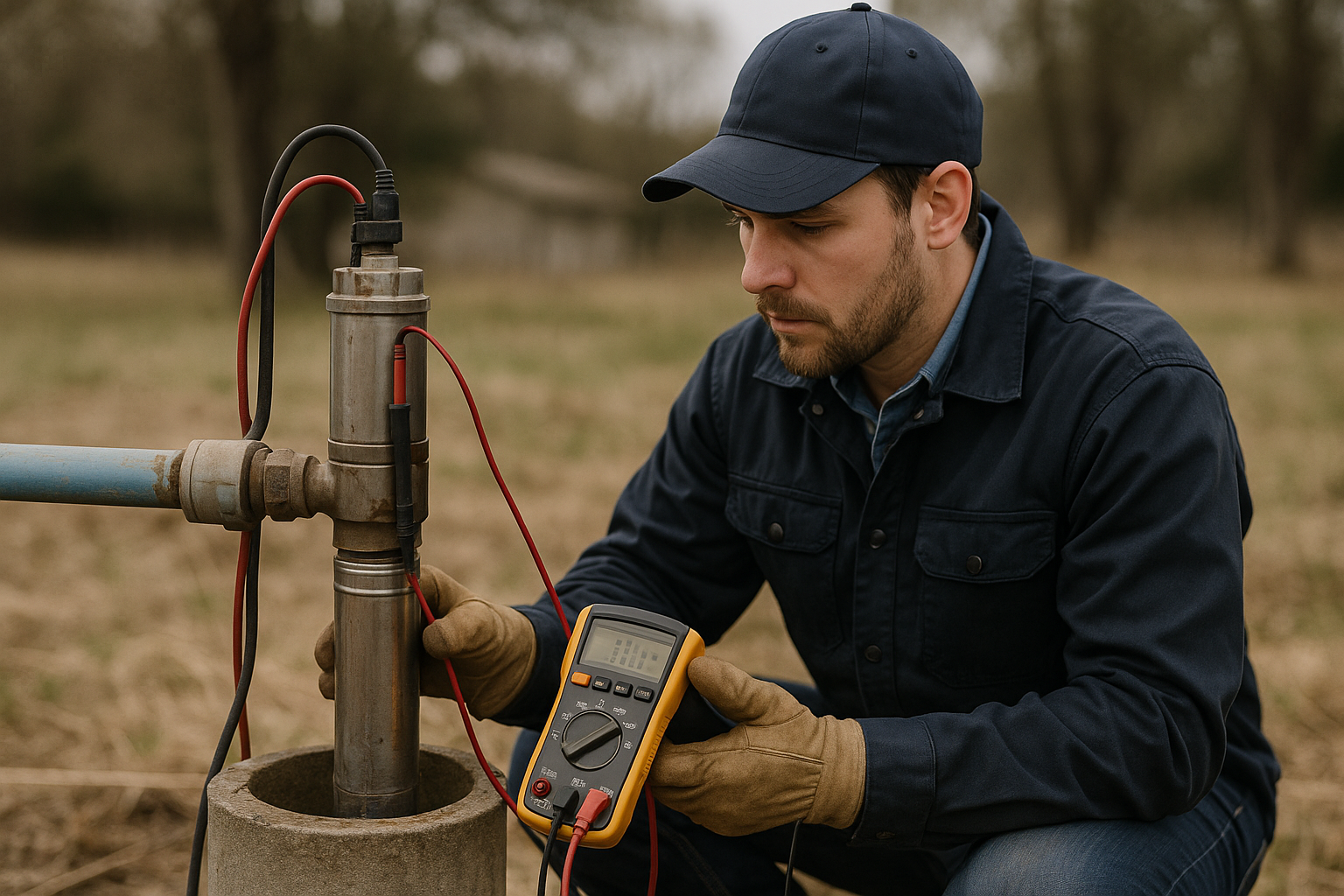
Low Water Pressure From Well: Complete Fix Guide
Diagnose and solve low pressure problems
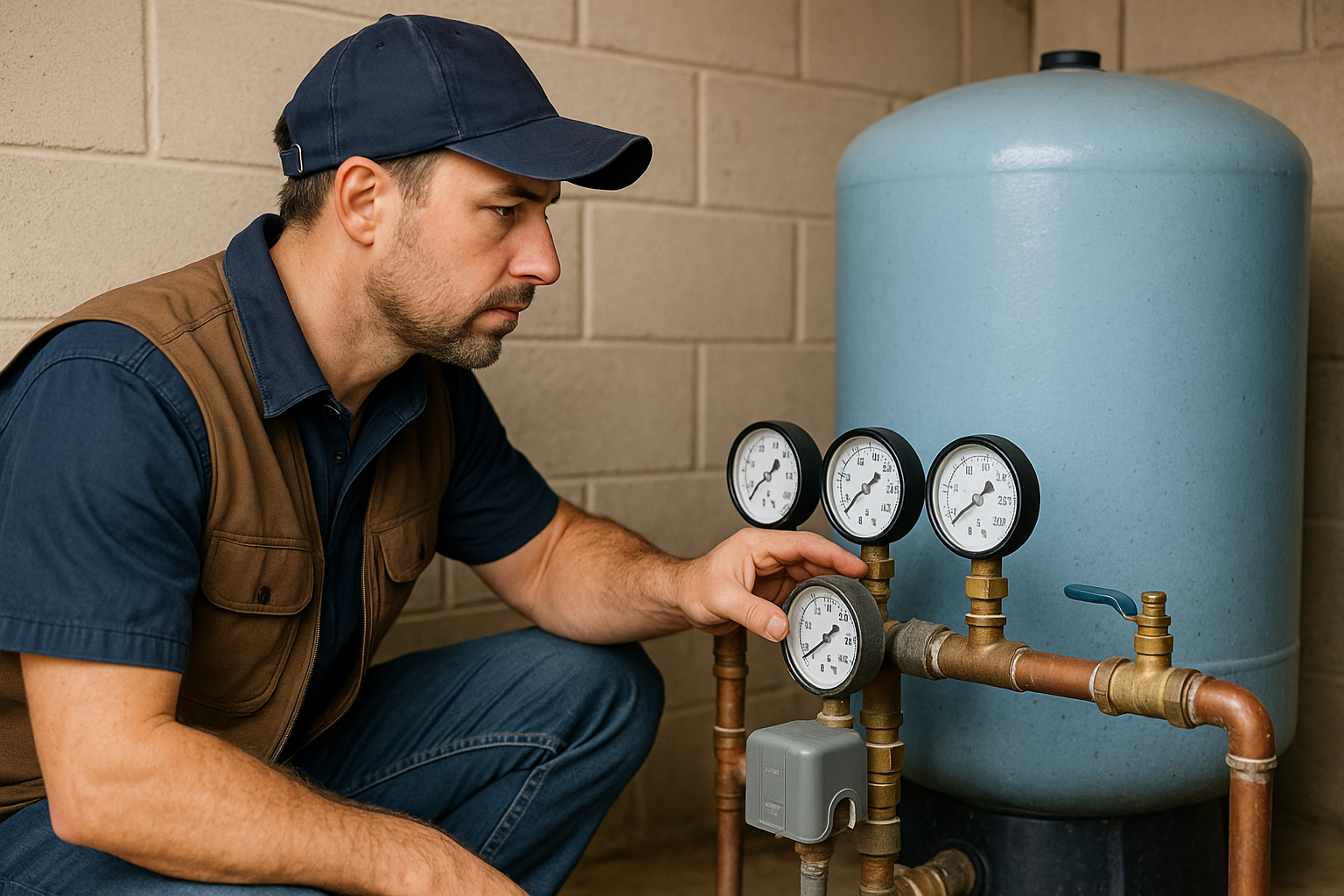
Well Pressure Switch: Settings, Adjustment & Replacement
Everything about pressure switches
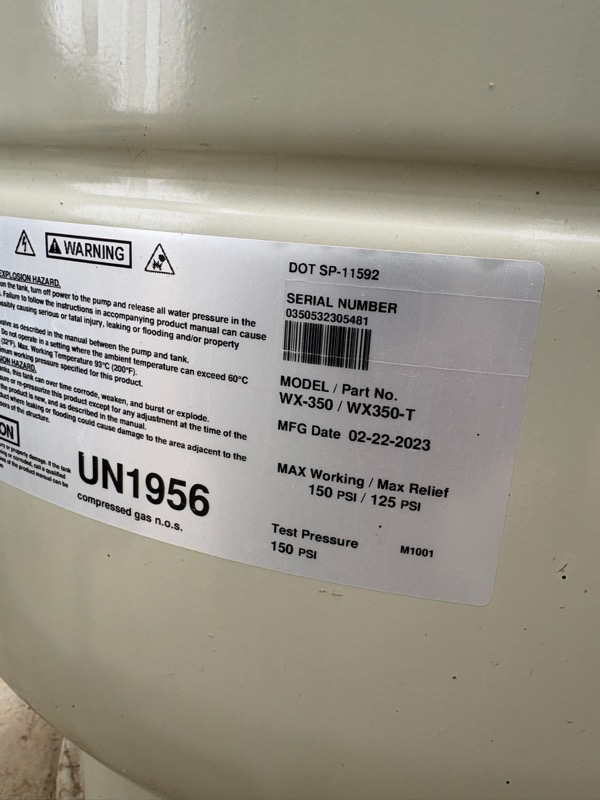
Pressure Tank Maintenance: Complete Guide
Keep your pressure tank working properly